Bylaws Residential Association With Board Members In Cook
Description



Get your form ready online
Our built-in tools help you complete, sign, share, and store your documents in one place.
Make edits, fill in missing information, and update formatting in US Legal Forms—just like you would in MS Word.
Download a copy, print it, send it by email, or mail it via USPS—whatever works best for your next step.
Sign and collect signatures with our SignNow integration. Send to multiple recipients, set reminders, and more. Go Premium to unlock E-Sign.
If this form requires notarization, complete it online through a secure video call—no need to meet a notary in person or wait for an appointment.
We protect your documents and personal data by following strict security and privacy standards.

Make edits, fill in missing information, and update formatting in US Legal Forms—just like you would in MS Word.

Download a copy, print it, send it by email, or mail it via USPS—whatever works best for your next step.

Sign and collect signatures with our SignNow integration. Send to multiple recipients, set reminders, and more. Go Premium to unlock E-Sign.

If this form requires notarization, complete it online through a secure video call—no need to meet a notary in person or wait for an appointment.

We protect your documents and personal data by following strict security and privacy standards.
Looking for another form?







Form popularity
FAQ
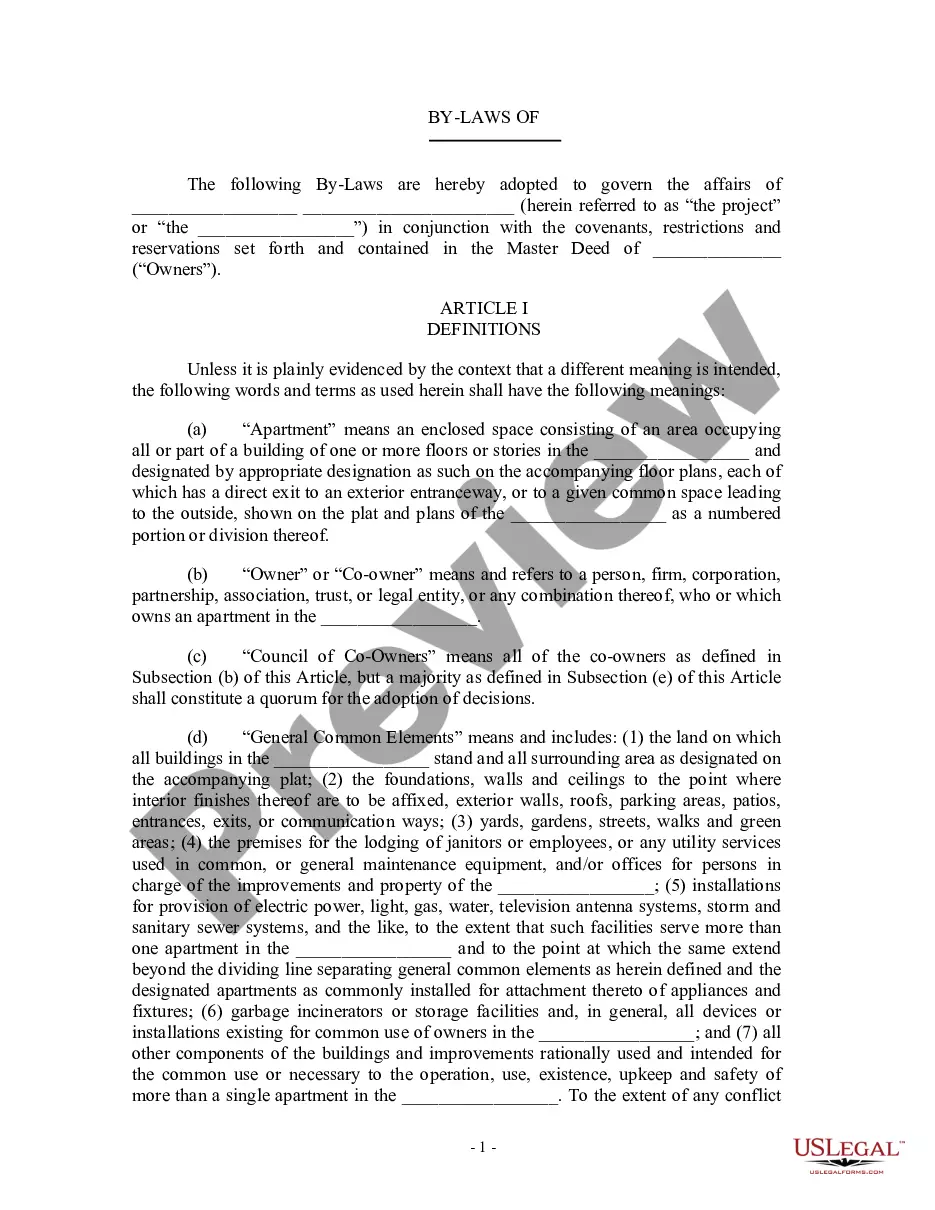
The Illinois General Not for Profit Corporation Act, which governs the vast majority of associations, requires that the board of directors of a corporation consist of three or more directors with the number of directors established in the bylaws.
The administration and functioning of HOAs in the state are governed by the Illinois Common Interest Community Association Act. In homeowner's associations with detached or attached townhouses, single-family houses, or villas, this provision is applicable.
Understanding Illinois Homeowners' Association Law AspectKey Takeaway HOA Powers Power to regulate common areas, collect charges, levy fines, and foreclose on homes for unpaid liens. Entry to Property Most governing documents allow HOA entry to homes for maintenance under certain conditions.6 more rows
The Illinois General Not for Profit Corporation Act, which governs the vast majority of associations, requires that the board of directors of a corporation consist of three or more directors with the number of directors established in the bylaws.
Typically, you'll have to follow these basic steps when adding a new board member: Hold a meeting of the board of directors. Draft a resolution to add a member. Make sure you have a quorum (the minimum number of directors who must be present to hold an official vote, which should be specified in your bylaws)
On the flip side, board members can be held personally liable if they engage in illegal activities, breach their fiduciary duties or personally benefit from association transactions.
Understanding HOA Receivership What happens if no one runs for the HOA board? The association will likely go into receivership. Any homeowner or creditor can take legal action against the HOA. Once it is clear that no one on the board will serve as the association's representative, the court will appoint a receiver.
Can an HOA Evict a Homeowner? Yes. Under Illinois state law (765 ILCS 605/9.2), a homeowners' association can 'evict' a member from their unit in order to recover past due assessments. If your community is considering eviction as a remedy, an experienced Chicago HOA/condo lawyer can help.
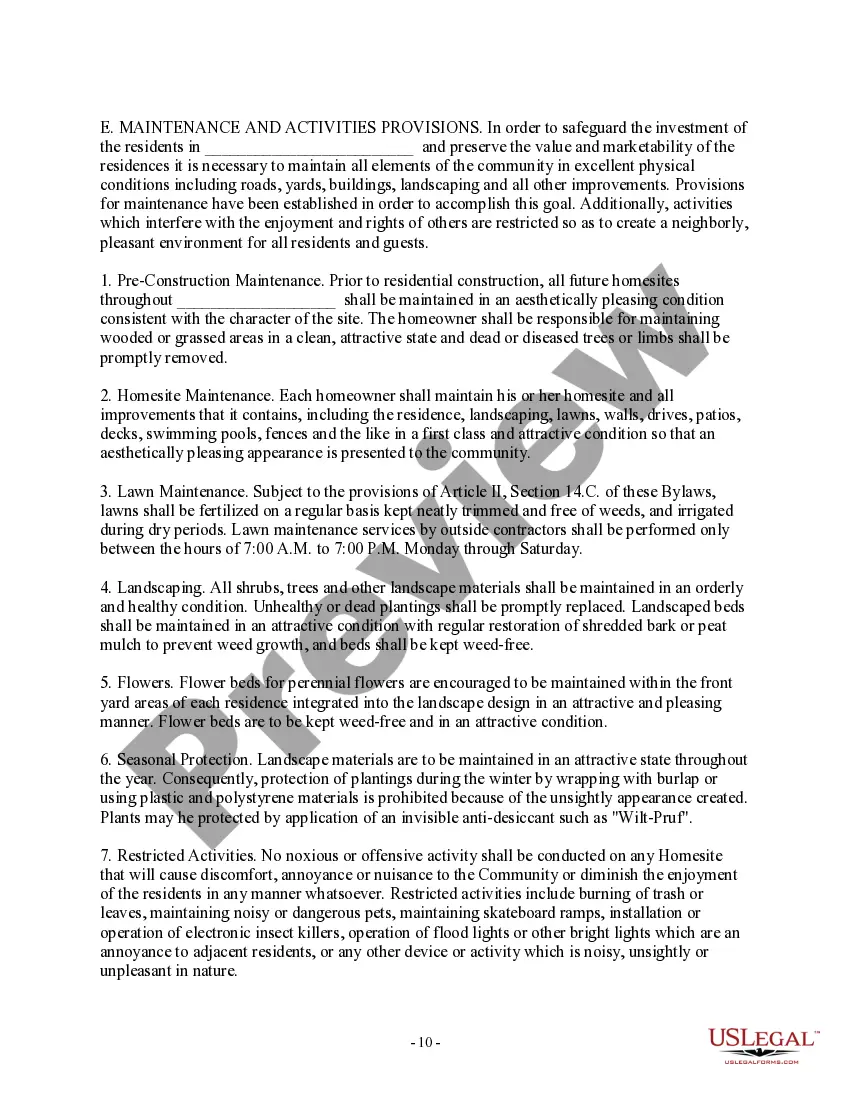
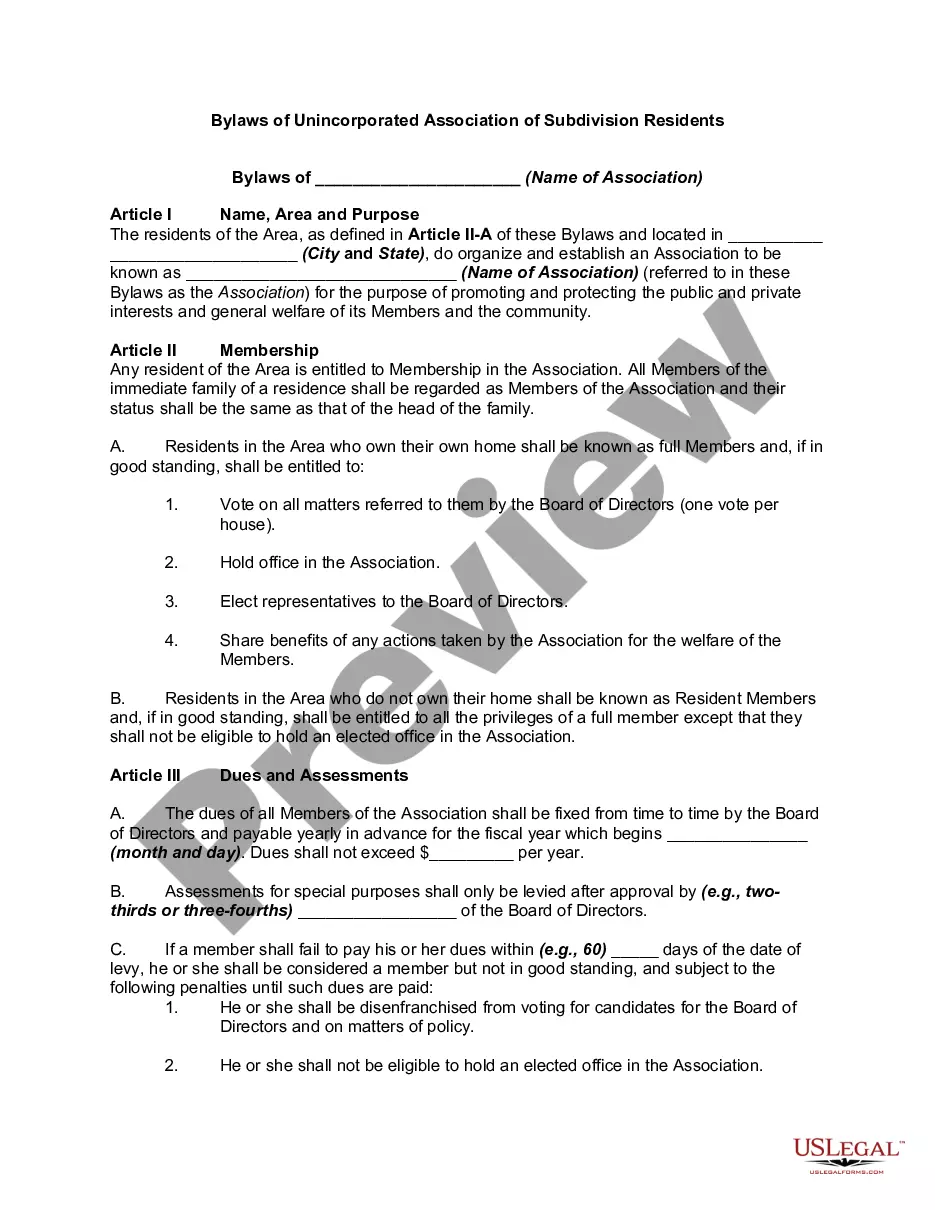
How to Draft Association Bylaws: A 12-Step Guide with Examples Start with the Association's Purpose. Name Your Association. Specify Membership Criteria. Define Membership Classes. Detail the Governance Structure. Highlight the Roles of Committees. Clarify Decision-making Mechanisms:
Associations can be made with a person, place, object, situation, or emotion. Pick whatever works best for the item you are trying to remember. The most important act is to use images rather than words as the associational cues.