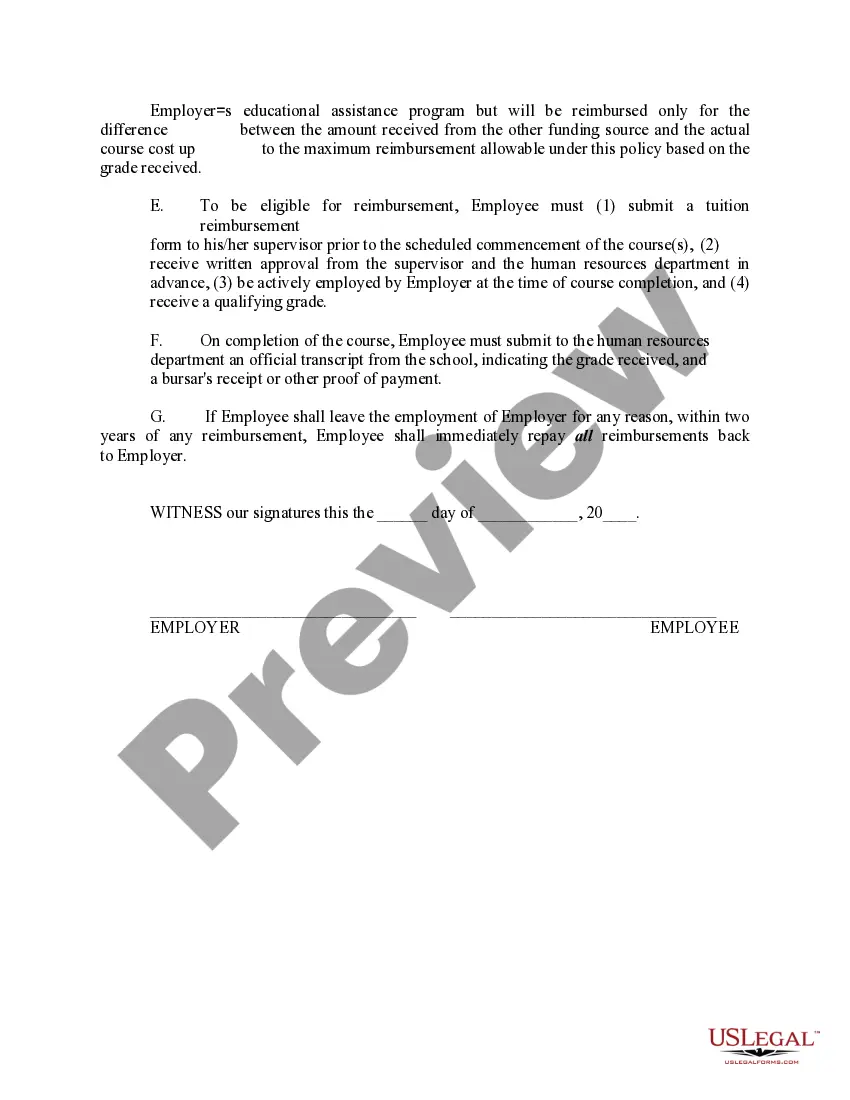
Educational Assistance Programme Employees With Disabilities In North Carolina
Description

Get your form ready online
Our built-in tools help you complete, sign, share, and store your documents in one place.
Make edits, fill in missing information, and update formatting in US Legal Forms—just like you would in MS Word.
Download a copy, print it, send it by email, or mail it via USPS—whatever works best for your next step.
Sign and collect signatures with our SignNow integration. Send to multiple recipients, set reminders, and more. Go Premium to unlock E-Sign.
If this form requires notarization, complete it online through a secure video call—no need to meet a notary in person or wait for an appointment.
We protect your documents and personal data by following strict security and privacy standards.

Make edits, fill in missing information, and update formatting in US Legal Forms—just like you would in MS Word.

Download a copy, print it, send it by email, or mail it via USPS—whatever works best for your next step.

Sign and collect signatures with our SignNow integration. Send to multiple recipients, set reminders, and more. Go Premium to unlock E-Sign.

If this form requires notarization, complete it online through a secure video call—no need to meet a notary in person or wait for an appointment.

We protect your documents and personal data by following strict security and privacy standards.
Looking for another form?






Form popularity
FAQ
Autism Spectrum Disorder. Deaf-blindness. Deafness. Developmental Delay (limited to ages 3-7) Emotional Disability. Hearing Impairment. Intellectual Disability. Multiple Disabilities.
The law requires schools to teach students with disabilities in the school building except in very rare cases. Additionally, schools must use effective instruction that meets the student's individual needs. Schools must teach them even if they have severe disabilities or challenging behaviors.
North Carolina's Personal Education Student Account (ESA) for Children with Disabilities program provides families of students with special needs who meet the federal definition of a “child with disabilities” under the Individuals with Disabilities Education Act (IDEA) an account with a maximum annual allocation of ...
The NC ABLE Program allows eligible individuals the opportunity to save and fund a variety of qualified disability expenses while maintaining Medicaid, SSI1 and other public supports.
NC Persons with Disabilities Protection Act—168A-7 This follows Title II of the ADA and prohibits government entities (including higher ed institutions) from excluding individuals from participating in or denying benefits of services, programs, or activities because of a person's disability.
IDEA is the nation's special education law. It gives rights and protections to kids with disabilities. It covers them from birth through high school graduation or age 21 (whichever comes first). Parents and legal guardians also have rights under the law.
NC Persons with Disabilities Protection Act—168A-7 This follows Title II of the ADA and prohibits government entities (including higher ed institutions) from excluding individuals from participating in or denying benefits of services, programs, or activities because of a person's disability.
Who Is Eligible? If you have a disability and receive SSDI or SSI benefits and you intend to get or keep a job. North Carolina Vocational Rehabilitation Services (VR) assists individuals with disabilities with obtaining, retaining or maintaining employment.
Disability Rights North Carolina (DRNC) is NC's federally-mandated statewide protection and advocacy agency.
