Educational Assistance Programme Employees With Disabilities In Minnesota
Description

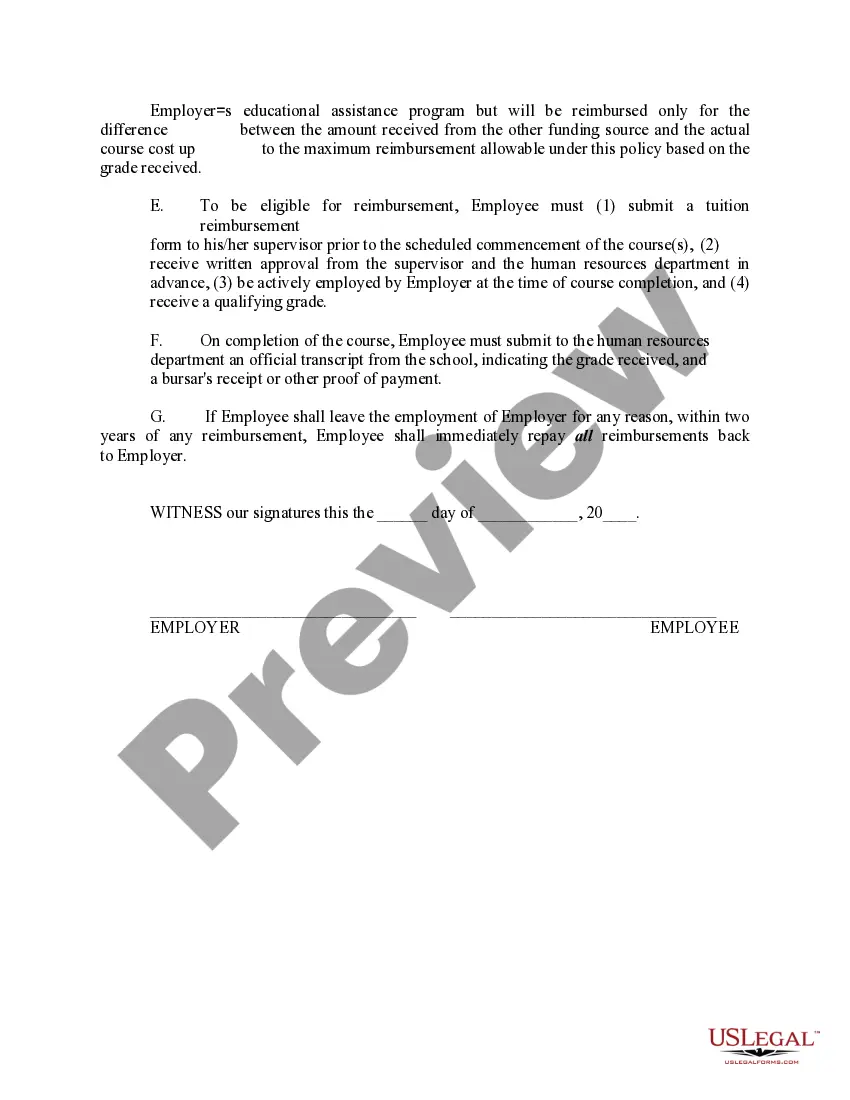
Get your form ready online
Our built-in tools help you complete, sign, share, and store your documents in one place.
Make edits, fill in missing information, and update formatting in US Legal Forms—just like you would in MS Word.
Download a copy, print it, send it by email, or mail it via USPS—whatever works best for your next step.
Sign and collect signatures with our SignNow integration. Send to multiple recipients, set reminders, and more. Go Premium to unlock E-Sign.
If this form requires notarization, complete it online through a secure video call—no need to meet a notary in person or wait for an appointment.
We protect your documents and personal data by following strict security and privacy standards.

Make edits, fill in missing information, and update formatting in US Legal Forms—just like you would in MS Word.

Download a copy, print it, send it by email, or mail it via USPS—whatever works best for your next step.

Sign and collect signatures with our SignNow integration. Send to multiple recipients, set reminders, and more. Go Premium to unlock E-Sign.

If this form requires notarization, complete it online through a secure video call—no need to meet a notary in person or wait for an appointment.

We protect your documents and personal data by following strict security and privacy standards.
Looking for another form?





Form popularity
FAQ
In order for a child to qualify for an IEP, there must be a negative educational impact on the child's performance in school. The deficits result in the need for specialized instruction/specially designed instruction.
To be eligible for an IEP, a child must have one or more of the 13 disabilities listed in IDEA that adversely affects education performance, such as hearing, vision or physical impairments; mental challenges (such as anxiety and depression); learning disabilities such as dyslexia or ADHD; or others.
What qualifies you for disability in Minnesota? To qualify for disability you need to have a condition that prevents you from working for at least a year. You'll also need to meet certain work history requirements (for SSDI) or be within certain income limits (for SSI).
The school must make sure that this first IEP meeting is held within 30 calendar days after a child has been found eligible for special education and related services. Annual IEP: An IEP is written every year for a child receiving special education.
To qualify for an IEP, students must have met one or more of the 13 disabilities listed in the IDEA, including ADHD and LD. As a result of their disability, the student needs special education services to progress in school. An IEP is a service-based learning intervention.
The Environmental Quality Board (EQB) oversees environmental review in Minnesota. Environmental review is NOT an approval process; it's an information-gathering process intended to: help public agencies make informed permitting and approval decisions. give the public access to decision makers.
Definition. Medical Assistance for Employed Persons with Disabilities (MA-EPD): Minnesota Health Care Program (MHCP) that allows people with disabilities to qualify for or keep their Medical Assistance (MA) while working.
The Elderly Waiver (EW) program is a federal Medicaid waiver program that funds home and community-based services for people 65 years old and older who are eligible for Medical Assistance (MA), require the level of care provided in a nursing home, and choose to live in the community.
The Arc Minnesota is a private, nonprofit, statewide voluntary organization dedicated to ensuring people with developmental disabilities participate fully in their communities.
