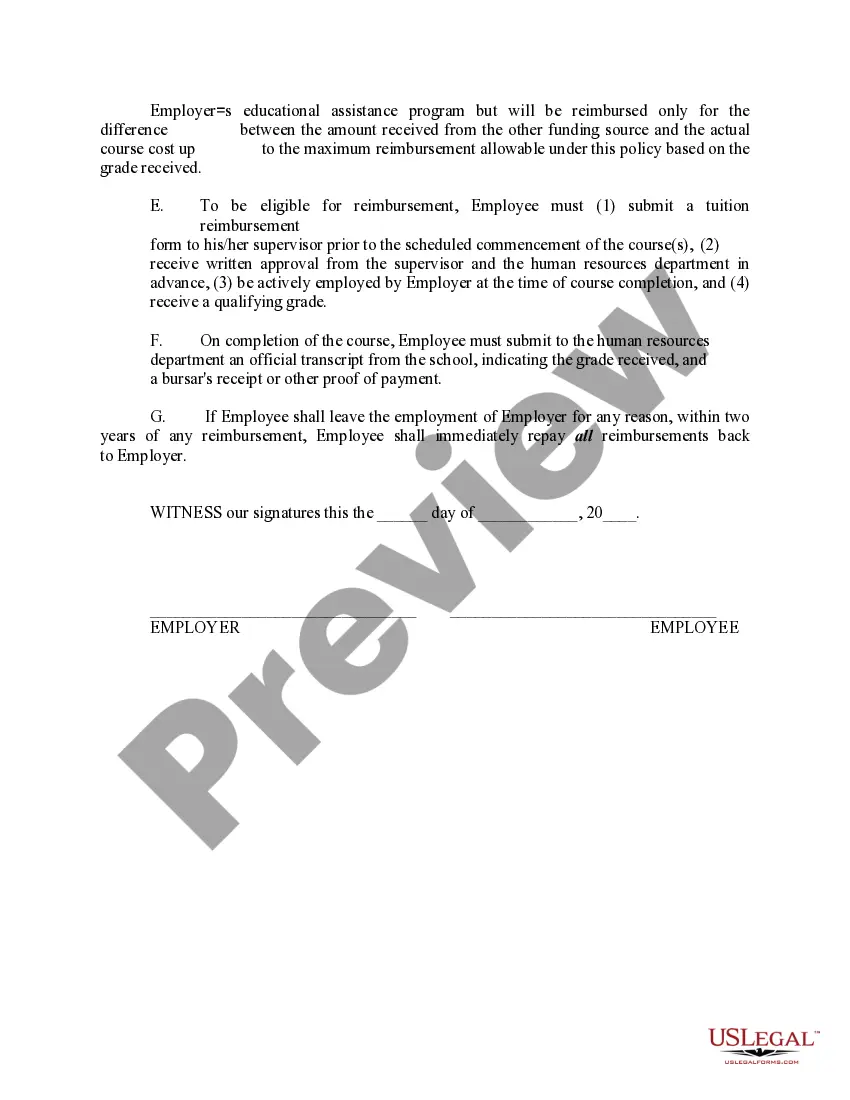
Educational Assistance Employee With Quizlet In Mecklenburg
Description

Get your form ready online
Our built-in tools help you complete, sign, share, and store your documents in one place.
Make edits, fill in missing information, and update formatting in US Legal Forms—just like you would in MS Word.
Download a copy, print it, send it by email, or mail it via USPS—whatever works best for your next step.
Sign and collect signatures with our SignNow integration. Send to multiple recipients, set reminders, and more. Go Premium to unlock E-Sign.
If this form requires notarization, complete it online through a secure video call—no need to meet a notary in person or wait for an appointment.
We protect your documents and personal data by following strict security and privacy standards.

Make edits, fill in missing information, and update formatting in US Legal Forms—just like you would in MS Word.

Download a copy, print it, send it by email, or mail it via USPS—whatever works best for your next step.

Sign and collect signatures with our SignNow integration. Send to multiple recipients, set reminders, and more. Go Premium to unlock E-Sign.

If this form requires notarization, complete it online through a secure video call—no need to meet a notary in person or wait for an appointment.

We protect your documents and personal data by following strict security and privacy standards.
Looking for another form?






Form popularity
FAQ
At-will employment means an employer can fire an employee at any time for almost any reason without incurring legal liability. Likewise, an employee has the freedom to quit at any time.
In United States labor law, at-will employment is an employer's ability to dismiss an employee for any reason (that is, without having to establish "just cause" for termination), and without warning, as long as the reason is not illegal (e.g. firing because of the employee's gender, sexual orientation, race, religion, ...
In California, the relationship of employer and employee is generally “at will.” This means that, without an employment contract, the employer or the employee can terminate the employment relationship at any time, with or without cause.
Employment-at-will means an employer or employee can end an employment relationship at any time for any reason.
Yes, in most US states, an employer can terminate an employee without notice, as long as the reason is not illegal, such as discrimination or retaliation. However, some contracts, union agreements, and state-specific laws require just cause or notice for termination.
The purpose of the EAP is to provide, confidential, professional assistance to any employee with behavioral or personal problems which may impair his or her job performance, attendance and conduct.
