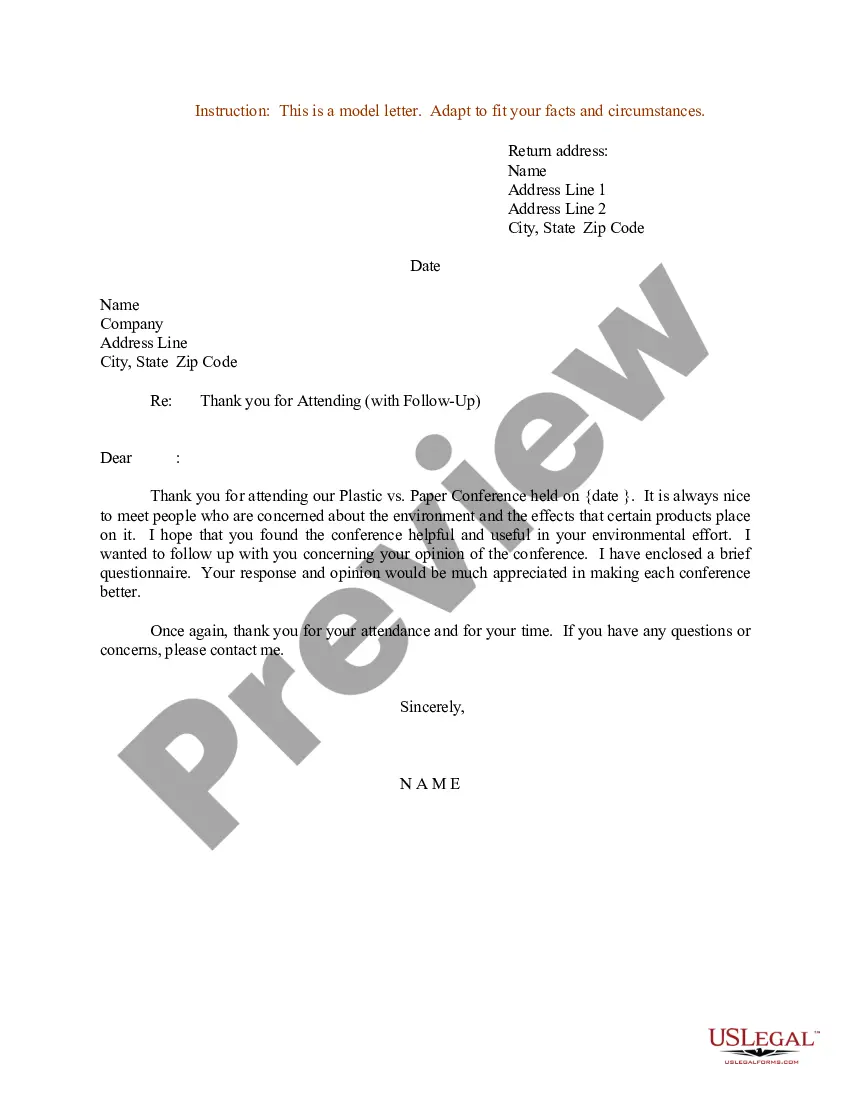
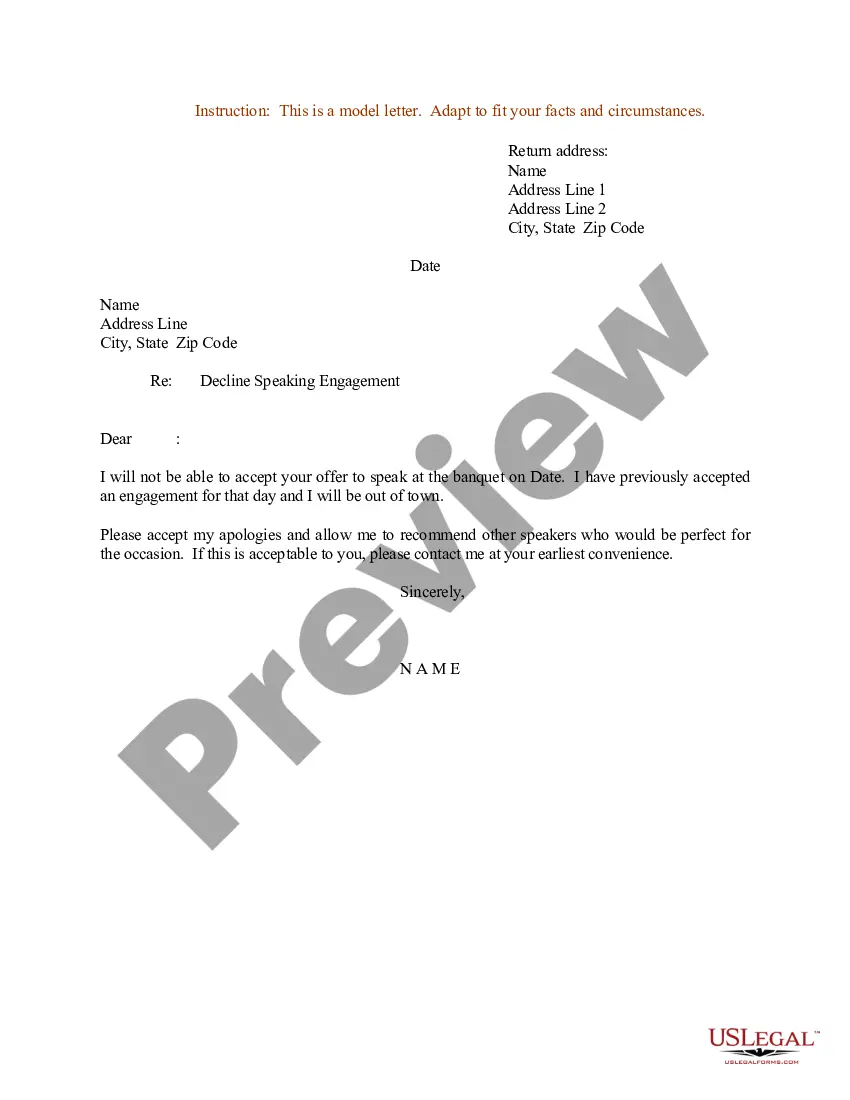
Letter Speaking Engagement Withdrawal In Dallas
Description
Get your form ready online
Our built-in tools help you complete, sign, share, and store your documents in one place.
Make edits, fill in missing information, and update formatting in US Legal Forms—just like you would in MS Word.
Download a copy, print it, send it by email, or mail it via USPS—whatever works best for your next step.
Sign and collect signatures with our SignNow integration. Send to multiple recipients, set reminders, and more. Go Premium to unlock E-Sign.
If this form requires notarization, complete it online through a secure video call—no need to meet a notary in person or wait for an appointment.
We protect your documents and personal data by following strict security and privacy standards.

Make edits, fill in missing information, and update formatting in US Legal Forms—just like you would in MS Word.

Download a copy, print it, send it by email, or mail it via USPS—whatever works best for your next step.

Sign and collect signatures with our SignNow integration. Send to multiple recipients, set reminders, and more. Go Premium to unlock E-Sign.

If this form requires notarization, complete it online through a secure video call—no need to meet a notary in person or wait for an appointment.

We protect your documents and personal data by following strict security and privacy standards.
Looking for another form?










Form popularity
FAQ
A deed is an official written document declaring a person's legal ownership of a property, while a title is a legal concept that refers to ownership rights. Here's a way to remember the difference: You can own a physical copy of a book, but you can't hold the book's title in your hand.
Requirements for the Affidavit of Heirship Witnesses: The affidavit must be signed and sworn to before two credible witnesses who are not beneficiaries or heirs. Notarization: The affidavit must be notarized by a licensed notary public to ensure its authenticity and legal validity.
In Texas, you record your deed with the County Clerk in the county where the property exists. If the property is in more than one county, record it in each. It is important to record your deed. In Texas, the property is legally transferred when the grantee accepts the signed deed.
It should take between 14 and 90 days for you to receive a deed recorded properly. That might seem a long time to wait, especially if you're doing it for the first time.
60-day waiting period: The Texas Family Code re- quires that your petition be on file 60 days before your divorce can be finalized. Dismissal for Want of Prosecution (DWOP): The court has the power to rid its docket of cases that are not being pursued.
Your mortgage company should send you a release of lien, and it must be filed with the County Clerk 214-653-7275.
Where To File For Divorce In Dallas County? Address: George L. Allen, Sr. Courts Building, 600 Commerce Street, Dallas, TX 75202. Phone: (214) 653-7301. Website: Dallas County District Clerk.
Obtaining Copies of Civil Case Records The District Clerk makes her civil case records freely available to the public online for most cases filed after 2008.
To initiate a divorce in Dallas County, you need to file a petition in person with the District Clerk's office that handles divorce cases. It is also possible to file for divorce online in an uncontested divorce without children.
Rule 3.02 - ANNOUNCEMENTS FOR TRIAL a. In all cases set for trial in a particular week, counsel are required to make announcements to the Court Administrator on the preceding Thursday and in any event, no later than A.M. on the preceding Friday concerning their readiness for trial.

