Consultant Work Contract For Accounting In Wayne
Description


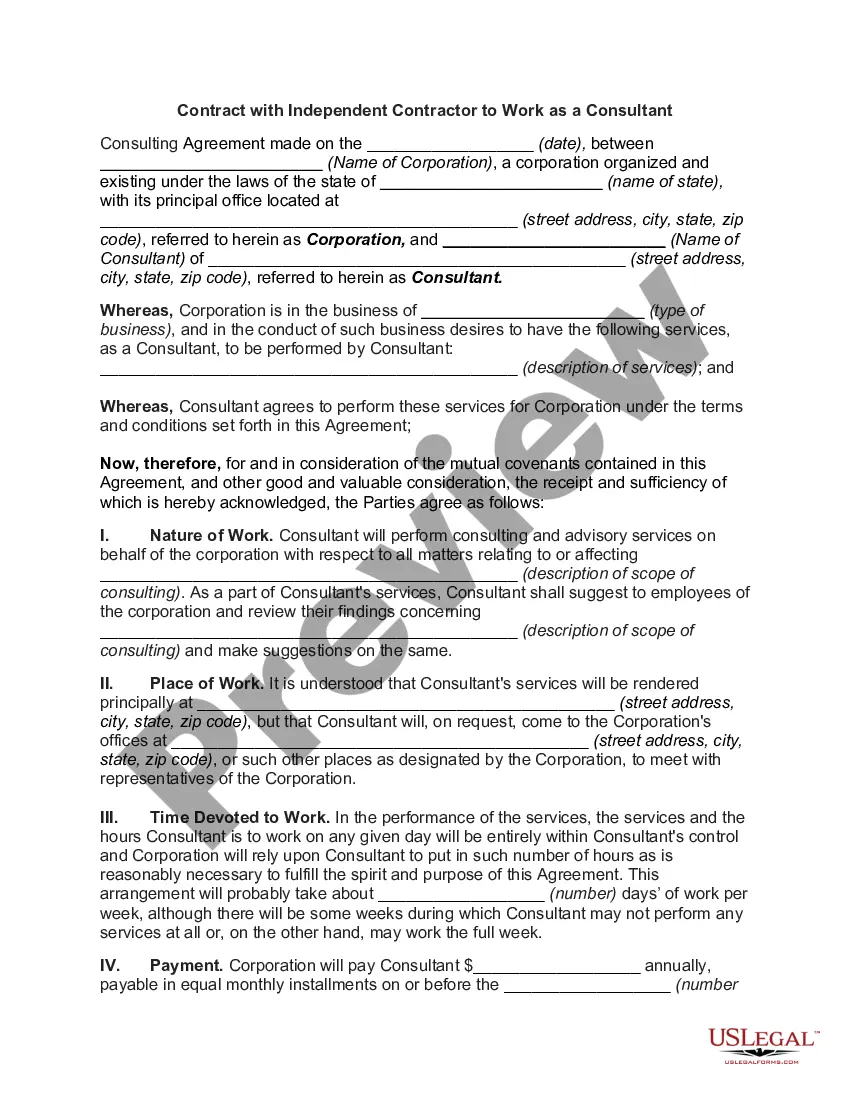
Get your form ready online
Our built-in tools help you complete, sign, share, and store your documents in one place.
Make edits, fill in missing information, and update formatting in US Legal Forms—just like you would in MS Word.
Download a copy, print it, send it by email, or mail it via USPS—whatever works best for your next step.
Sign and collect signatures with our SignNow integration. Send to multiple recipients, set reminders, and more. Go Premium to unlock E-Sign.
If this form requires notarization, complete it online through a secure video call—no need to meet a notary in person or wait for an appointment.
We protect your documents and personal data by following strict security and privacy standards.

Make edits, fill in missing information, and update formatting in US Legal Forms—just like you would in MS Word.

Download a copy, print it, send it by email, or mail it via USPS—whatever works best for your next step.

Sign and collect signatures with our SignNow integration. Send to multiple recipients, set reminders, and more. Go Premium to unlock E-Sign.

If this form requires notarization, complete it online through a secure video call—no need to meet a notary in person or wait for an appointment.

We protect your documents and personal data by following strict security and privacy standards.
Looking for another form?










Form popularity
FAQ
Consultants typically set their business consultant fees one of three ways: Hourly rates. Project-based fees. Monthly retainers. Your knowledge and experience. Industry standards. The estimated time you'll spend on the project. Your overhead costs. Project size and complexity.
It's fairly common for CPAs to become part-time or full-time consultants just prior to retirement, while others enjoy the benefits of greater flexibility and control over their schedules earlier in their careers. Another option is to consult on the side, or in between permanent jobs.
Consulting fees can have a significant impact on the profitability of a business. They are typically considered to be non-operating expenses, meaning that they do not directly contribute to revenue. As such, they are reported as an expense on the income statement, and their presence can affect the bottom line.
By leveraging your accounting background, gaining relevant experience, and developing your network, you can successfully transition into a consulting role. Focus on building both your technical and soft skills to stand out in the competitive consulting landscape.
Use these steps to help you get your first consulting contract: Consider your areas of expertise. In order to book a contract, you need to know what areas you can train in. Target companies in your area. Meet with the owner. Prove your knowledge. Get the contract. Ask for a referral and testimonial.
Accounting can involve more than just filing tax returns, generating financial statements or offering back-office accounting solutions. Many certified public accountants (CPAs) are increasingly offering their services as accounting consultants, a profile that acts as a trusted adviser to clients regarding the economy.
Accounting consulting jobs may involve: Helping your business clients maintain efficient and accurate accounting practices. Providing your expertise to help clients understand the meaning behind their financial data and how those numbers affect their business.
Senior Accountant duties and responsibilities Recommend ways to reduce costs and enhance revenue. Prepare documentation for External Auditors. Analyze financial statements for discrepancies and alert the CFO if necessary. Coordinate semi-annual audits and assist the CFO in running audits.
A Senior Consultant will perform as an individual contributor on client engagement teams, working under the supervision of an Engagement Director and/or Partner, to develop work product, lead specific project initiatives, and act as a subject matter expert on consulting projects.
Key Responsibilities:Lead and oversee accounting functions, including financial reporting, budgeting, and forecasting. Conduct thorough financial analysis and provide strategic recommendations to clients. Review and analyze complex financial data to identify trends, variances, and areas for improvement.
