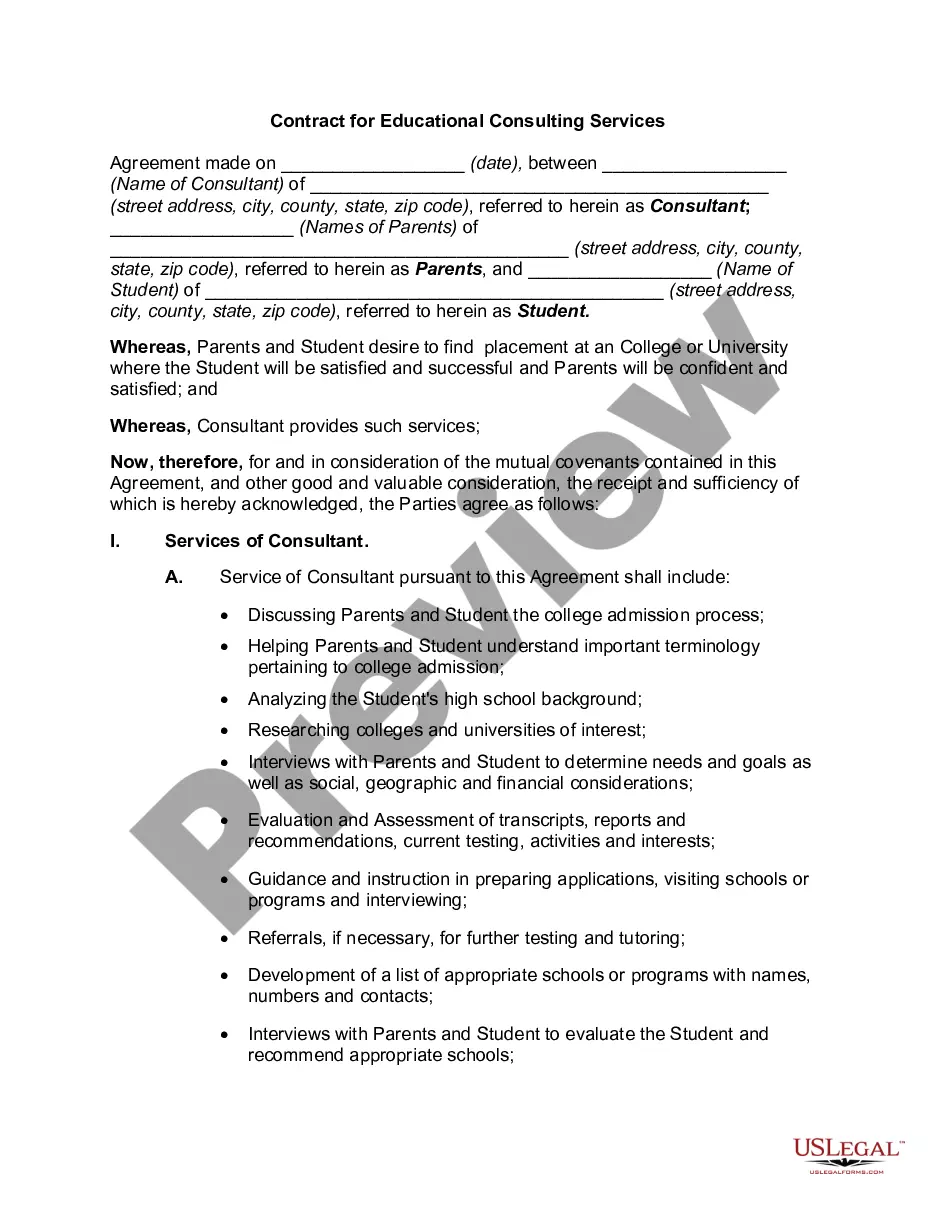
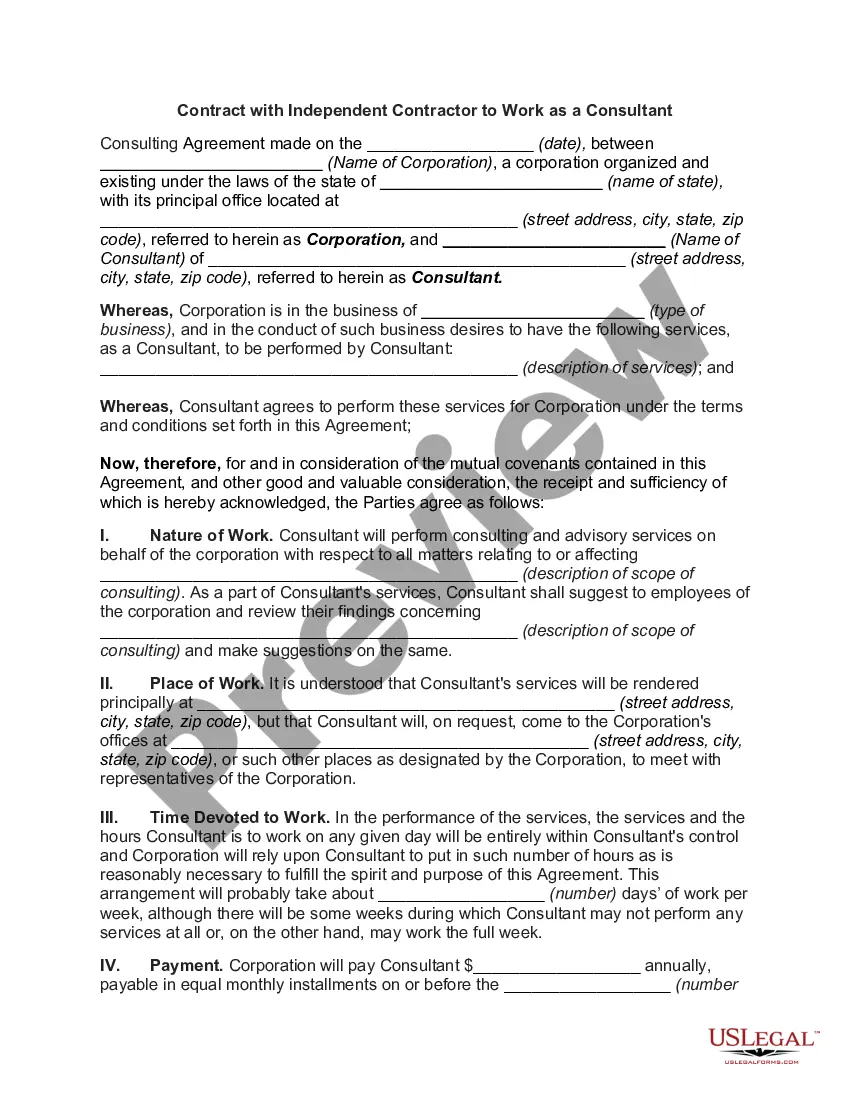
Consultant Work Contract For Taxes In Minnesota
Description

Get your form ready online
Our built-in tools help you complete, sign, share, and store your documents in one place.
Make edits, fill in missing information, and update formatting in US Legal Forms—just like you would in MS Word.
Download a copy, print it, send it by email, or mail it via USPS—whatever works best for your next step.
Sign and collect signatures with our SignNow integration. Send to multiple recipients, set reminders, and more. Go Premium to unlock E-Sign.
If this form requires notarization, complete it online through a secure video call—no need to meet a notary in person or wait for an appointment.
We protect your documents and personal data by following strict security and privacy standards.

Make edits, fill in missing information, and update formatting in US Legal Forms—just like you would in MS Word.

Download a copy, print it, send it by email, or mail it via USPS—whatever works best for your next step.

Sign and collect signatures with our SignNow integration. Send to multiple recipients, set reminders, and more. Go Premium to unlock E-Sign.

If this form requires notarization, complete it online through a secure video call—no need to meet a notary in person or wait for an appointment.

We protect your documents and personal data by following strict security and privacy standards.
Looking for another form?








Form popularity
FAQ
You must file Form 1040 or Form 1040-SR as a self-employed consultant. You must attach Schedule C on which you've figured out your net profit or loss after accounting for deductible business expenses. Be sure to consult a tax attorney about any additional forms that may apply to you.
Most consultants receive 1099 forms because they work for multiple companies, while an in-house consultant would receive a W-2.
Independent contractors generally report their income on Schedule C (Form 1040), Profit or Loss from Business (Sole Proprietorship). Also file Schedule SE (Form 1040), Self-Employment Tax if your net earnings from self-employment are $400 or more.
Individuals and businesses receive 1099s. Common income types reported on a 1099 include: Non-employee compensation. Retirement income/pension.
Most professional services are not taxable.
If your W-2s have no Minnesota withholding, but you are actively registered for withholding tax, we expect you to send them to us. You must submit 1099s that have Minnesota withholding to us even if you participate in the Combined Federal/State program.
It is illegal for an employer to classify a worker as an independent contractor if the worker qualifies as an employee. An employer also cannot make a worker an independent contractor by having workers to sign a contract saying that they are independent contractors, when in reality they are employees.
Some common examples when you might receive a 1099 include: You should receive a Form 1099-NEC if you earned $600 or more in nonemployee compensation from a person or business who isn't typically your employer. You should receive Form 1099-MISC if you earned $600 or more in rent or royalty payments.
Individuals who perform regular work for a company in the course of that company's business are employees. An independent contractor, on the other hand, is a worker who is not an employee and independently contracts with an individual or business to provide a good or perform a service.
Independent contractors receive a Form 1099 for taxes while employees receive a Form W-2.
