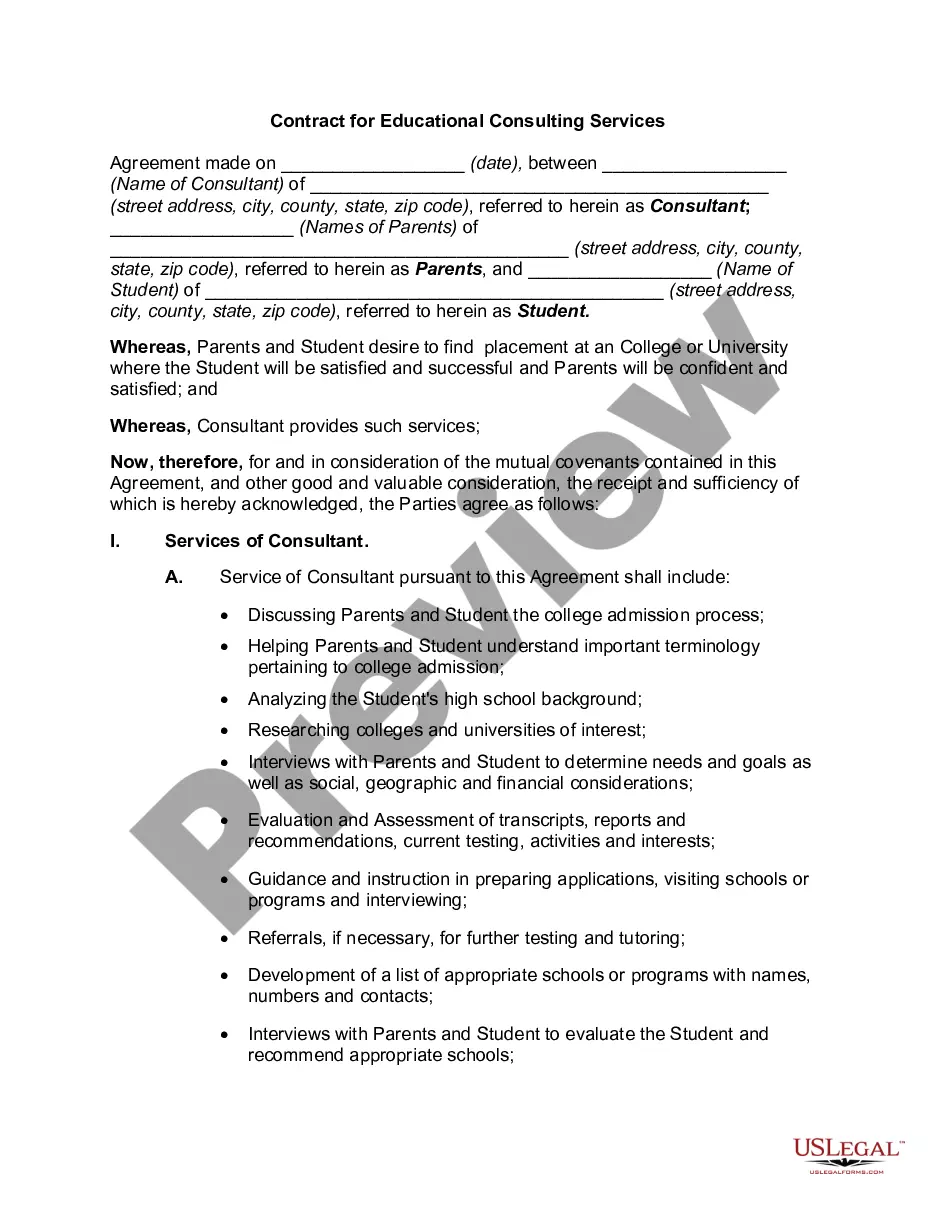
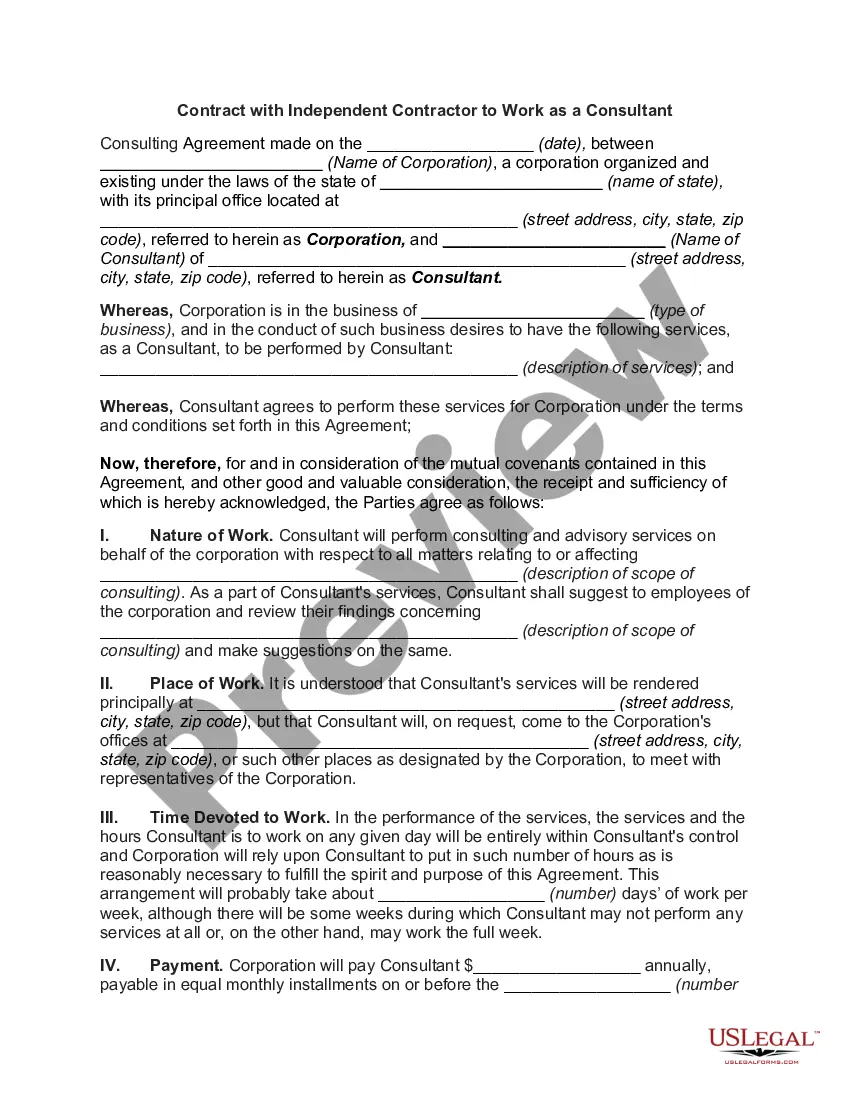
Consultant Contract Under Foreign Trade In Illinois
Description

Get your form ready online
Our built-in tools help you complete, sign, share, and store your documents in one place.
Make edits, fill in missing information, and update formatting in US Legal Forms—just like you would in MS Word.
Download a copy, print it, send it by email, or mail it via USPS—whatever works best for your next step.
Sign and collect signatures with our SignNow integration. Send to multiple recipients, set reminders, and more. Go Premium to unlock E-Sign.
If this form requires notarization, complete it online through a secure video call—no need to meet a notary in person or wait for an appointment.
We protect your documents and personal data by following strict security and privacy standards.

Make edits, fill in missing information, and update formatting in US Legal Forms—just like you would in MS Word.

Download a copy, print it, send it by email, or mail it via USPS—whatever works best for your next step.

Sign and collect signatures with our SignNow integration. Send to multiple recipients, set reminders, and more. Go Premium to unlock E-Sign.

If this form requires notarization, complete it online through a secure video call—no need to meet a notary in person or wait for an appointment.

We protect your documents and personal data by following strict security and privacy standards.
Looking for another form?







Form popularity
FAQ
In international trade, creating contracts that are clear, secure, and legally binding is key to safeguarding the interests of the involved parties (exporter-seller and importer-buyers). Essentially, this agreement sets out the rights and obligations of the parties and the remedies for breach.
International trade contracts are considered informal contracts because they do not require any form of documentation to be completed. “Informal” even goes so far as to mean that these contracts do not have to be in writing, but instead they can be orally binding agreements.
The activity of trading goods and services with other countries: He said putting up barriers to foreign trade and guarding jobs might work in the short run but not indefinitely.
International contracts are legally binding agreements between parties who are based in separate countries. As with any contract, it will require the parties to do or refrain from doing particular actions.
A contract entered into directly between the employer and a trade contractor for an element of the works.
Top exports overall by category in 2021 included Chemicals ($14.2 billion), Machinery ($11.2 billion), Computer and Electronic Products ($7.2 billion), and Transportation Equipment ($6.3 billion).
A Foreign Trade Consultant is responsible for advising companies on international trade regulations, market entry strategies, and foreign market opportunities.
A valid contract is built on these cornerstones: Offer, Acceptance, Consideration, and Intention to Create Legal Relations. Here's a quick look: Offer: A clear proposal to make a deal. Acceptance: A definite agreement to the terms of the offer.
Here are six best practices to write a consulting contract that defines your project scope and protects both you and your business. Define Duties, Deliverables, and Roles. Prepare for Potential Risk. Specify Project Milestones and Engagement Time. Identify Expenses and Outline Payment Terms. Specify Product Ownership.
This is Part 1 of a beginning lesson on Contracts for the legal studies, business law, prelaw or paralegal student. It discusses the first 2 Cs of any Contract: Consent and Capacity. This lesson should be done with Part 2, which discusses the other C's: Consideration and Complies with the Law and/or Public Policy.
