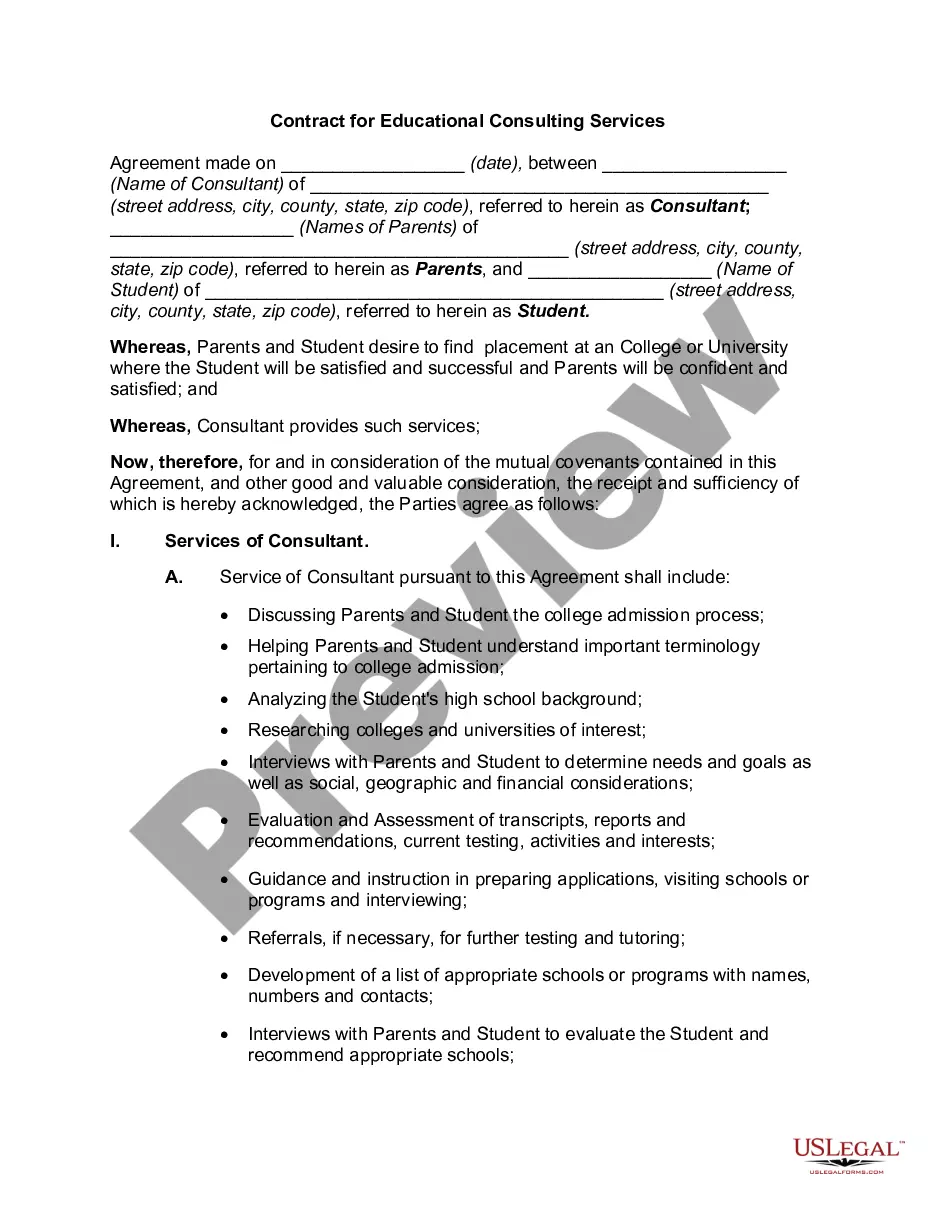
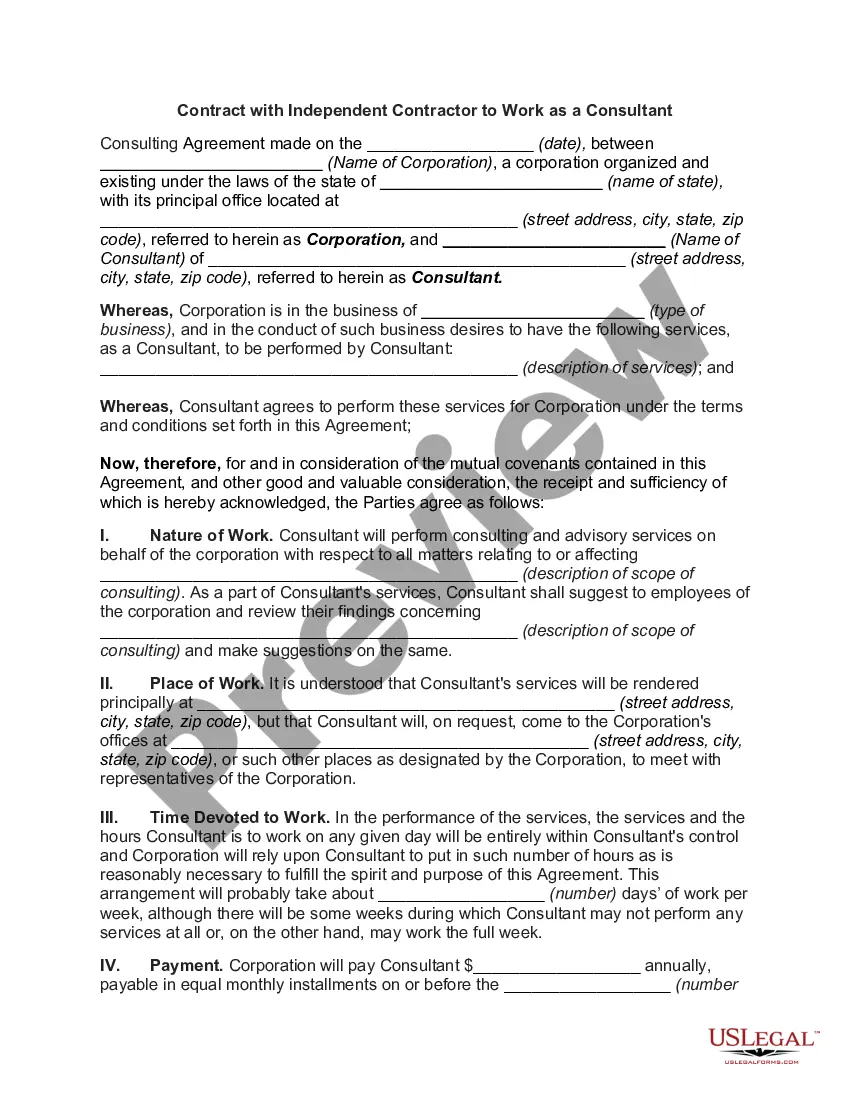
Consultant Contract Under Withholding In Houston
Description

Get your form ready online
Our built-in tools help you complete, sign, share, and store your documents in one place.
Make edits, fill in missing information, and update formatting in US Legal Forms—just like you would in MS Word.
Download a copy, print it, send it by email, or mail it via USPS—whatever works best for your next step.
Sign and collect signatures with our SignNow integration. Send to multiple recipients, set reminders, and more. Go Premium to unlock E-Sign.
If this form requires notarization, complete it online through a secure video call—no need to meet a notary in person or wait for an appointment.
We protect your documents and personal data by following strict security and privacy standards.

Make edits, fill in missing information, and update formatting in US Legal Forms—just like you would in MS Word.

Download a copy, print it, send it by email, or mail it via USPS—whatever works best for your next step.

Sign and collect signatures with our SignNow integration. Send to multiple recipients, set reminders, and more. Go Premium to unlock E-Sign.

If this form requires notarization, complete it online through a secure video call—no need to meet a notary in person or wait for an appointment.

We protect your documents and personal data by following strict security and privacy standards.
Looking for another form?








Form popularity
FAQ
The self-employment tax rate is currently 15.3%, which includes 12.4% for Social Security and 2.9% for Medicare. This rate applies to your net earnings, which is your total income minus any business expenses. It's important to accurately calculate your net earnings to ensure you're paying the correct amount of tax.
Services such as shoe shining or repair, appliance repair, furniture refurbishing or upholstering, jewelry repair or cleaning and dog grooming are taxable. See Rule 3.292, Repair, Remodeling, Maintenance, and Restoration of Tangible Personal Property.
Repair, Restore, or Remodel Services: These are taxable services in Texas under Rule 3.357(b)(2) and contractors must obtain a sales tax permit to collect owed tax from customers and remit it to the state.
How to become a contractor in Texas Register a state business entity. Choose a contractor license type. Meet the basic requirements for your license. Obtain a Texas contractor license bond or insurance. Apply for your license.
Follow these five steps to take to do to set yourself up for future contract opportunities. Consider Your Options and Plan Ahead. While it's natural to worry, it's better to plan out your options. Keep Potential Clients Informed. Use Your Network. Build Your Own Opportunities. Always Be Proactive.
The IRS requires a flat 30% withholding on ALL types of payments to foreign national individuals UNLESS: The individual has a U.S. tax identification number (SSN or ITIN) and qualifies for a tax reduction under the tax treaty between the U.S. and their country of tax residency.
Right to manage your own business. You run your own business as an independent contractor. As a self employed person, you provide your own benefits. Your client has no responsibility for benefits, health insurance, or other things that employees have. Also, you enforce the rights of your business.
Workers who use their own materials and tools, control meaningful aspects of the working relationship, complete tasks relatively quickly, are highly skilled, and control how they perform their job can usually be classified as independent contractors.
Texas will enforce a non-compete agreement if it meets certain criteria: It must be included with another agreement (such as an employment offer), and be in exchange for “consideration” (i.e. something in return, such as specialized training or confidential information).
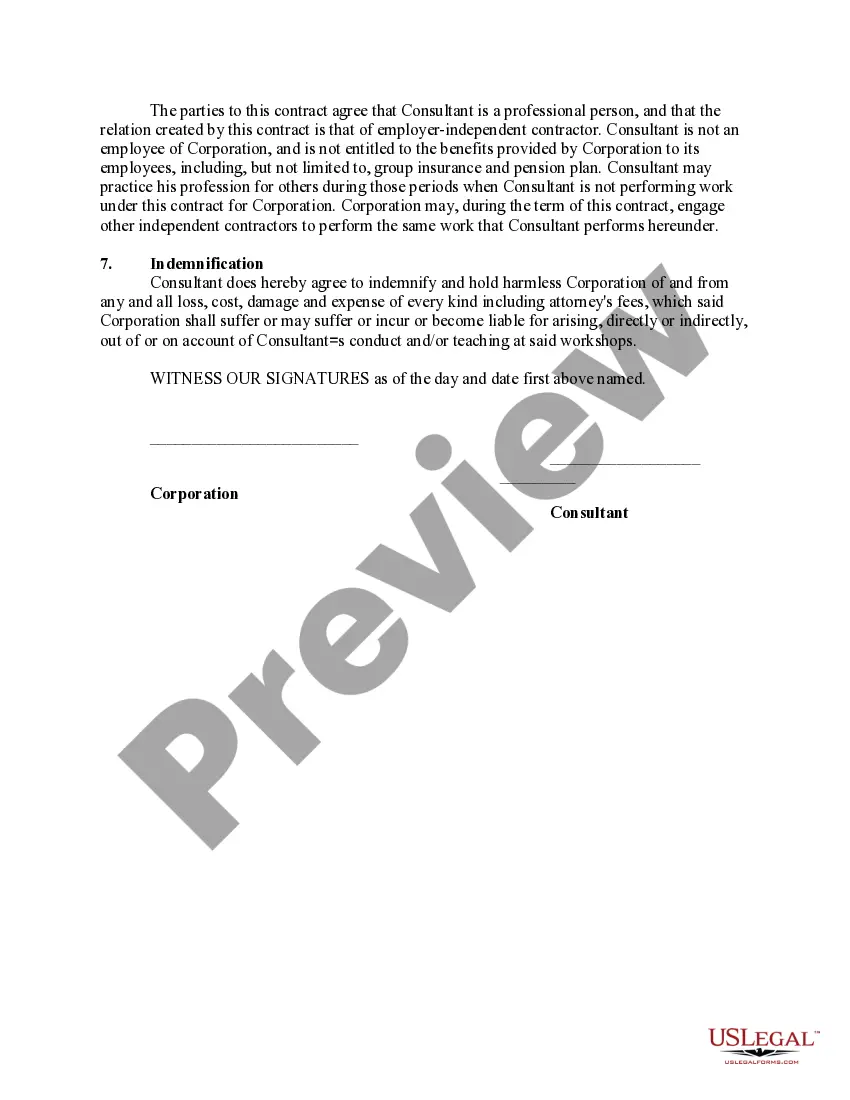
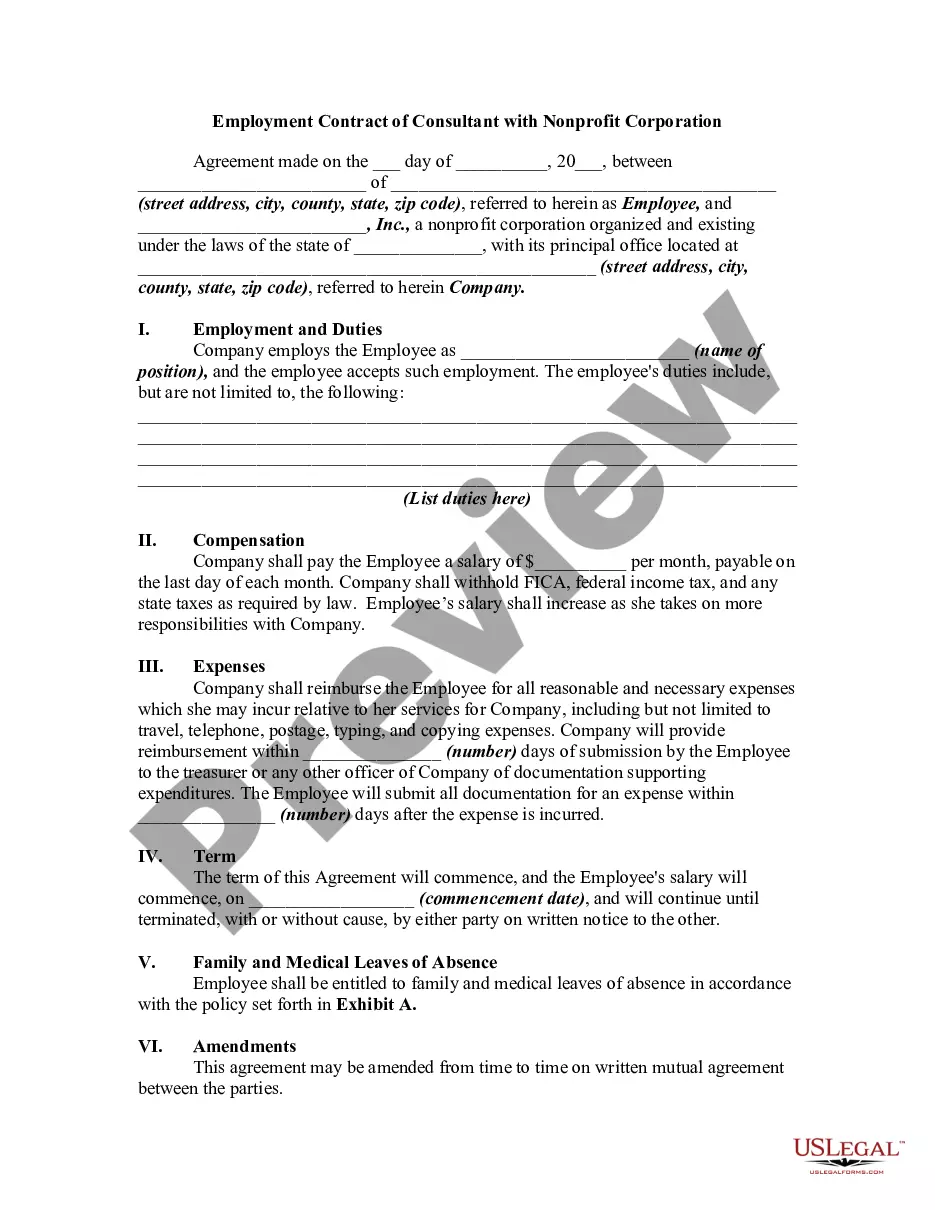
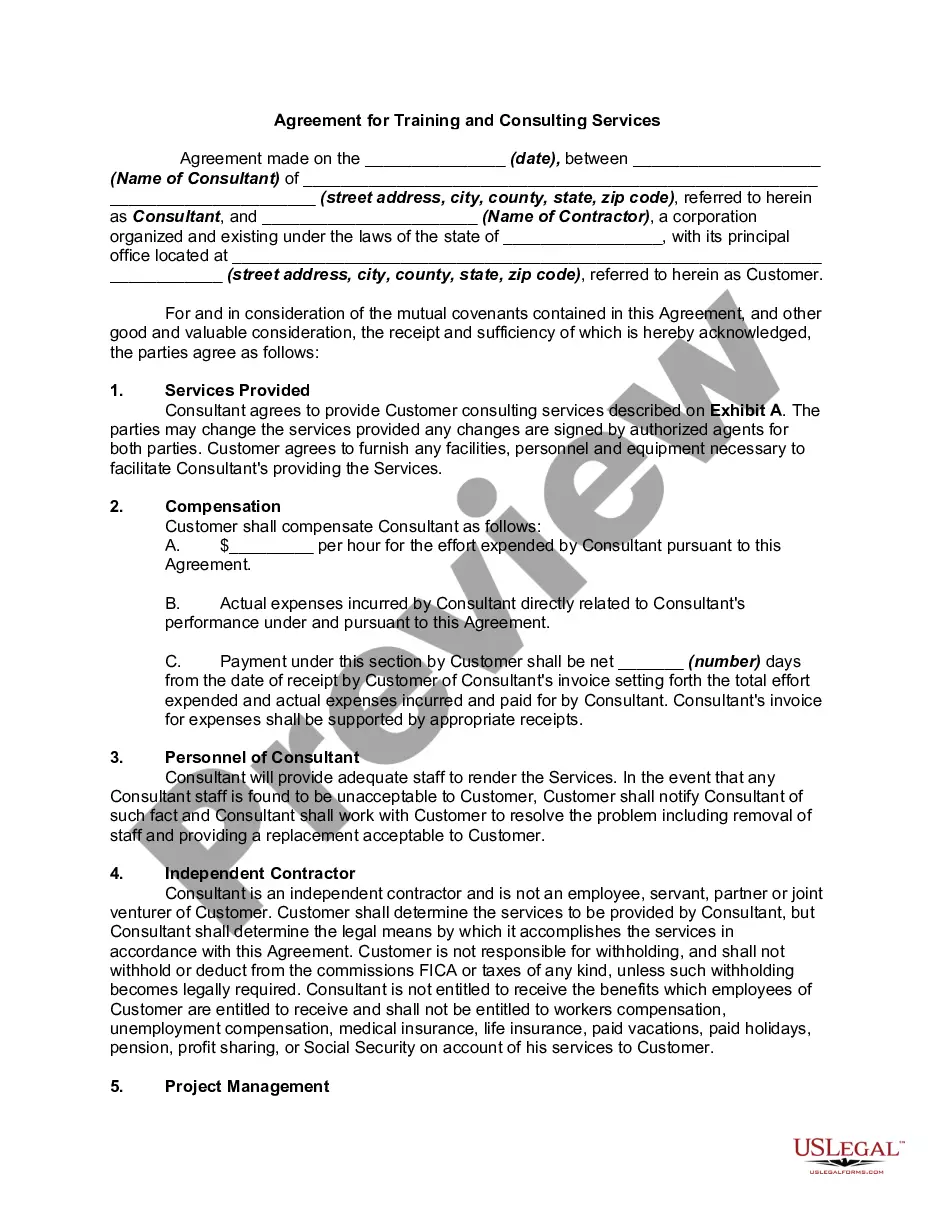
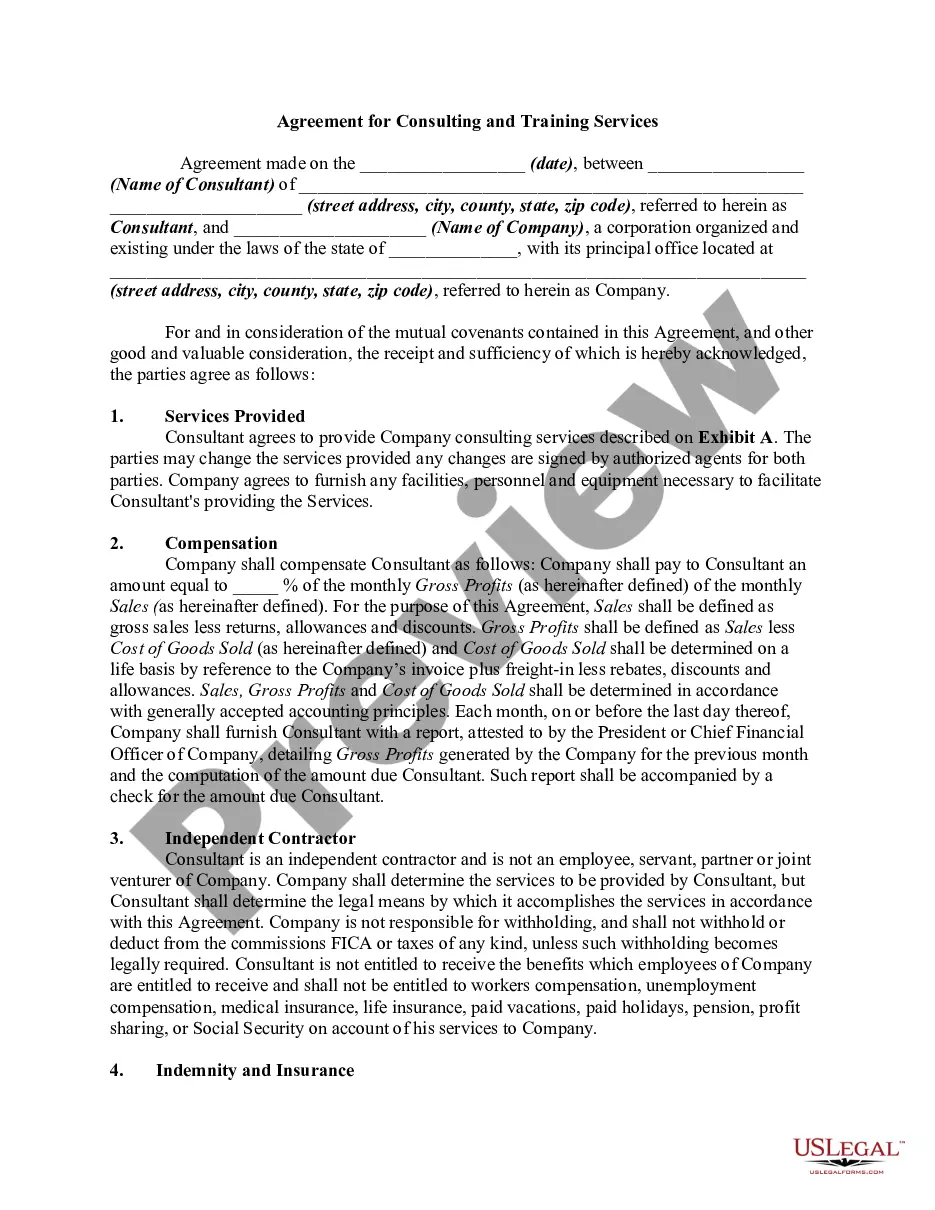
A consulting contract should offer a detailed description of the duties you will perform and the deliverables you promise the client. The agreement may also explain how much work you will perform at the client's office and how often you will work remotely.
