Commercial Lease Agreement With Option To Purchase In Orange
Description
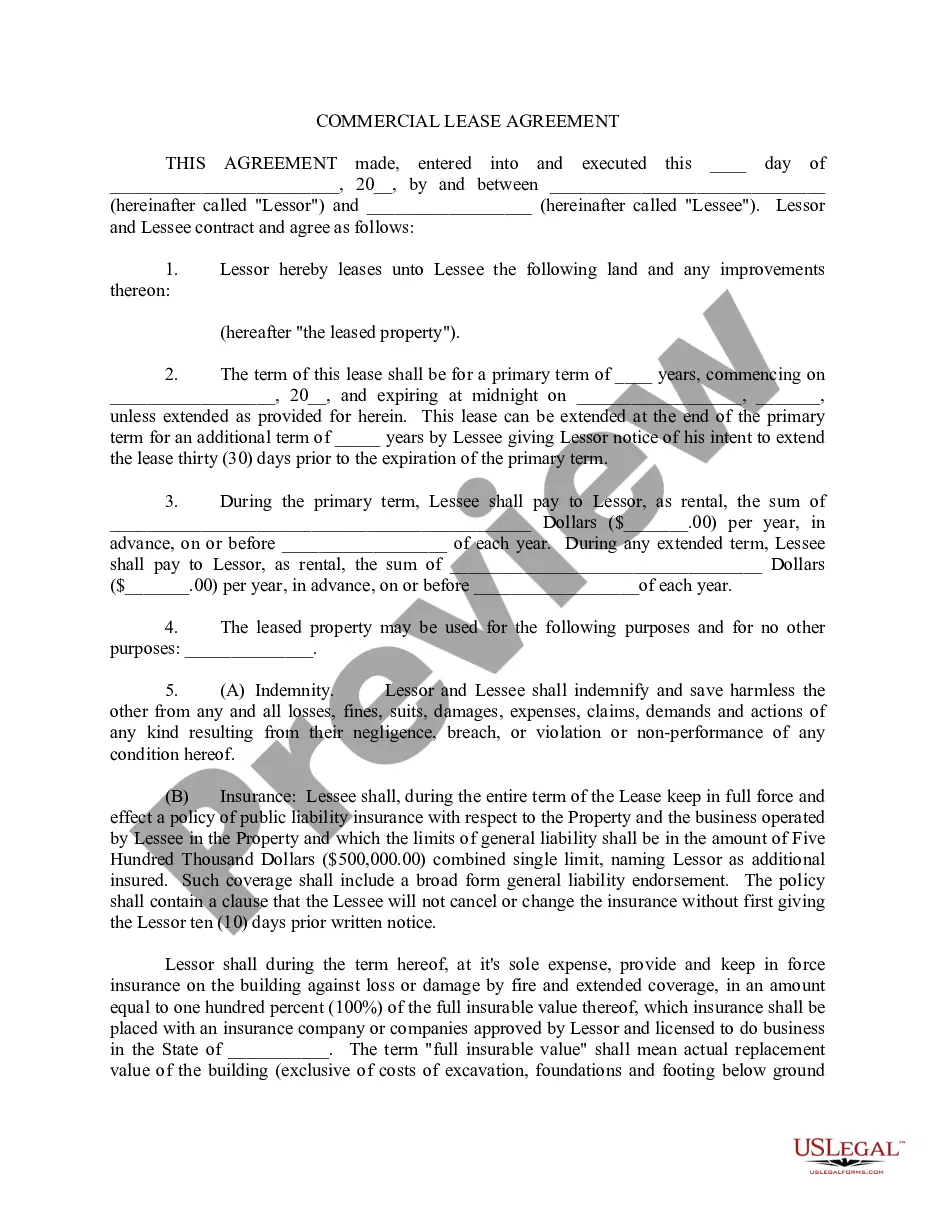

Get your form ready online
Our built-in tools help you complete, sign, share, and store your documents in one place.
Make edits, fill in missing information, and update formatting in US Legal Forms—just like you would in MS Word.
Download a copy, print it, send it by email, or mail it via USPS—whatever works best for your next step.
Sign and collect signatures with our SignNow integration. Send to multiple recipients, set reminders, and more. Go Premium to unlock E-Sign.
If this form requires notarization, complete it online through a secure video call—no need to meet a notary in person or wait for an appointment.
We protect your documents and personal data by following strict security and privacy standards.

Make edits, fill in missing information, and update formatting in US Legal Forms—just like you would in MS Word.

Download a copy, print it, send it by email, or mail it via USPS—whatever works best for your next step.

Sign and collect signatures with our SignNow integration. Send to multiple recipients, set reminders, and more. Go Premium to unlock E-Sign.

If this form requires notarization, complete it online through a secure video call—no need to meet a notary in person or wait for an appointment.

We protect your documents and personal data by following strict security and privacy standards.
Looking for another form?

Form popularity
FAQ
Rent-to-own could be a good option if your credit score is so low that you either can't qualify for a mortgage or you can only qualify for one with high interest rates. You can take the steps necessary to improve your credit score while leasing the home you'll eventually buy.
A break clause in a commercial lease (also known as 'an option to determine') is fairly common. It allows both parties flexibility if any issues or changes in circumstances occur, and provides the parties with a mechanism to terminate the agreement early if certain criteria are met.
There are many reasons why a Landlord and Tenant may choose to include an “option” in a commercial lease. The most common type of option is one that gives the Tenant the right to extend the lease term, usually for additional — sometimes two or more — terms of equal length to the original term.
A 'break option', 'break clause' or 'option to determine' is a clause in a lease which gives either the landlord, tenant, or both, a right in specified circumstances to terminate the lease before it's contractual expiry date.
Be sure to review the contract in its entirety and consider all written terms and conditions including penalties, renewals, terminations, and extensions when evaluating the lease term. Depending on how the contract is written, the lease term may be determined from the commencement date or possibly the possession date.
A break clause, sometimes referred to as an 'option to determine,' allows either the landlord, the tenant, or sometimes both, to end a lease early. This provides much-needed flexibility in case circumstances change. For example, a business may need to downsize, or a landlord may wish to sell or redevelop a property.
For example, a tenant and landlord may agree to a five-year lease with a five-year option to renew. At the end of the first five years, the tenant is given the chance to continue the lease for another five years. If you think you may renew, be sure to bring up extension provisions with your landlord.
