Accident Report File Form Template Uk In San Antonio
Description

Get your form ready online
Our built-in tools help you complete, sign, share, and store your documents in one place.
Make edits, fill in missing information, and update formatting in US Legal Forms—just like you would in MS Word.
Download a copy, print it, send it by email, or mail it via USPS—whatever works best for your next step.
Sign and collect signatures with our SignNow integration. Send to multiple recipients, set reminders, and more. Go Premium to unlock E-Sign.
If this form requires notarization, complete it online through a secure video call—no need to meet a notary in person or wait for an appointment.
We protect your documents and personal data by following strict security and privacy standards.

Make edits, fill in missing information, and update formatting in US Legal Forms—just like you would in MS Word.

Download a copy, print it, send it by email, or mail it via USPS—whatever works best for your next step.

Sign and collect signatures with our SignNow integration. Send to multiple recipients, set reminders, and more. Go Premium to unlock E-Sign.

If this form requires notarization, complete it online through a secure video call—no need to meet a notary in person or wait for an appointment.

We protect your documents and personal data by following strict security and privacy standards.
Looking for another form?








Form popularity
FAQ
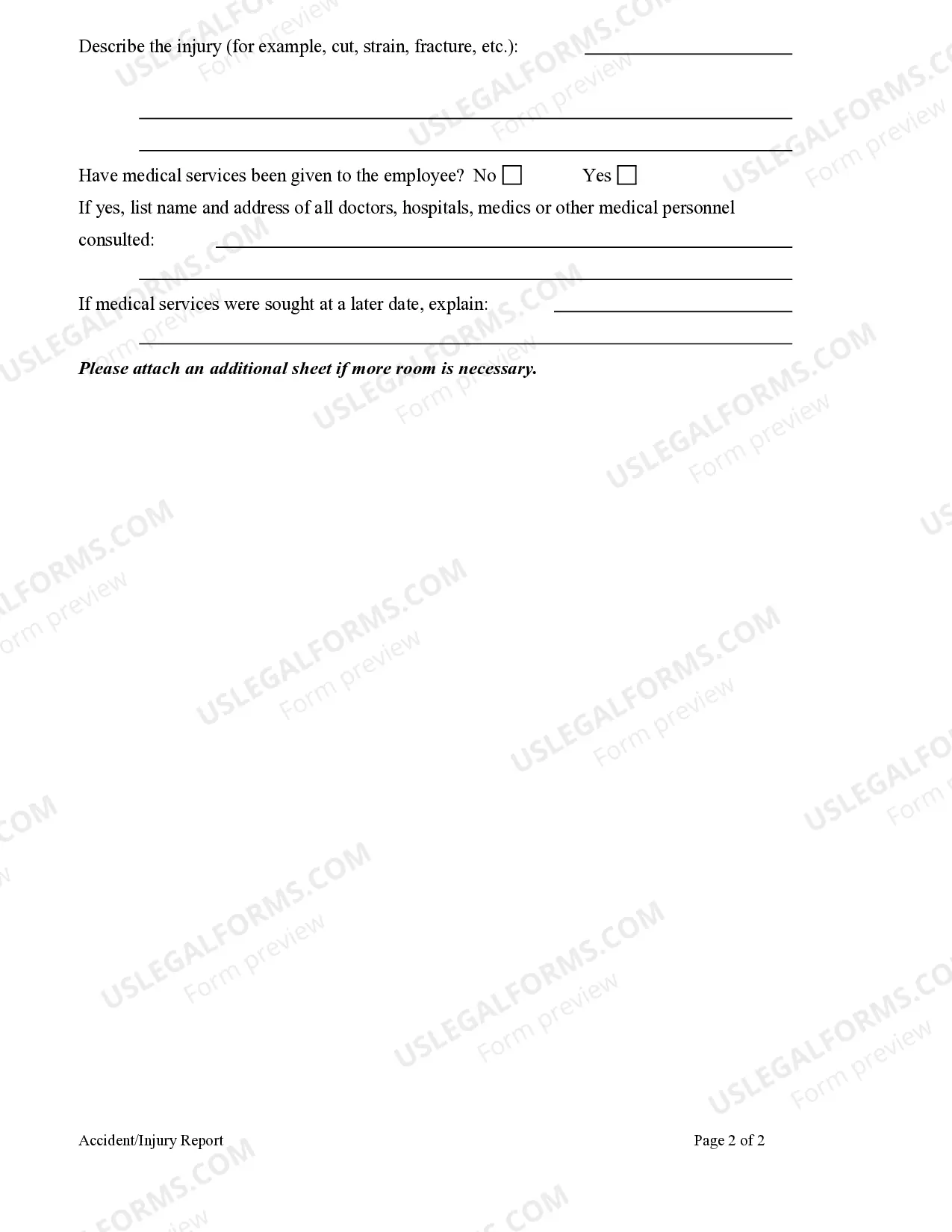
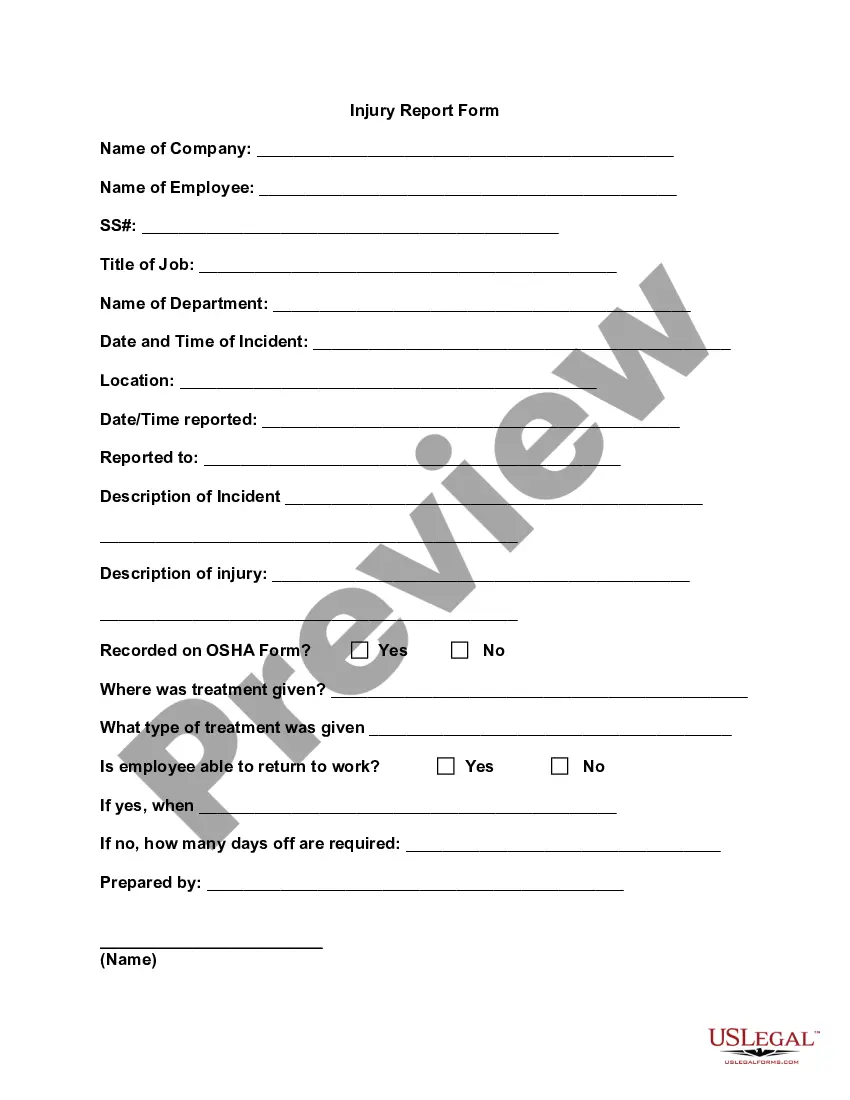
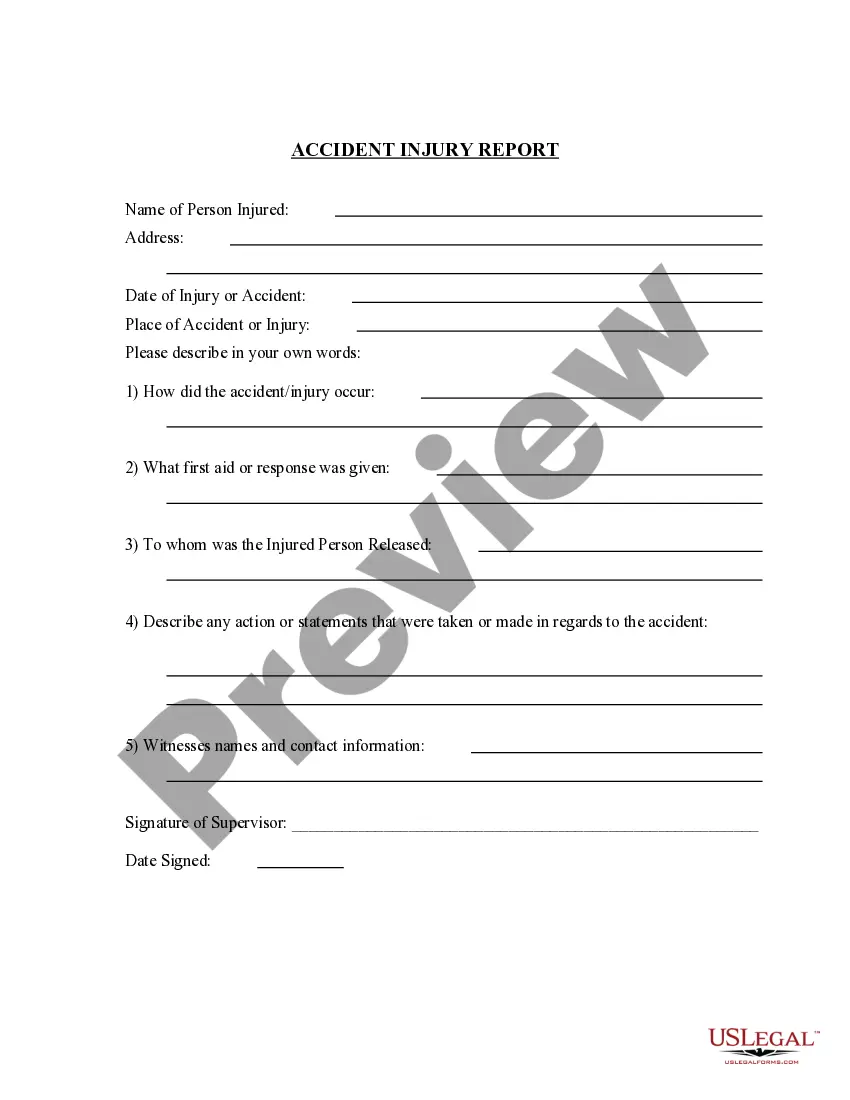
It should include: the names and positions of the people involved. the names of any witnesses. the exact location and/or address of the incident. the exact time and date of the occurrence. a detailed and clear description of what exactly happened. a description of the injuries.
How to Write an Incident Report: A Step-by-Step Guide (with Examples) Step 1: Provide Fundamental Information. Step 2: Take Note of Any Damages and Injuries. Step 3: Identify Affected Individual(s) ... Step 4: Identify Witnesses and Take Their Statements. Step 5: Take Action. Step 6: Close Your Report.
What are the five rules of incident report writing? Timeliness: Always report the incident as soon as possible. Accuracy: Make sure all information provided is accurate and detailed. Completeness: Be thorough and provide all important details. Confidentiality: Handle sensitive and personal information carefully.
Items to review include: Date, time and specific location of incident. Names, job titles and department of employees involved and immediate supervisors. Names and accounts of witnesses. Events leading up to incident. Specifically what the employee was doing at the moment of the accident.
Does it adequately answer the 5 W and one H questions: what, where, when, who, why, and how? These same questions structure Barry Poyner's method of crime analysis by breaking up a larger problem into its constituent parts.
The format and elements comprises of the title page, table of content, summary, the main body, conclusion, and recommendations. These factors together forms an ideal format of report writing.
Accident report forms should include fields for names and contact information of the individuals and witnesses involved, the type of accident, the date and time the accident occurred, the location of the accident, a detailed description of the accident, and room for any additional comments.
To ensure an effective incident reporting, it should be accurate, factual, complete, graphic, and valid.
