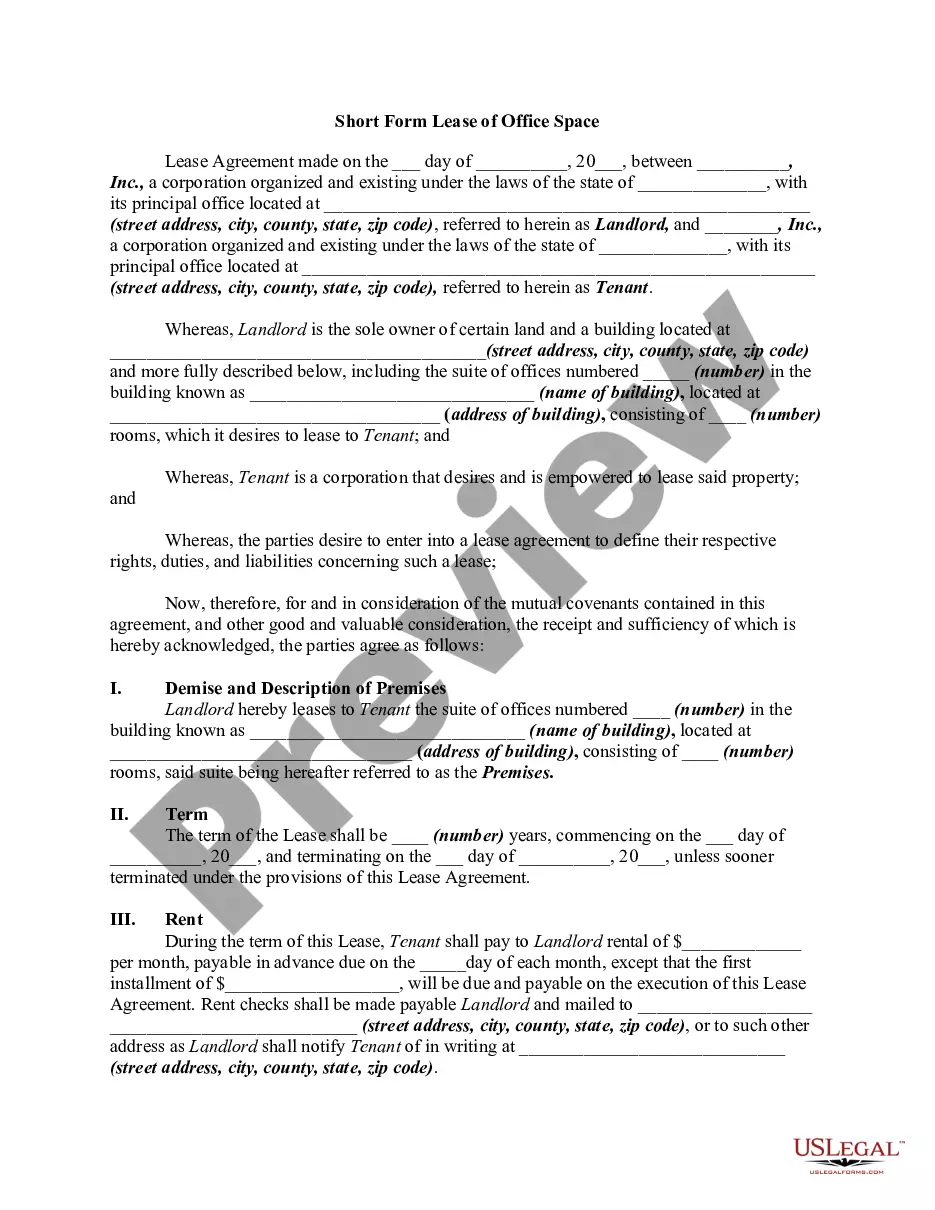
Commercial Lease Agreement Application For Land In Nevada
Description


Get your form ready online
Our built-in tools help you complete, sign, share, and store your documents in one place.
Make edits, fill in missing information, and update formatting in US Legal Forms—just like you would in MS Word.
Download a copy, print it, send it by email, or mail it via USPS—whatever works best for your next step.
Sign and collect signatures with our SignNow integration. Send to multiple recipients, set reminders, and more. Go Premium to unlock E-Sign.
If this form requires notarization, complete it online through a secure video call—no need to meet a notary in person or wait for an appointment.
We protect your documents and personal data by following strict security and privacy standards.

Make edits, fill in missing information, and update formatting in US Legal Forms—just like you would in MS Word.

Download a copy, print it, send it by email, or mail it via USPS—whatever works best for your next step.

Sign and collect signatures with our SignNow integration. Send to multiple recipients, set reminders, and more. Go Premium to unlock E-Sign.

If this form requires notarization, complete it online through a secure video call—no need to meet a notary in person or wait for an appointment.

We protect your documents and personal data by following strict security and privacy standards.
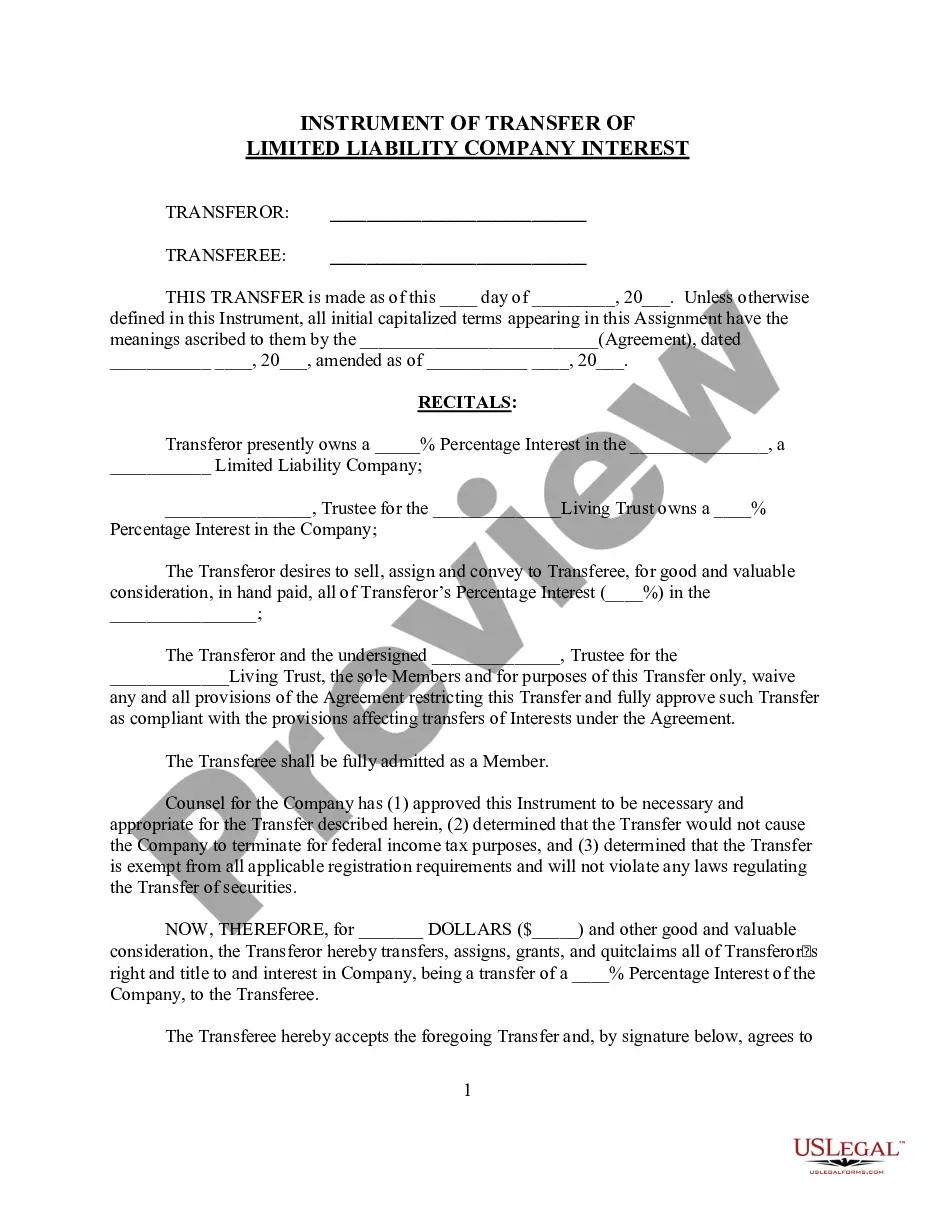
Looking for another form?






Form popularity
FAQ
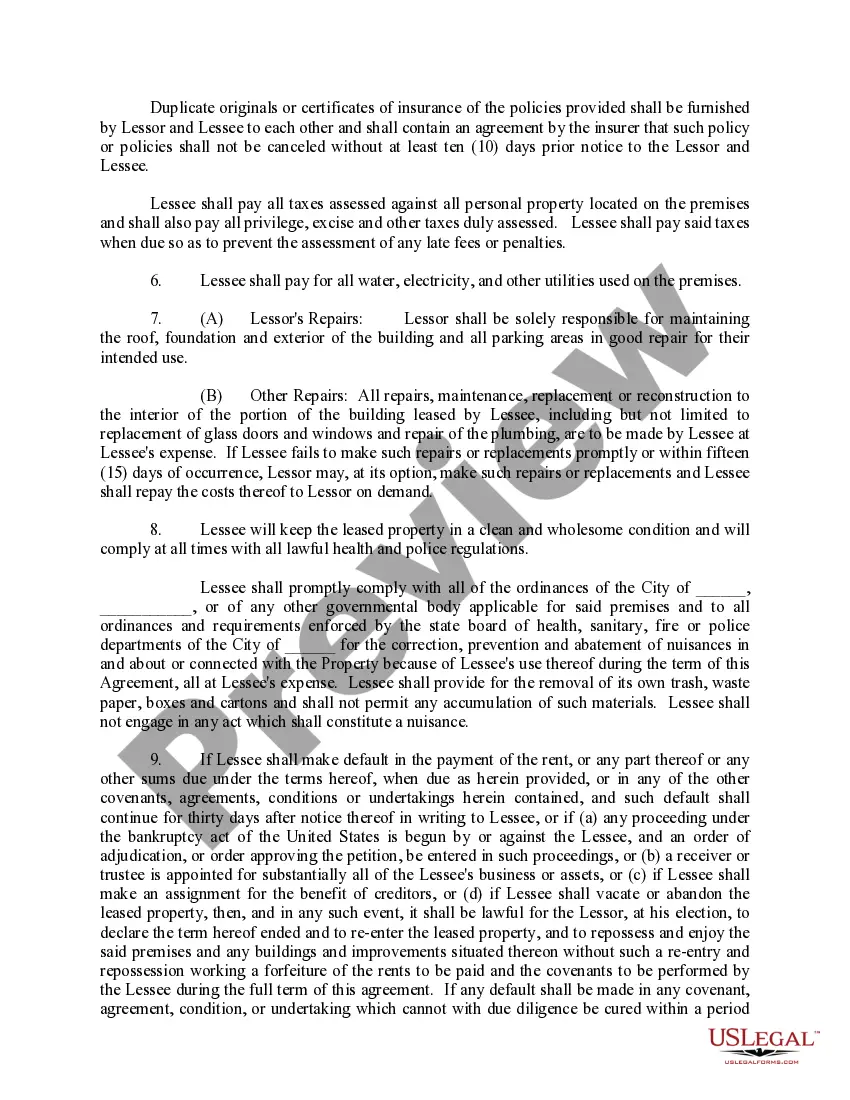
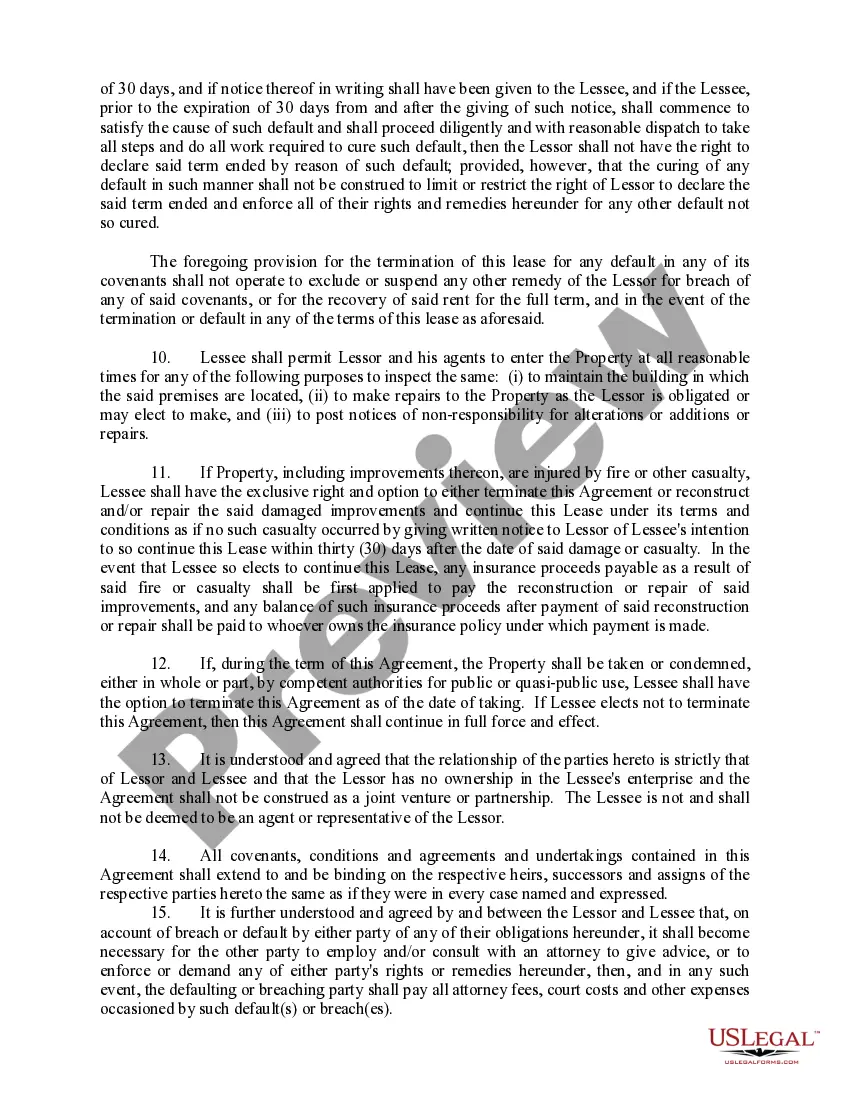
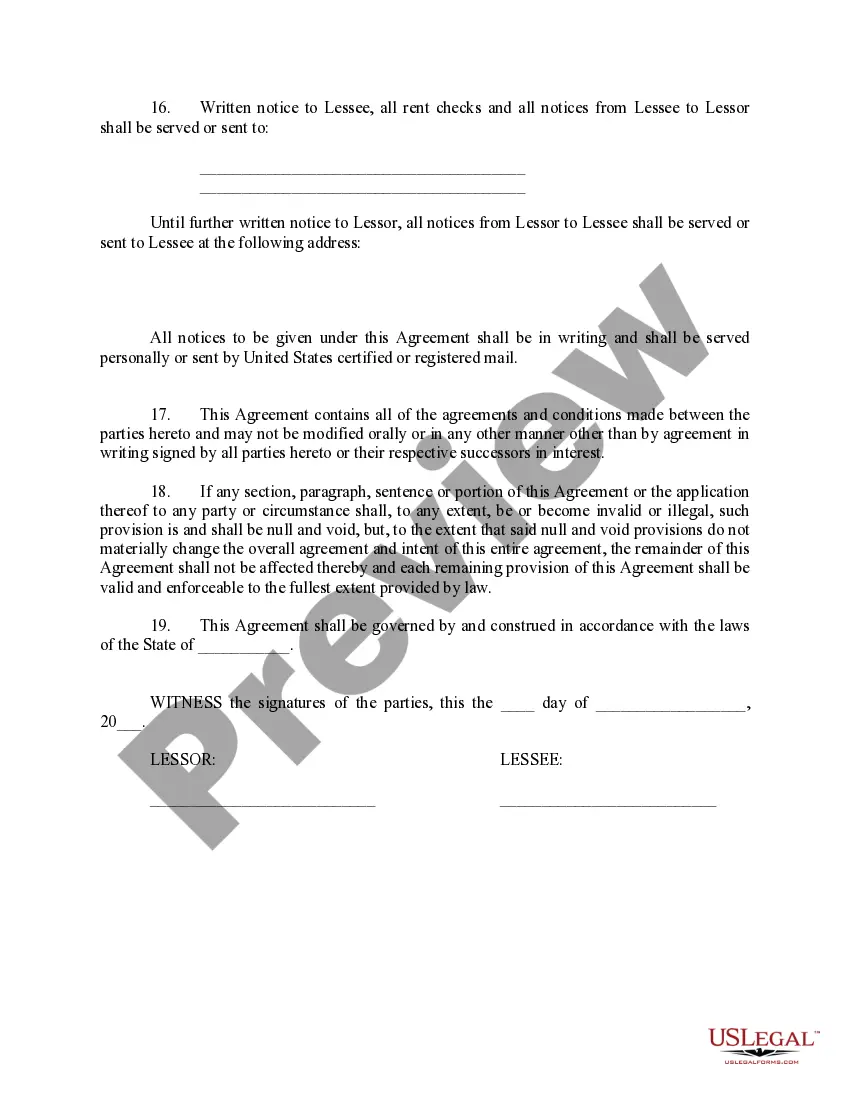
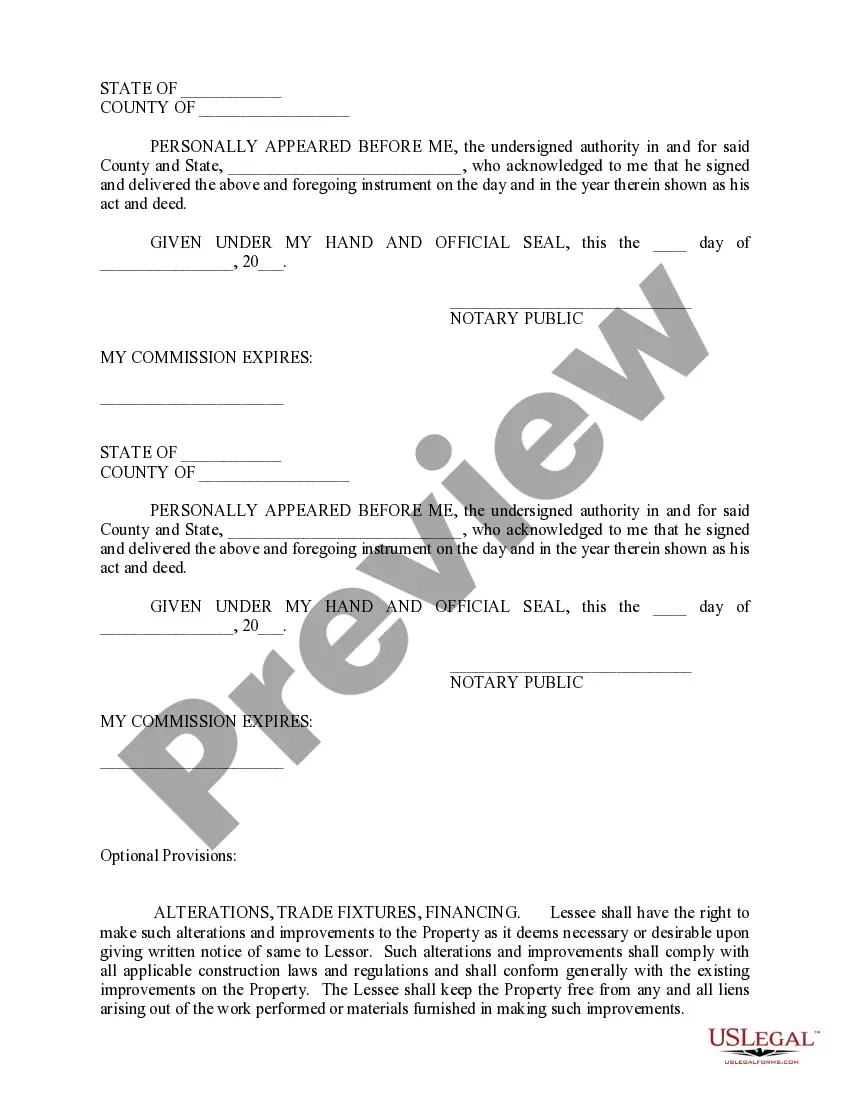
It is possible to draft your own lease agreement, but you are leaving yourself open to issues.
You can still lease property to your company, but you will not receive the tax benefits available to owners of C corporations. Tip: It is usually advisable to have an independent appraiser set the rental rate.
Gross Lease Gross leases are most common for commercial properties such as offices and retail space. The tenant pays a single, flat amount that includes rent, taxes, utilities, and insurance.
written rental agreement is absolutely valid and enforceable. It doesn't need to be notarized, but must be signed by both parties to the lease. Essential terms must be present in the writing, however.
The most common way to set up a commercial lease for a franchise is for the franchisor to lease the property from the landlord and then sublease it to the franchisee.
The Commercial Leasing Process Determine Your Needs. First, it's important to get very specific in your needs and wants. Look for Right Space. Create a Letter of Intent. Begin Lease Negotiations. Identify Target Occupancy Date. Move In.
Handwritten contracts are legally binding if they meet the necessary conditions that apply to all contracts: mutual agreement, capacity, consideration, and legal validity. There are no legal differences between typed and handwritten agreements when it comes to enforceability.
They look standardized and feel like a cursory part of renting real estate. However, leases are legally enforceable agreements that can have lasting impacts on your tenancy. Having a lawyer involved when signing a lease can help both parties protect their rights and interests.
The landlord of a commercial space for rent may require the following: Security deposit (e.g., one month's rent or more) Financial statements. Profit and loss statements. Balance sheet. Business bank statements. Previous landlord information. Credit reports. Business tax returns.
5 Steps to Leasing a Commercial Property Step 1: Assess your business. Step 2: Search for properties that meet your needs and budget. Step 3: Set up Showings. Step 4: Negotiate the Letter of Intent (LOI) or Lease Proposal. Step 5: Executing a Lease.
