Difference Between A Commercial And Retail Lease In California
Description

Get your form ready online
Our built-in tools help you complete, sign, share, and store your documents in one place.
Make edits, fill in missing information, and update formatting in US Legal Forms—just like you would in MS Word.
Download a copy, print it, send it by email, or mail it via USPS—whatever works best for your next step.
Sign and collect signatures with our SignNow integration. Send to multiple recipients, set reminders, and more. Go Premium to unlock E-Sign.
If this form requires notarization, complete it online through a secure video call—no need to meet a notary in person or wait for an appointment.
We protect your documents and personal data by following strict security and privacy standards.

Make edits, fill in missing information, and update formatting in US Legal Forms—just like you would in MS Word.

Download a copy, print it, send it by email, or mail it via USPS—whatever works best for your next step.

Sign and collect signatures with our SignNow integration. Send to multiple recipients, set reminders, and more. Go Premium to unlock E-Sign.

If this form requires notarization, complete it online through a secure video call—no need to meet a notary in person or wait for an appointment.

We protect your documents and personal data by following strict security and privacy standards.
Looking for another form?




Form popularity
FAQ
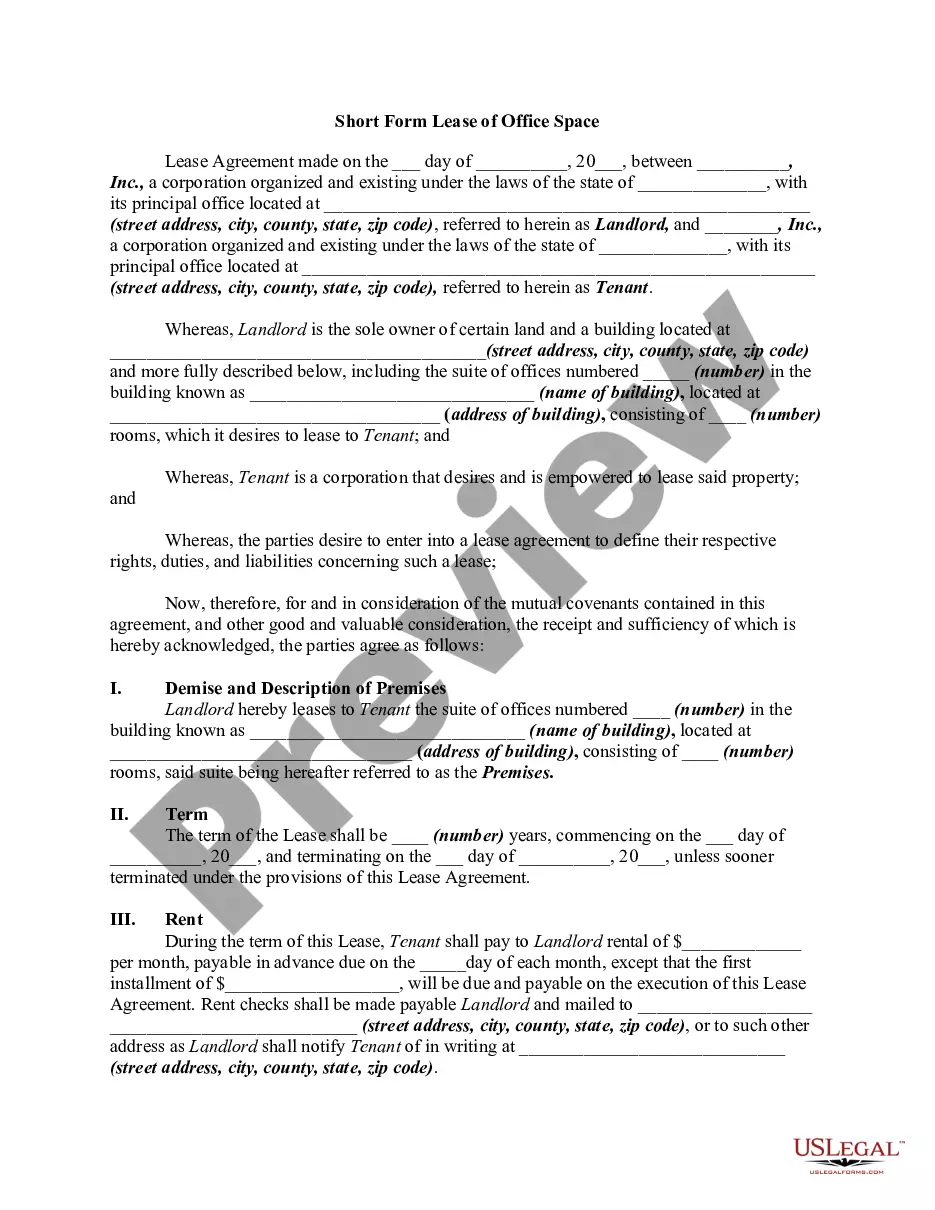
Gross Lease Gross leases are most common for commercial properties such as offices and retail space. The tenant pays a single, flat amount that includes rent, taxes, utilities, and insurance. The landlord is responsible for paying taxes, utilities, and insurance from the rent fees.
In a net lease, the tenant pays it all from day one. In a typical gross lease, taxes for the “base year” are included in the rental rate with increases for subsequent years passed along to the tenant.
Yes, if you are a landlord and rent, lease, sublease or sublet commercial or residential property within the City, you are required to secure the appropriate business license, and a separate business license must be obtained for each separate rental property.
This will be done using a Land Registry form known as a TR1. If the lease is for less than 7 years, then the lease can be assigned by using a deed of assignment. Both these documents have the same effect and will generally be executed by both you as the current tenant and the assignee.
Under California law, a new property owner is generally required to honor the terms of existing leases. This means that your lease agreement, including rent, lease duration, and other conditions, remains in effect despite the change in ownership.
For example, it is common in a lease for a commercial building for the landlord to be obligated to maintain and repair the “structural elements” of the building (i.e., the foundation, exterior walls, roof supports and roof), and for the tenant to agree to maintain the remainder of the building, including interior, ...
Yes. The property owner is required to obtain a valid Residential Rental Business Tax Certificate, and a City issued STR Permit prior to advertising and operating the STR.
Currently, there are no rent control policies for commercial units in the United States. New York City and Berkeley, California, had policies in place for several years before each state repealed the laws.
“Commercial space” generally refers to office space. With commercial space, there may not be as many people wandering in and out, whereas “retail space” depends largely on foot traffic. Commercial space is typically used for businesses that don't have a lot of foot traffic.
