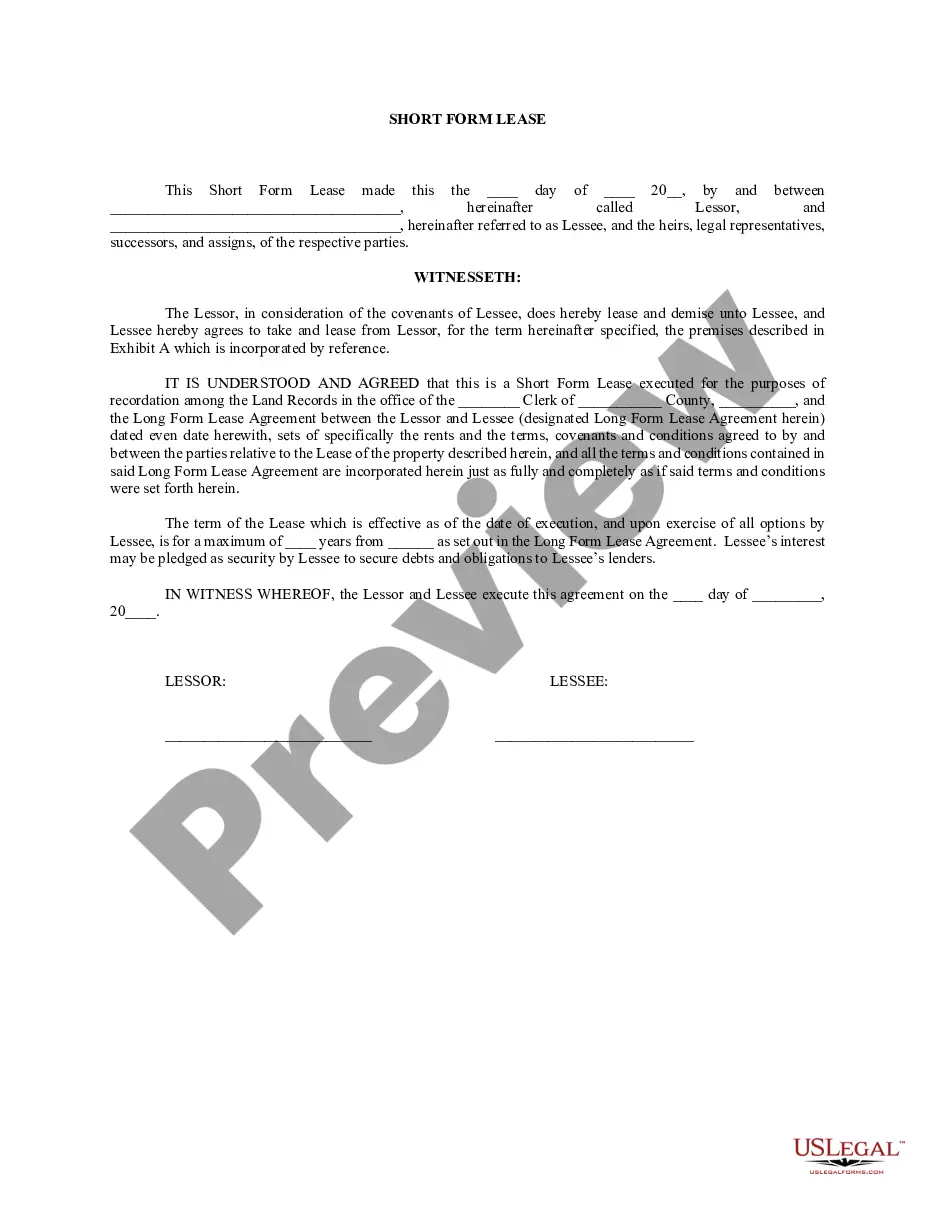
Long Term Lease With Insurance In Texas
Description
Get your form ready online
Our built-in tools help you complete, sign, share, and store your documents in one place.
Make edits, fill in missing information, and update formatting in US Legal Forms—just like you would in MS Word.
Download a copy, print it, send it by email, or mail it via USPS—whatever works best for your next step.
Sign and collect signatures with our SignNow integration. Send to multiple recipients, set reminders, and more. Go Premium to unlock E-Sign.
If this form requires notarization, complete it online through a secure video call—no need to meet a notary in person or wait for an appointment.
We protect your documents and personal data by following strict security and privacy standards.

Make edits, fill in missing information, and update formatting in US Legal Forms—just like you would in MS Word.

Download a copy, print it, send it by email, or mail it via USPS—whatever works best for your next step.

Sign and collect signatures with our SignNow integration. Send to multiple recipients, set reminders, and more. Go Premium to unlock E-Sign.

If this form requires notarization, complete it online through a secure video call—no need to meet a notary in person or wait for an appointment.

We protect your documents and personal data by following strict security and privacy standards.
Looking for another form?






Form popularity
FAQ
Length of Tenancy It is common for a lease to be for a period of 12 months, but it can also be for many years.
It must be written in strict adherence to property laws of the state where the property is located. Failing to do so can either render the lease invalid or unable to protect the landlord's property and interests from potential problem tenants.
Advantages of leasing include lower monthly payments, no long-term commitments, and minimal maintenance costs. Disadvantages include never owning the car, charges for damage or exceeding mileage limits, and restrictive terms and conditions.
Average monthly lease payment: $761 The numbers show Texas is far and away the most expensive when it comes to car leases. ing to Experian, this could be due to how taxes are collected on leased vehicles. In Texas, as well as in some other states, the vehicle's full sales tax amount is collected from the lessee.
Short-term goals are smaller goals (relatively speaking) that are usually set to be achieved within a 90-day window. Sometimes six months or a year, but generally anything longer than a year is a “long-term” goal.
So, how long is a long term tenancy agreement? In short, a long-term let is anywhere from 6 months onwards. While long term tenancies don't offer the same flexibility or increased rates as short term agreements, they do perform better in several ways.
A quick definition of lease insurance: Lease insurance is a type of insurance that protects a leaseholder from losing their lease due to damage to the property caused by a covered peril. If.
A lease (property right to exclusive possession of land) which was initially granted for more than 21 years. However, the term is more commonly used to describe leases for an initial term of 99, 125, or even 999 years.
Key Features of Long-Term Leases These leases typically extend beyond 5 years and can last up to 25 years or more. While these often require more front-end legal work, they offer tenants more certainty.
