Accounting For Long-term Lease Of Land In Bronx
Description

Form popularity
FAQ
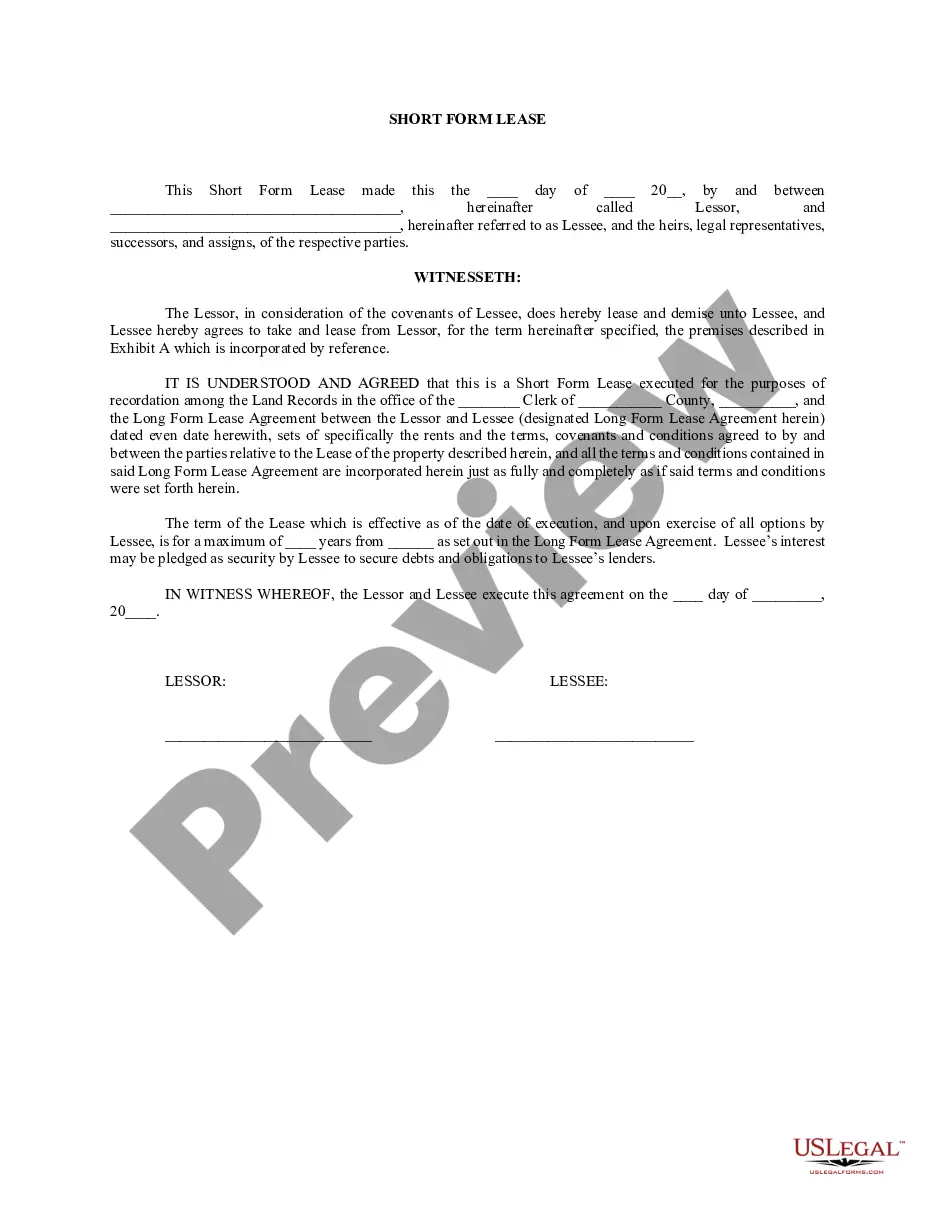
When the land has an indefinite economic life, the land element is normally classified as an operating lease unless title is expected to pass to the lessee by the end of the lease term (i.e. in determining whether the land element is an operating or finance lease, an important consideration is that land normally has an ...
Once we have gathered our information (i.e., we know the lease term, the lease payment, and the discount rate), we simply discount the liability over the lease term, using the discount rate. We then record the lease liability, or the resulting amount, on the balance sheet. Then, we record the lease asset.
The new lease accounting standard requires nearly all leases with terms that exceed one year to be recorded on the balance sheet as “right of use” assets with corresponding lease liabilities for the present value of future lease payments.
In order to record the lease liability on the balance sheet, we need to know these 3 factors: Determine the lease term. Verify the lease payment. Know the discount rate that will be used to discount the lease liability.
What is a Journal Entry for Lease? A journal entry for a lease records the financial transactions related to the leasing of an asset. This involves documenting the initial recognition of lease obligations and assets, as well as ongoing payments and expenses.
Ground leases are usually triple net (NNN), whereby the tenant is responsible for all expenses related to the premises (for example, property taxes, maintenance costs, and insurance premiums).
In the law of several US states, a 99-year lease will always be the longest possible contract for realty by statute, but many states have enacted shorter terms and some allow infinite terms.
