Damage to Religious Property
Understanding this form
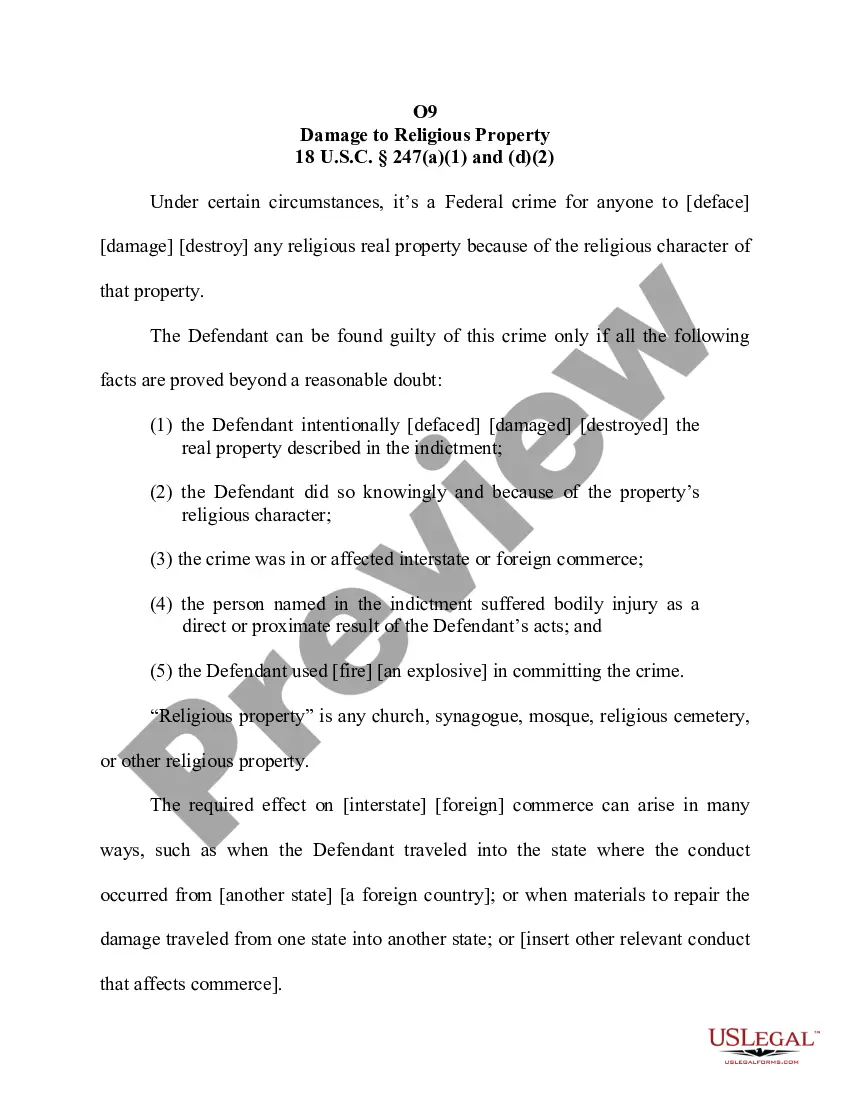
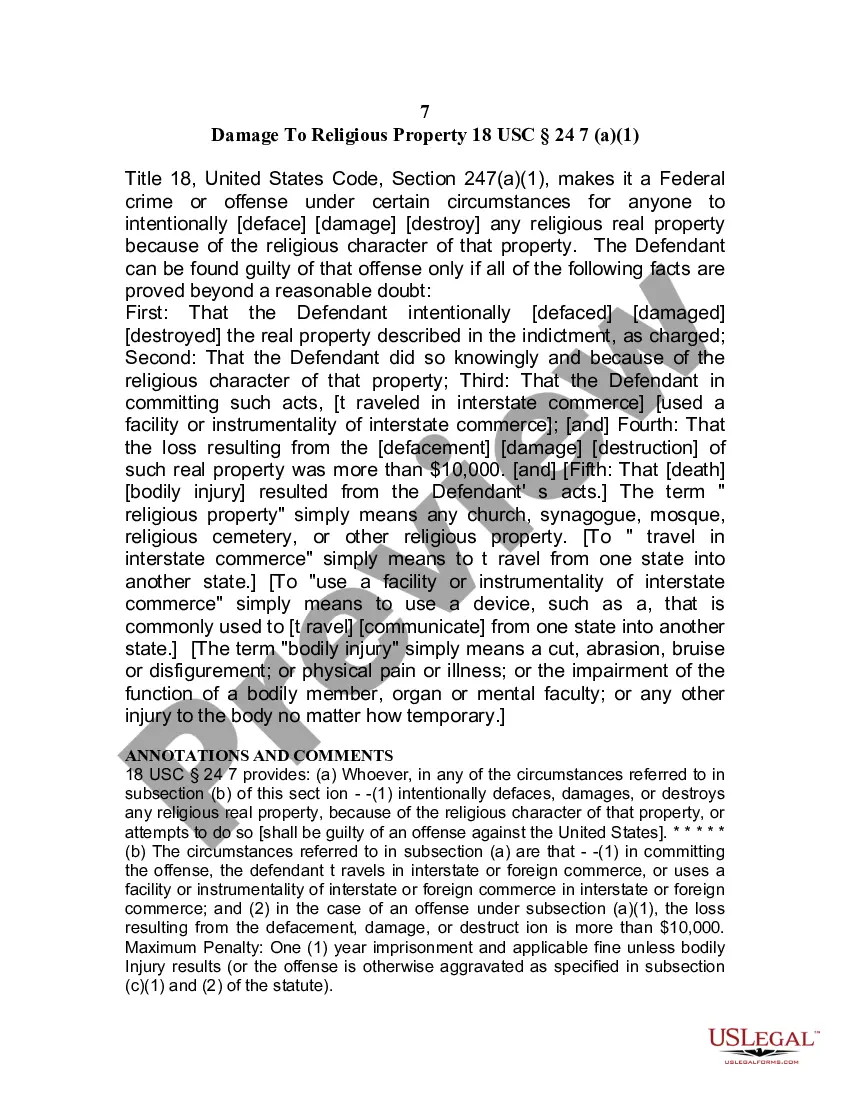
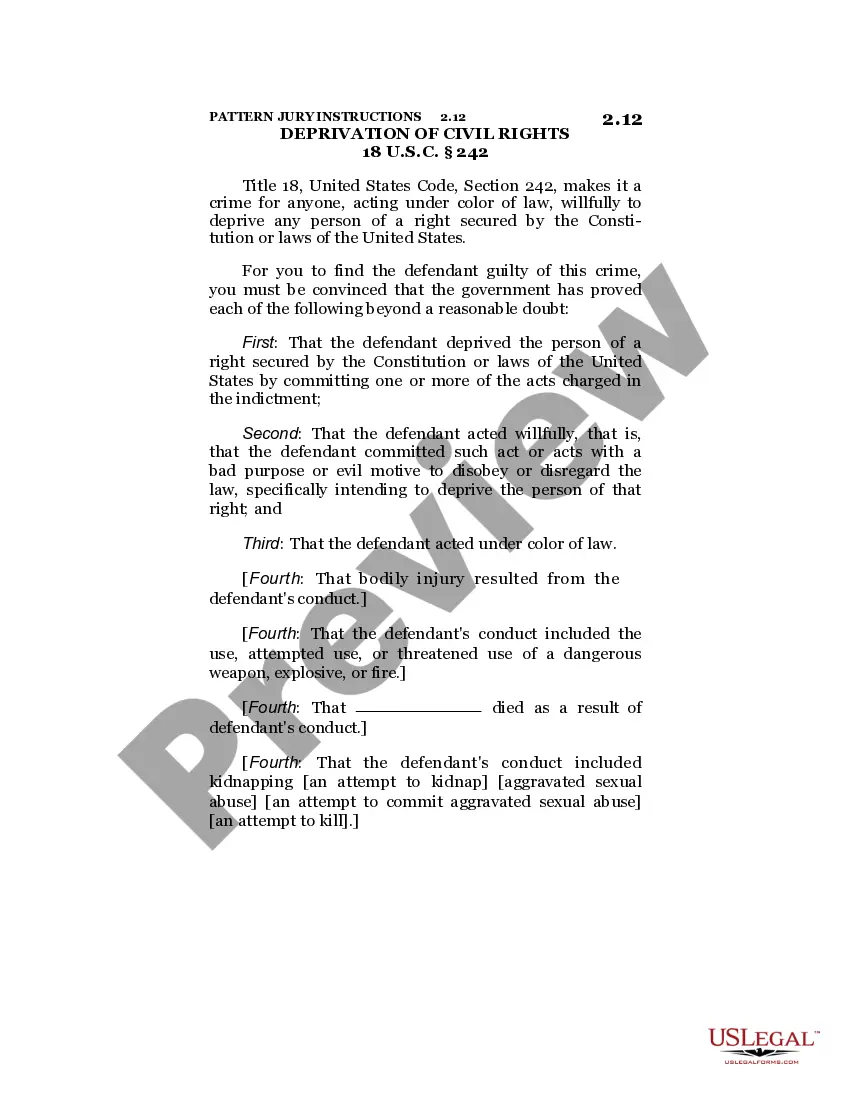
The Damage to Religious Property form addresses the legal ramifications and procedures surrounding the federal crime of damaging or defacing religious properties. This form is based on the Pattern Jury Instructions from the 11th Circuit Federal Court of Appeals and is essential for understanding how to prove and assess damages related to such crimes. It differs from other legal forms by specifically addressing violations rooted in religious discrimination and the impact they have on communities of faith.
Main sections of this form
- Definitions and scope of what constitutes "religious property."
- Criteria needed to prove guilt, such as intentionality and motive related to the religious character of the property.
- Specifications regarding interstate or foreign commerce impacts and requirements.
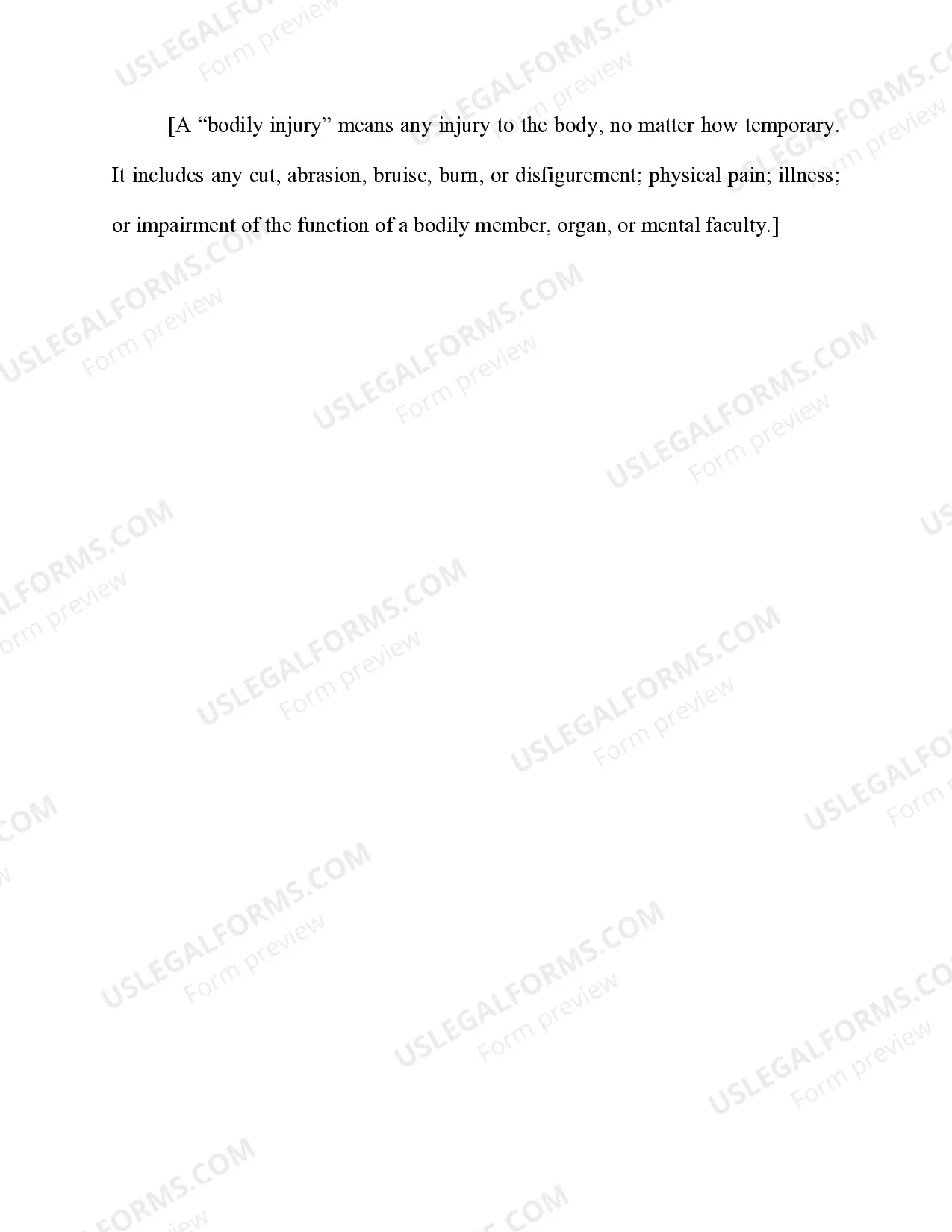
- Details on the definition of "bodily injury" related to damages incurred.
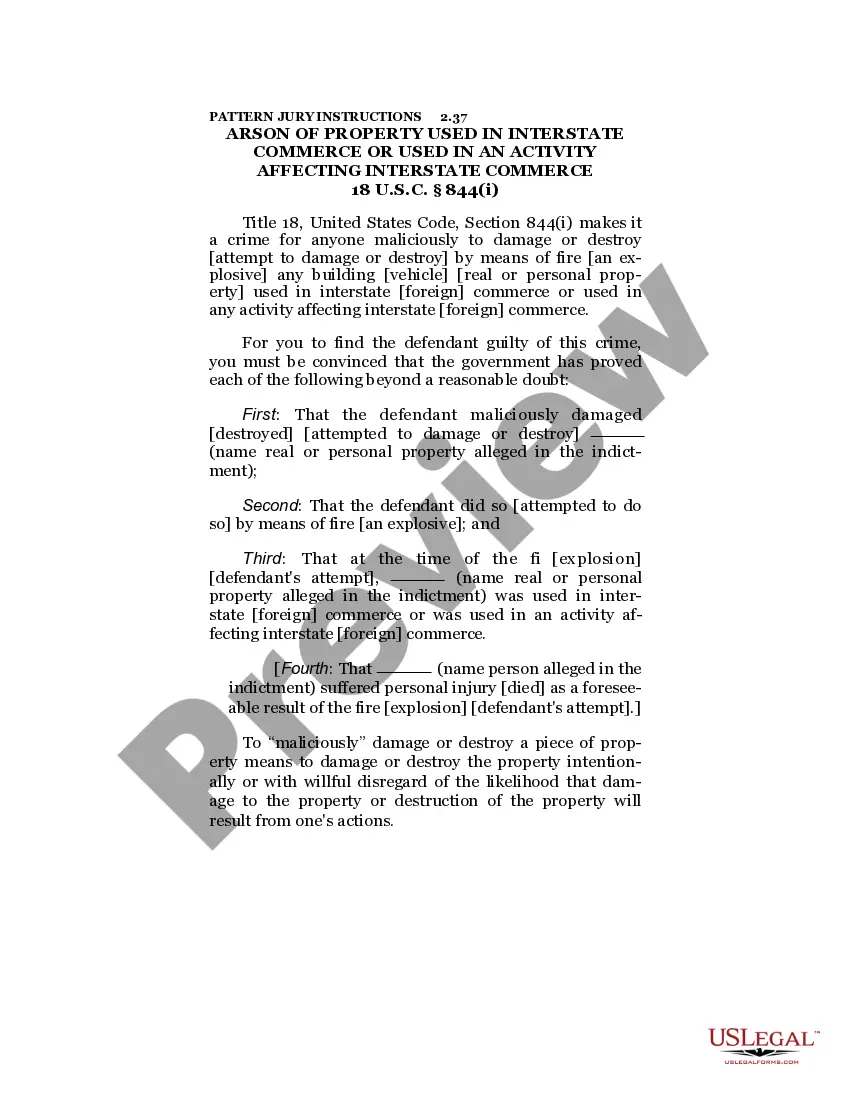
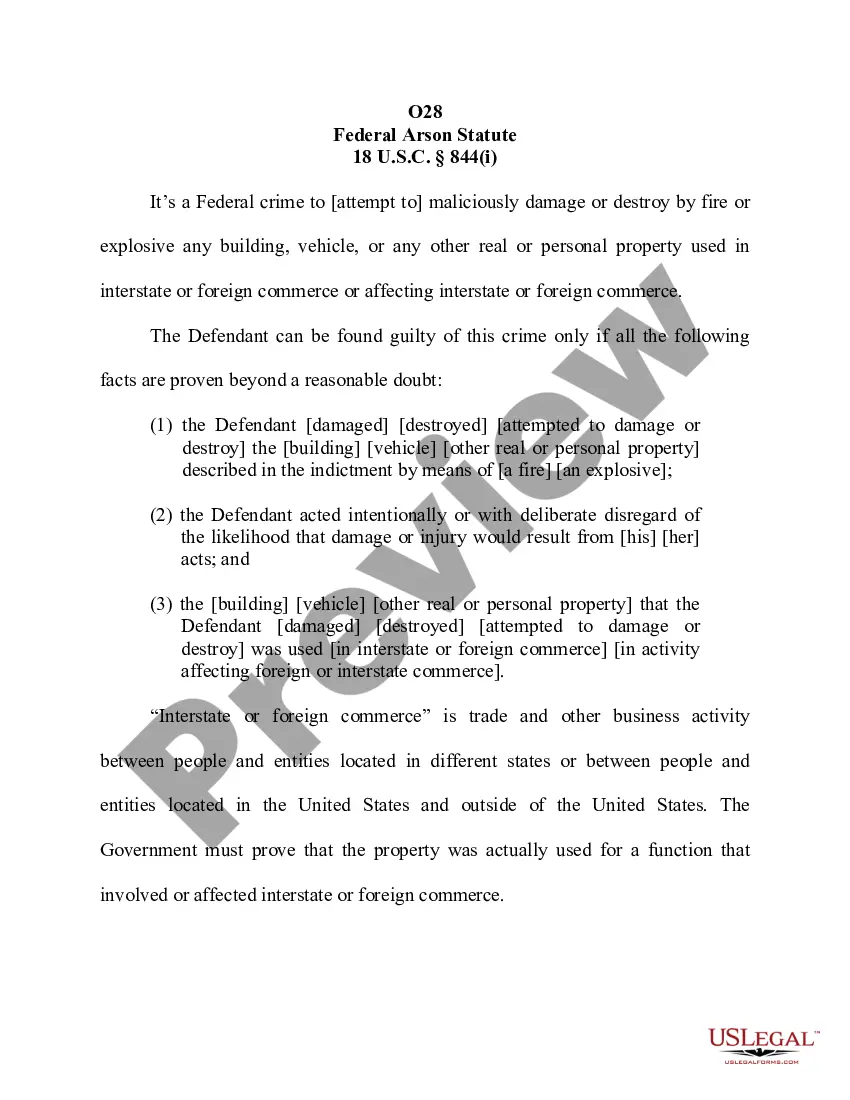
- Instructions for assessing the use of fire or explosives in the commission of the crime.
When this form is needed
This form should be used in situations where there has been an incident involving the defacement, damage, or destruction of religious property, such as churches, synagogues, or cemeteries, motivated by the propertyâs religious characteristics. It serves as a legal basis for addressing the violation, assessing damages, and determining the appropriate legal actions to pursue against the perpetrator.
Who needs this form
This form is intended for:
- Religious organizations or institutions seeking to file charges against individuals for damaging their property.
- Legal representatives acting on behalf of victims of property damage due to religious bias.
- Individuals who wish to report violations and seek legal recourse for damages incurred.
How to prepare this document
- Identify and describe the specific religious property that has been damaged.
- Clearly state the circumstances surrounding the damage, including the intent and actions of the defendant.
- Provide evidence of how the crime has affected interstate or foreign commerce.
- Detail any bodily injuries suffered as a direct result of the incident.
- Specify if any explosives or fire were used in the commission of the crime.
Is notarization required?
This form does not typically require notarization unless specified by local law. Always check with local legal requirements to ensure the form is compliant before submission.
Get your form ready online
Our built-in tools help you complete, sign, share, and store your documents in one place.
Make edits, fill in missing information, and update formatting in US Legal Forms—just like you would in MS Word.
Download a copy, print it, send it by email, or mail it via USPS—whatever works best for your next step.
Sign and collect signatures with our SignNow integration. Send to multiple recipients, set reminders, and more. Go Premium to unlock E-Sign.
If this form requires notarization, complete it online through a secure video call—no need to meet a notary in person or wait for an appointment.
We protect your documents and personal data by following strict security and privacy standards.

Make edits, fill in missing information, and update formatting in US Legal Forms—just like you would in MS Word.

Download a copy, print it, send it by email, or mail it via USPS—whatever works best for your next step.

Sign and collect signatures with our SignNow integration. Send to multiple recipients, set reminders, and more. Go Premium to unlock E-Sign.

If this form requires notarization, complete it online through a secure video call—no need to meet a notary in person or wait for an appointment.

We protect your documents and personal data by following strict security and privacy standards.
Typical mistakes to avoid
- Failing to clearly specify the religious character of the property involved.
- Not providing sufficient evidence of the defendant's intent.
- Omitting necessary details regarding bodily injuries sustained.
- Inexactly describing how the crime affected interstate commerce.
Benefits of using this form online
- Immediate access to legally validated templates drafted by licensed attorneys.
- Convenience of completing the form from any location at any time.
- Editability allows users to personalize the form to fit specific situations.
- Reliable and secure storage of completed forms for future reference.
Looking for another form?

Form popularity
FAQ
Whoever intentionally defaces, damages, or destroys any religious real property because of the race, color, or ethnic characteristics of any individual associated with that religious property, or attempts to do so, shall be punished as provided in subsection (d).
The intent to destroy religious property makes this offense a hate crime. A hate crime under the Church Arson Prevention Act is among the federal offenses you can face when they intentionally damage religious property. The damaged property must have been designated religious property to be convicted of a federal crime.
The Church Arson Prevention Act, 18 U.S.C. § 247, makes it a crime to deface, damage, or destroy religious real property, or interfere with a person's religious practice, in situations affecting interstate commerce.
(6) Congress has authority, pursuant to section 2 of the 13th amendment to the Constitution, to make actions of private citizens motivated by race, color, or ethnicity that interfere with the ability of citizens to hold or use religious property without fear of attack, violations of Federal criminal law. SEC.
Desecration of holy spaces is attack of the symbolic meanings of the place. To wantonly destroy a temple, shrine, church, mosque or even a memorial is to attack the community's symbols of unity, of its relations to God, itself and its neighbours, and of its history, its present and its future.