Closure Any Property With Addition With Example In Phoenix
Description

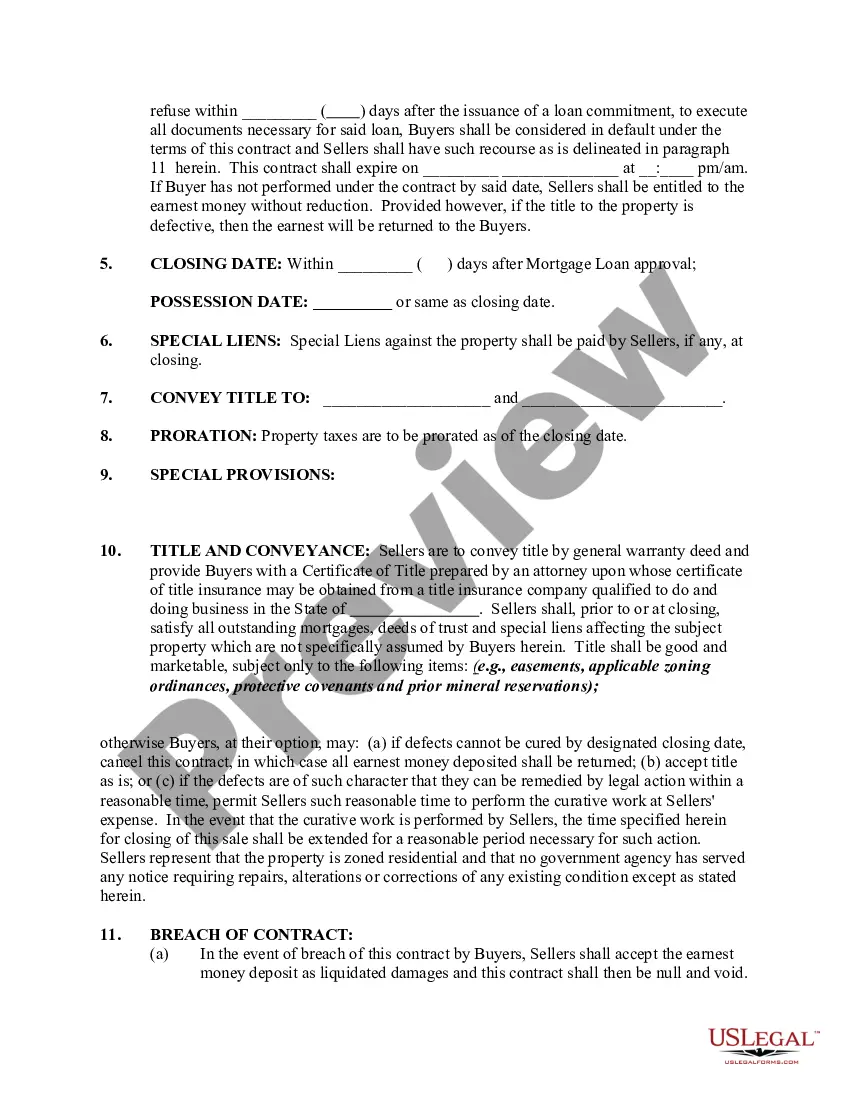
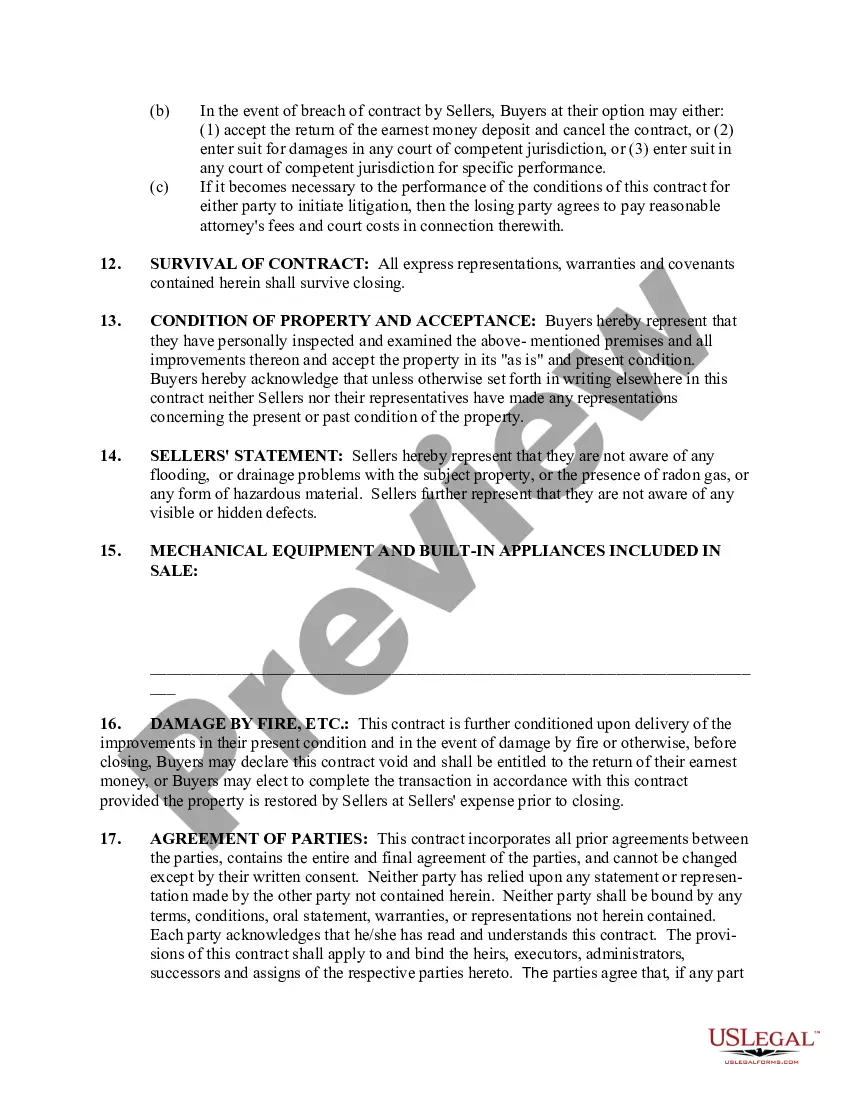



Get your form ready online
Our built-in tools help you complete, sign, share, and store your documents in one place.
Make edits, fill in missing information, and update formatting in US Legal Forms—just like you would in MS Word.
Download a copy, print it, send it by email, or mail it via USPS—whatever works best for your next step.
Sign and collect signatures with our SignNow integration. Send to multiple recipients, set reminders, and more. Go Premium to unlock E-Sign.
If this form requires notarization, complete it online through a secure video call—no need to meet a notary in person or wait for an appointment.
We protect your documents and personal data by following strict security and privacy standards.

Make edits, fill in missing information, and update formatting in US Legal Forms—just like you would in MS Word.

Download a copy, print it, send it by email, or mail it via USPS—whatever works best for your next step.

Sign and collect signatures with our SignNow integration. Send to multiple recipients, set reminders, and more. Go Premium to unlock E-Sign.

If this form requires notarization, complete it online through a secure video call—no need to meet a notary in person or wait for an appointment.

We protect your documents and personal data by following strict security and privacy standards.
Looking for another form?










Form popularity
FAQ
Closure properties say that a set of numbers is closed under a certain operation if and when that operation is performed on numbers from the set, we will get another number from that set back out. Real numbers are closed under addition and multiplication.
Closure Property of Addition for Whole Numbers Addition of any two whole numbers results in a whole number only. We can represent it as a + b = W, where a and b are any two whole numbers, and W is the whole number set. For example, 0+21=21, here all numbers fall under the whole number set.
Closure property states that any operation conducted on elements within a set gives a result which is within the same set of elements. Integers are either positive, negative or zero. They are whole and not fractional. Integers are closed under addition.
Answer. For any complex numbers z1 and z2, the closure law states that the sum of two complex numbers is a complex number, i.e., z1+z2 is a complex number.
Closure Property of Whole Numbers Under Addition Set of whole numbers{1, 2, 3, 4, 5...} Pick any two whole numbers from the set 7 and 4 Add 7 + 4 = 11 Does the sum lie in the original set? Yes Inference Whole numbers are closed under addition
Closure property means when you perform an operation on any two numbers in a set, the result is another number in the same set or in simple words the set of numbers is closed for that operation.
The closure property states that if a set of numbers (integers, real numbers, etc.) is closed under some operation (such as addition, subtraction, or multiplication, etc.), then performing that operation on any two numbers in the set results in the element belonging to the set.
How can closure properties be proven for regular languages? Answer: Closure properties for regular languages are often proven using constructions and properties of finite automata, regular expressions, or other equivalent representations. Mathematical proofs and induction are commonly employed in these demonstrations.
The set {2, 4, 6, …} is closed under addition and multiplication, meaning the sum or product of two even integers is still an even integer. However, it is not closed under subtraction or division by odd integers, as these operations can yield results that are not even integers.
Closure Property of Addition for Whole Numbers Addition of any two whole numbers results in a whole number only. We can represent it as a + b = W, where a and b are any two whole numbers, and W is the whole number set. For example, 0+21=21, here all numbers fall under the whole number set.