Boat Rental Liability Waiver With Insurance In Bexar
Description

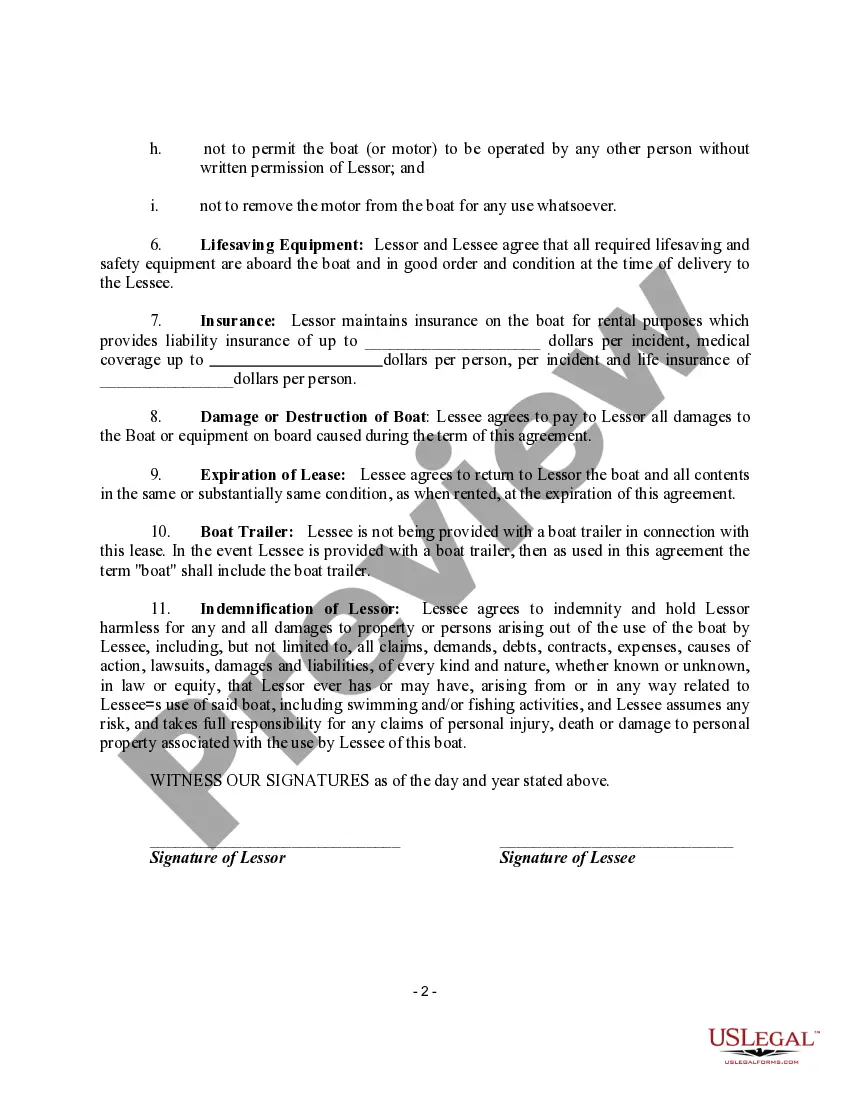
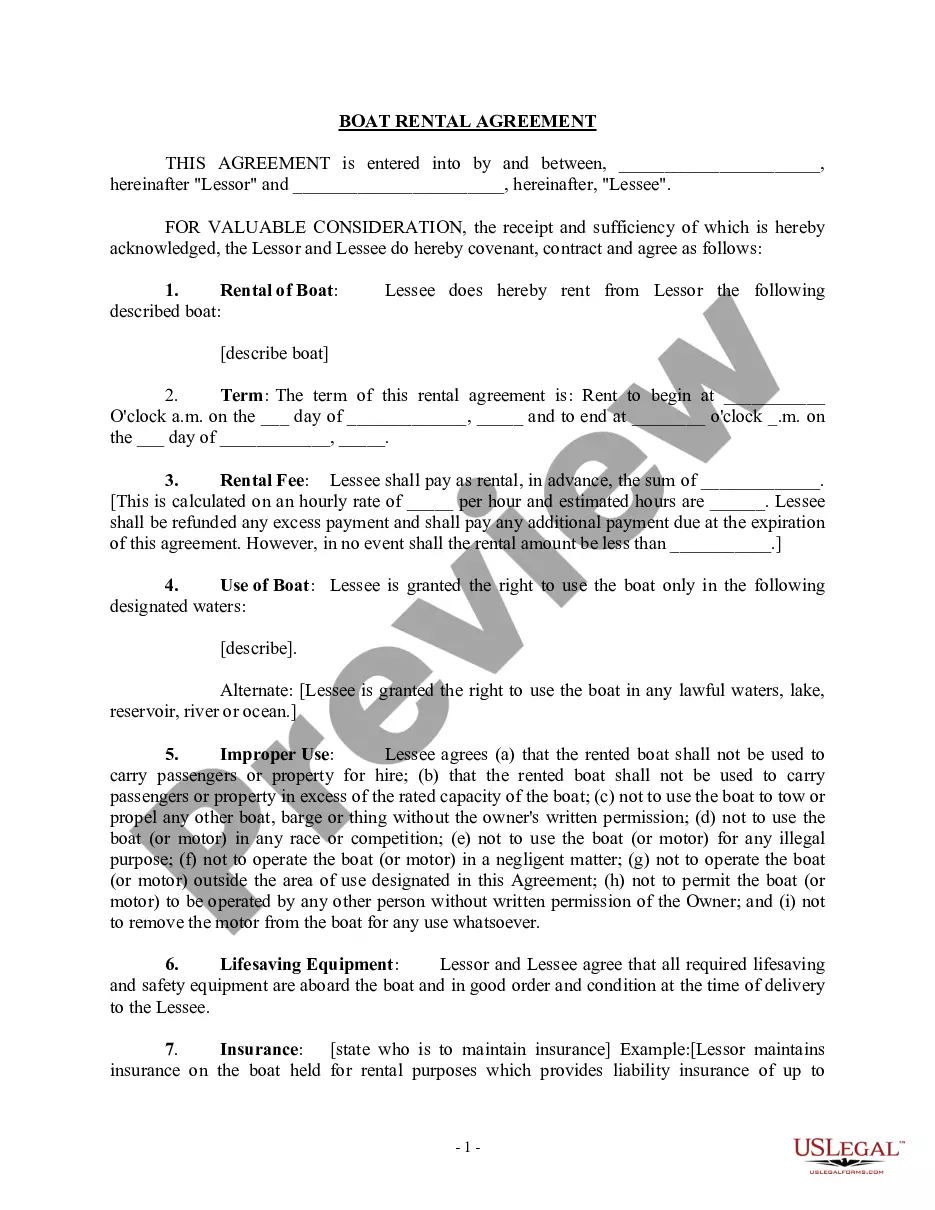
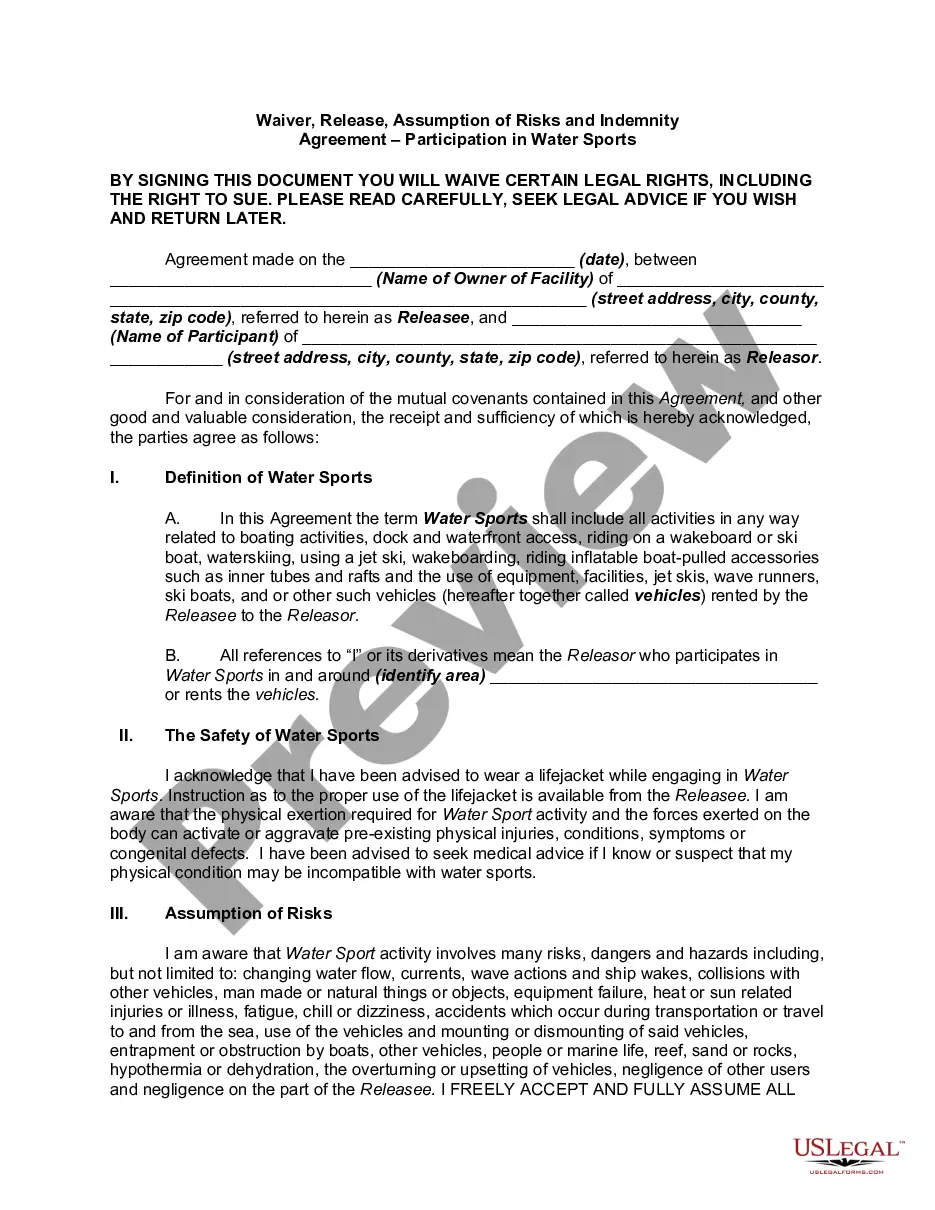
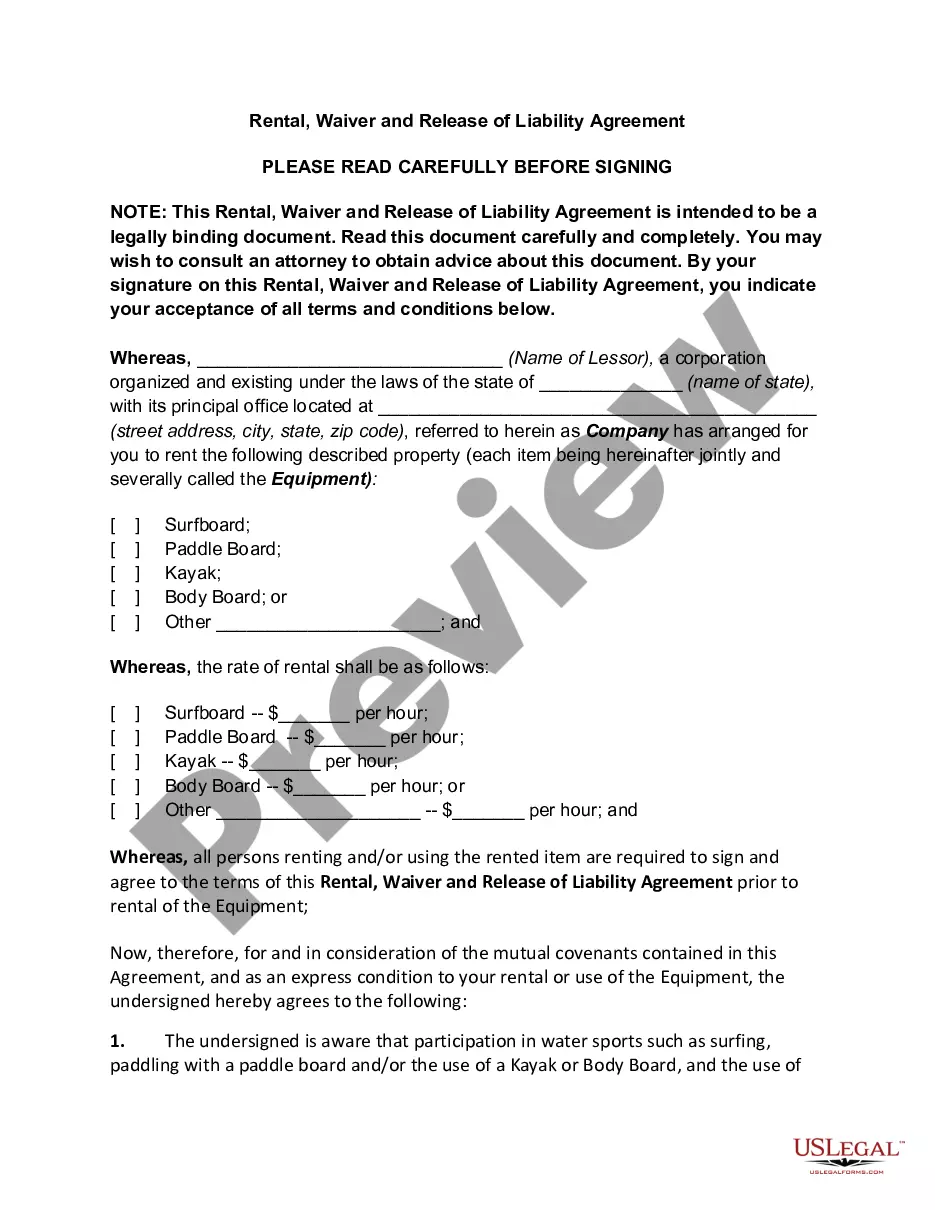
Get your form ready online
Our built-in tools help you complete, sign, share, and store your documents in one place.
Make edits, fill in missing information, and update formatting in US Legal Forms—just like you would in MS Word.
Download a copy, print it, send it by email, or mail it via USPS—whatever works best for your next step.
Sign and collect signatures with our SignNow integration. Send to multiple recipients, set reminders, and more. Go Premium to unlock E-Sign.
If this form requires notarization, complete it online through a secure video call—no need to meet a notary in person or wait for an appointment.
We protect your documents and personal data by following strict security and privacy standards.

Make edits, fill in missing information, and update formatting in US Legal Forms—just like you would in MS Word.

Download a copy, print it, send it by email, or mail it via USPS—whatever works best for your next step.

Sign and collect signatures with our SignNow integration. Send to multiple recipients, set reminders, and more. Go Premium to unlock E-Sign.

If this form requires notarization, complete it online through a secure video call—no need to meet a notary in person or wait for an appointment.

We protect your documents and personal data by following strict security and privacy standards.
Looking for another form?




Form popularity
FAQ
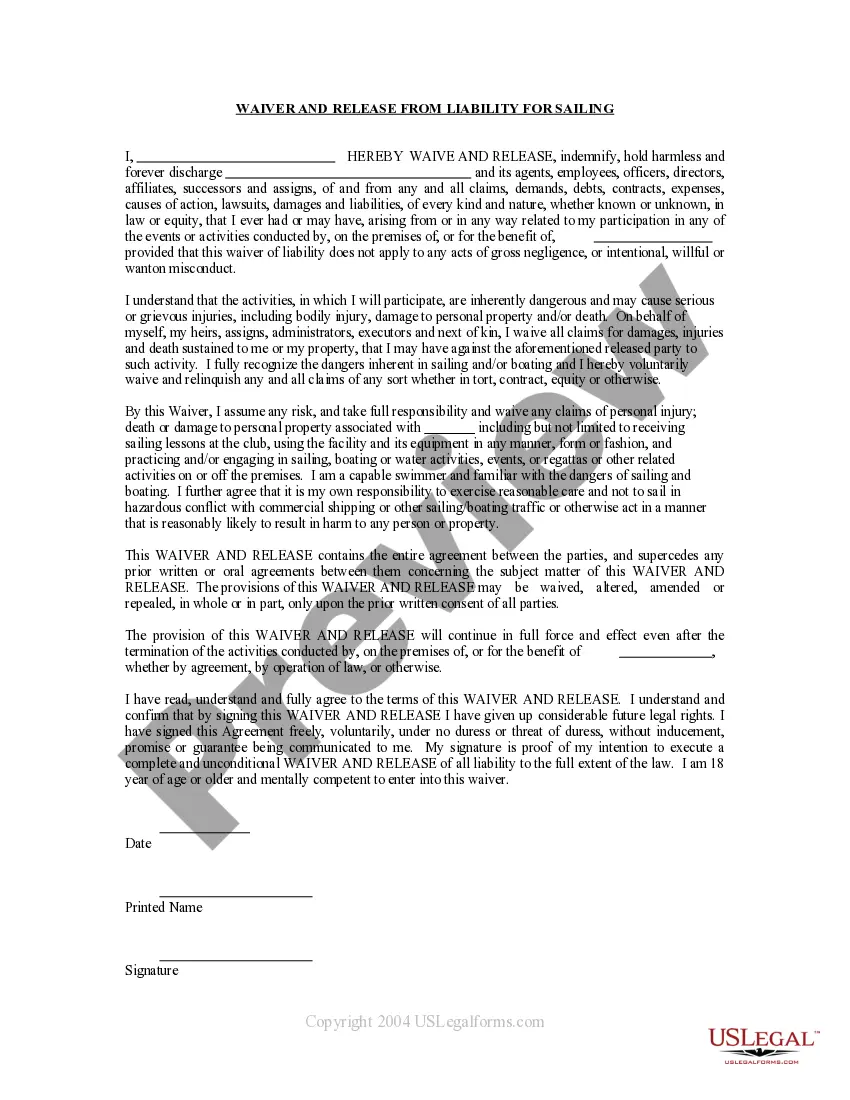
A waiver is generally a voluntary relinquishment of a known right and is executed prior to the activity. Basically, a participant surrenders their negligence-based personal injury claim against a business or company. This means the participant agrees to “hold harmless” the organization if they are injured.
Liability waivers are also known as hold harmless agreements for a reason. A hold harmless clause, also known as an exculpatory clause or release of liability clause, is a standard waiver clause that states that one party won't hold the other liable for damages, losses, or costs associated with incurred legal issues.
A liability waiver is a legal document that a person who participates in an activity may sign to acknowledge the risks involved in their participation. By doing so, the company attempts to remove legal liability from the business or person responsible for the activity.
A hold harmless agreement differs in that it shifts liability. While a waiver of subrogation is protection from liability, it doesn't shift the liability as a hold harmless agreement does.
A liability waiver, or release of liability, is a legal document that a company or organization has you sign in order to protect them from being sued in the event that you are injured.
Boat insurance isn't required by Texas law, but some marinas may mandate boat liability coverage.
No state requires you to carry insurance for your boat trailer — even the few states that require boat insurance. But, if you don't have boat and trailer insurance coverage and you're in an accident involving your boat trailer, you could be liable for the damages.
He said he heard about what happened at the eight-year-old. And his heart goes out to the family. HeMoreHe said he heard about what happened at the eight-year-old. And his heart goes out to the family. He says the first thing he does when getting on a boat is putting life jackets on the little. Ones.
