Agreement Personal Injury Sample With Settlement Agreement In Dallas
Description

Get your form ready online
Our built-in tools help you complete, sign, share, and store your documents in one place.
Make edits, fill in missing information, and update formatting in US Legal Forms—just like you would in MS Word.
Download a copy, print it, send it by email, or mail it via USPS—whatever works best for your next step.
Sign and collect signatures with our SignNow integration. Send to multiple recipients, set reminders, and more. Go Premium to unlock E-Sign.
If this form requires notarization, complete it online through a secure video call—no need to meet a notary in person or wait for an appointment.
We protect your documents and personal data by following strict security and privacy standards.

Make edits, fill in missing information, and update formatting in US Legal Forms—just like you would in MS Word.

Download a copy, print it, send it by email, or mail it via USPS—whatever works best for your next step.

Sign and collect signatures with our SignNow integration. Send to multiple recipients, set reminders, and more. Go Premium to unlock E-Sign.

If this form requires notarization, complete it online through a secure video call—no need to meet a notary in person or wait for an appointment.

We protect your documents and personal data by following strict security and privacy standards.
Looking for another form?



Form popularity
FAQ
Treat the following as a set of general guidelines: Gather complete information before you start writing. Describe your injuries and medical treatment. List your medical expenses, lost wages, and non-economic damages. Make a settlement demand. Include a deadline for legal action if you want to, but don't bluff.
Most settlements and court awards will be approximately $3,000 to $75,000. The likelihood of receiving a payout in this range is approximately 70%. Below we'll map out California personal injury settlements by case type.
An average personal injury settlement amount is anywhere between $3,000 and $75,000. Be careful when using an average personal injury settlement calculator to give you an idea of what you may stand to collect. These numbers really depend on your individual case and are hard to predict without a professional.
Physical Injuries or Sickness: Compensation for personal physical injuries or physical sickness is generally not taxable. ing to the IRS, if you did not take an itemized deduction for medical expenses related to the injury or sickness, the settlement is non-taxable.
It's important to note there are two types of injury compensation (damages): General Damagescompensate you for the pain and suffering of your injuries and the impact they've had on your life. Special damages reimburse you for any financial losses you incurred as a direct result of the accident and your injuries.
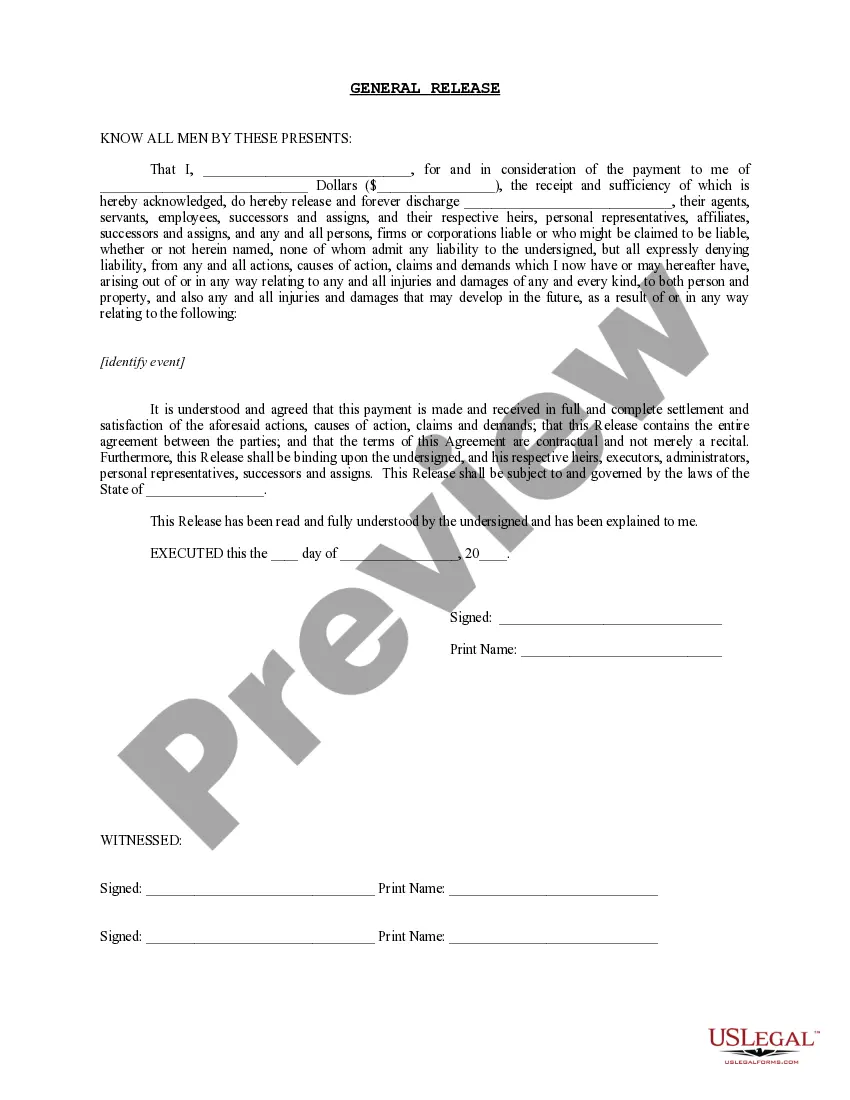
The result of a settlement agreement involves the responsible party paying a certain amount to compensate for the damages caused to the victim.
Ing to the Texas Department of Insurance, a Texas average personal injury settlement typically falls between $30,000 and $40,000, ing to industry reports.
SIGNING AND FILING THE AGREEMENT Once you and your spouse agree on the terms of the Agreement, it must be properly signed (executed). Note: Signatures must be certified by a Notary Public, but the parties do not have to sign the document at the same time, or in the presence of the same Notary.
So, these documents must meet specific legal requirements and incorporate certain sections to be legally binding. In most cases, a contract does not have to be notarized since the signed contract itself is enforceable and legally binding in state or federal courts.
A party may obtain discovery of the existence and contents of any relevant portions of a settlement agreement. Information concerning a settlement agreement is not by reason of disclosure admissible in evidence at trial.
