Example Of Simple Corporate Bylaws In Suffolk
Description

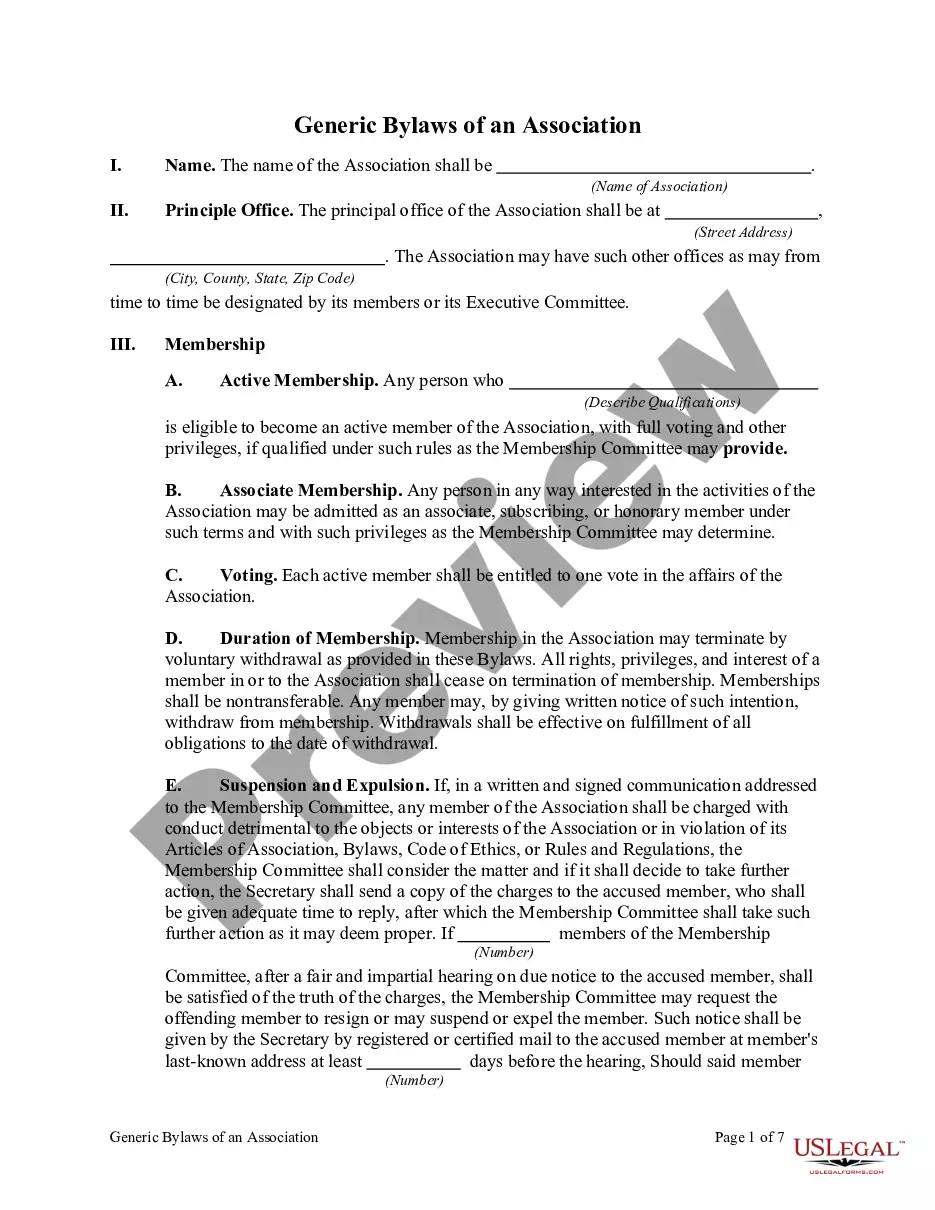
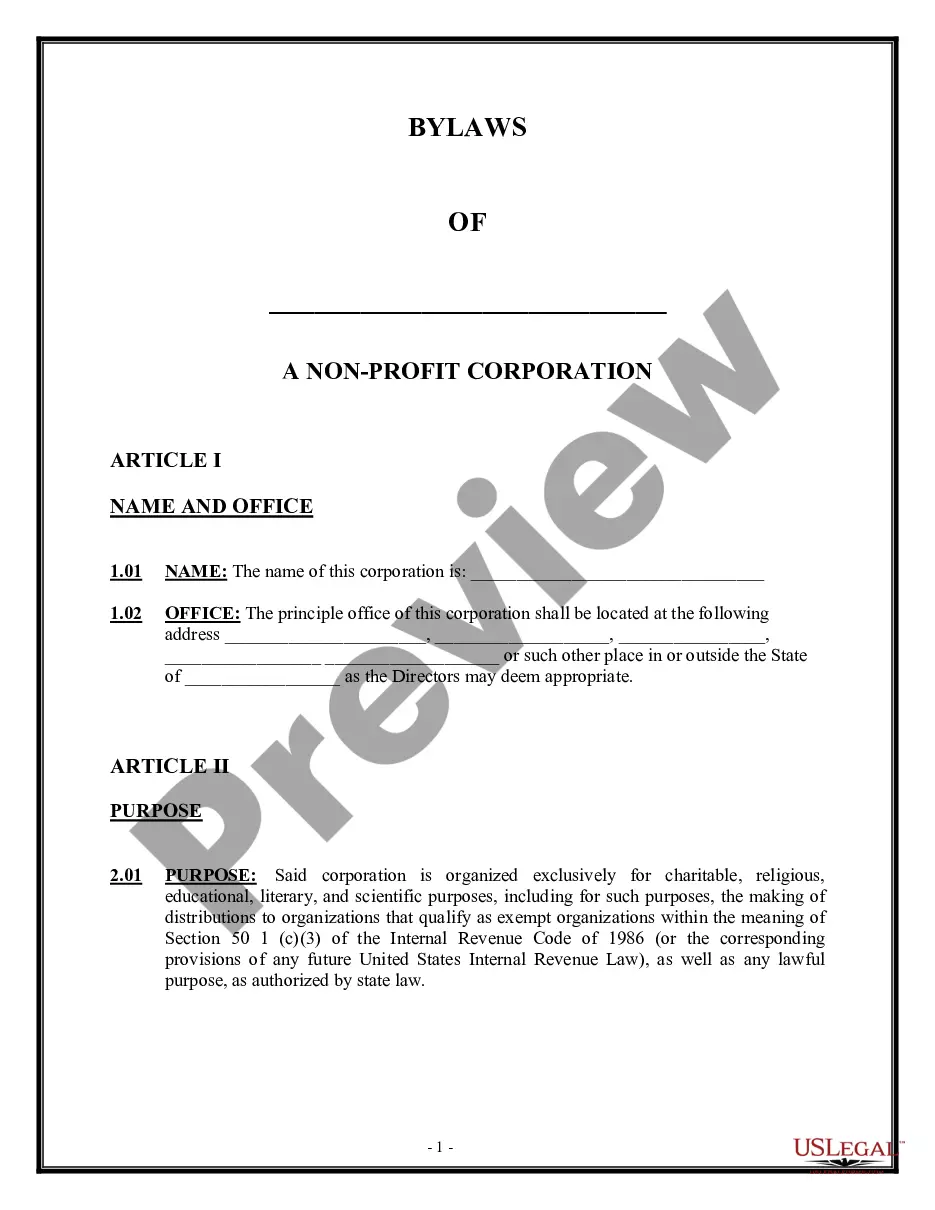
Get your form ready online
Our built-in tools help you complete, sign, share, and store your documents in one place.
Make edits, fill in missing information, and update formatting in US Legal Forms—just like you would in MS Word.
Download a copy, print it, send it by email, or mail it via USPS—whatever works best for your next step.
Sign and collect signatures with our SignNow integration. Send to multiple recipients, set reminders, and more. Go Premium to unlock E-Sign.
If this form requires notarization, complete it online through a secure video call—no need to meet a notary in person or wait for an appointment.
We protect your documents and personal data by following strict security and privacy standards.

Make edits, fill in missing information, and update formatting in US Legal Forms—just like you would in MS Word.

Download a copy, print it, send it by email, or mail it via USPS—whatever works best for your next step.

Sign and collect signatures with our SignNow integration. Send to multiple recipients, set reminders, and more. Go Premium to unlock E-Sign.

If this form requires notarization, complete it online through a secure video call—no need to meet a notary in person or wait for an appointment.

We protect your documents and personal data by following strict security and privacy standards.
Looking for another form?









Form popularity
FAQ
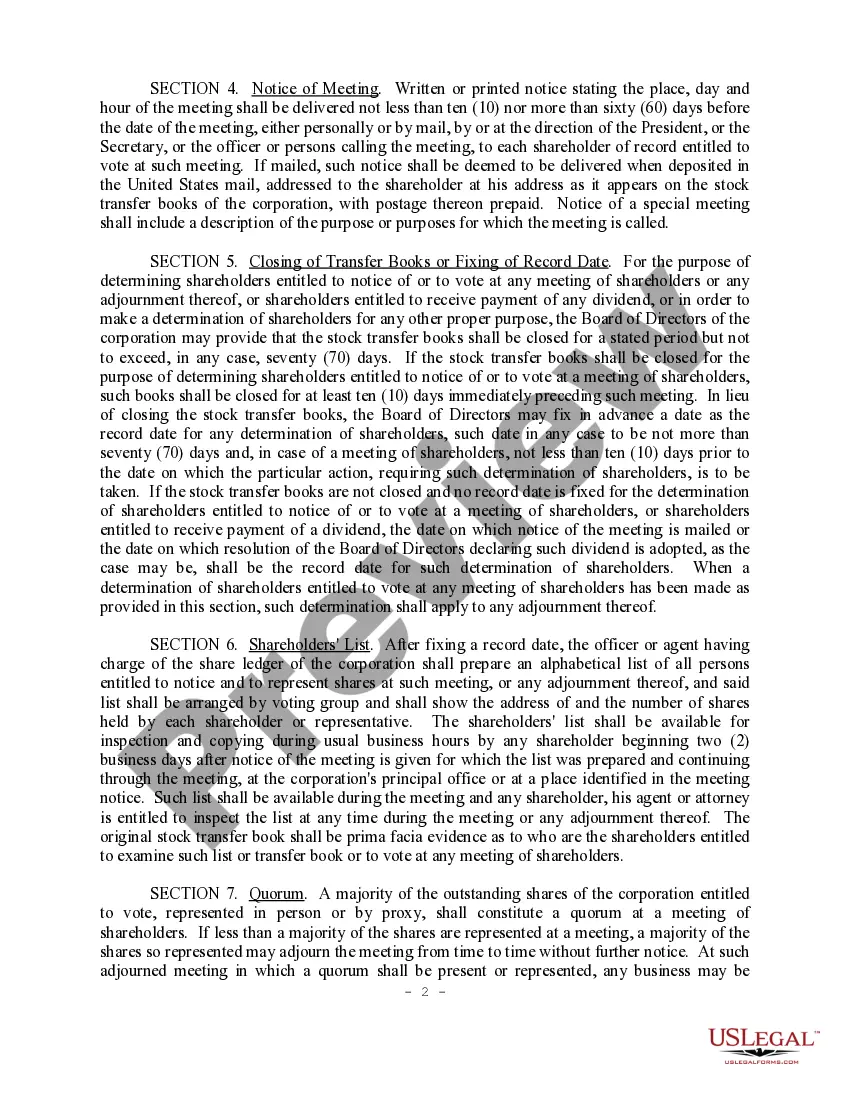
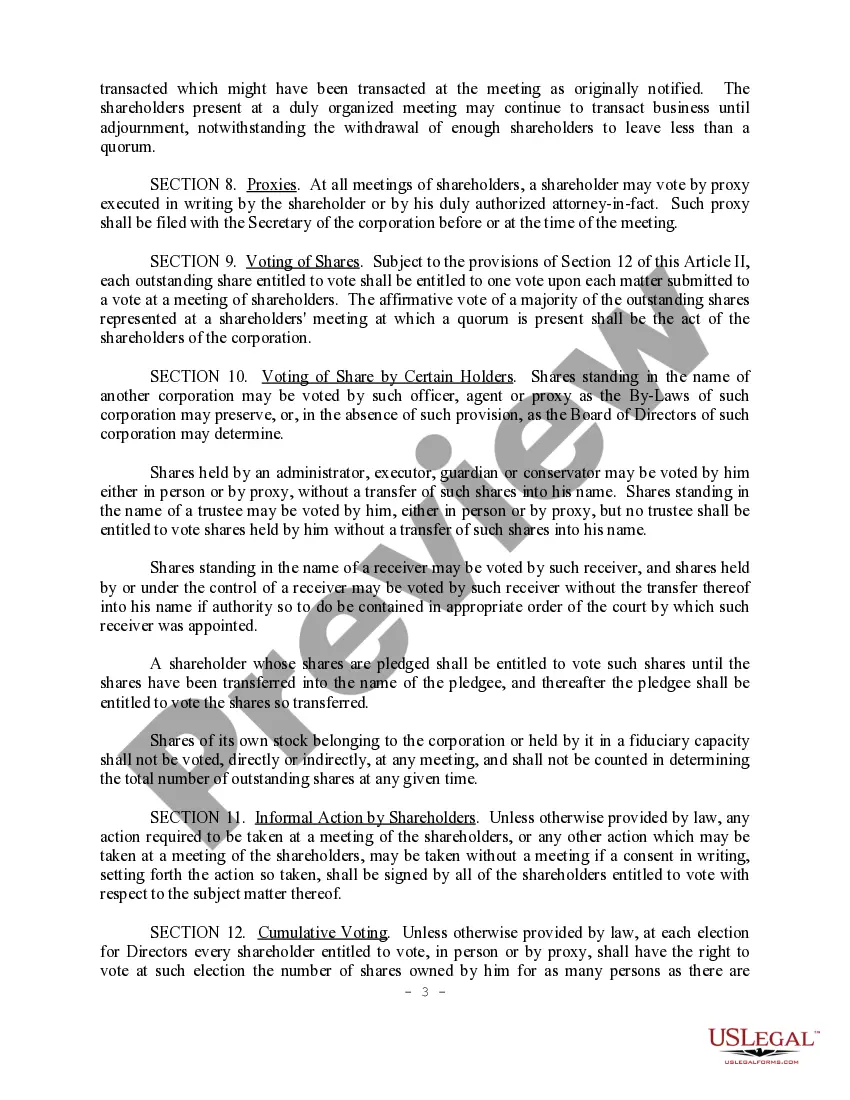
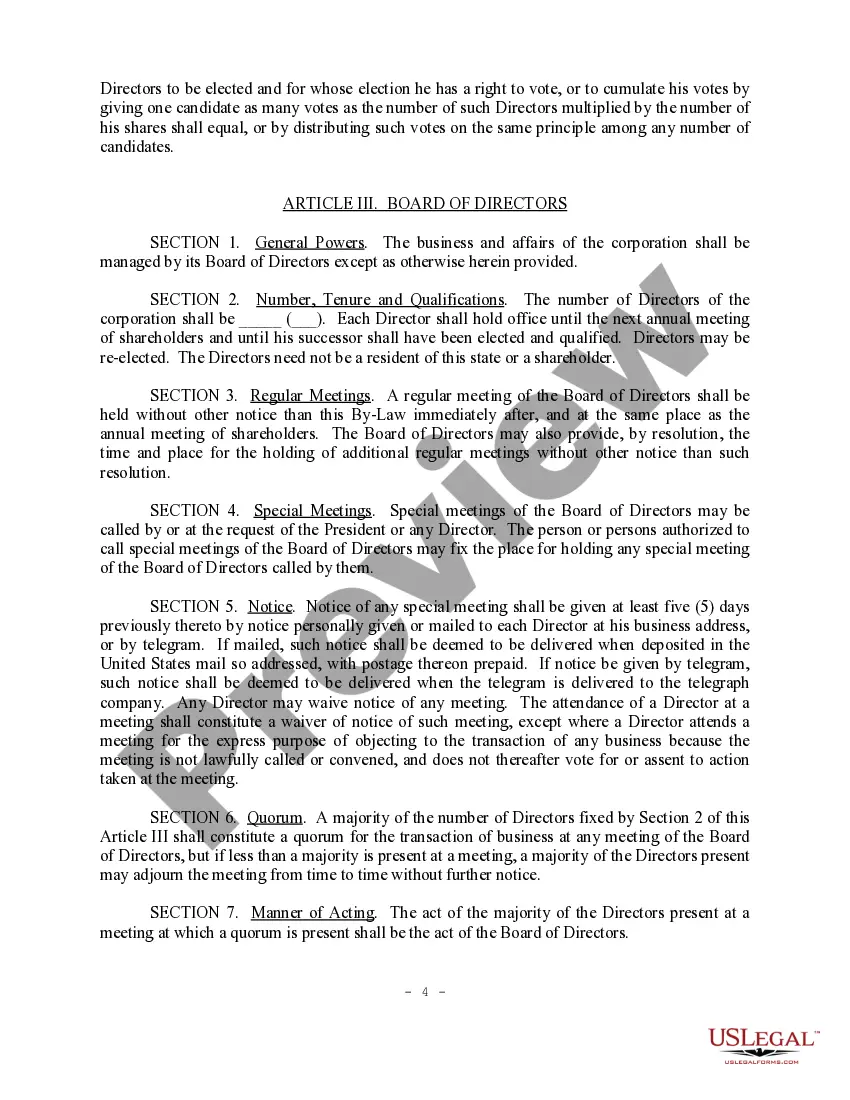
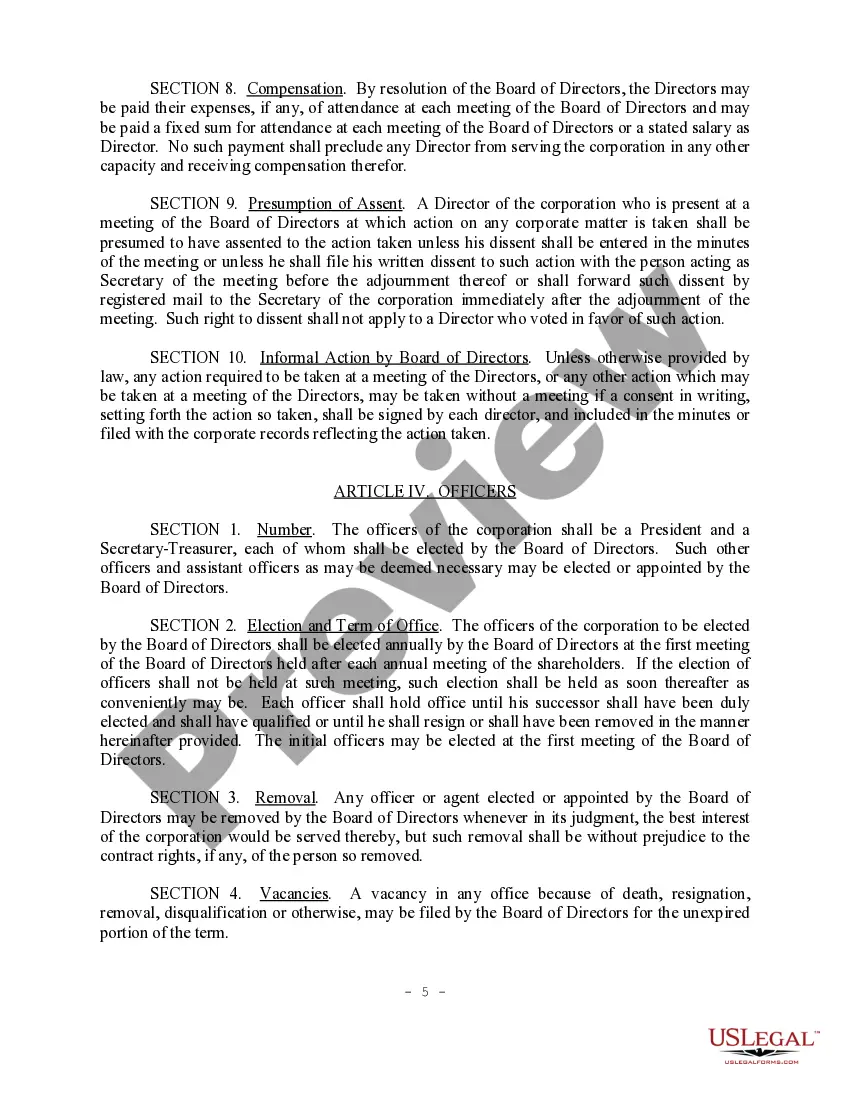
10 steps for writing bylaws for an association Research. Form a committee. Create the structure. Outline your organization's key roles and responsibilities. Establish your meeting rules. Define your membership. Address finances. Outline the amendment process.
Here are some typical examples of S corporation bylaws: Yearly meetings will be held to elect a board of directors for the following year. To vote or carry on other transactional business, there must be a minimum of six directors.
No, bylaws do not need to be notarized. Bylaws are rules that guide all activities and operations of a corporation.
Topics to Include in Your Corporate Bylaws. Shareholders' Meetings. Corporate Officers: Positions, Duties, and Appointment. Board of Directors: Number, Term, and Elections. Board of Directors Meetings. Corporate Records and Reports. Shares and Stock Certificates.
