Bylaws With Members In Hennepin
Description

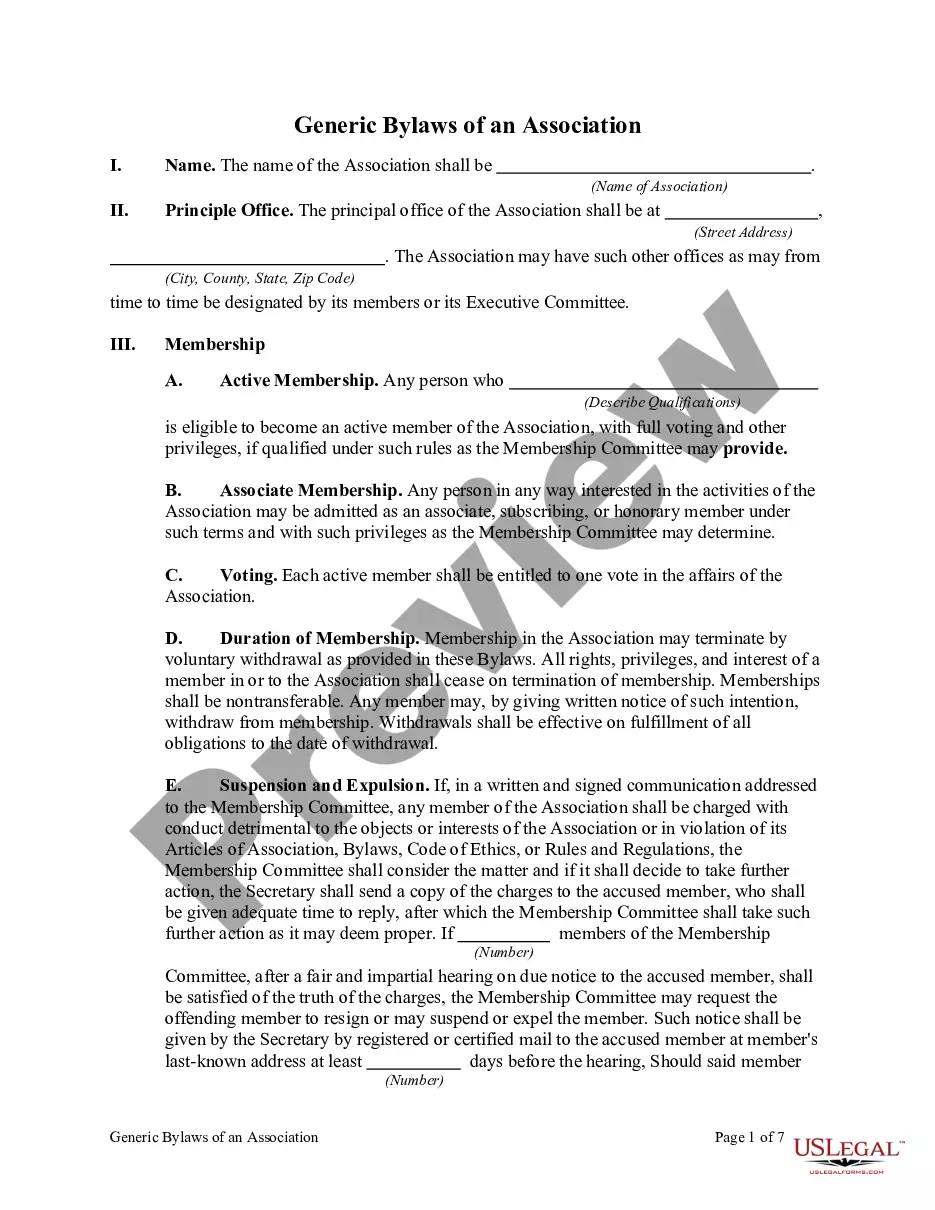
Get your form ready online
Our built-in tools help you complete, sign, share, and store your documents in one place.
Make edits, fill in missing information, and update formatting in US Legal Forms—just like you would in MS Word.
Download a copy, print it, send it by email, or mail it via USPS—whatever works best for your next step.
Sign and collect signatures with our SignNow integration. Send to multiple recipients, set reminders, and more. Go Premium to unlock E-Sign.
If this form requires notarization, complete it online through a secure video call—no need to meet a notary in person or wait for an appointment.
We protect your documents and personal data by following strict security and privacy standards.

Make edits, fill in missing information, and update formatting in US Legal Forms—just like you would in MS Word.

Download a copy, print it, send it by email, or mail it via USPS—whatever works best for your next step.

Sign and collect signatures with our SignNow integration. Send to multiple recipients, set reminders, and more. Go Premium to unlock E-Sign.

If this form requires notarization, complete it online through a secure video call—no need to meet a notary in person or wait for an appointment.

We protect your documents and personal data by following strict security and privacy standards.
Looking for another form?



Form popularity
FAQ
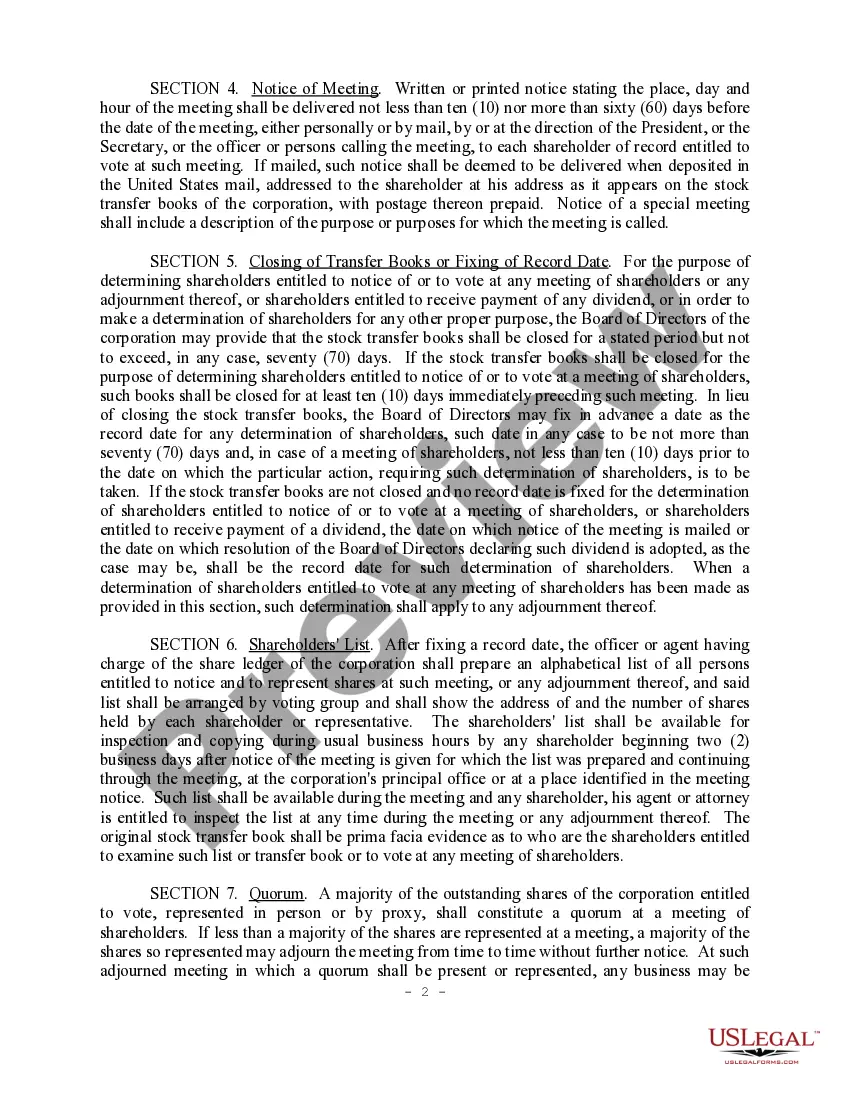
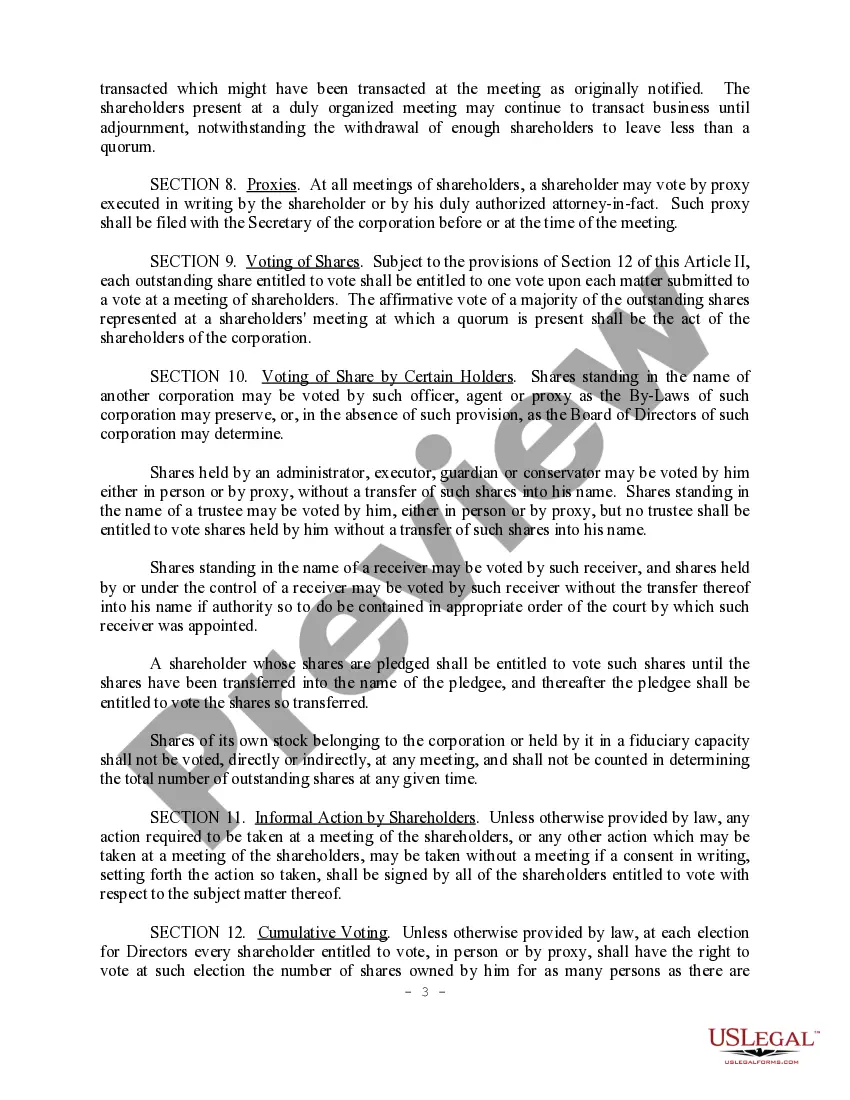
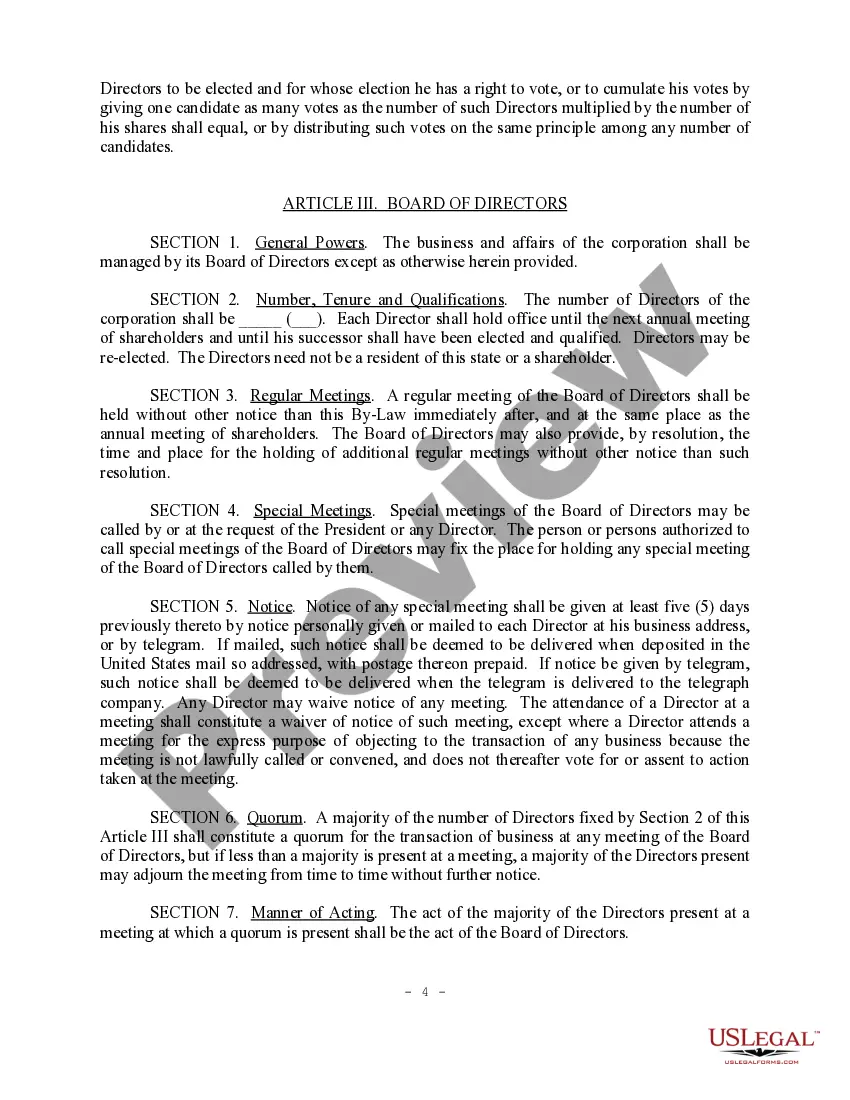
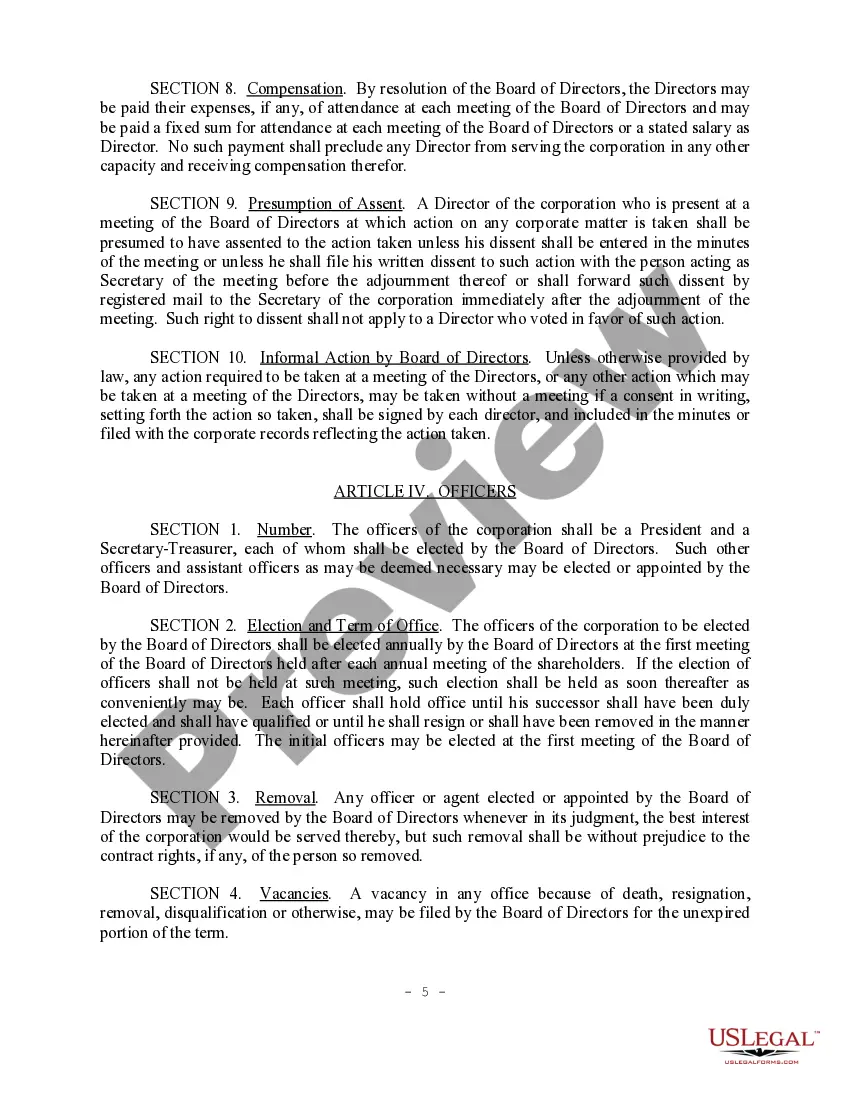
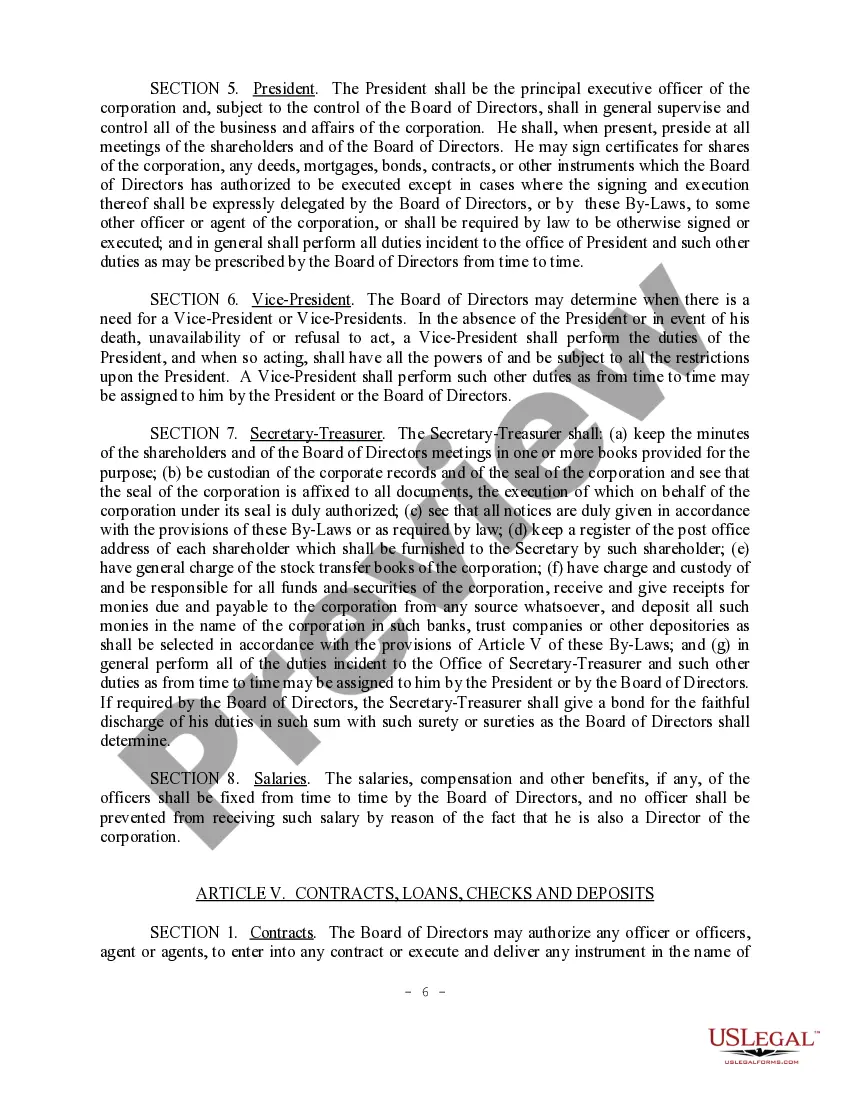
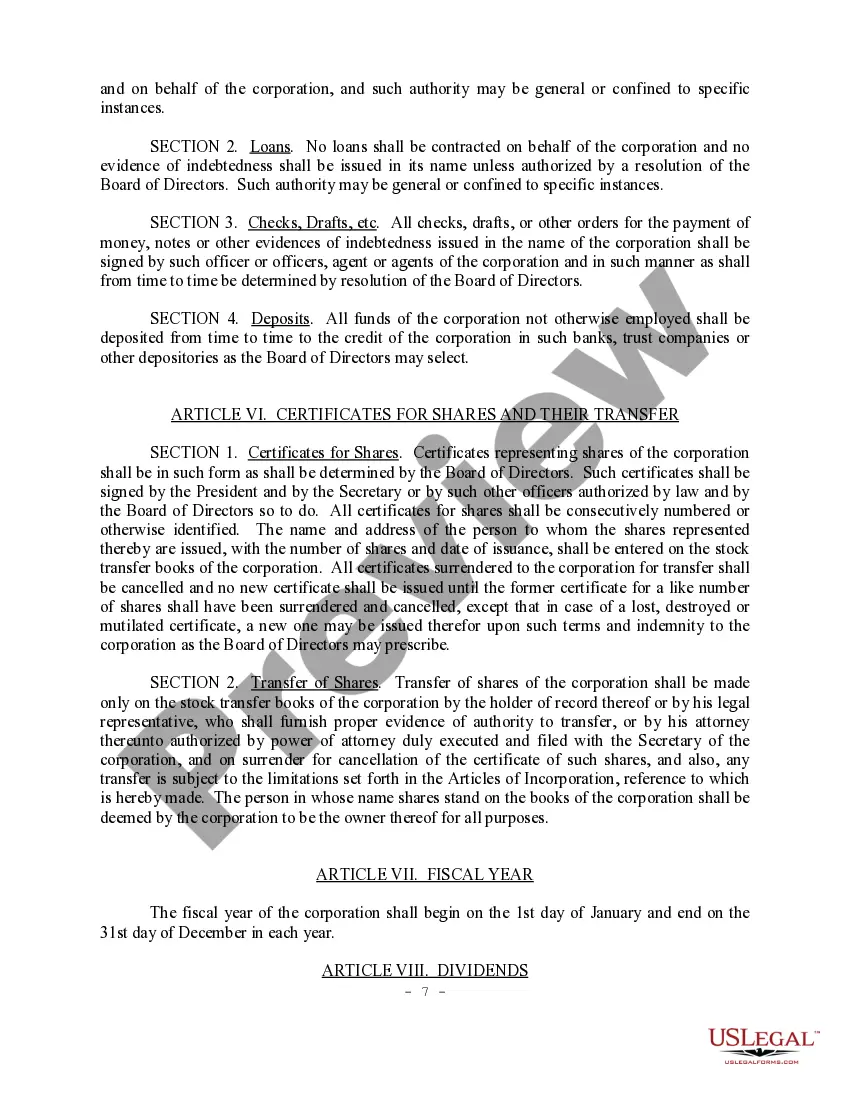
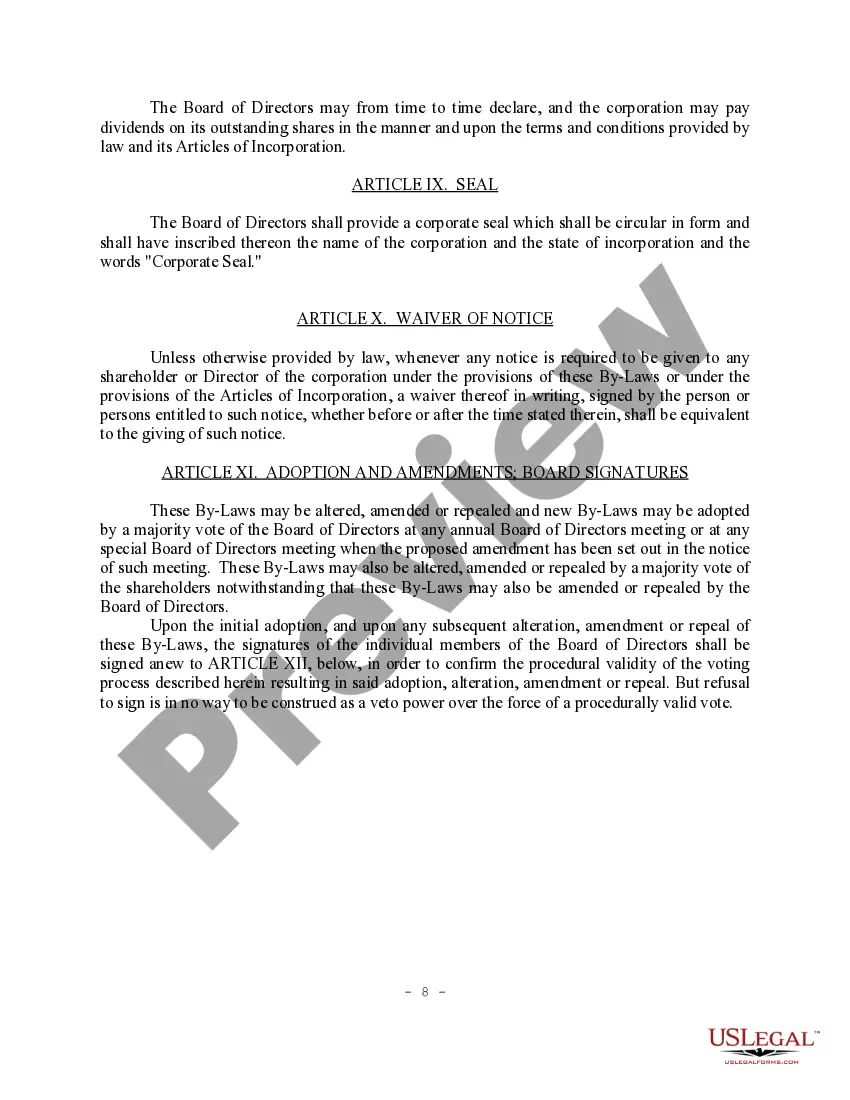
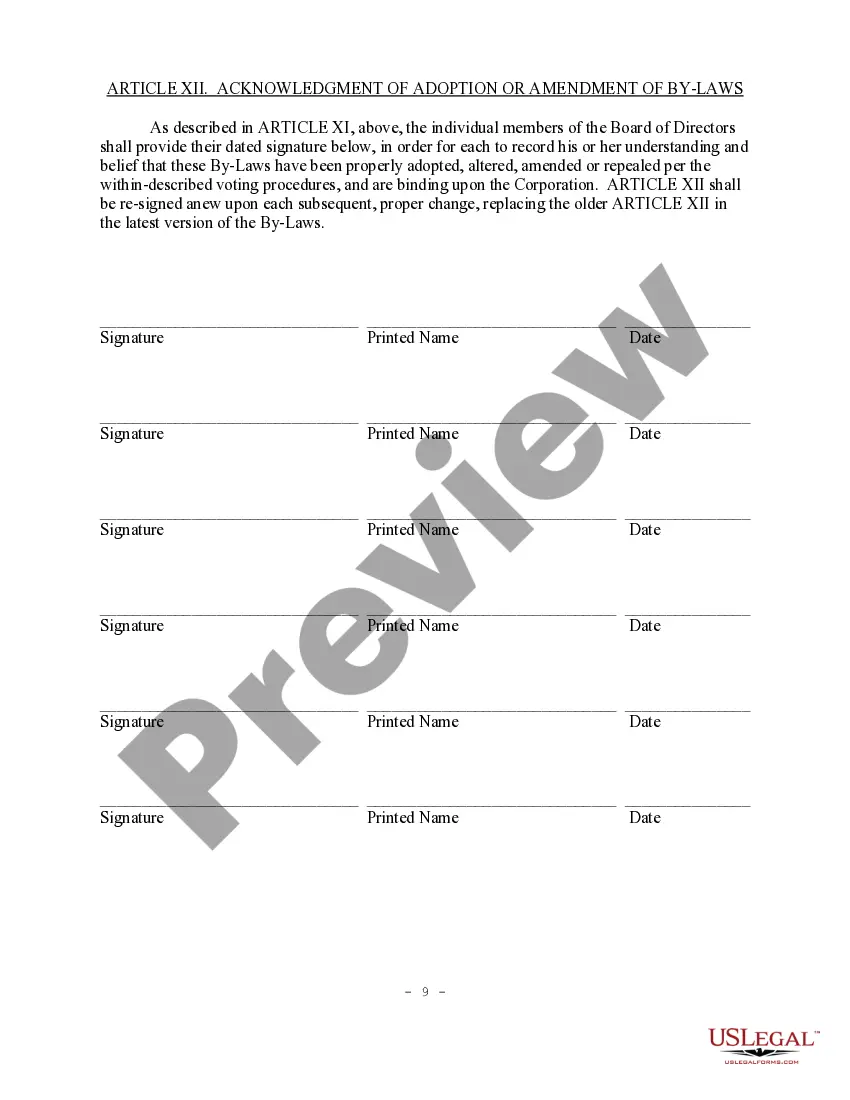
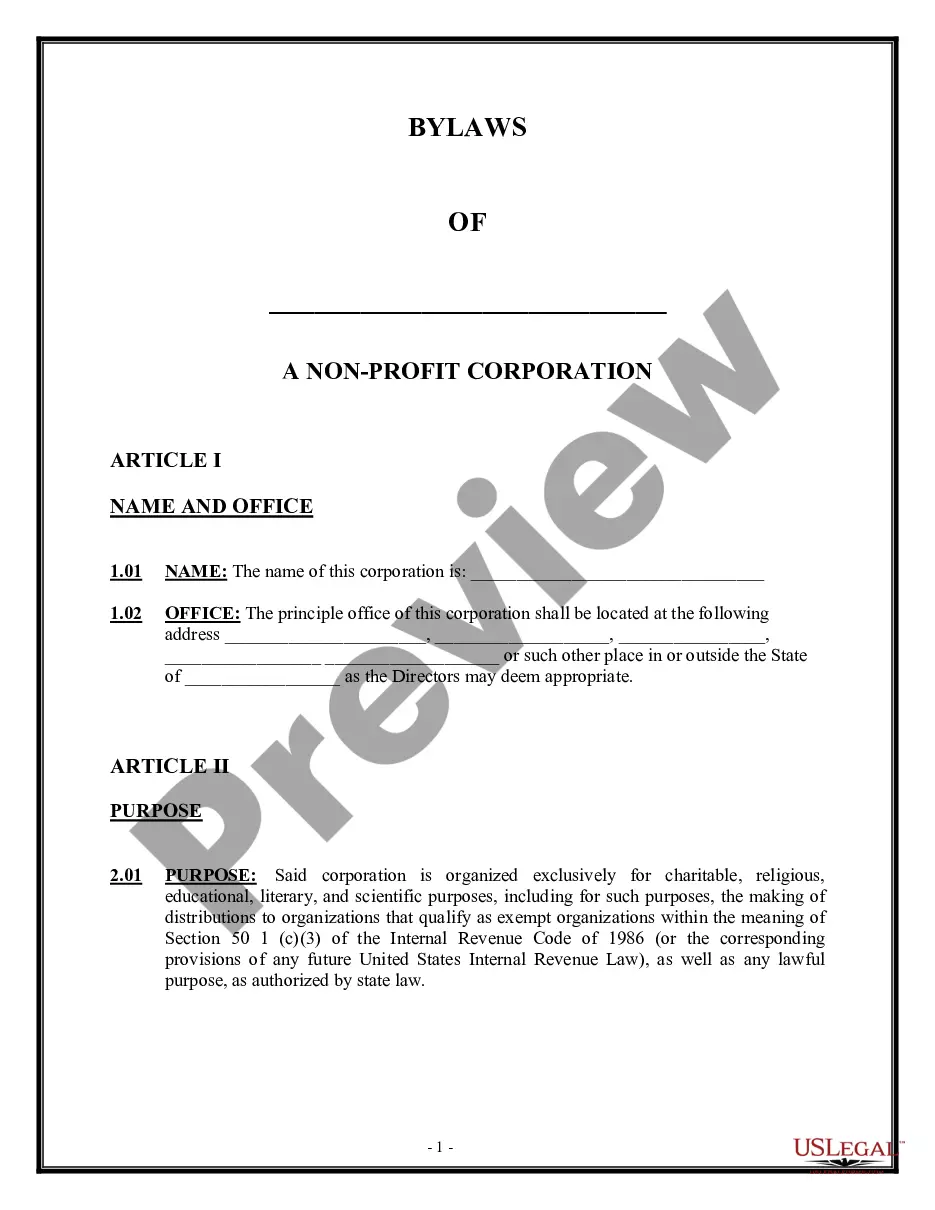
Bylaws are an organization's internal operating rules. Federal tax law does not require specific language in the bylaws of most organizations. State law may require nonprofit corporations to have bylaws, however, and nonprofit organizations generally find it advisable to have internal operating rules.
By-laws may be used to set principles for decision-making and to provide for specific rules and regulations, accompanied by offences and penalty clauses. By-laws can also set procedures for the application of authorisations and approvals from the municipality, for example.
Which of the following best describes bylaws? They are rules enacted by directors to govern a corporation's conduct.
They are essential in helping an organization map out its purpose and the practical day-to-day details of how it will go about its business. Bylaws serve as the legal guidelines of the organization, and the organization could be challenged in court for its actions if it violates them.
Associations of all sizes and purposes use bylaws to provide a consistent structure for guiding their teams. Association bylaws cover a range of topics like an organization's purpose, how meetings should be run and membership requirements.
Hennepin County has seven commissioners who serve four-year terms. The board enacts and enforces local ordinances, approves budgets, oversees spending, and hires county employees. Their duties are defined by the state constitution and state statutes. Find your commissioner using the district map.
Like all Minnesota counties, Hennepin is governed by an elected and nonpartisan board of commissioners. In Minnesota, county commissions usually have five members, but Hennepin, Ramsey, Dakota, Anoka and St. Louis counties have seven members.
375.01 MEMBERS, NUMBER OF. Each county shall have a board of five commissioners who shall be known as the county board and whose terms of office shall be four years and until their successors qualify. In Anoka, Hennepin, Ramsey, and St. Louis Counties the board shall have seven members.
Hennepin County has seven commissioners elected from seven separate districts. Find your district by using the state of Minnesota's polling place and district finder.
