Example Of Corporate Bylaws In California
Description

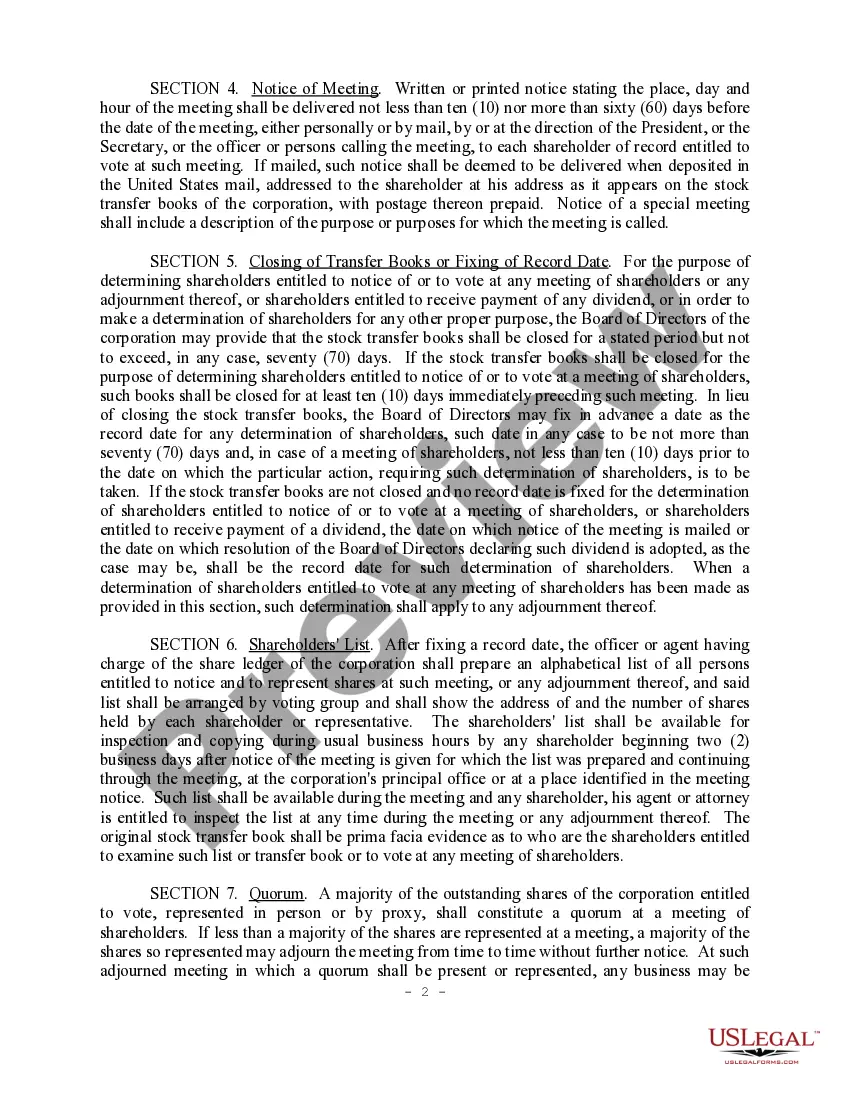
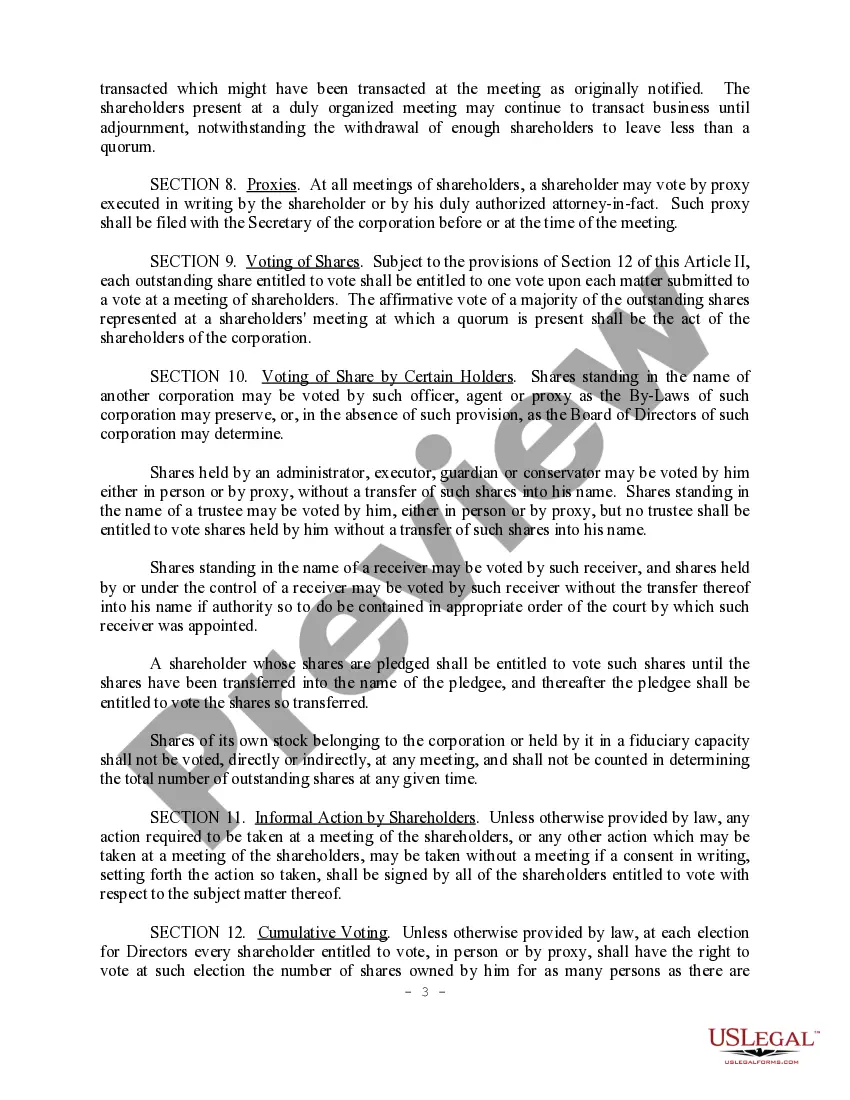
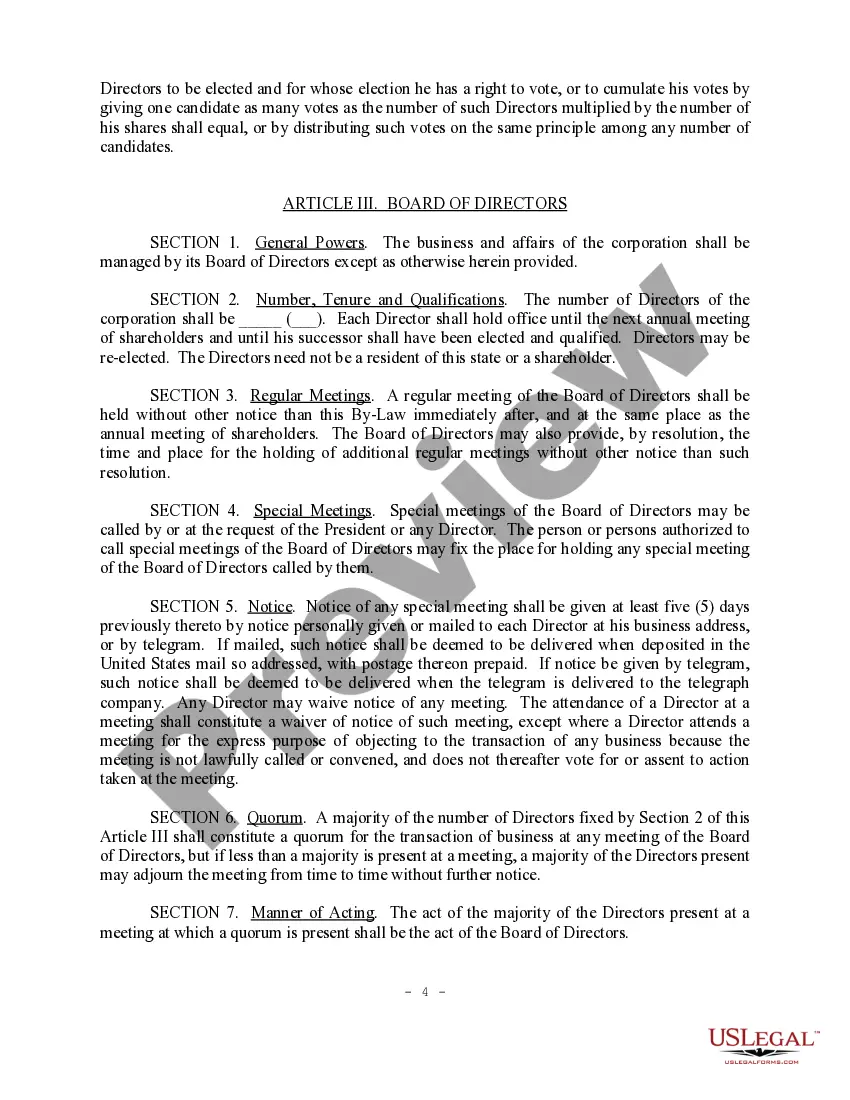
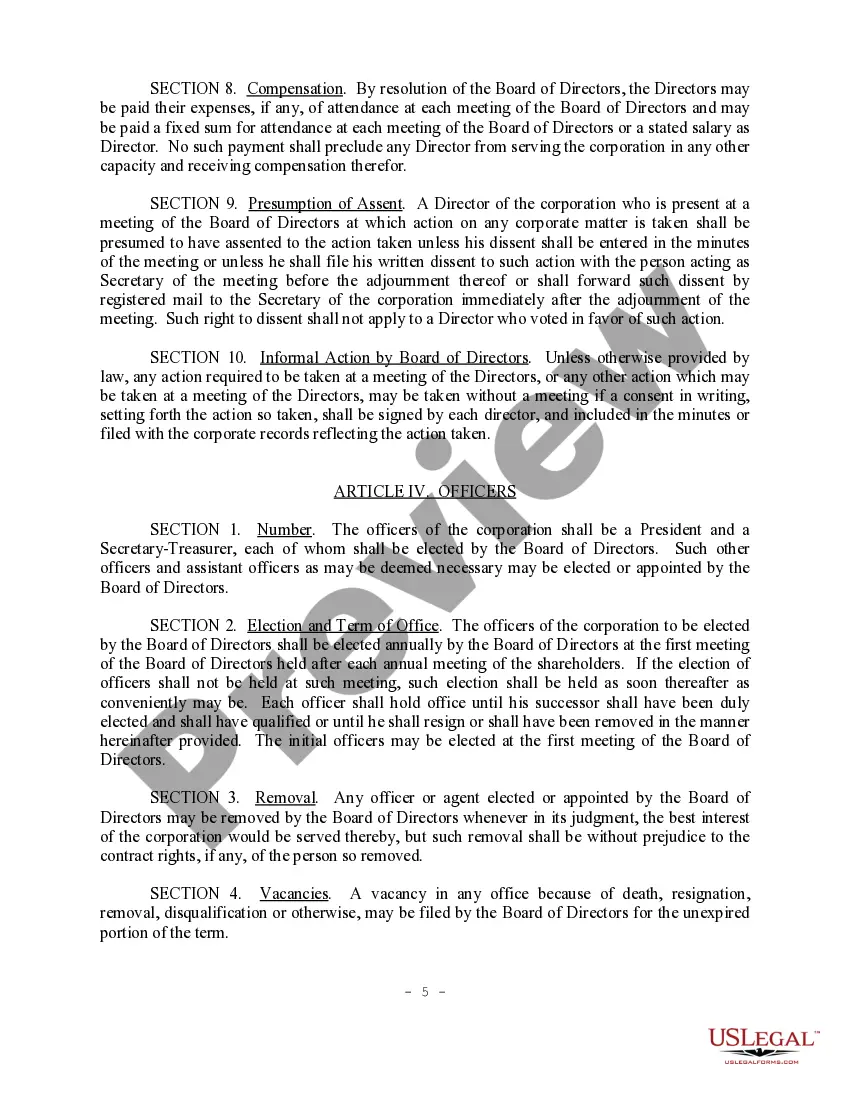
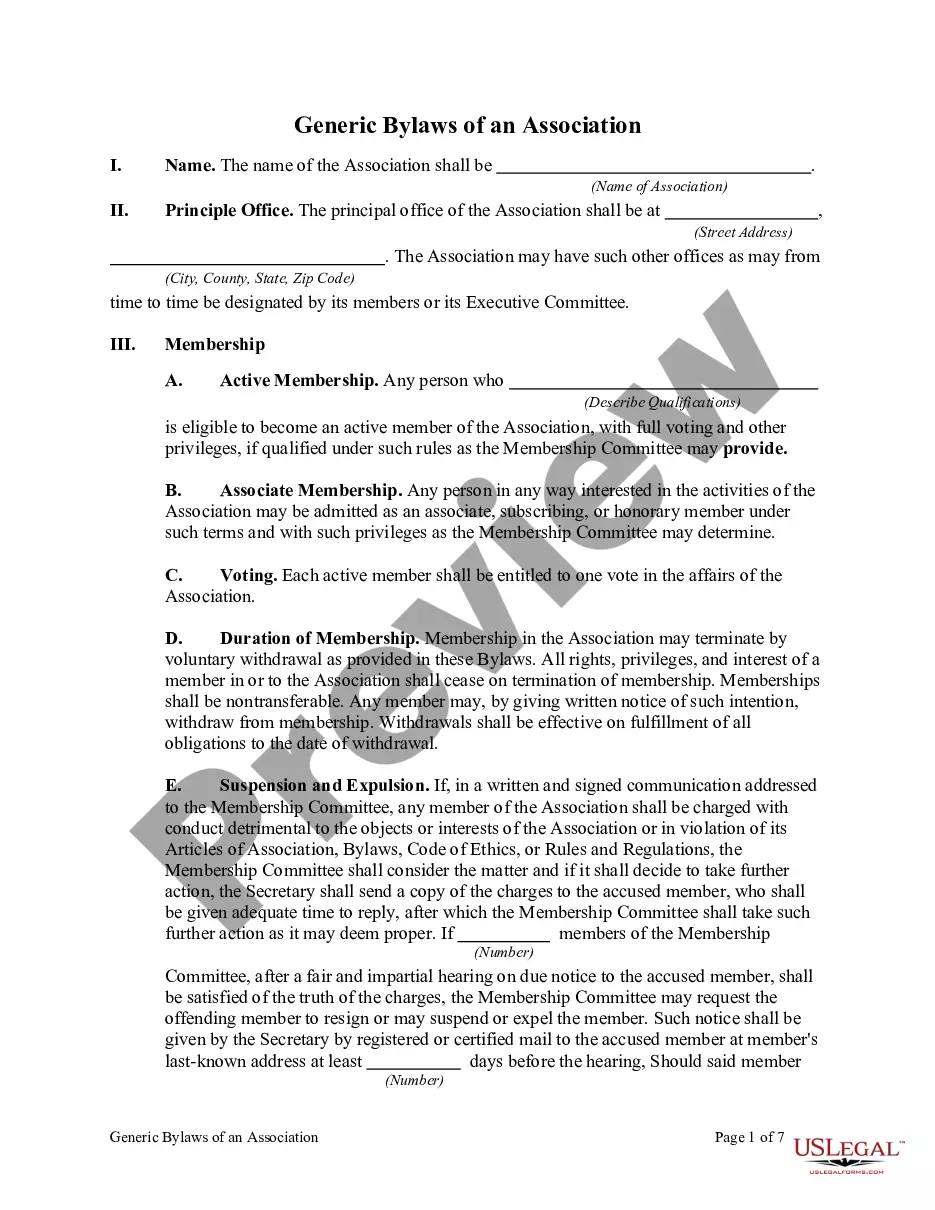
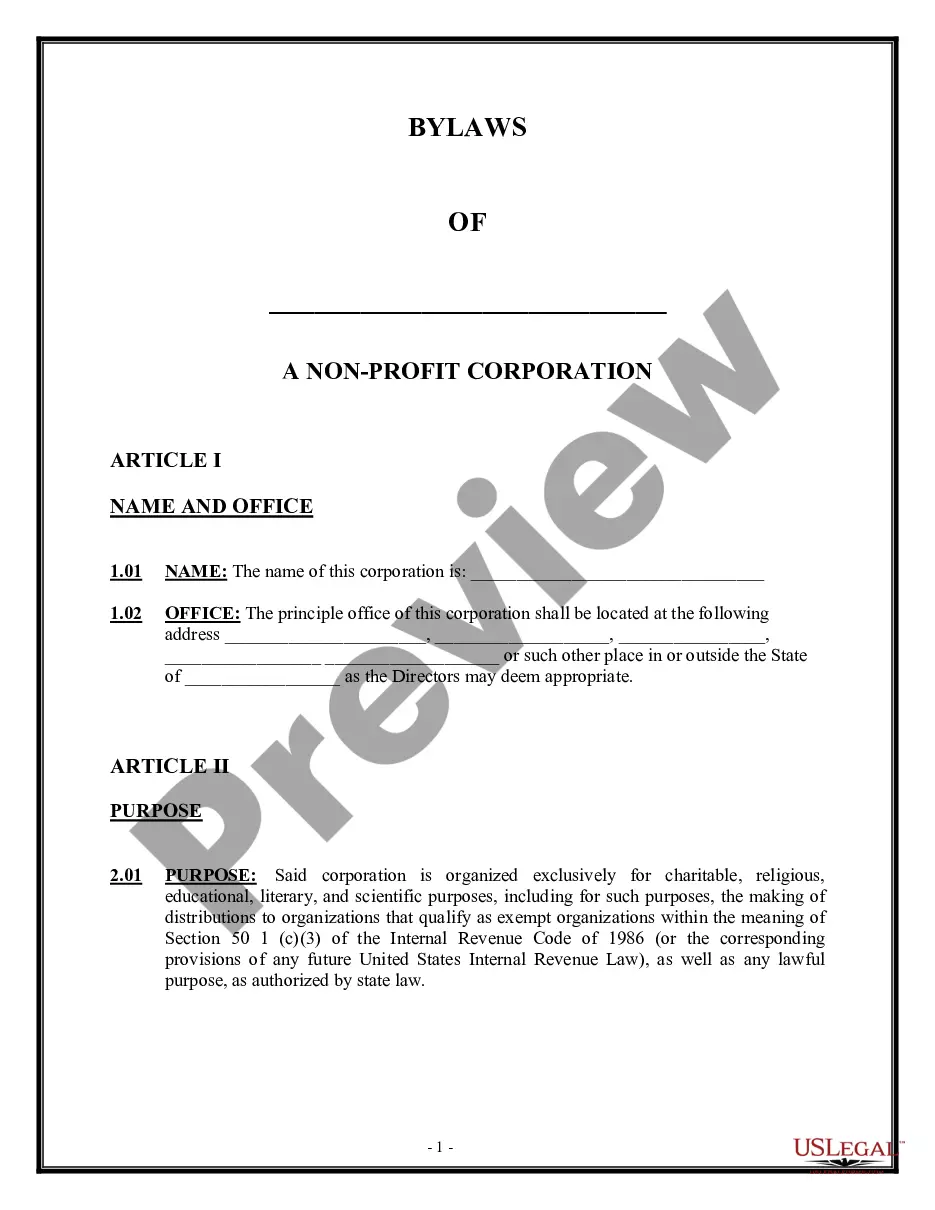
Get your form ready online
Our built-in tools help you complete, sign, share, and store your documents in one place.
Make edits, fill in missing information, and update formatting in US Legal Forms—just like you would in MS Word.
Download a copy, print it, send it by email, or mail it via USPS—whatever works best for your next step.
Sign and collect signatures with our SignNow integration. Send to multiple recipients, set reminders, and more. Go Premium to unlock E-Sign.
If this form requires notarization, complete it online through a secure video call—no need to meet a notary in person or wait for an appointment.
We protect your documents and personal data by following strict security and privacy standards.

Make edits, fill in missing information, and update formatting in US Legal Forms—just like you would in MS Word.

Download a copy, print it, send it by email, or mail it via USPS—whatever works best for your next step.

Sign and collect signatures with our SignNow integration. Send to multiple recipients, set reminders, and more. Go Premium to unlock E-Sign.

If this form requires notarization, complete it online through a secure video call—no need to meet a notary in person or wait for an appointment.

We protect your documents and personal data by following strict security and privacy standards.
Looking for another form?






Form popularity
FAQ
The Delaware corporate code covers most of the topics normally addressed in the Bylaws. Therefore, if the Certificate of Incorporation sets forth the authorized number of directors there is no legal requirement that a corporation have bylaws.
They set clear expectations and govern how often board meetings are held, how voting works, how new board members get elected, and how the company can issue new shares. US law requires that most corporations have bylaws.
How do I write Corporate Bylaws? Step 1: Select your corporation type. This is where you will list your company as a for-profit or a nonprofit. Step 2: Describe your incorporation status. Step 3: State your location. Step 4: Provide your corporation's registered name. Step 5: Outline shareholder meeting rules.
There's also the fact that if you don't list the number of directors in your Articles of Incorporation, you're legally required to list that information in your bylaws (see California Corp Code § 212). The bottom line: corporate bylaws are not legally required, but they're pretty much essential for your corporation.
Here are some typical examples of S corporation bylaws: Yearly meetings will be held to elect a board of directors for the following year. To vote or carry on other transactional business, there must be a minimum of six directors.
Creating by-laws When incorporating under the Canada Not-for-profit Corporations Act (NFP Act), you have to create by-laws. They set out the rules for governing and operating the corporation. They can be modified at a later date as the needs of the corporation change.
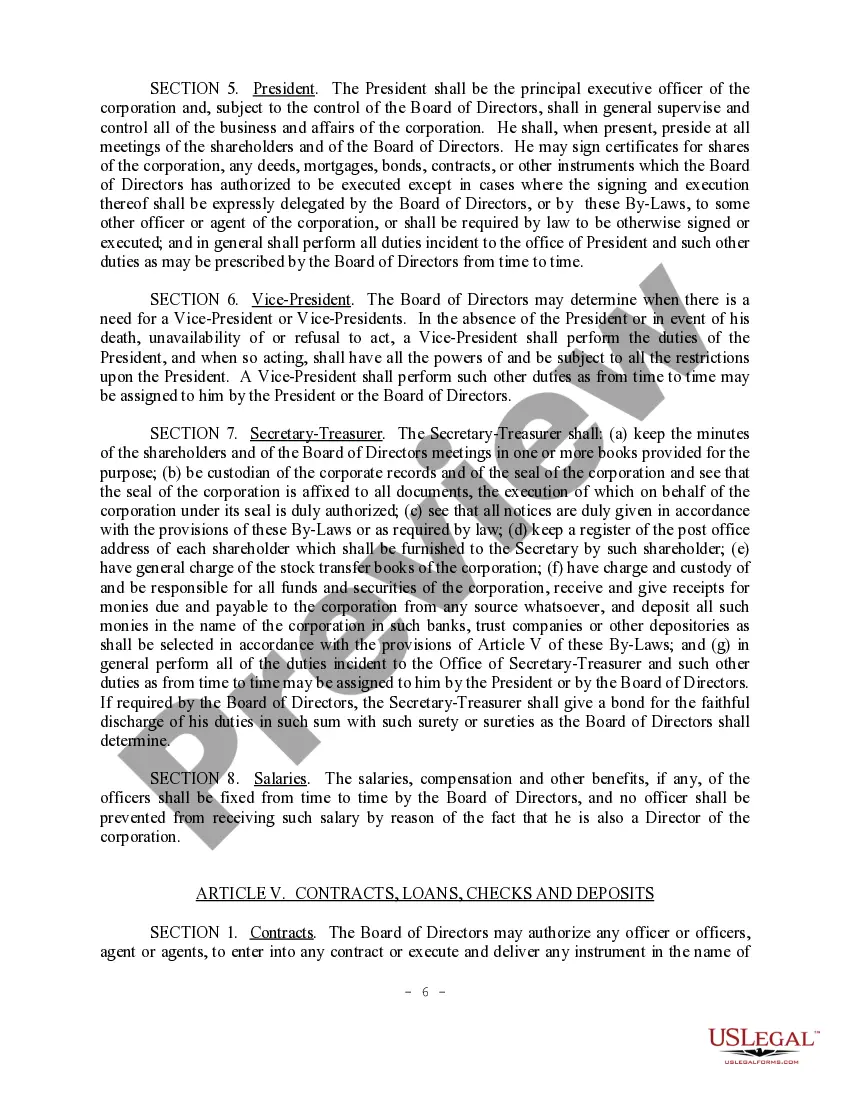
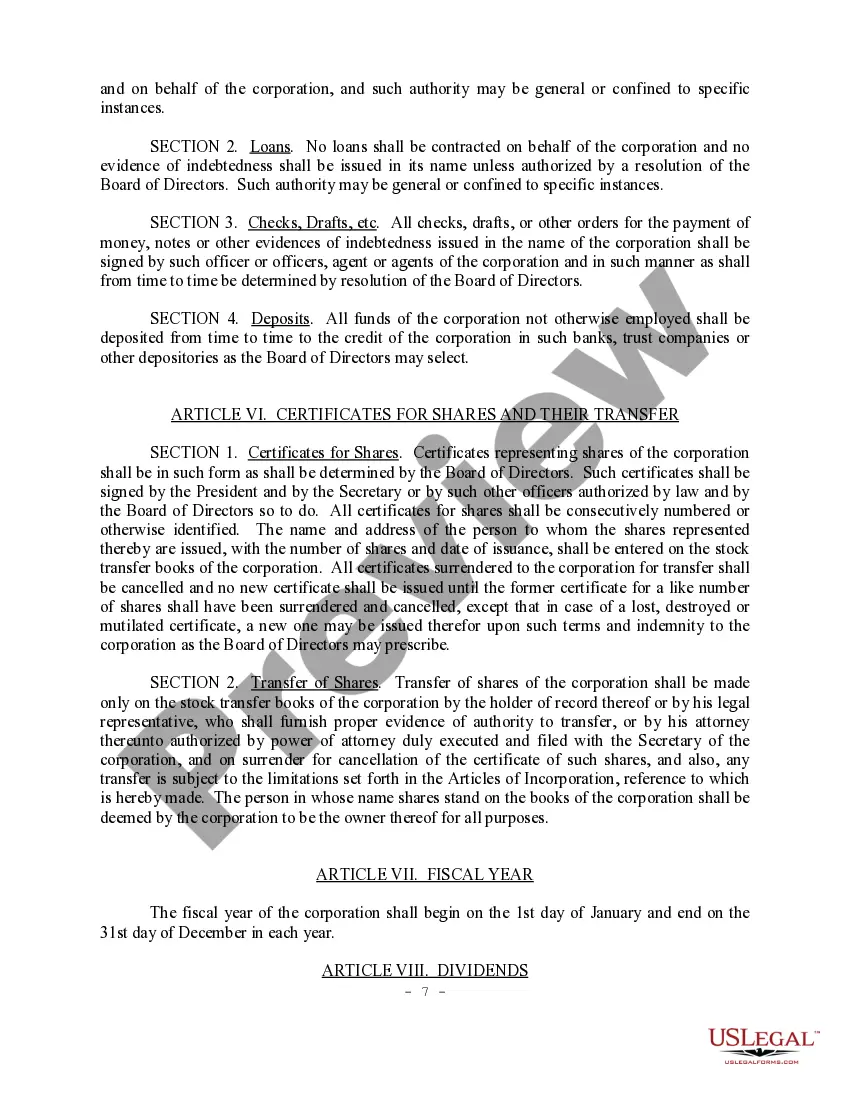
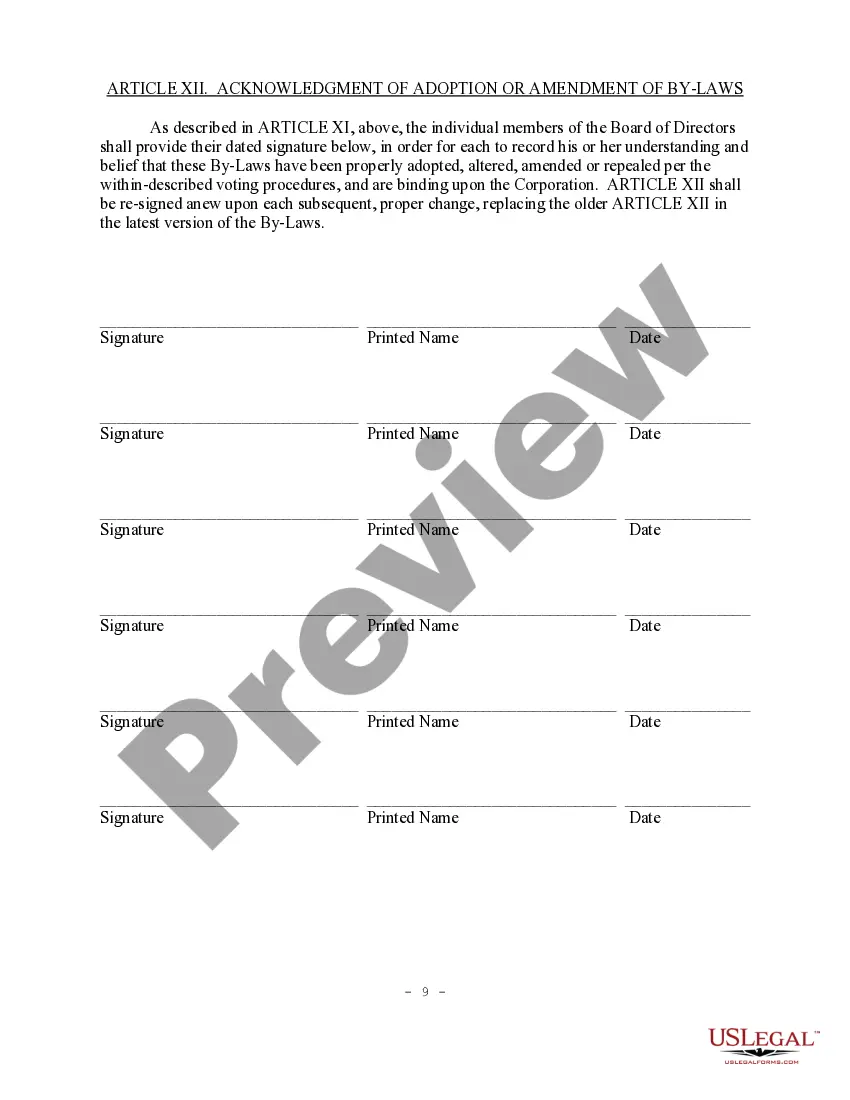
California corporate bylaws are the agreed-upon rules for your corporation's operations. Bylaws create an organizational structure for your company and outline policies for appointing directors and officers, holding shareholder and board meetings, and handling conflicts of interest, among other issues.
What Is A California Professional Corporation? Members of certain professions, such as lawyers, doctors, accountants, and engineers, may form a California professional corporation (also known as a “PC”). Typically, these types of entities provide services only through licensed professionals.
What Is A California Professional Corporation? Members of certain professions, such as lawyers, doctors, accountants, and engineers, may form a California professional corporation (also known as a “PC”). Typically, these types of entities provide services only through licensed professionals.
Qualified Corporation. A qualified corporation is a foreign corporation that has qualified through the Secretary of State. Franchise Tax. The corporate franchise tax is imposed for the privilege of exercising the corporate franchise in California. It is imposed on all corporations that do business in California.
