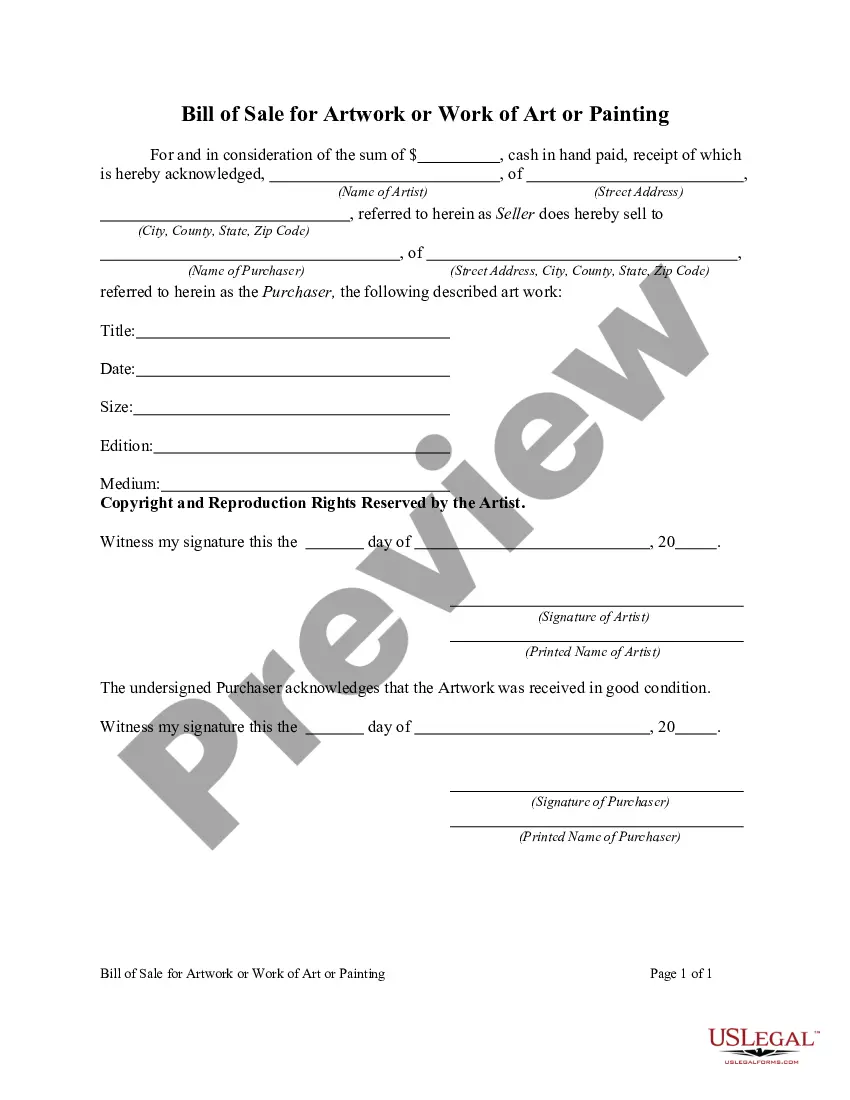
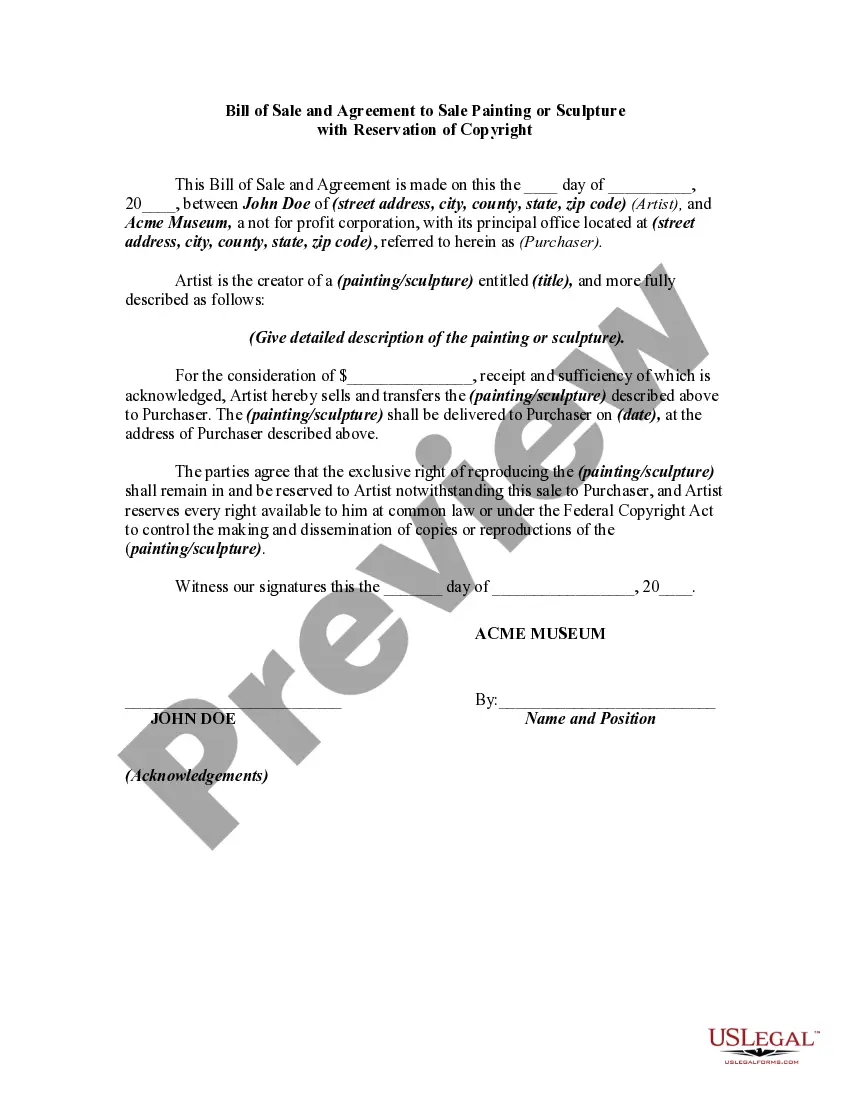
Bill Sale Art Sample With Replacement In Cook
Description
Get your form ready online
Our built-in tools help you complete, sign, share, and store your documents in one place.
Make edits, fill in missing information, and update formatting in US Legal Forms—just like you would in MS Word.
Download a copy, print it, send it by email, or mail it via USPS—whatever works best for your next step.
Sign and collect signatures with our SignNow integration. Send to multiple recipients, set reminders, and more. Go Premium to unlock E-Sign.
If this form requires notarization, complete it online through a secure video call—no need to meet a notary in person or wait for an appointment.
We protect your documents and personal data by following strict security and privacy standards.

Make edits, fill in missing information, and update formatting in US Legal Forms—just like you would in MS Word.

Download a copy, print it, send it by email, or mail it via USPS—whatever works best for your next step.

Sign and collect signatures with our SignNow integration. Send to multiple recipients, set reminders, and more. Go Premium to unlock E-Sign.

If this form requires notarization, complete it online through a secure video call—no need to meet a notary in person or wait for an appointment.

We protect your documents and personal data by following strict security and privacy standards.
Looking for another form?







Form popularity
FAQ
How to make and sell art prints in 6 steps Go digital. First things first, you need to convert your masterpieces to digital form. Prepare your file for printing. Your files will need a bit of adjusting before they're print-perfect. Choose how to make your prints. Decide what materials to print on. Get samples.
Selling replicas is legal only when the seller is transparent about the product. They should clarify that a specific designer item inspires the product, and there should be no intention to deceive the customer. When it comes to design, the replica closely resembles the original.
Reproduction or original? Original paintings tend to have a higher value than reproductions of paintings (a museum print of Van Gogh's sunflowers has minimal value compared to the priceless original). However, some antique engravings are highly sought after, even though they are prints rather than paintings.
If you obtain permission to make a copy and sell it, then it would be legal. A few of the paintings from a century or so ago may no longer be copyrighted, but you would still need to verify that and identify yourself as the painter of a copy. It is always illegal to sell any work as the original when it is a copy.
Selling copies of another artist's work is copyright violation. So, no, it's not okay. ing to United States Copyright Law, art is considered copyright protected from the moment it is created either directly or with the aid of a machine or device.
Can I copy or use artworks in the public domain? Yes, it is perfectly legal to produce and sell reproductions of famous paintings as long as they are in the public domain, and the artwork is clearly presented as a "reproduction".
The size of your pieces will also influence how it should be packaged. Smaller pieces and medium-sized artworks should be shipped in padded mailers or corrugated cardboard boxes, while crating is the best approach for large artwork larger than 48 inches to ensure maximum protection.
On your invoice, you should include: Your details. Your business name and address. Your buyer's details. Your buyer's name and address. Information about the artwork. Separate line items for each product or service delivered. Information about the payment terms. Your hourly rate, if relevant.
Oil paintings are the most saleable, followed by acrylic, watercolor, and digital art.
Technically yes it's illegal but in all honesty if your selling some fanart in some shows I don't think you would be in any sort of trouble.