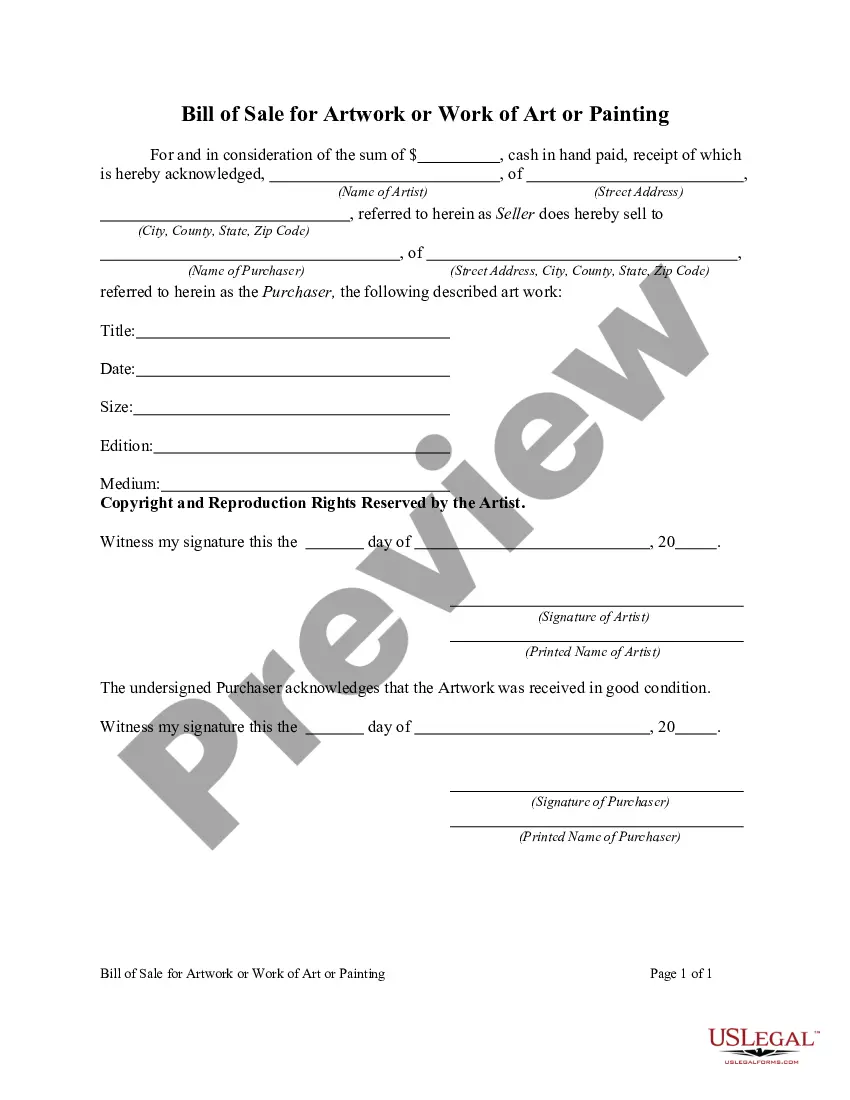
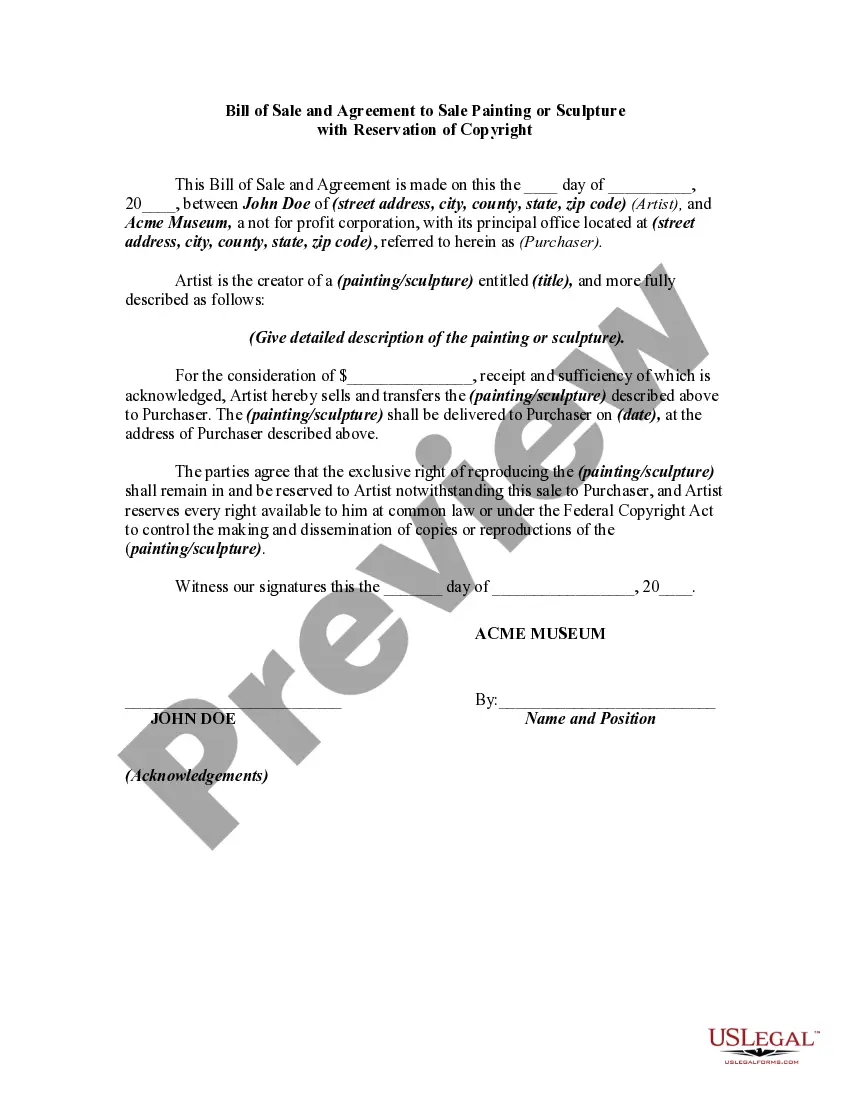
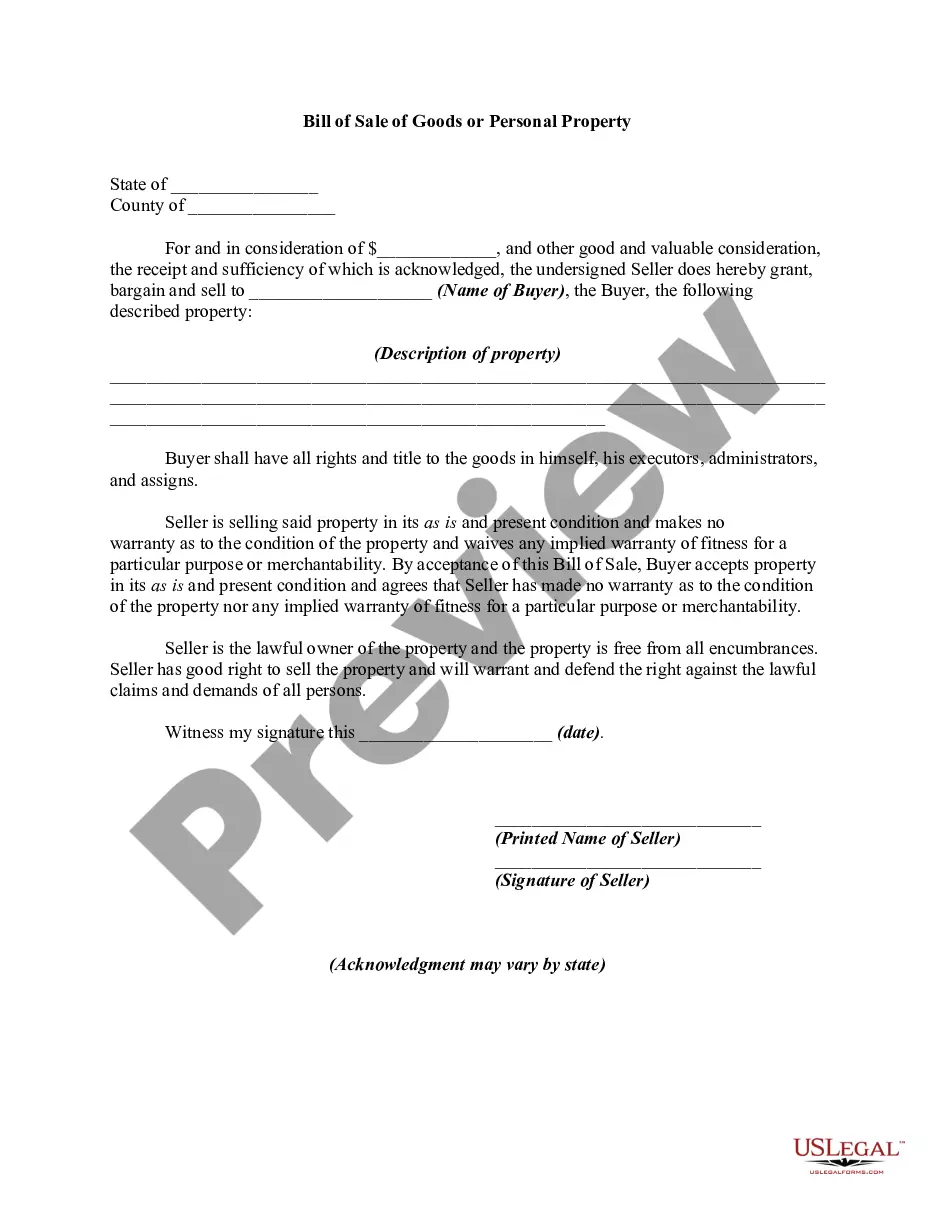
Bill Sale Art Sample For Composition Scheme In Collin
Description
Get your form ready online
Our built-in tools help you complete, sign, share, and store your documents in one place.
Make edits, fill in missing information, and update formatting in US Legal Forms—just like you would in MS Word.
Download a copy, print it, send it by email, or mail it via USPS—whatever works best for your next step.
Sign and collect signatures with our SignNow integration. Send to multiple recipients, set reminders, and more. Go Premium to unlock E-Sign.
If this form requires notarization, complete it online through a secure video call—no need to meet a notary in person or wait for an appointment.
We protect your documents and personal data by following strict security and privacy standards.

Make edits, fill in missing information, and update formatting in US Legal Forms—just like you would in MS Word.

Download a copy, print it, send it by email, or mail it via USPS—whatever works best for your next step.

Sign and collect signatures with our SignNow integration. Send to multiple recipients, set reminders, and more. Go Premium to unlock E-Sign.

If this form requires notarization, complete it online through a secure video call—no need to meet a notary in person or wait for an appointment.

We protect your documents and personal data by following strict security and privacy standards.
Looking for another form?









Form popularity
FAQ
The GST limit for composition schemes in India is Rs. 1.5 crore turnover per annum. Composition schemes are voluntary schemes available for small businesses with annual turnovers up to Rs. 1.5 crore who can opt for fixed tax rates instead of regular GST rates.
1% is the GST composition scheme rate for manufacturers and traders. 5% is the GST composition rate for restaurants not serving alcohol whereas 6% is the GST composition scheme rate for other service providers. GST composition scheme turnover limit is currently Rs.1.5 crore.
What Details Should a Composition Dealer Invoice Contain? Name, address, and GSTIN of the supplier. A unique invoice number and date of issue. Name, address, and GSTIN of the recipient, if registered. Description of goods or services being supplied. The total amount of the invoice. Tax rate and amount, if applicable.
The Composition Dealer Invoice Format may vary depending on local tax laws and regulations, but generally, it should include the following information: Name, address, and GSTIN of the supplier. A unique invoice number and date of issue. Name, address, and GSTIN of the recipient, if registered.
The client's name and contact information. The invoice number, the date it was issued and the due date for payment. An itemized breakdown of the services and/or products provided. The invoice summary, including the subtotal, any taxes added and the total.
Invoice format simply refers to the layout of an invoice's different sections. An invoice format breaks an invoice down into different parts, allowing you to better arrange it, whilst also ensuring that you include all of the mandatory invoice fields.
Invoices - what they must include your company name, address and contact information. the company name and address of the customer you're invoicing. a clear description of what you're charging for. the date the goods or service were provided (supply date)
Ready to Exhibit Your Art? Here Are Steps You Can Take Try a home show and invite your friends. Connect with a local business and see if they might be interested in hanging your work in their establishment. Get together with a few other artists and rent a space for your exhibition. Enter juried exhibitions.
Use Frames Choose the Right Frame: Select frames that complement your art without overshadowing it. Use Mats: Adding a mat around your print can give it a polished look and draw attention to the artwork. Display in a Grid: Arrange framed prints in a grid pattern on the wall to create a cohesive and organized display.
Use social media platforms like Instagram, Facebook, and Twitter to share your work and connect with other artists and potential buyers. Participate in art shows and exhibitions: Participate in local art shows, exhibitions, and fairs to showcase your work and connect with potential buyers and collectors.