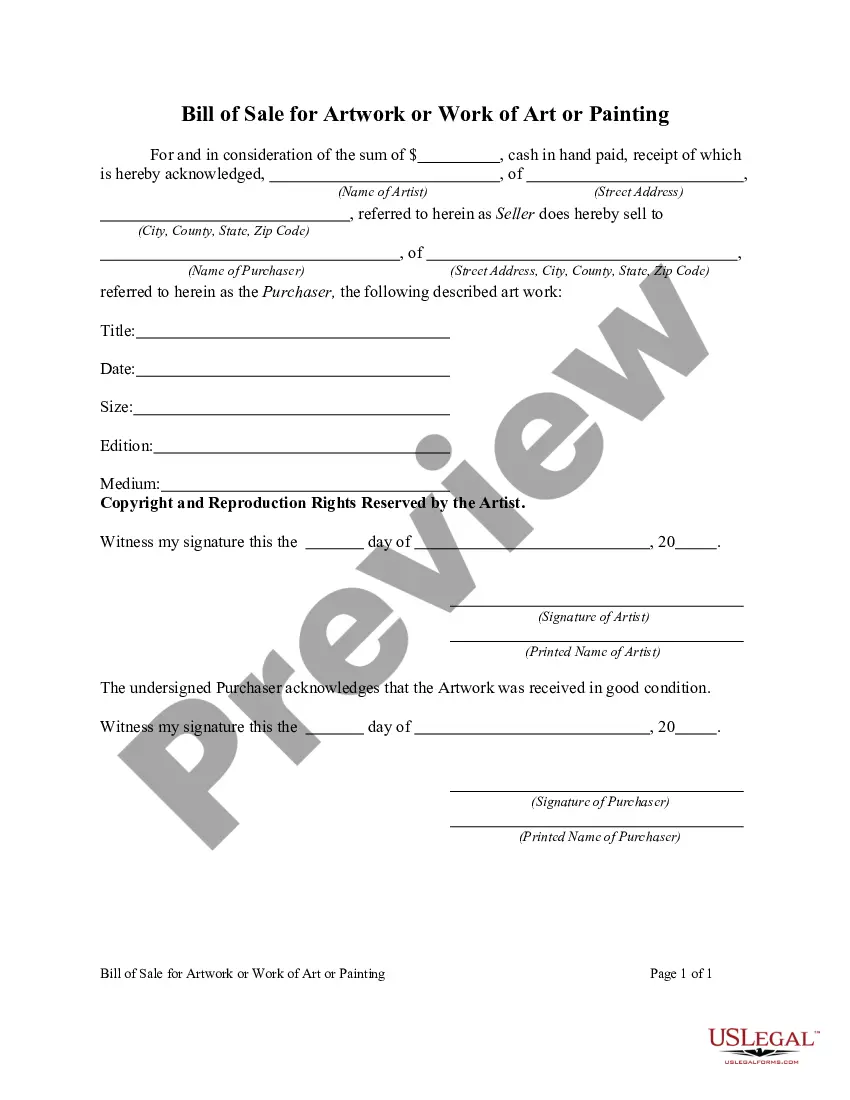
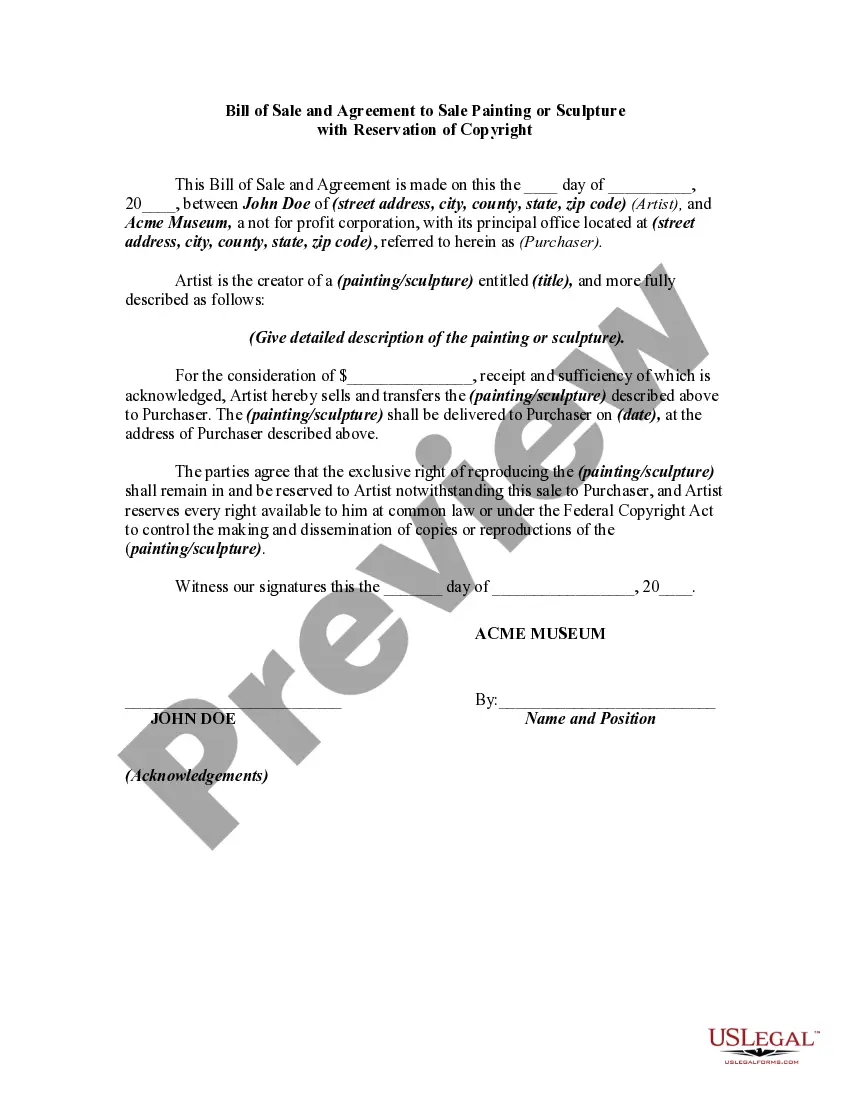
Bill Sale Art Sample For Students In Clark
Description
Get your form ready online
Our built-in tools help you complete, sign, share, and store your documents in one place.
Make edits, fill in missing information, and update formatting in US Legal Forms—just like you would in MS Word.
Download a copy, print it, send it by email, or mail it via USPS—whatever works best for your next step.
Sign and collect signatures with our SignNow integration. Send to multiple recipients, set reminders, and more. Go Premium to unlock E-Sign.
If this form requires notarization, complete it online through a secure video call—no need to meet a notary in person or wait for an appointment.
We protect your documents and personal data by following strict security and privacy standards.

Make edits, fill in missing information, and update formatting in US Legal Forms—just like you would in MS Word.

Download a copy, print it, send it by email, or mail it via USPS—whatever works best for your next step.

Sign and collect signatures with our SignNow integration. Send to multiple recipients, set reminders, and more. Go Premium to unlock E-Sign.

If this form requires notarization, complete it online through a secure video call—no need to meet a notary in person or wait for an appointment.

We protect your documents and personal data by following strict security and privacy standards.
Looking for another form?









Form popularity
FAQ
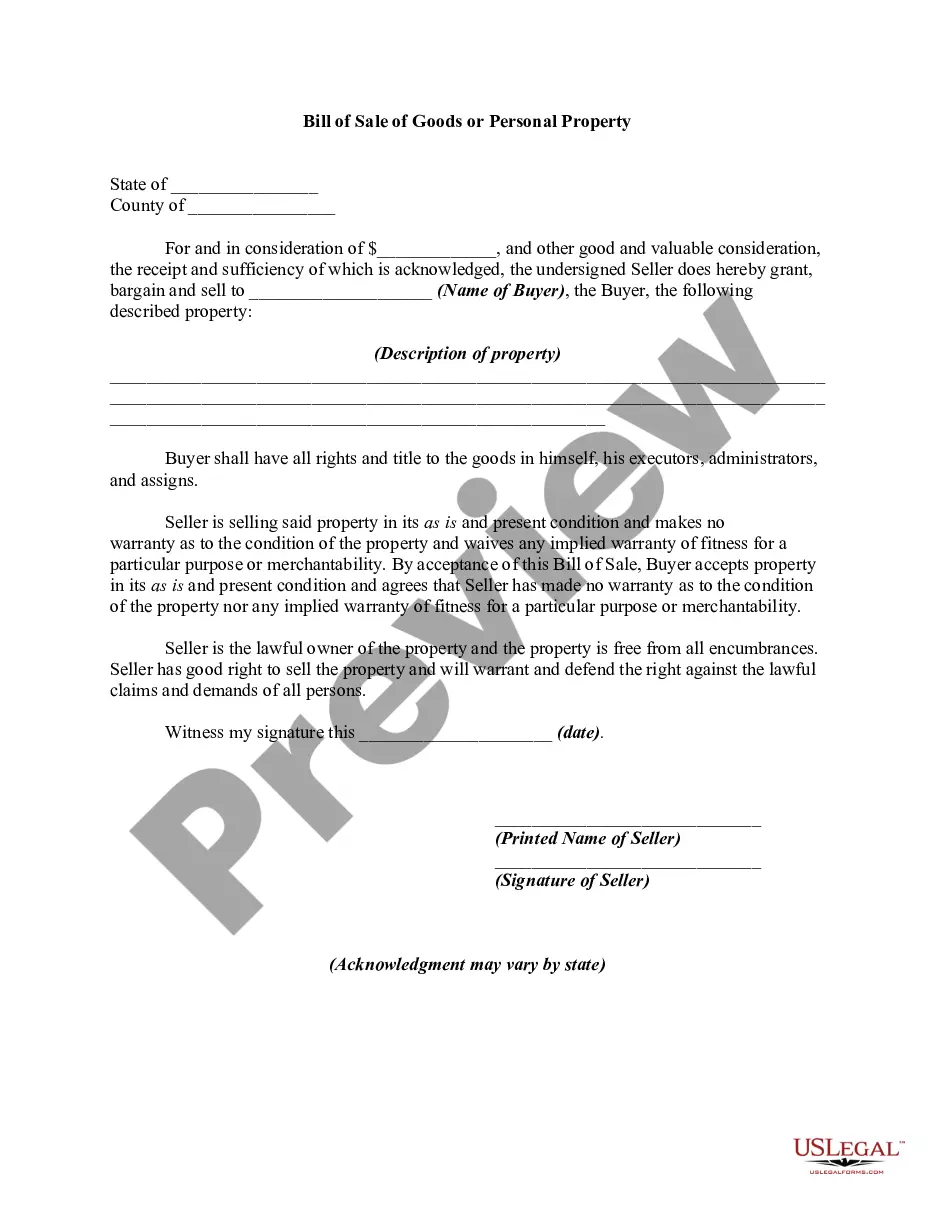
Notarization requirements for bills of sale vary by state and transaction type. Vehicles: States like Louisiana require notarization for vehicle sales. Conversely, states like California do not. Boats: Some states mandate notarization for boat transactions, ensuring secure ownership transfer.
Artist's Bill of Sale Date of sale and invoice number. Invoice numbers can be used as a unique reference ID and will prove very helpful should you need to quickly find the documentation later. Artist's contact information. Buyer's contact information. Artwork sold. Subtotal. Taxes. Other charges. Total.
Yes. It is the way things were done before typewriters and computers. With actual handwriting, it is actually easier to verify than something that is printed! It is easier to prove the sale is legitimate if you also have a notary witness the signature. That is how I bought my last car, with a handwritten bill of sale.
Invoices should contain information about: you the artist. your billing address. your client or customer. their taxable address. your tax reference code (UTR - unique tax reference code if in the UK) the tax date for the product or service rendered. description of the artwork provided or artistic service rendered.
To sell your drawings online, use platforms like Etsy or Redbubble, create a portfolio on Instagram or Behance, and offer both prints and digital downloads. Promote your work on social media and art communities, set fair prices, and market your art through ads or influencer collaborations.
Online marketplaces like Etsy, Amazon, or eBay can plug directly into your online store, allowing you to sync sales and reach wider audiences. Other art-specific marketplaces help you show up where art lovers congregate (Society 6, Artfinder, Saatchi Art, Fine Art America, etc.).
What steps do I need to take to sell my art online? Choose your format: originals or reproductions. Find a printer (for reproductions). Build your artist brand. Set up an online store. Expand your reach by selling through marketplaces or online galleries. Market your art business.
On your invoice, you should include: Your details. Your business name and address. Your buyer's details. Your buyer's name and address. Information about the artwork. Separate line items for each product or service delivered. Information about the payment terms. Your hourly rate, if relevant.
Use Frames Choose the Right Frame: Select frames that complement your art without overshadowing it. Use Mats: Adding a mat around your print can give it a polished look and draw attention to the artwork. Display in a Grid: Arrange framed prints in a grid pattern on the wall to create a cohesive and organized display.
The size of your pieces will also influence how it should be packaged. Smaller pieces and medium-sized artworks should be shipped in padded mailers or corrugated cardboard boxes, while crating is the best approach for large artwork larger than 48 inches to ensure maximum protection.