Listing Agreement For Commercial Lease In Ohio
Description

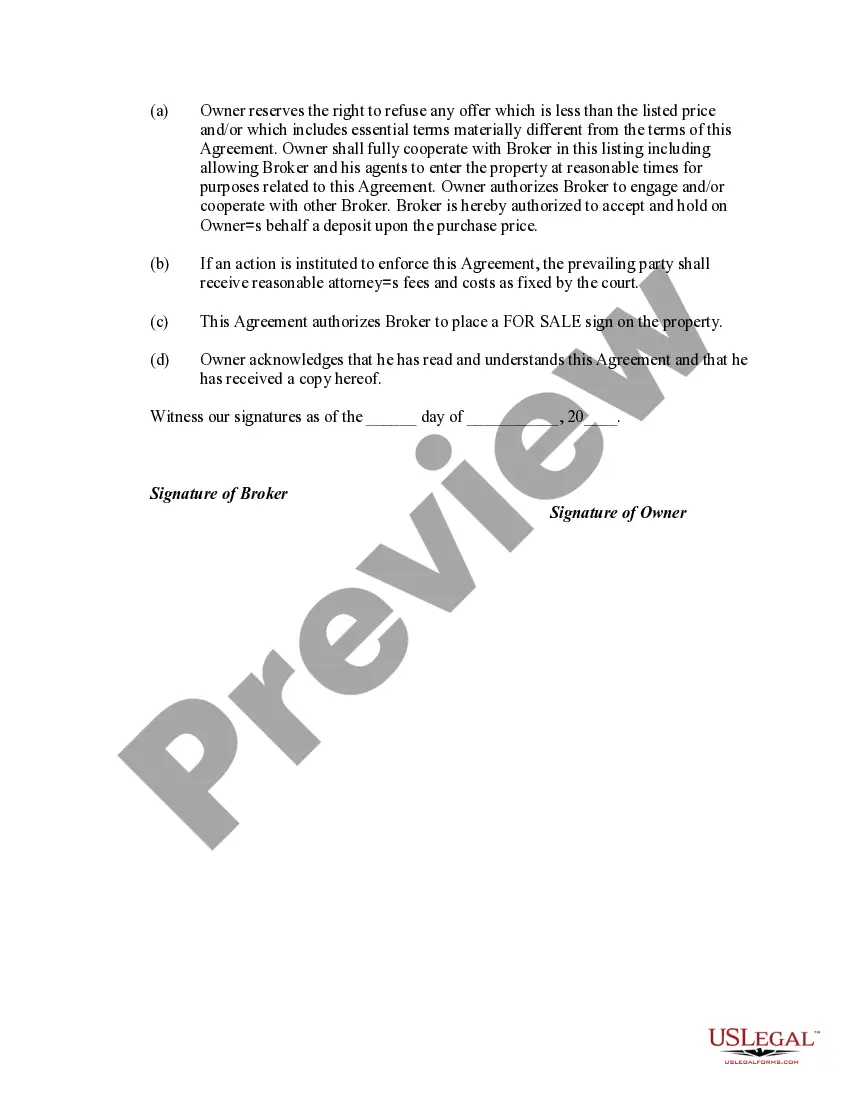

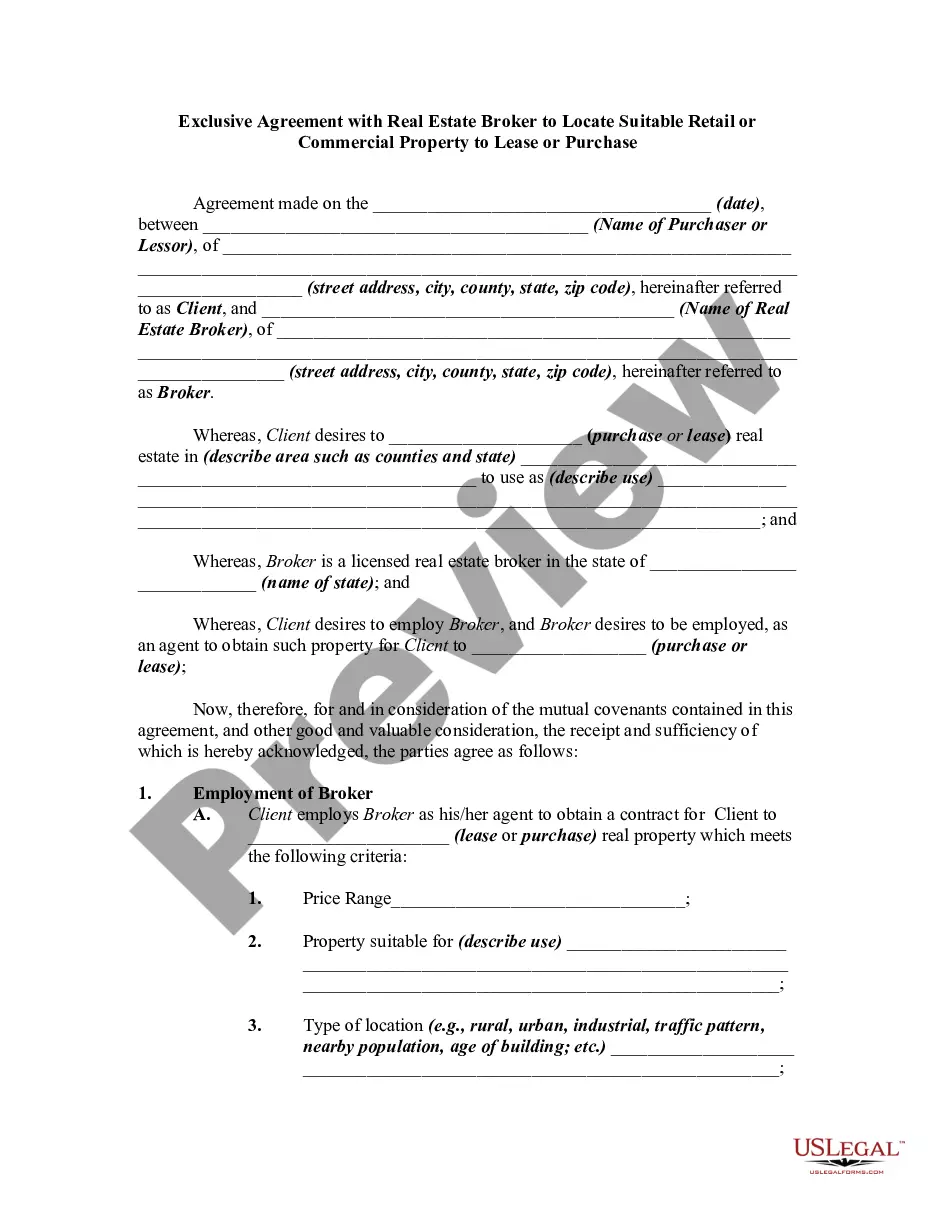
Get your form ready online
Our built-in tools help you complete, sign, share, and store your documents in one place.
Make edits, fill in missing information, and update formatting in US Legal Forms—just like you would in MS Word.
Download a copy, print it, send it by email, or mail it via USPS—whatever works best for your next step.
Sign and collect signatures with our SignNow integration. Send to multiple recipients, set reminders, and more. Go Premium to unlock E-Sign.
If this form requires notarization, complete it online through a secure video call—no need to meet a notary in person or wait for an appointment.
We protect your documents and personal data by following strict security and privacy standards.

Make edits, fill in missing information, and update formatting in US Legal Forms—just like you would in MS Word.

Download a copy, print it, send it by email, or mail it via USPS—whatever works best for your next step.

Sign and collect signatures with our SignNow integration. Send to multiple recipients, set reminders, and more. Go Premium to unlock E-Sign.

If this form requires notarization, complete it online through a secure video call—no need to meet a notary in person or wait for an appointment.

We protect your documents and personal data by following strict security and privacy standards.
Looking for another form?









Form popularity
FAQ
Who pays closing costs in Florida? In Florida, similarly to other states, closing costs are charges that applied to both parties in a real estate transaction, the buyer AND the seller.
This means they must be of sound mind and at least 18 years old. Additionally, the contract must be for a lawful purpose; a contract for an illegal act is not enforceable. Finally, a real estate contract in Florida must be in writing and signed by the parties involved.
Tenants in Ohio should provide written notice if they want to end the agreement before the lease term expires. Currently, there are two established notice periods: Weekly Leases - Seven days of notice. Monthly Leases - 30 days of notice.
Yes. Leases in this state must be notarized to comply with the law.
Under Ohio law all leases that have a term of three (3) years or longer must be signed and notarized to be considered valid and in effect. Failure to have a lease with a term of three (3) or more years notarized can potentially invalidate that lease.
Mutual Assent: The contracting parties must have a “meeting of the minds” and have the intent to be bound by the contract and its essential terms. Lawful purpose: The purpose of the contract may not be illegal. For example, a contract to hire a hit-man is not an enforceable contract.
A lease agreement is a legally binding contract outlining the terms under which one party agrees to rent property, whether real or personal, from another party. This agreement includes important details such as the rent amount, duration, responsibilities of both parties, and conditions for terminating the agreement.
Verbal versus Written Leases Ohio law does allow some types of verbal agreements to constitute valid contracts, but certain types of leases cannot be enforced at law if not in writing and signed by the party against whom enforcement is sought.
Tenant Responsibilities When Breaking a Lease Providing proper notice (30 days for month-to-month leases) Paying early termination fees. Leaving the property in good condition. Cooperating with the landlord's efforts to re-rent. Handling outstanding rent and utilities. Removing personal belongings.
