Listing Agreement Form In Maryland
Description

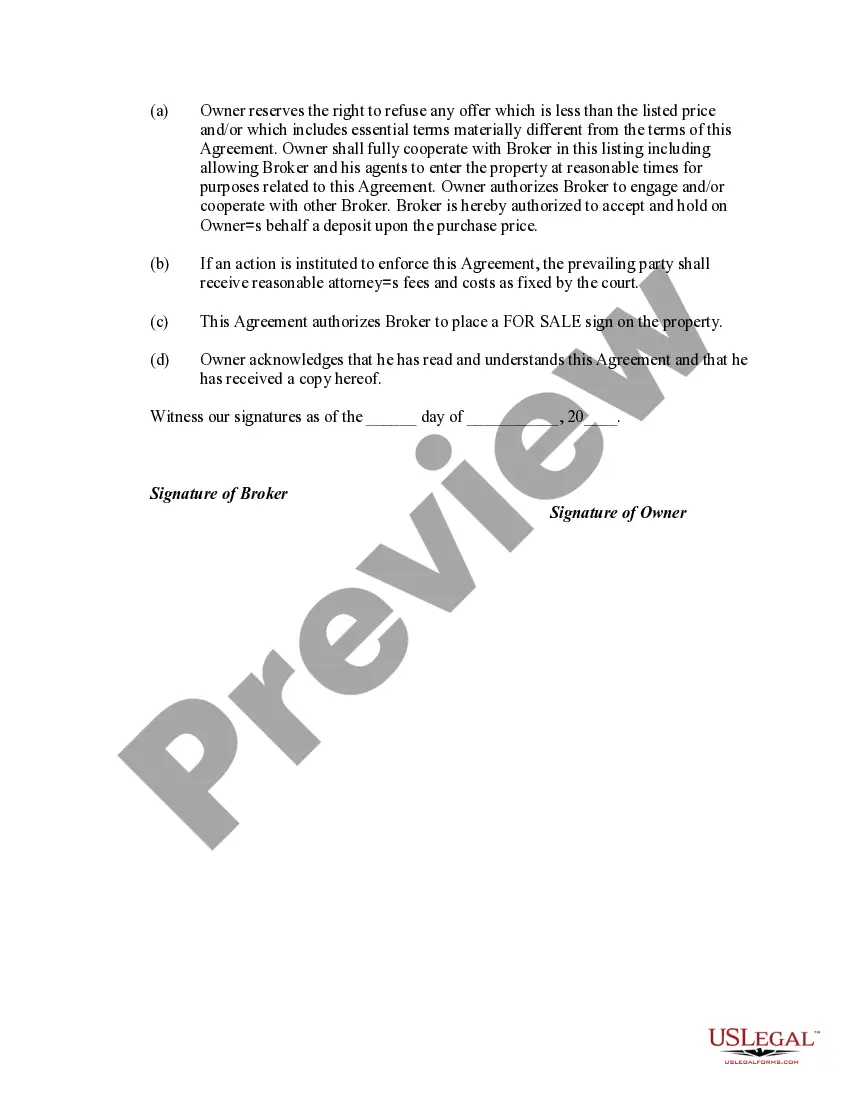

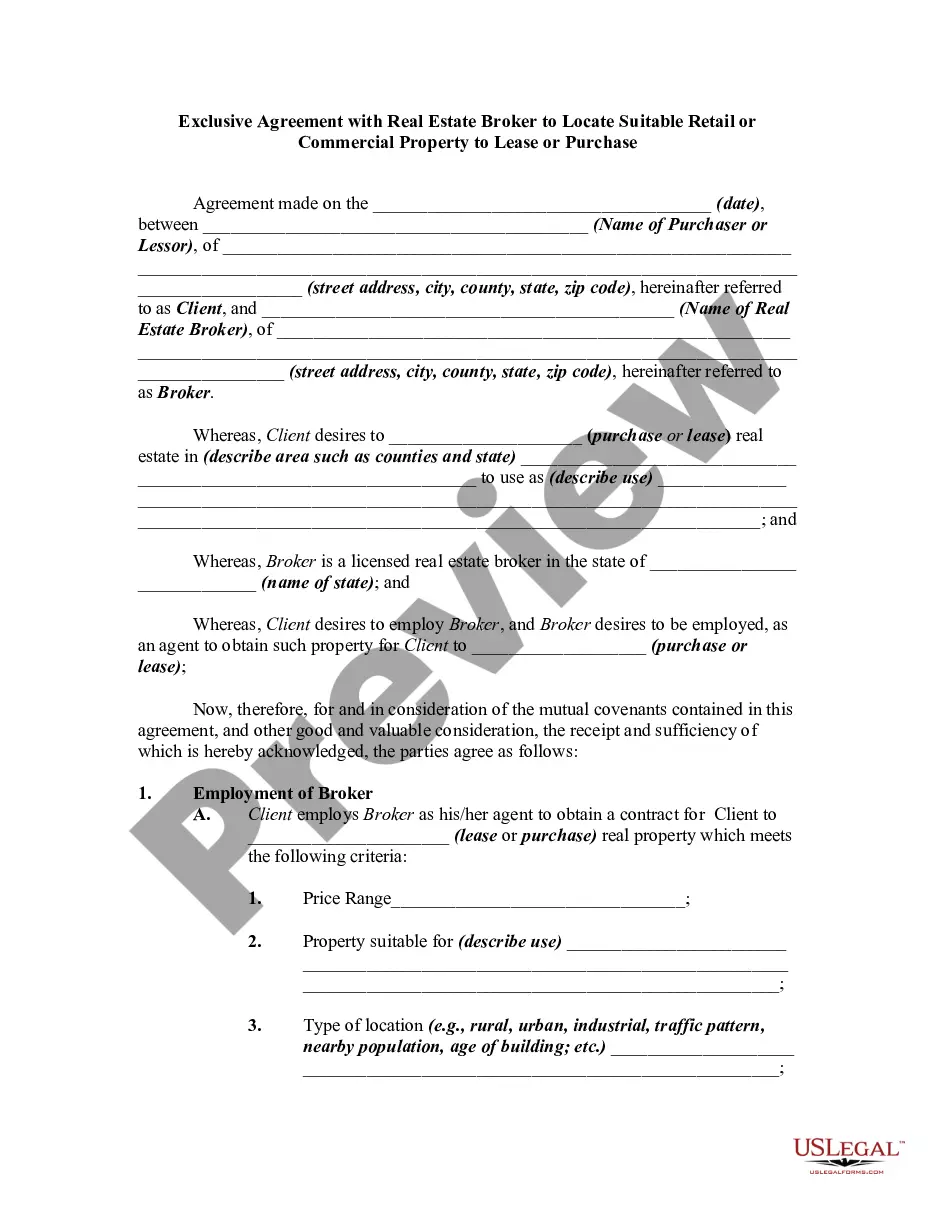
Get your form ready online
Our built-in tools help you complete, sign, share, and store your documents in one place.
Make edits, fill in missing information, and update formatting in US Legal Forms—just like you would in MS Word.
Download a copy, print it, send it by email, or mail it via USPS—whatever works best for your next step.
Sign and collect signatures with our SignNow integration. Send to multiple recipients, set reminders, and more. Go Premium to unlock E-Sign.
If this form requires notarization, complete it online through a secure video call—no need to meet a notary in person or wait for an appointment.
We protect your documents and personal data by following strict security and privacy standards.

Make edits, fill in missing information, and update formatting in US Legal Forms—just like you would in MS Word.

Download a copy, print it, send it by email, or mail it via USPS—whatever works best for your next step.

Sign and collect signatures with our SignNow integration. Send to multiple recipients, set reminders, and more. Go Premium to unlock E-Sign.

If this form requires notarization, complete it online through a secure video call—no need to meet a notary in person or wait for an appointment.

We protect your documents and personal data by following strict security and privacy standards.
Looking for another form?




Form popularity
FAQ
Bilateral contracts are agreements in which both parties exchange mutual promises to perform certain obligations, making this type of contract the most common in business transactions.
Under Maryland law, you will need to have an agreement in place before an agent can work with you in a brokerage capacity. You will be asked to enter into a written buyer agreement with your real estate professional before “touring” a home with them, either in-person or virtually.
An open listing enables multiple real estate agents to try to sell your home. This setup gives the seller the ability to work with multiple agents at once. This differs from an exclusive listing, in which the seller works exclusively with one listing agent to find a buyer.
An exclusive right to sell listing is the most widely-used listing agreement. Under this agreement, the broker has the exclusive right to market the property for a specified period of time.
A listing agreement is “a legally binding contract that creates an agency relationship authorizing a broker to serve as the agent for a principal in a real estate transaction.” In other words, a listing agreement is an employment contract between a client and a broker that spells out what the broker is responsible for ...
The exclusive right to sell listing agreement is the most common type of agreement in real estate. Under this arrangement, the broker is given exclusive rights to market the property for a set period.
Although Maryland law does allow you to show a property to an unrepresented buyer, you are required to utilize the Understanding Whom Real Estate Agents Represent form in that situation.
If they wished, buyers' agents could tour property without an agency agreement. But those days are over. Under the terms of the 2024 NAR settlement, agents are required to have a signed agreement before performing any substantive work on behalf of a buyer, including touring homes.
