Listing Agreement For Rental Property In King
Description

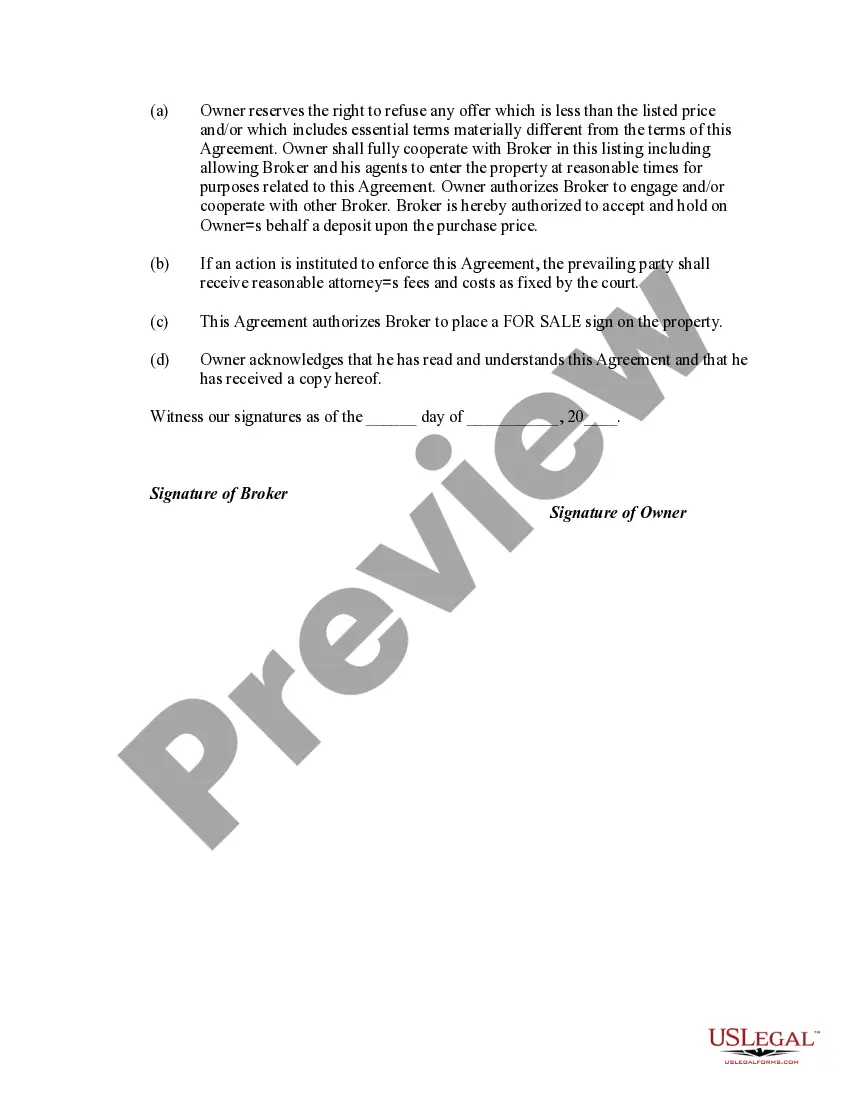

Get your form ready online
Our built-in tools help you complete, sign, share, and store your documents in one place.
Make edits, fill in missing information, and update formatting in US Legal Forms—just like you would in MS Word.
Download a copy, print it, send it by email, or mail it via USPS—whatever works best for your next step.
Sign and collect signatures with our SignNow integration. Send to multiple recipients, set reminders, and more. Go Premium to unlock E-Sign.
If this form requires notarization, complete it online through a secure video call—no need to meet a notary in person or wait for an appointment.
We protect your documents and personal data by following strict security and privacy standards.

Make edits, fill in missing information, and update formatting in US Legal Forms—just like you would in MS Word.

Download a copy, print it, send it by email, or mail it via USPS—whatever works best for your next step.

Sign and collect signatures with our SignNow integration. Send to multiple recipients, set reminders, and more. Go Premium to unlock E-Sign.

If this form requires notarization, complete it online through a secure video call—no need to meet a notary in person or wait for an appointment.

We protect your documents and personal data by following strict security and privacy standards.
Looking for another form?






Form popularity
FAQ
A listing agreement is an example of an agency relationship that is created by express agency. In this context, express agency arises when the principal explicitly states their intention to create an agency relationship with the agent through a written or verbal agreement.
The exclusive right to sell listing agreement is the most common type of agreement in real estate. Under this arrangement, the broker is given exclusive rights to market the property for a set period.
A listing agreement is “a legally binding contract that creates an agency relationship authorizing a broker to serve as the agent for a principal in a real estate transaction.” In other words, a listing agreement is an employment contract between a client and a broker that spells out what the broker is responsible for ...
A listing agreement is between the parties that own a property and the agents or brokers who will find a buyer for it. Typically, a real estate listing agreement involves the property owner and a real estate agent. The property owner, or seller, grants the agent the right to market and sell the property.
Assured Tenancy (AT) and Assured Shorthold Tenancy (AST) agreements offer more security than other tenancies as they offer the tenant more rights. For an agreement to be an Assured Tenancy, the tenant needs to occupy the property as their sole residence, and they have to be an individual, not a company.
The tenancy agreement should include: the deposit amount and how it will be protected. when the deposit can be fully or partly withheld, for example to repair damage caused by tenants. the property address. the start and end date of the tenancy. any tenant or landlord obligations. which bills your tenants are responsible for.
You need to submit the following documents for rent agreement registration in UP. Details of ownership of the property (property sale deed, registration document, property tax receipt, etc.) Address proof of the property to be registered. Passport-size photos of the owner as well as the tenant.
Whilst an AST can last for any duration, tenants have a legal right to stay in a property for a minimum of six months. This applies whether the AST was for a shorter term than this or not.
The most common types include joint tenancy, tenancy in common, tenants by entirety, sole ownership, and community property.
An exclusive right to sell listing is the most widely-used listing agreement. Under this agreement, the broker has the exclusive right to market the property for a specified period of time.
