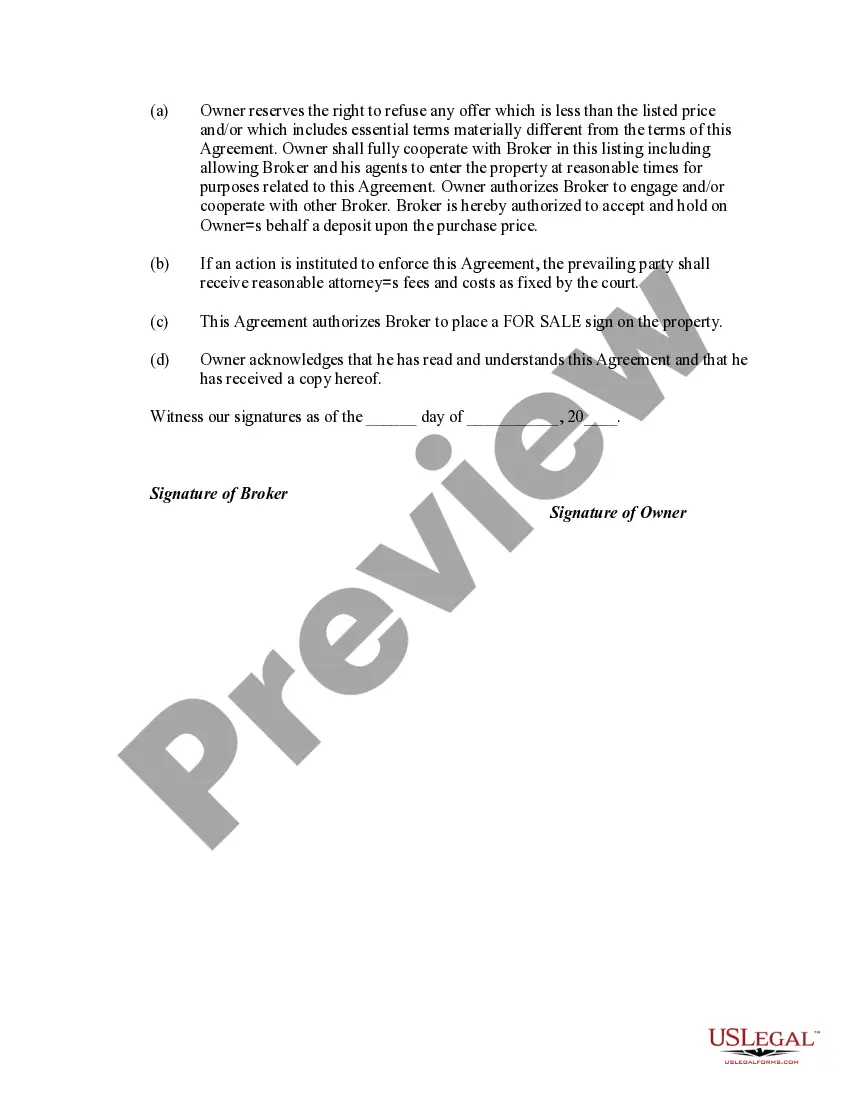
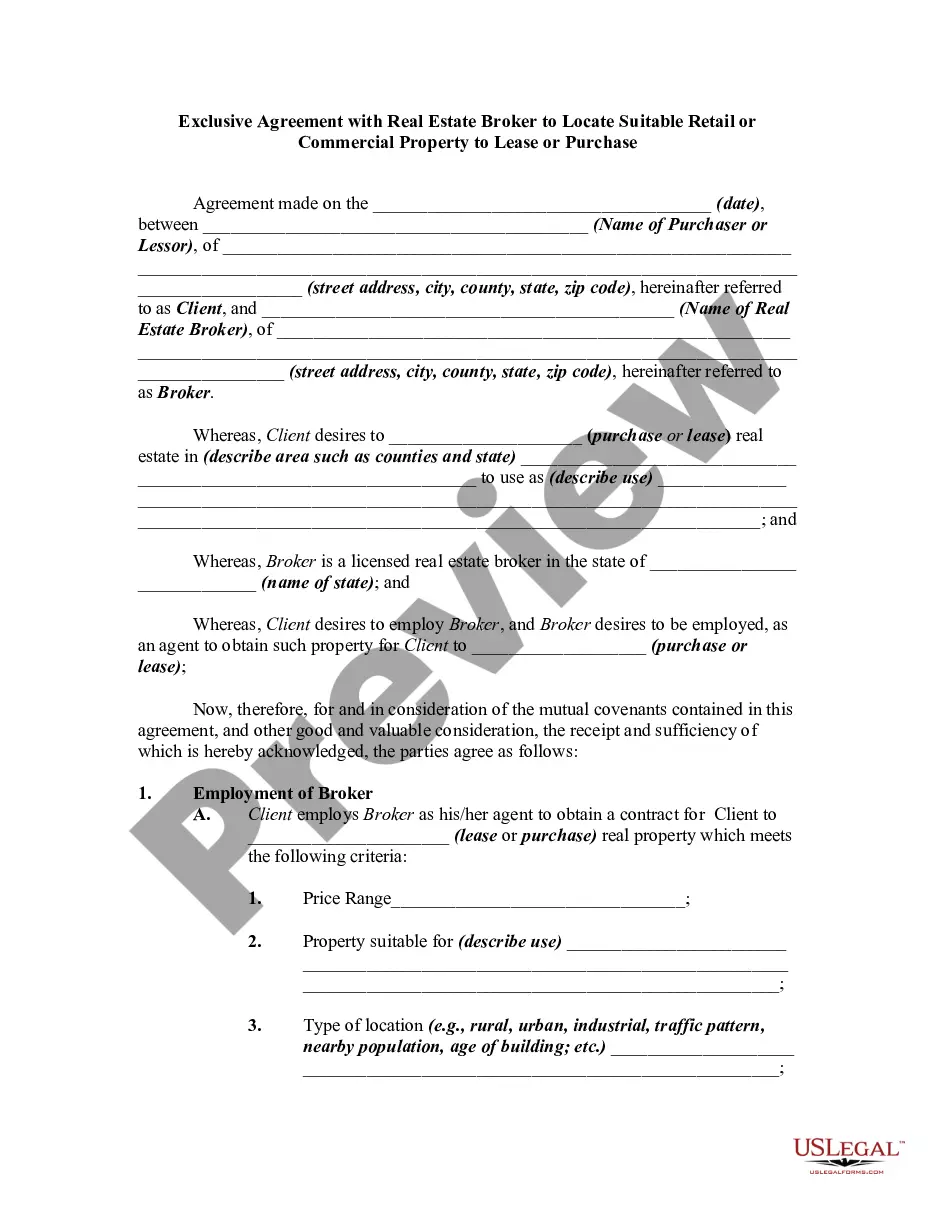
Agreement Commercial Property Without A Realtor In Harris
Description


Get your form ready online
Our built-in tools help you complete, sign, share, and store your documents in one place.
Make edits, fill in missing information, and update formatting in US Legal Forms—just like you would in MS Word.
Download a copy, print it, send it by email, or mail it via USPS—whatever works best for your next step.
Sign and collect signatures with our SignNow integration. Send to multiple recipients, set reminders, and more. Go Premium to unlock E-Sign.
If this form requires notarization, complete it online through a secure video call—no need to meet a notary in person or wait for an appointment.
We protect your documents and personal data by following strict security and privacy standards.

Make edits, fill in missing information, and update formatting in US Legal Forms—just like you would in MS Word.

Download a copy, print it, send it by email, or mail it via USPS—whatever works best for your next step.

Sign and collect signatures with our SignNow integration. Send to multiple recipients, set reminders, and more. Go Premium to unlock E-Sign.

If this form requires notarization, complete it online through a secure video call—no need to meet a notary in person or wait for an appointment.

We protect your documents and personal data by following strict security and privacy standards.
Looking for another form?







Form popularity
FAQ
You do not need to be a licensed real estate broker to post on LoopNet if the property you want to post is your own.
How do you write a contract for sale? Title the document appropriately. List all parties involved in the agreement. Detail the product or service, including all rights, warranties, and limitations. Specify the duration of the contract and any important deadlines.
When it comes to commercial closing costs as opposed to residential, sellers are most often responsible for closing costs. Commercial closing costs typically include the following items. Property appraisal.
How to Market Your Commercial Property for Sale by Owner Work with a Commercial Real Estate Broker. Take Interior / Exterior Photos. Put Together a Marketing Flyer. List the Property Online. Share with Your Network. Notify Your Chamber of Commerce, Economic Development Board. Place High Quality Signage Onsite.
How to write a letter of intent for business Write the introduction. Describe the transaction and timeframes. List contingencies. Go through due diligence. Include covenants and other binding agreements. State that the agreement is nonbinding. Include a closing date.
Table Of Contents Set Goals and Identify Your Ideal Audience. Develop a Commercial Real Estate Marketing Plan. Consider the Tools and Software You Need. Upgrade Your Company Website. Create Feature-Rich Property Websites. Segment and Build Targeted Email Campaigns. Add your Listings on Commercial Real Estate Portals.
How to Sell Commercial Property List Your Commercial Real Estate Property for Sale. Market Your Property Effectively. Collaborate With a Commercial Real Estate Agent. Identify Off-Market Buyers. Search for Recent Sellers & Buyers. Negotiate With Potential Buyers. Analyze Commercial Real Estate Comparable in Your Area.
Many of the issues confronting industry stakeholders in the new year are interrelated. High Financing Costs. Massive Commercial Real Estate Debt. High Cap Rates. Soaring Insurance Costs. Increasingly Unaffordable Housing. Rise in Artificial Intelligence. Impact of Extreme Weather. Lingering Office Vacancies.
To answer the question of can a residential realtor sell commercial property, know that the answer is, "Yes." Various states have different licensure requirements, but they typically include taking a certain number of hours of an approved course, passing an exam, and working with a licensed firm.
