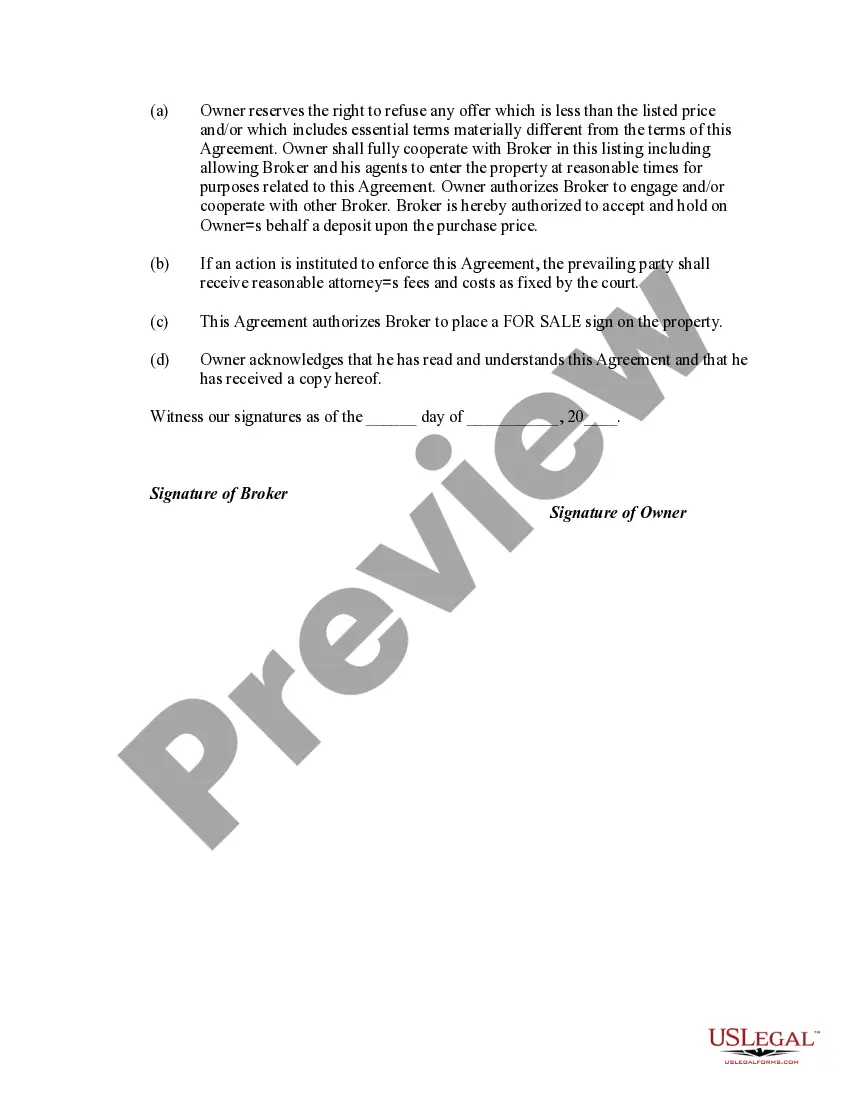
Listing Agreement For Commercial Lease In Allegheny
Description


Get your form ready online
Our built-in tools help you complete, sign, share, and store your documents in one place.
Make edits, fill in missing information, and update formatting in US Legal Forms—just like you would in MS Word.
Download a copy, print it, send it by email, or mail it via USPS—whatever works best for your next step.
Sign and collect signatures with our SignNow integration. Send to multiple recipients, set reminders, and more. Go Premium to unlock E-Sign.
If this form requires notarization, complete it online through a secure video call—no need to meet a notary in person or wait for an appointment.
We protect your documents and personal data by following strict security and privacy standards.

Make edits, fill in missing information, and update formatting in US Legal Forms—just like you would in MS Word.

Download a copy, print it, send it by email, or mail it via USPS—whatever works best for your next step.

Sign and collect signatures with our SignNow integration. Send to multiple recipients, set reminders, and more. Go Premium to unlock E-Sign.

If this form requires notarization, complete it online through a secure video call—no need to meet a notary in person or wait for an appointment.

We protect your documents and personal data by following strict security and privacy standards.
Looking for another form?


Form popularity
FAQ
An open listing enables multiple real estate agents to try to sell your home. This setup gives the seller the ability to work with multiple agents at once. This differs from an exclusive listing, in which the seller works exclusively with one listing agent to find a buyer.
A listing agreement is a contract between a property owner and a real estate broker that authorizes the broker to represent the seller and find a buyer for the property. The three types of real estate listing agreements are open listing, exclusive agency listing, and exclusive right-to-sell listing.
Known under a variety of names, a common element of these product listing agreements (PLAs) is the negotiation of confidential prices that are typically achieved through rebates that may or may not be tied to drug expenditures, utilization patterns or health outcomes.
Open listing: Definition An open listing enables multiple real estate agents to try to sell your home. This setup gives the seller the ability to work with multiple agents at once. This differs from an exclusive listing, in which the seller works exclusively with one listing agent to find a buyer.
Legal Considerations in Pennsylvania ing to the Pennsylvania Landlord-Tenant Act, while more applicable to residential leases, some aspects can influence commercial leasing practices, especially concerning security deposits and notice periods.
This will be done using a Land Registry form known as a TR1. If the lease is for less than 7 years, then the lease can be assigned by using a deed of assignment. Both these documents have the same effect and will generally be executed by both you as the current tenant and the assignee.
Examples of Good Letters of Intent 1) Be genuine, authentic, and earnest. 2) Use examples from your experience to highlight your skills and how you have grown. 3) Demonstrate that you have a growth mindset and are enthusiastic. 4) Be positive. 5) Don't go overboard or try to be too much. As always, aim for zero.
An LOI stands for Letter of Intent. In commercial real estate, a Letter of Intent is a preliminary agreement that is negotiated between a tenant and landlord or buyer and seller. The LOI or Letter of Intent states the primary economics and deal points with proposed terms.
An Exclusive Right to Sell Listing Agreement is more than just a formal arrangement between a homeowner and a real estate agent; it's a partnership that defines how the sale of a property will be handled. In Florida's dynamic real estate market, this agreement plays a pivotal role.
