Boundary Line Agreement Sample For Married Couples In Texas
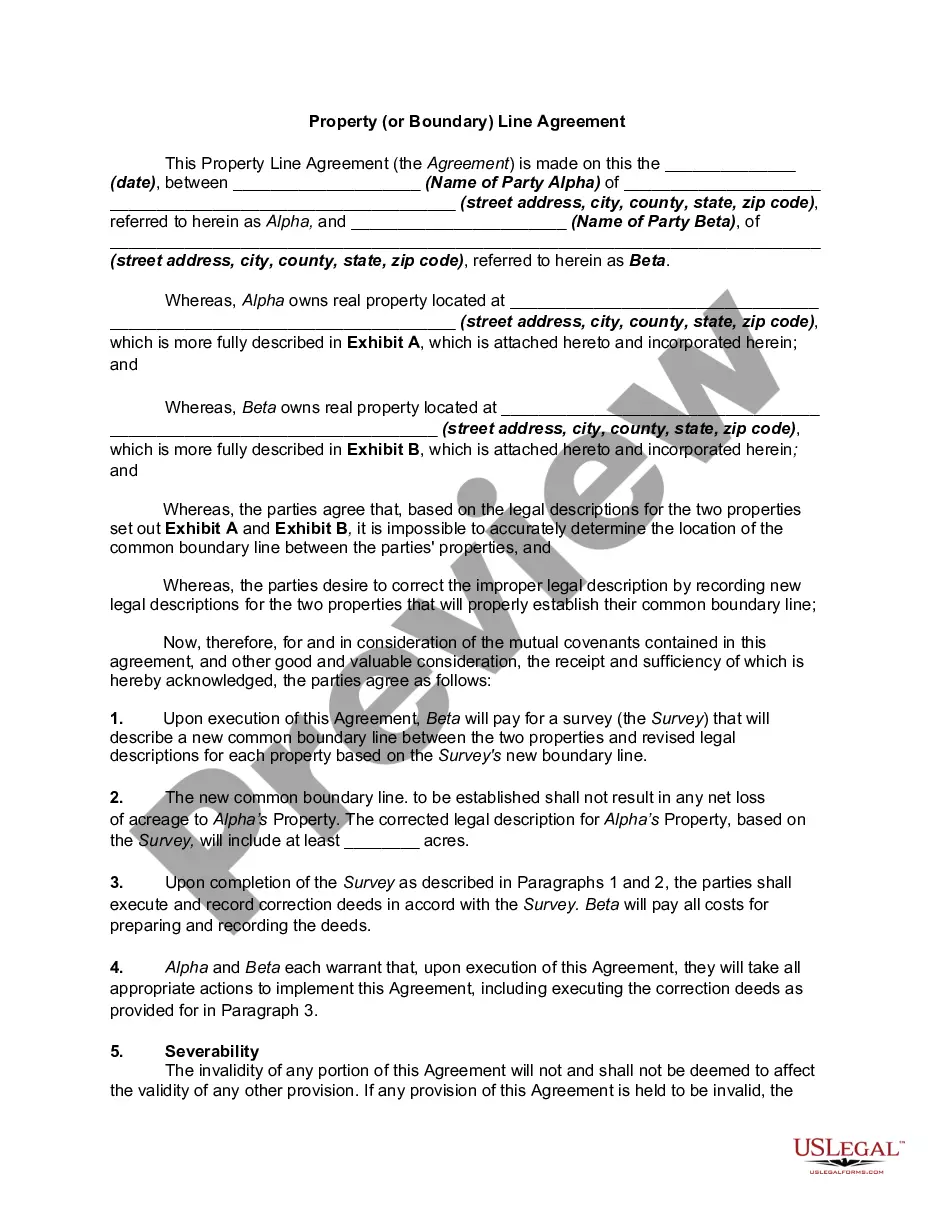
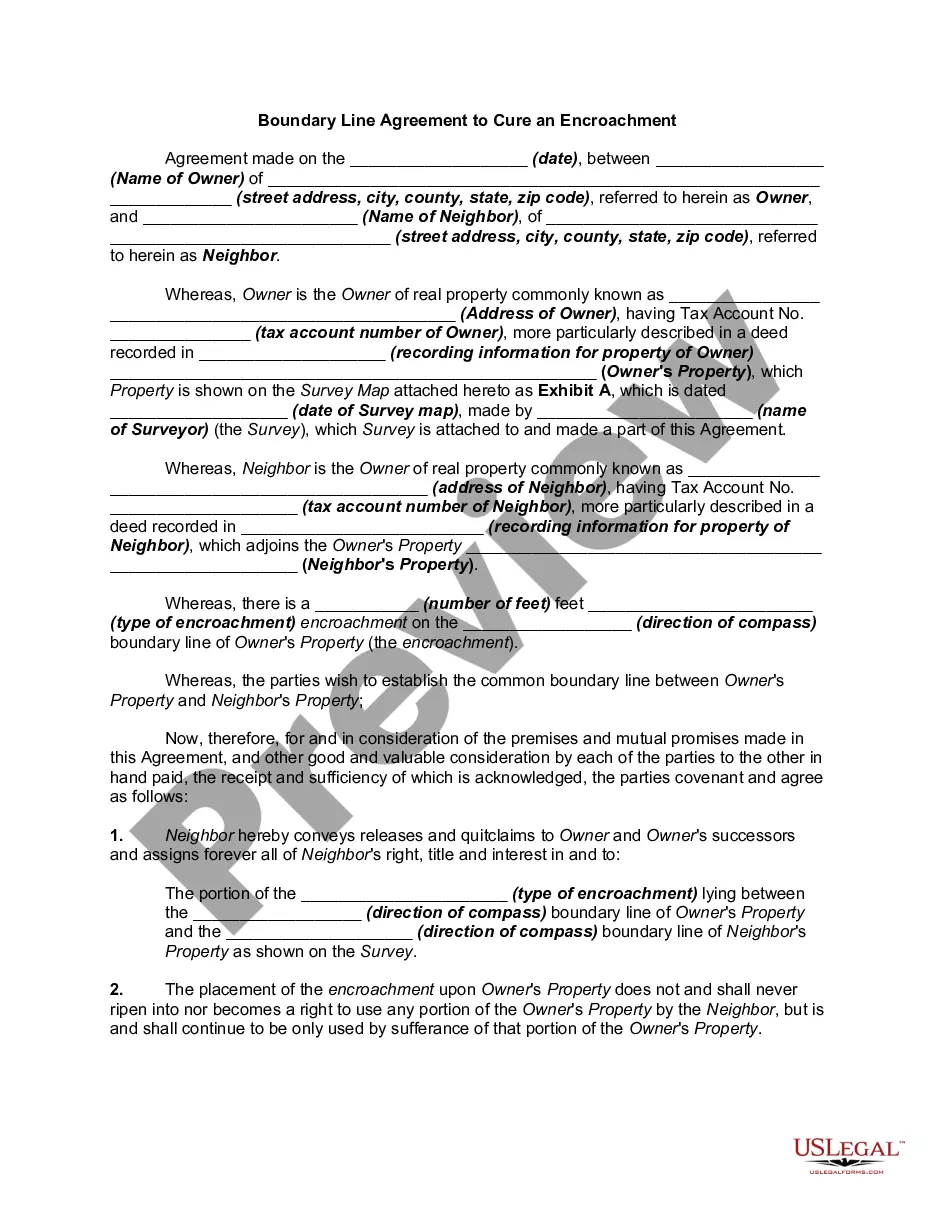
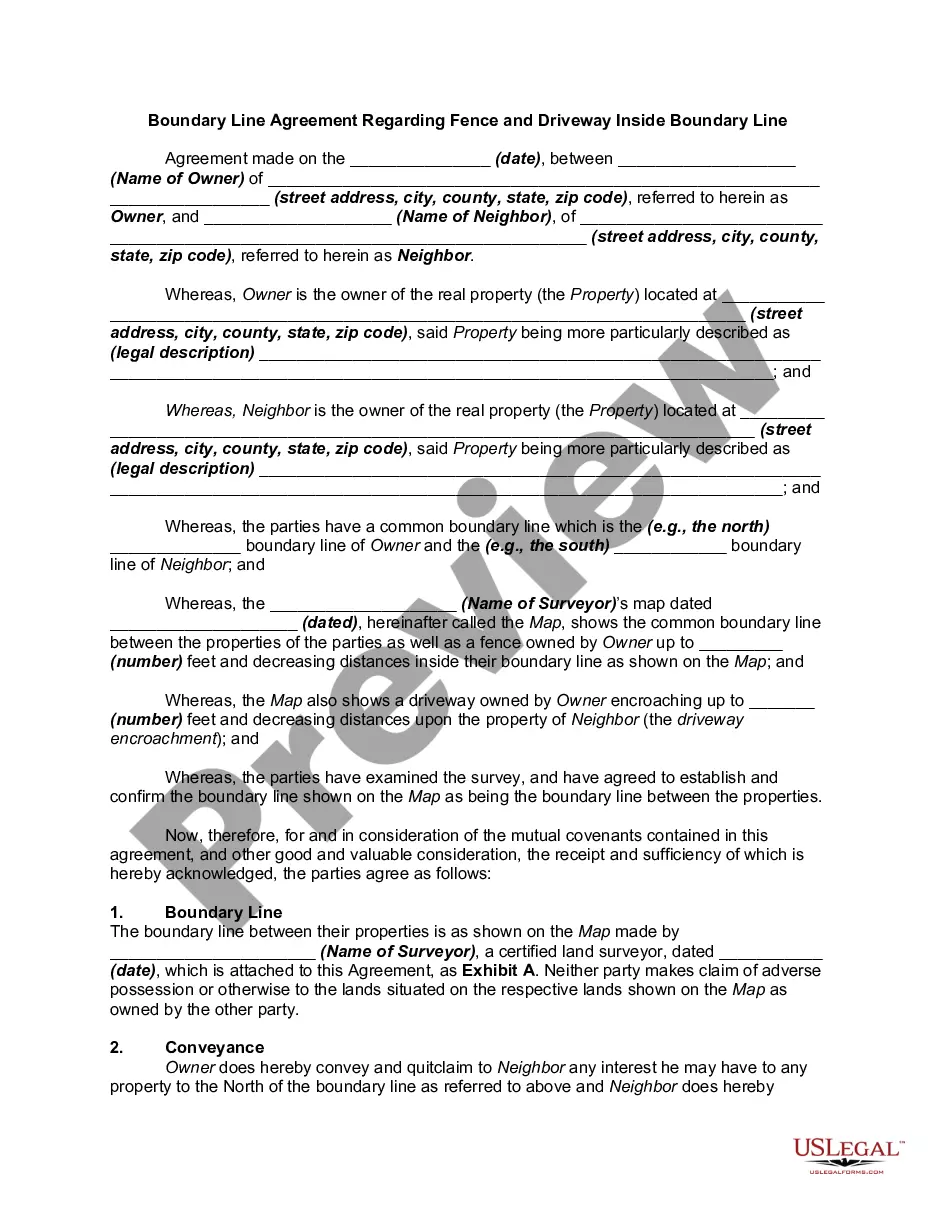
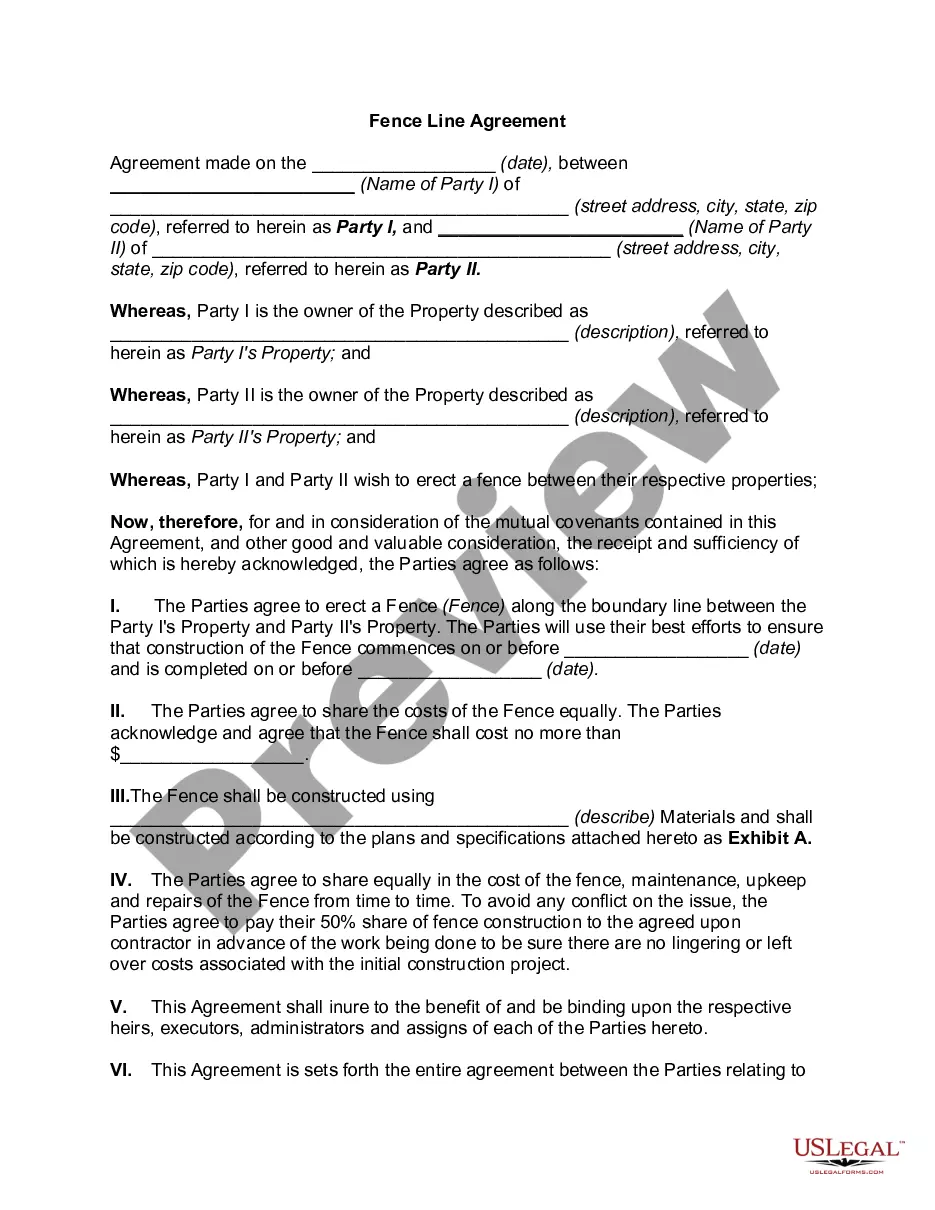
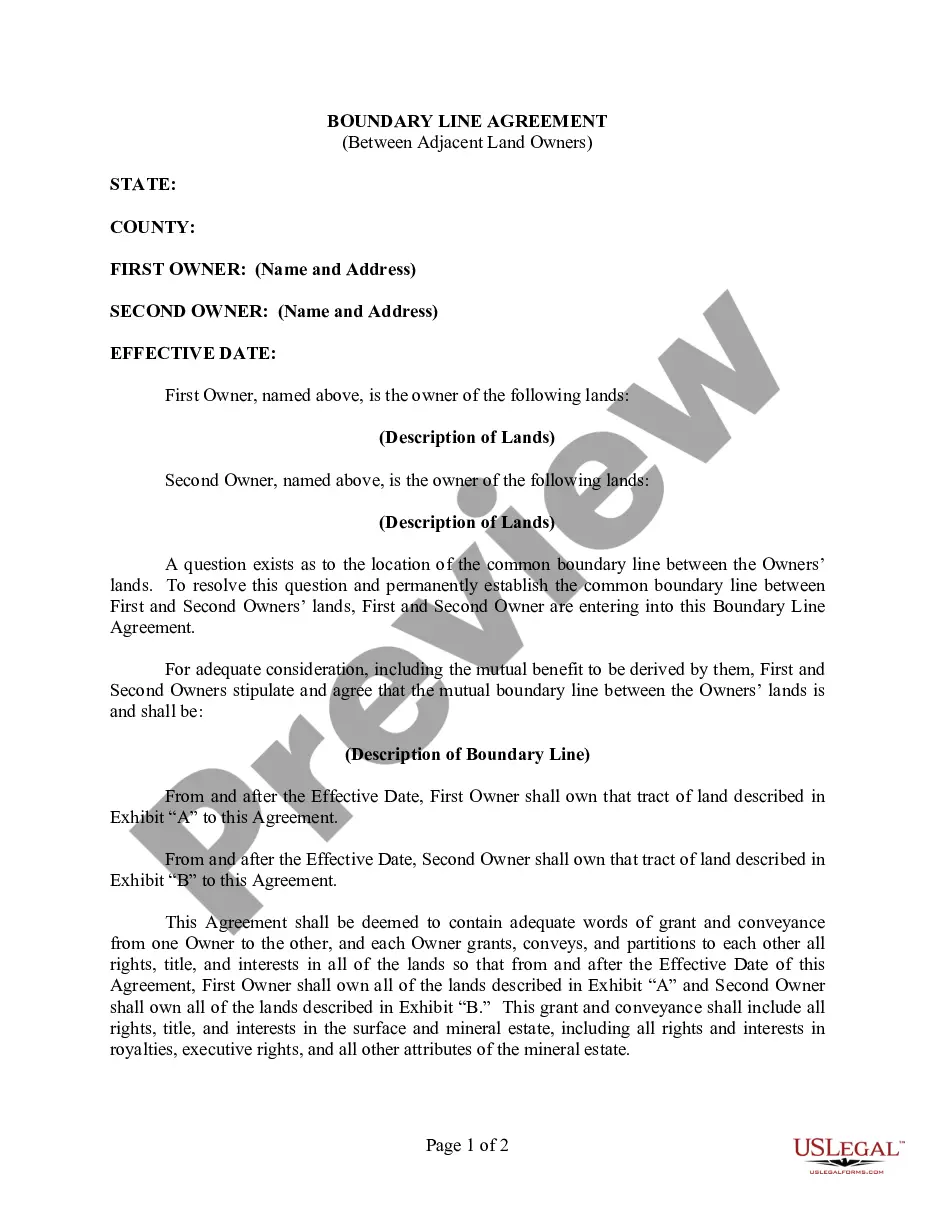
Description


Get your form ready online
Our built-in tools help you complete, sign, share, and store your documents in one place.
Make edits, fill in missing information, and update formatting in US Legal Forms—just like you would in MS Word.
Download a copy, print it, send it by email, or mail it via USPS—whatever works best for your next step.
Sign and collect signatures with our SignNow integration. Send to multiple recipients, set reminders, and more. Go Premium to unlock E-Sign.
If this form requires notarization, complete it online through a secure video call—no need to meet a notary in person or wait for an appointment.
We protect your documents and personal data by following strict security and privacy standards.

Make edits, fill in missing information, and update formatting in US Legal Forms—just like you would in MS Word.

Download a copy, print it, send it by email, or mail it via USPS—whatever works best for your next step.

Sign and collect signatures with our SignNow integration. Send to multiple recipients, set reminders, and more. Go Premium to unlock E-Sign.

If this form requires notarization, complete it online through a secure video call—no need to meet a notary in person or wait for an appointment.

We protect your documents and personal data by following strict security and privacy standards.
Looking for another form?







Form popularity
FAQ
The boundary line is where the property ends. An easement is aright to cross over your property. Most easements are for utilities or access to a property. Both are pretty much written in stone and beyond your ability to control.
Under such an agreement, the parties acknowledge the true boundary line between the properties, and the encroaching owner releases any claim to the strip of land encroached upon. In return, the “encroached upon” owner allows the encroachment to continue for so long as he/she is not adversely affected.
Boundary lines help determine the extent of a property and its legal ownership. Specifically, these lines define a property's physical limits and help prevent conflicts between neighboring property owners.
You and your neighbour can create a 'boundary agreement' to record: the boundary between 2 properties. who's responsible for maintaining a hedge, wall, tree or fence between 2 properties.
The Texas Family Code authorizes a “marital property agreement” between spouses. At any time, the spouses may partition or exchange between themselves any part of their community property, then existing or to be acquired, as the spouses may desire.
In short, yes, you should have an attorney to represent you in a postnuptial agreement for several reasons: To be sure you are treated fairly in the agreement. To have the agreement upheld, as a court is much more likely to say it is a valid contract if both parties were represented by counsel when they entered into it.
A partition agreement divides, or partitions, a married couple's community estate into two separate estates. It is sometimes called a post-nuptial or post-marital agreement and is similar to a prenuptial agreement, except that it is executed by a married couple.
Under Texas law, spouses can enter into partition or exchange agreements in which one spouse transfers all or part of their present or soon-to-be-acquired community property to the other, thereby transmuting it into the separate property of the receiving spouse.
