Boundary Line Agreement Sample With Contract Language In Orange
Description

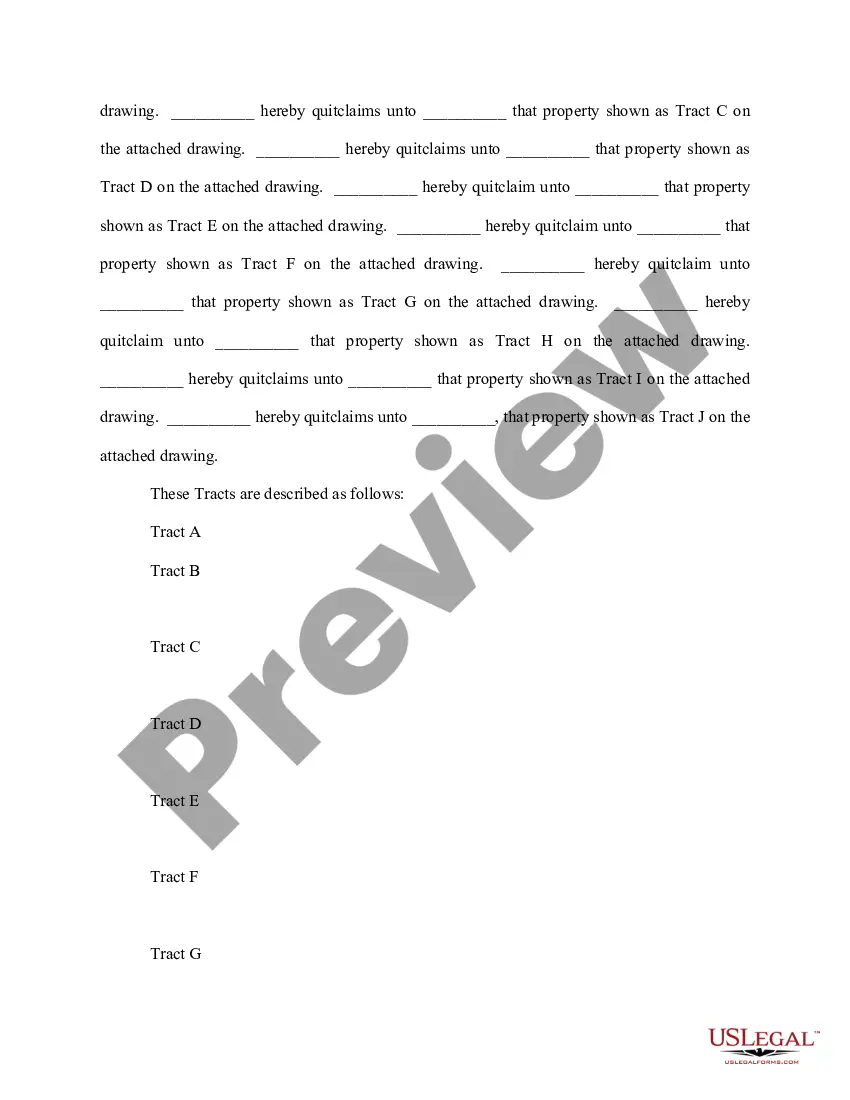
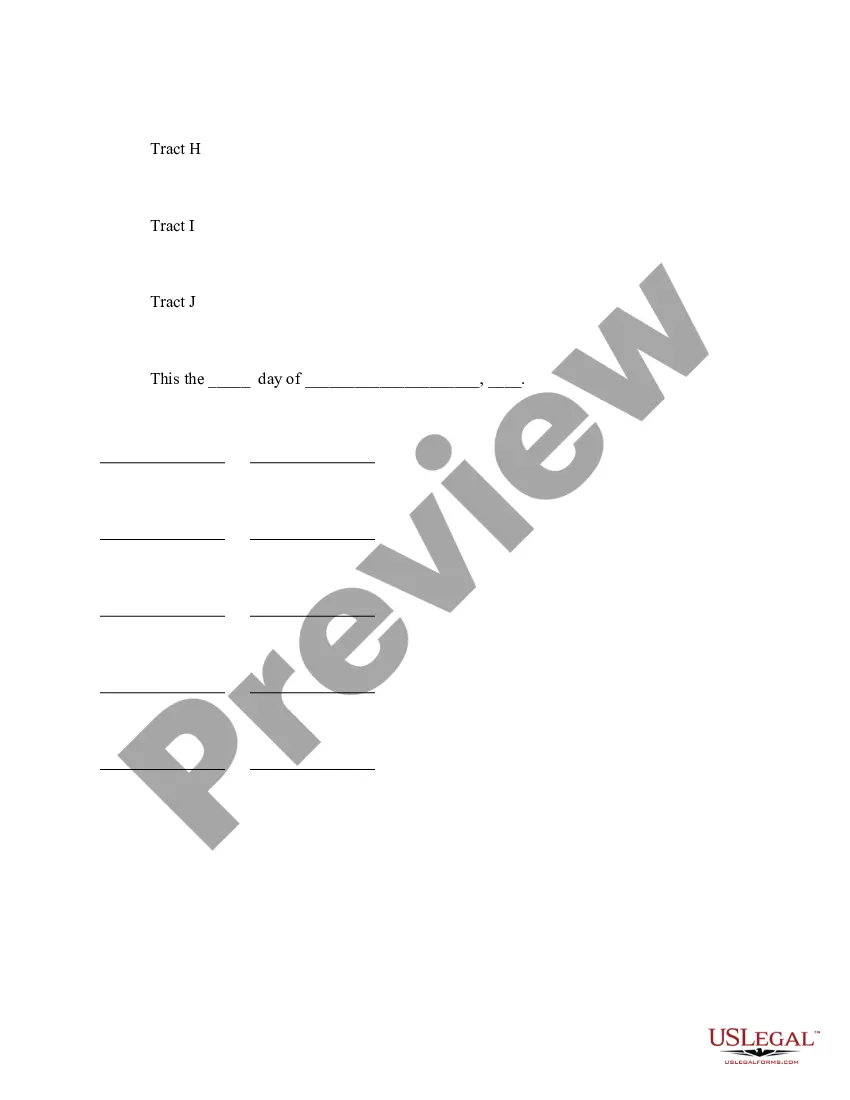

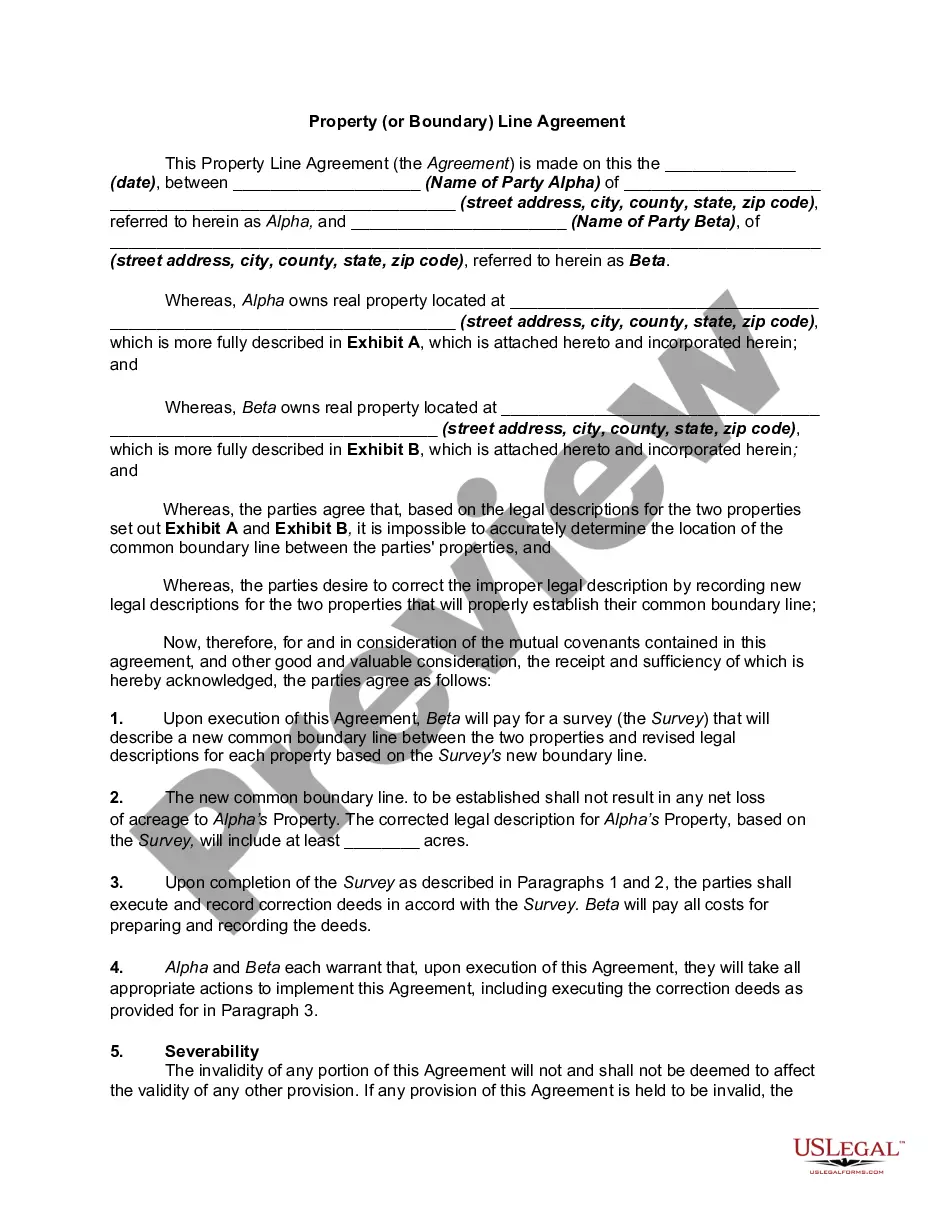
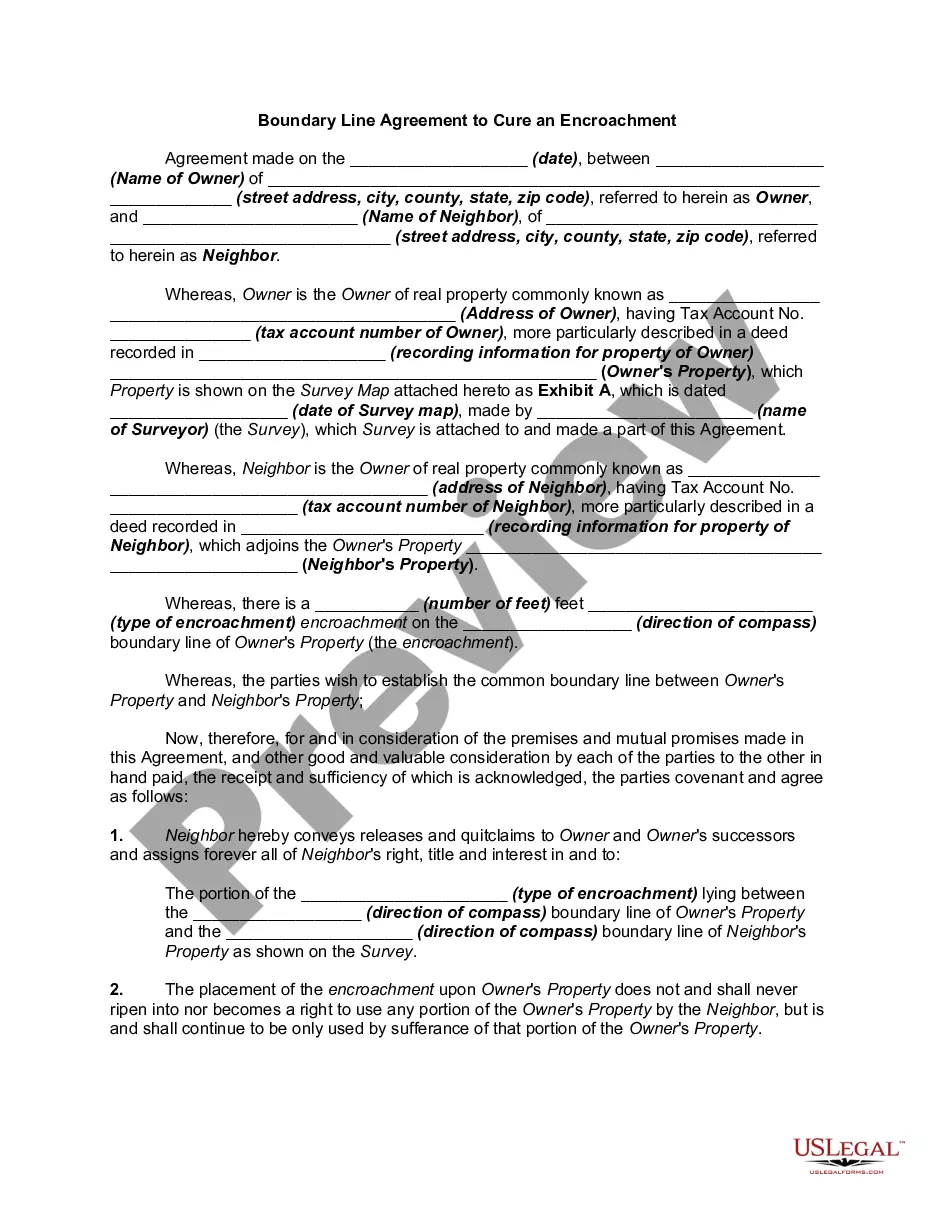
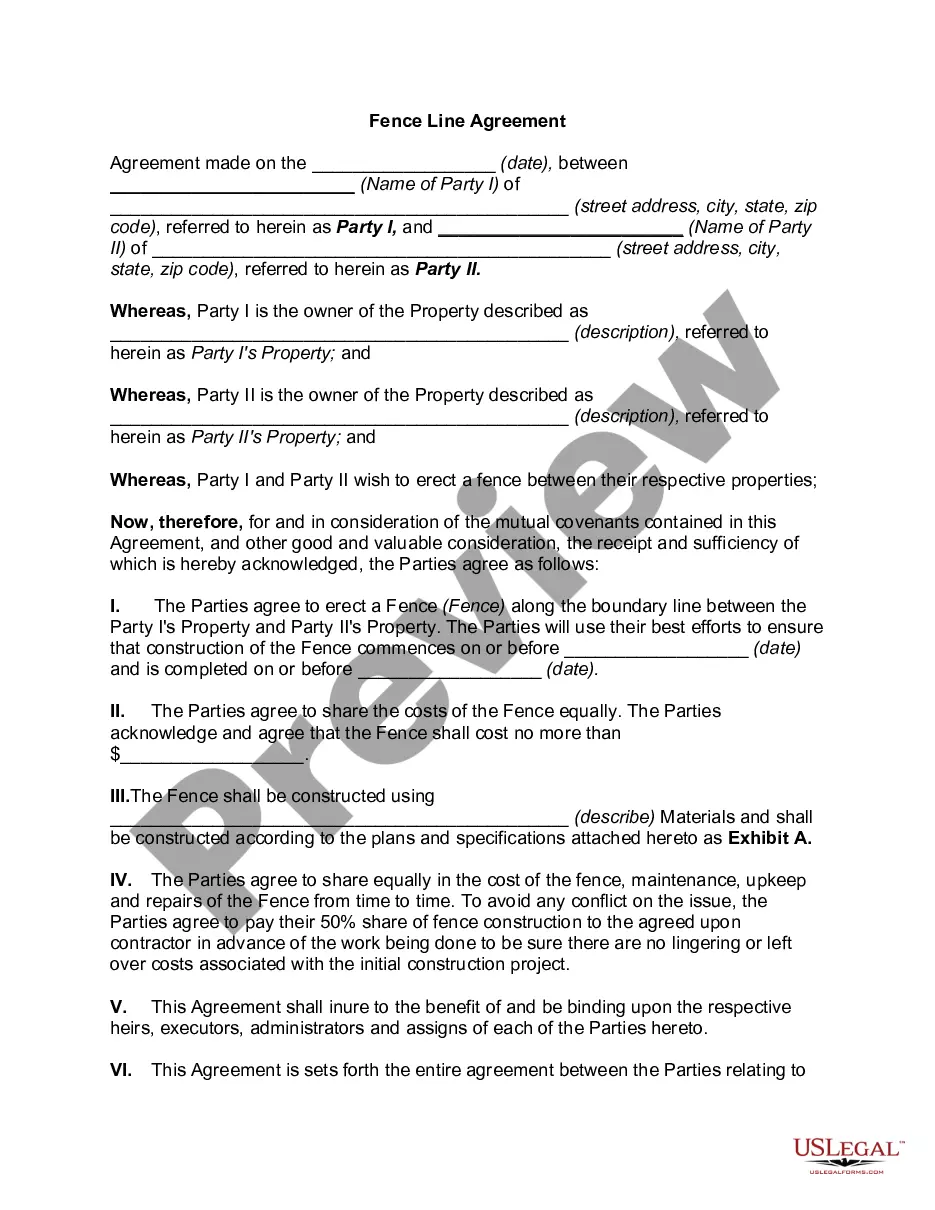
Get your form ready online
Our built-in tools help you complete, sign, share, and store your documents in one place.
Make edits, fill in missing information, and update formatting in US Legal Forms—just like you would in MS Word.
Download a copy, print it, send it by email, or mail it via USPS—whatever works best for your next step.
Sign and collect signatures with our SignNow integration. Send to multiple recipients, set reminders, and more. Go Premium to unlock E-Sign.
If this form requires notarization, complete it online through a secure video call—no need to meet a notary in person or wait for an appointment.
We protect your documents and personal data by following strict security and privacy standards.

Make edits, fill in missing information, and update formatting in US Legal Forms—just like you would in MS Word.

Download a copy, print it, send it by email, or mail it via USPS—whatever works best for your next step.

Sign and collect signatures with our SignNow integration. Send to multiple recipients, set reminders, and more. Go Premium to unlock E-Sign.

If this form requires notarization, complete it online through a secure video call—no need to meet a notary in person or wait for an appointment.

We protect your documents and personal data by following strict security and privacy standards.
Looking for another form?







Form popularity
FAQ
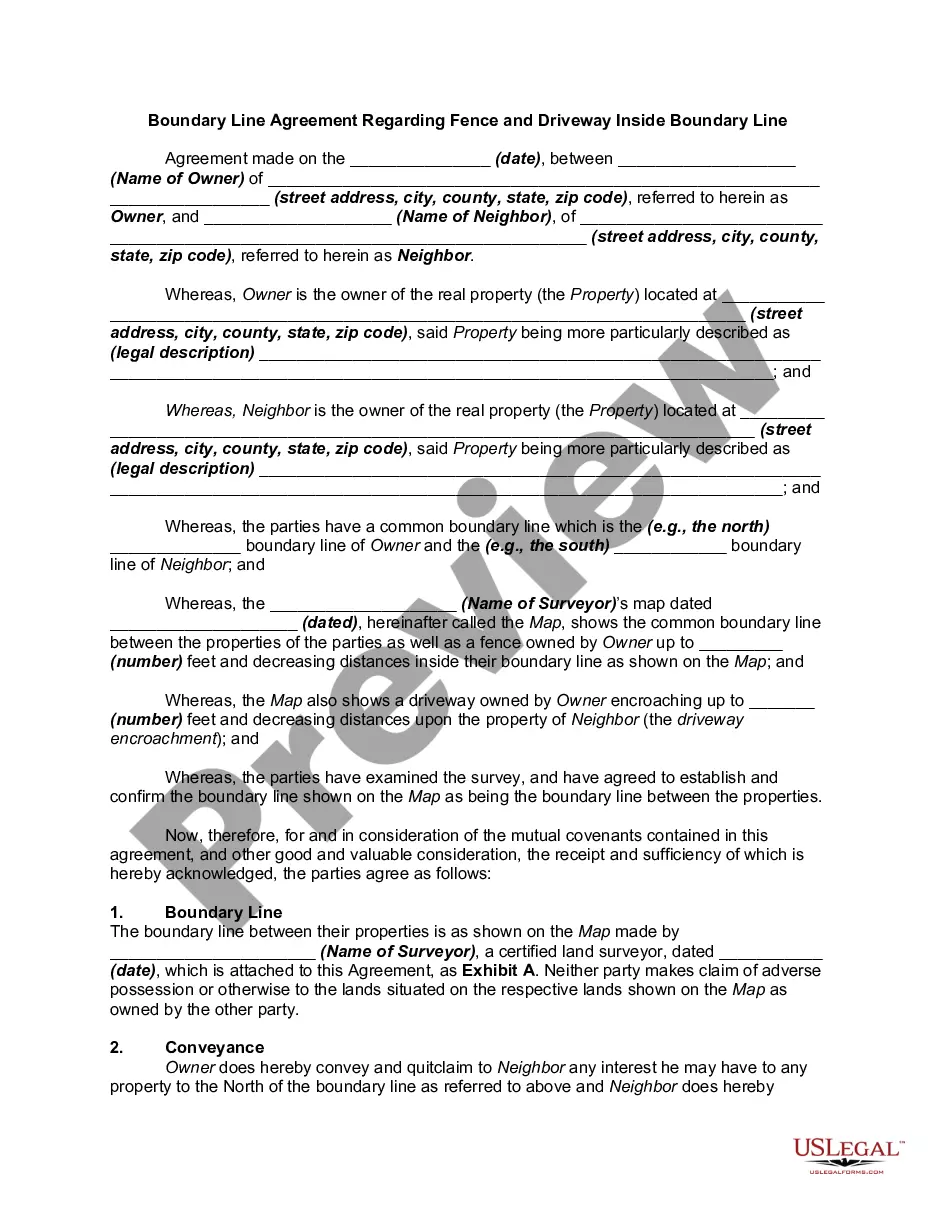
A boundary line agreement is a legally binding document that sets clear boundaries between neighboring properties, providing certainty and preventing conflicts.
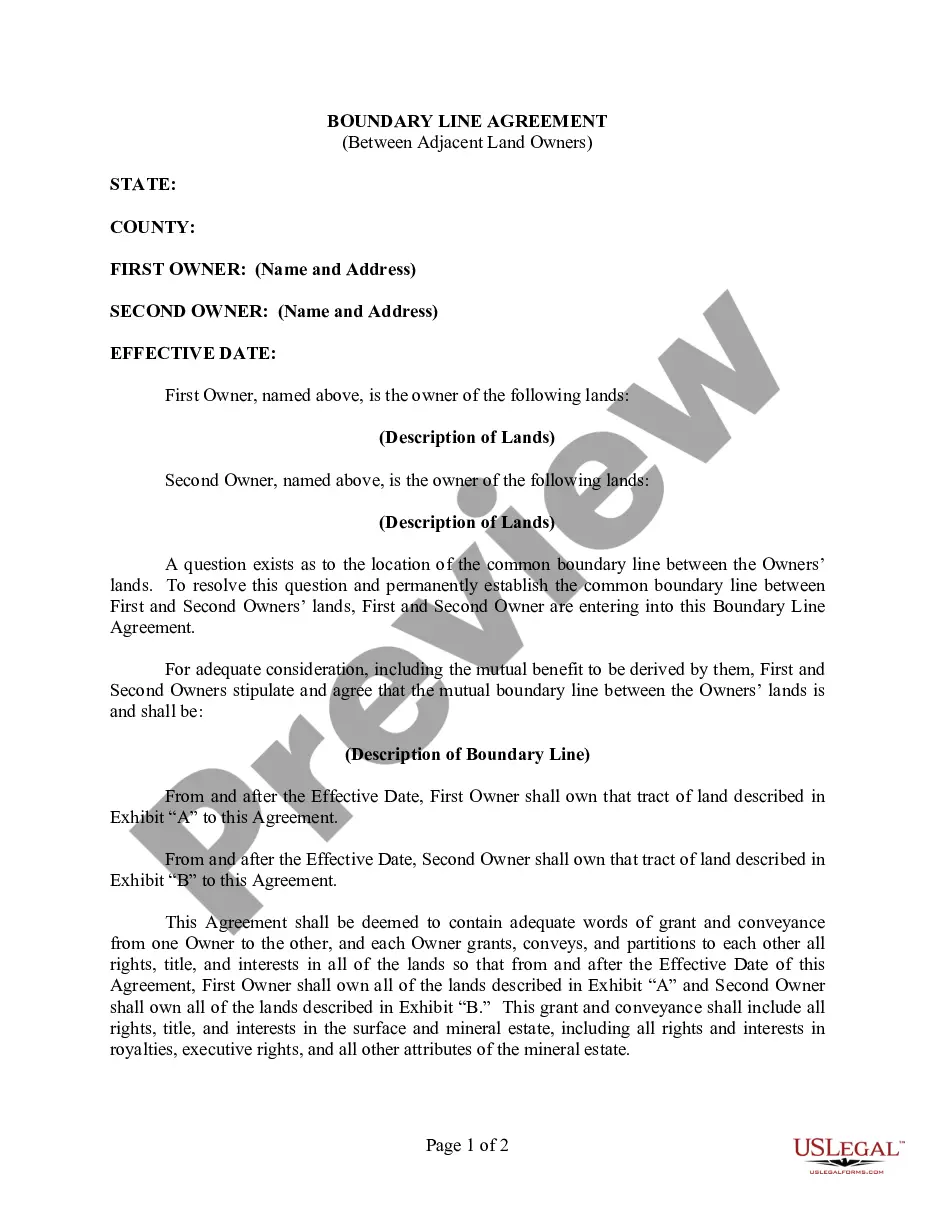
A boundary line agreement is a written document between abutting landowners which first identifies their common boundary as being “ambiguous”, “lost” or “uncertain” and secondly describes an agreed to boundary line that is certain.
The Boundary Line Agreement (BL AGR) provides a procedure for County review whenever a point or line determining the boundary between two or more parcels of real property cannot be identified from the existing public record, monuments, and landmarks or is in dispute. RCW 58.04.
Under such an agreement, the parties acknowledge the true boundary line between the properties, and the encroaching owner releases any claim to the strip of land encroached upon. In return, the “encroached upon” owner allows the encroachment to continue for so long as he/she is not adversely affected.
If the property line goes through the middle of the tree trunk, the tree is jointly owned by you and your neighbor. Since you jointly own such boundary trees, you are allowed to trim them. But if your trimming kills the tree or you cut down the tree entirely, you could be liable for timber trespass.
A boundary line agreement is a legally binding document that sets clear boundaries between neighboring properties, providing certainty and preventing conflicts.
Use concrete words rather than industry jargon to keep the intent clear. A properly formatted contract will typically have copy that is left-aligned and single-spaced. If the contract is long or has multiple sections, a table of contents should be included to make it easier to review.
Write the contract in six steps Start with a contract template. Open with the basic information. Describe in detail what you have agreed to. Include a description of how the contract will be ended. Write into the contract which laws apply and how disputes will be resolved. Include space for signatures.
How to write a contract agreement in 7 steps. Determine the type of contract required. Confirm the necessary parties. Choose someone to draft the contract. Write the contract with the proper formatting. Review the written contract with a lawyer. Send the contract agreement for review or revisions.
