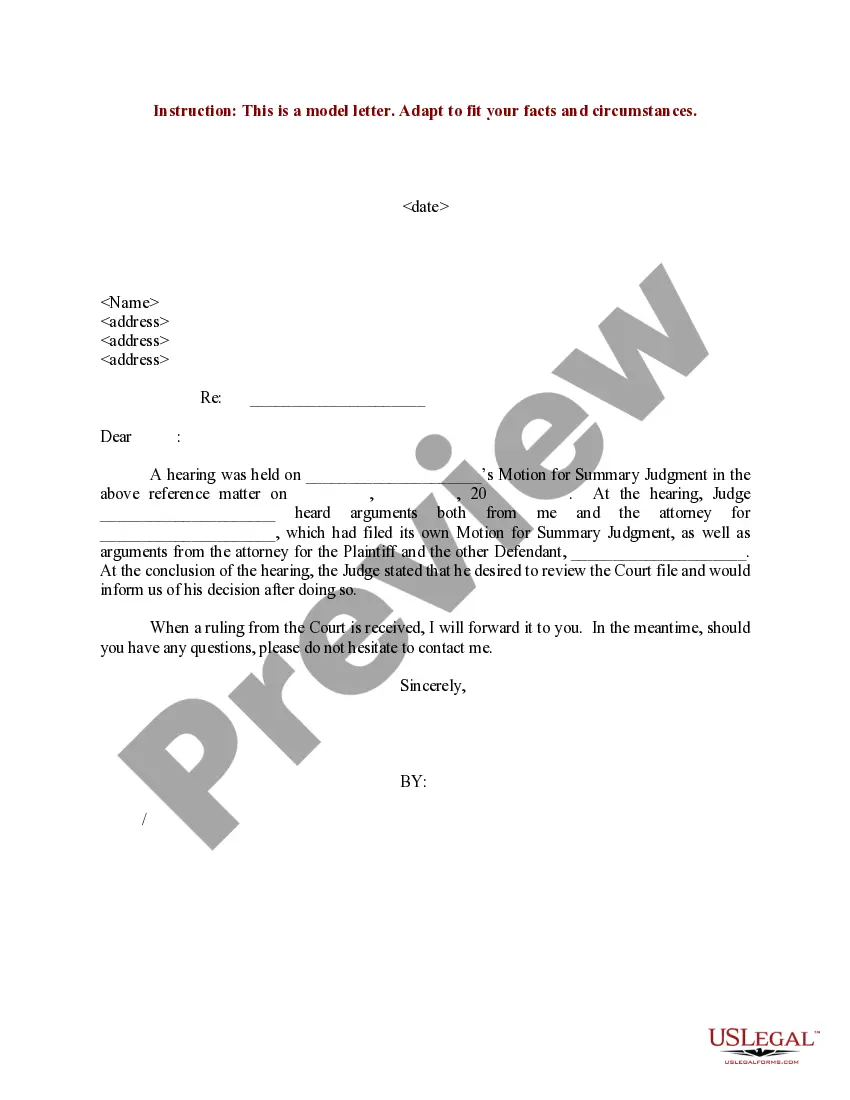
Estate Against Fortune In Texas
Description


Get your form ready online
Our built-in tools help you complete, sign, share, and store your documents in one place.
Make edits, fill in missing information, and update formatting in US Legal Forms—just like you would in MS Word.
Download a copy, print it, send it by email, or mail it via USPS—whatever works best for your next step.
Sign and collect signatures with our SignNow integration. Send to multiple recipients, set reminders, and more. Go Premium to unlock E-Sign.
If this form requires notarization, complete it online through a secure video call—no need to meet a notary in person or wait for an appointment.
We protect your documents and personal data by following strict security and privacy standards.

Make edits, fill in missing information, and update formatting in US Legal Forms—just like you would in MS Word.

Download a copy, print it, send it by email, or mail it via USPS—whatever works best for your next step.

Sign and collect signatures with our SignNow integration. Send to multiple recipients, set reminders, and more. Go Premium to unlock E-Sign.

If this form requires notarization, complete it online through a secure video call—no need to meet a notary in person or wait for an appointment.

We protect your documents and personal data by following strict security and privacy standards.
Looking for another form?



Form popularity
FAQ
One way to reduce your estate tax liability in Texas is to give gifts to your heirs during your lifetime. You can gift up to $15,000 per year, per recipient, without incurring gift taxes in Texas. This means that if you have multiple heirs, you can gift up to $15,000 to each of them without triggering gift taxes.
If a creditor wishes to file a claim against the estate, they must do so in writing and provide documentation of the debt. The claim must be filed with the probate court and a copy must be sent to the executor or administrator of the estate.
In Texas, if an estate's value exceeds $75,000, it generally must go through probate because the law aims to ensure that significant assets are appropriately managed and distributed under court supervision. The reason an estate over $75,000 must go through probate is to protect the rights of heirs and creditors.
If you die without a will and your spouse survives you, he or she will inherit all of your share in the marriage's community property. Your separate or personal property will be divided between your spouse and children if you have children or your spouse and parents or siblings if you don't have children.
Children (or if none, grandchildren) will get an equal share. if there are no children or grandchildren, surviving parents will get a share. if there are no children, grandchildren or surviving parents, any brothers and sisters will get a share (or their children if they died while the deceased was still alive)
If there is no will, the estate may still have to go through probate. Texas has several types of probate methods. Estate administration is the most formal. In administration, the court appoints a specific person to manage the whole process.
In Texas, the surviving spouse and children will usually inherit all probate assets. If there are no children or grandchildren, the property may pass to the spouse, parents, siblings, nieces, nephews, and/or other heirs, depending on the situation.
California Probate Codes on Suing an Estate Probate Code 551 allows for filing a lawsuit within 40 days with an additional year if the injured person was unaware of the defendant's demise.
In Texas, the statute of limitations for claims against an estate is generally two years from the date of the decedent's death. This means that any claims must be filed within this time frame to be valid.
Two Years. Basic Rule: In general, a Texas will contest must be filed within two years from the date the will is admitted to probate, not two years from death.