Letter Settlement Estate Sample Without Prejudice In Fairfax
Description


Get your form ready online
Our built-in tools help you complete, sign, share, and store your documents in one place.
Make edits, fill in missing information, and update formatting in US Legal Forms—just like you would in MS Word.
Download a copy, print it, send it by email, or mail it via USPS—whatever works best for your next step.
Sign and collect signatures with our SignNow integration. Send to multiple recipients, set reminders, and more. Go Premium to unlock E-Sign.
If this form requires notarization, complete it online through a secure video call—no need to meet a notary in person or wait for an appointment.
We protect your documents and personal data by following strict security and privacy standards.

Make edits, fill in missing information, and update formatting in US Legal Forms—just like you would in MS Word.

Download a copy, print it, send it by email, or mail it via USPS—whatever works best for your next step.

Sign and collect signatures with our SignNow integration. Send to multiple recipients, set reminders, and more. Go Premium to unlock E-Sign.

If this form requires notarization, complete it online through a secure video call—no need to meet a notary in person or wait for an appointment.

We protect your documents and personal data by following strict security and privacy standards.
Looking for another form?


Form popularity
FAQ
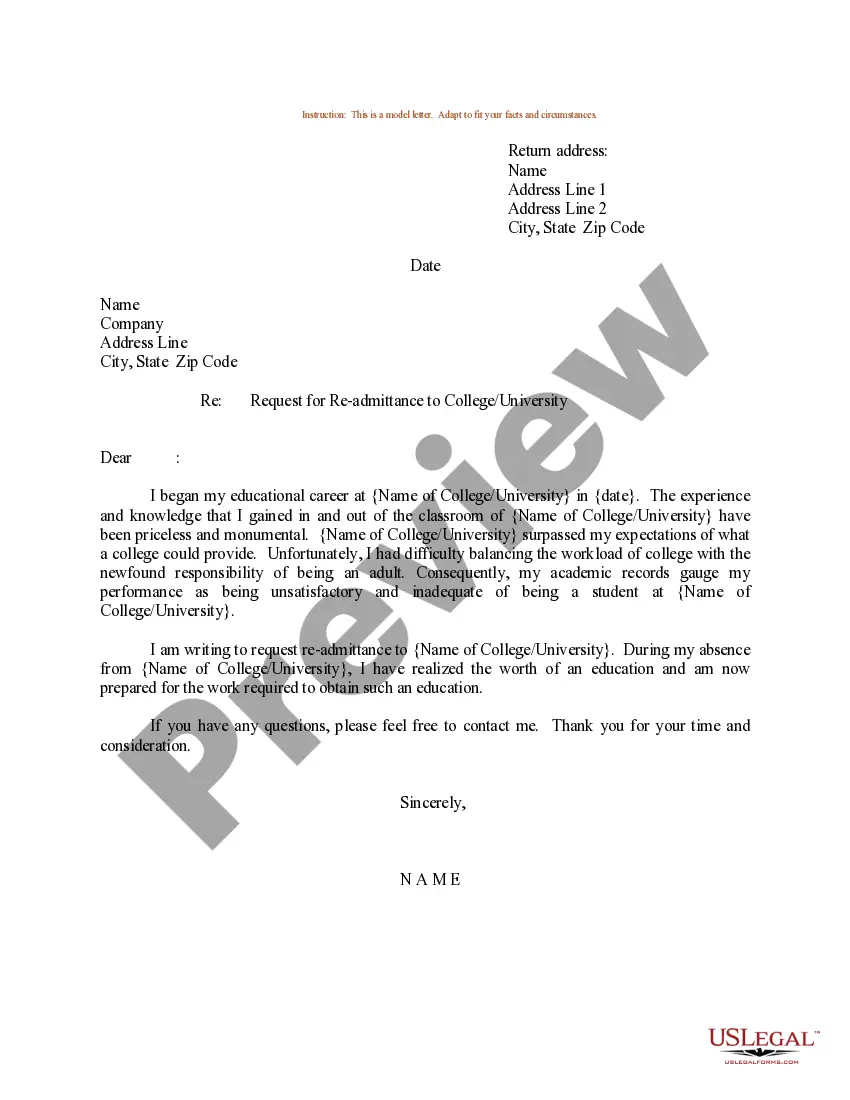
Negotiations opened by the employer Your employer will then set out the reasons for the discussion and their proposal for a financial settlement in return for the termination of your employment. They will often then hand you a letter marked 'without prejudice'. The letter will set out the details of their offer.
Letter of No Prejudice (LONP) LONPs are intended to allow time-sensitive critical-path project activities to occur using local funds in advance of federal grant funds being available for reimbursement. As such, LONPs expire after a specific period of time, generally limited to five years.
Marking a communication with the words “without prejudice save as to costs” means that the correspondence cannot be shown to the Court until after the main issue is resolved and a concluded settlement agreement has been reached.
``This is effectively shorthand for saying: 'whilst I am trying to reach a settlement with you, I'm not admitting any part of the case or conceding or waiving any arguments or rights - so, my offers to achieve a commercial deal are without prejudice to my primary position that I'm right and you're wrong'.
Without Prejudice Meaning The basic meaning of 'without prejudice' is that statements made in the settlement of an existing dispute cannot be relied upon as evidence against the interests of the relevant party if negotiations fail and the parties then have to formally engage in a dispute resolution procedure.
The core purpose of the “without prejudice” rule is to foster the resolution of disputes by ensuring that statements made in the course of settlement discussions cannot later be used as evidence in court.
Without prejudice means, in general, that the contents of any communications sent by other party in a genuine attempt to try and settle a claim will not be admissible in a court or tribunal.
What does Without prejudice save as to costs mean? A party who engages in negotiations 'without prejudice save as to costs' reserves the right, which he would not otherwise have, to bring those negotiations to the attention of the court on the matter of costs.
In general, following the death of a decedent, a Personal Representative needs to contact the Probate Division of the Circuit Court Clerk's office in the county or city where the decedent (i) had a known place of residence; (ii) if no known place of residence, then where he or she owned real estate; or (iii) if no real ...

