Agreement Letter For Teacher In Orange
Description

Get your form ready online
Our built-in tools help you complete, sign, share, and store your documents in one place.
Make edits, fill in missing information, and update formatting in US Legal Forms—just like you would in MS Word.
Download a copy, print it, send it by email, or mail it via USPS—whatever works best for your next step.
Sign and collect signatures with our SignNow integration. Send to multiple recipients, set reminders, and more. Go Premium to unlock E-Sign.
If this form requires notarization, complete it online through a secure video call—no need to meet a notary in person or wait for an appointment.
We protect your documents and personal data by following strict security and privacy standards.

Make edits, fill in missing information, and update formatting in US Legal Forms—just like you would in MS Word.

Download a copy, print it, send it by email, or mail it via USPS—whatever works best for your next step.

Sign and collect signatures with our SignNow integration. Send to multiple recipients, set reminders, and more. Go Premium to unlock E-Sign.

If this form requires notarization, complete it online through a secure video call—no need to meet a notary in person or wait for an appointment.

We protect your documents and personal data by following strict security and privacy standards.
Looking for another form?
Form popularity
FAQ
Ing to Boundy (2012), typically, a written contract will include: Date of agreement. Names of parties to the agreement. Preliminary clauses. Defined terms. Main contract clauses. Schedules/appendices and signature provisions (para. 5).
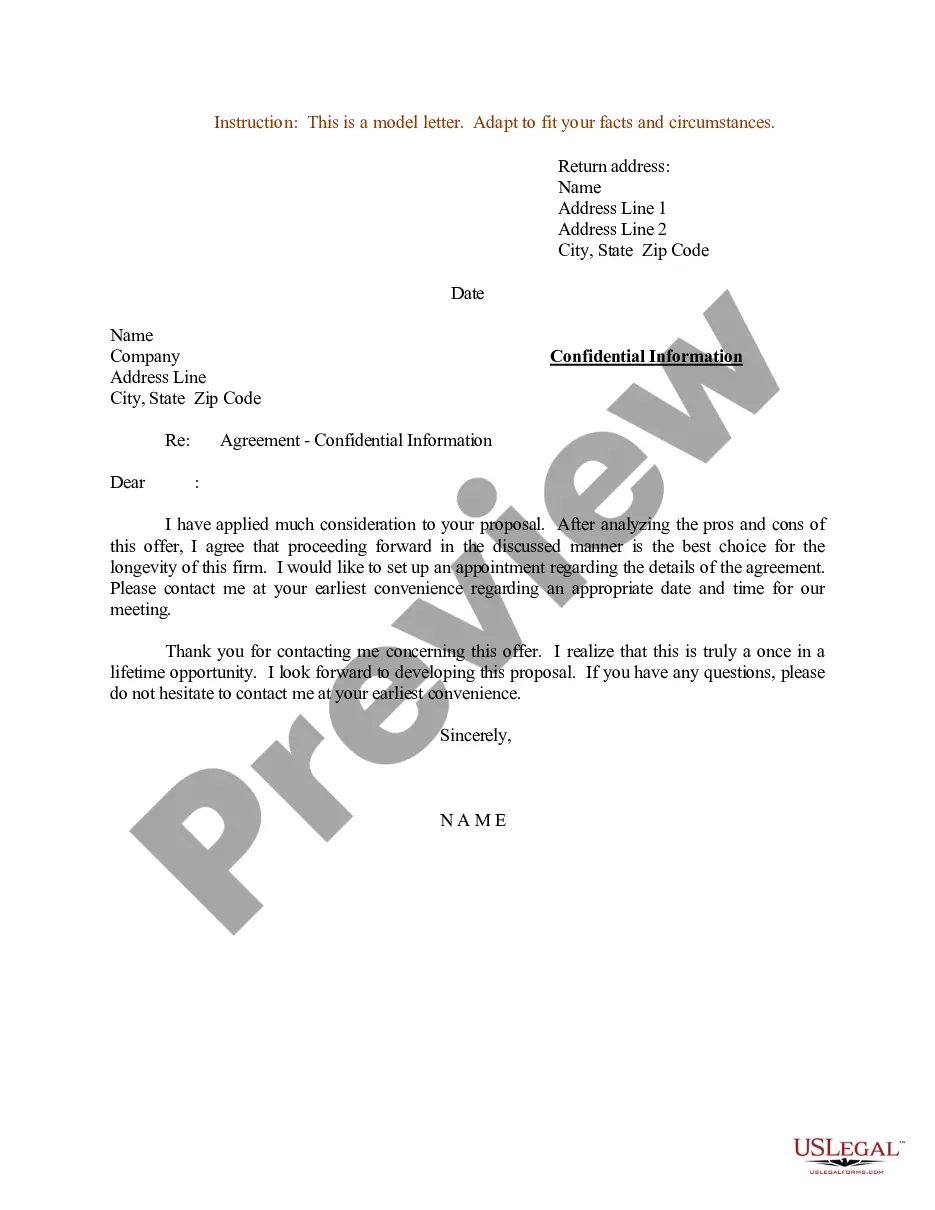
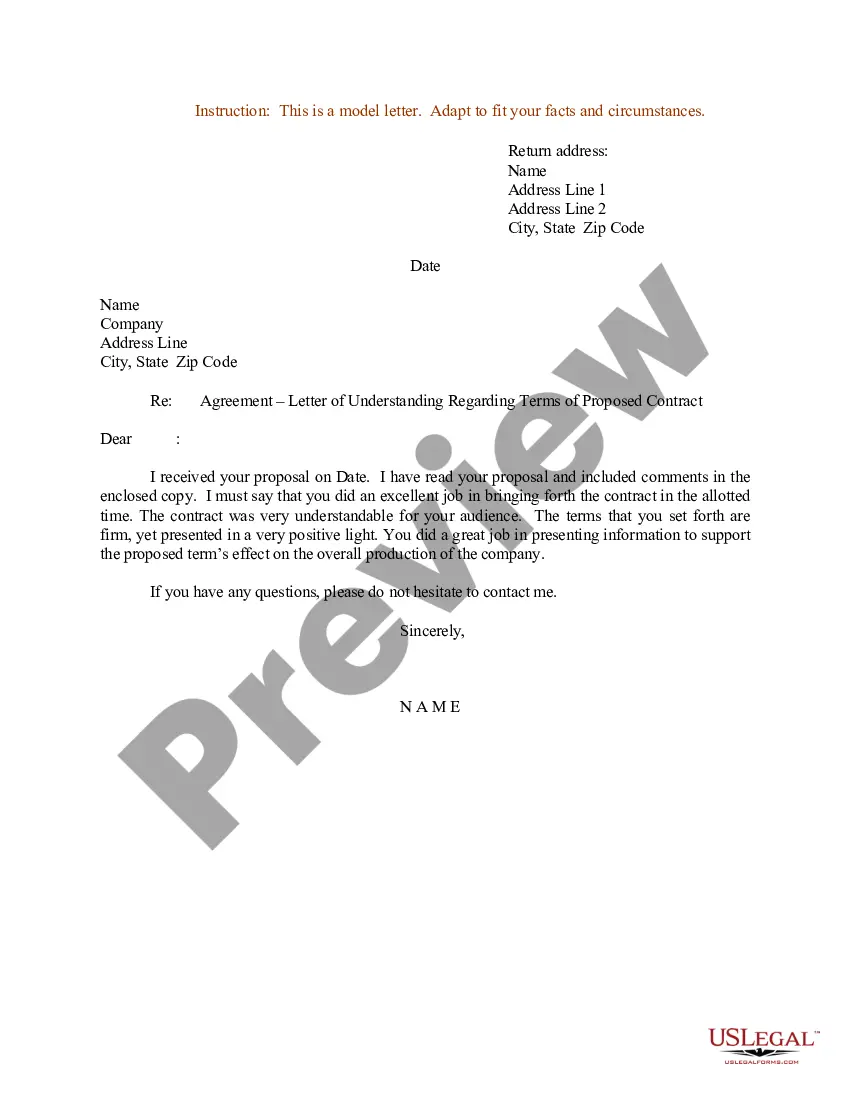
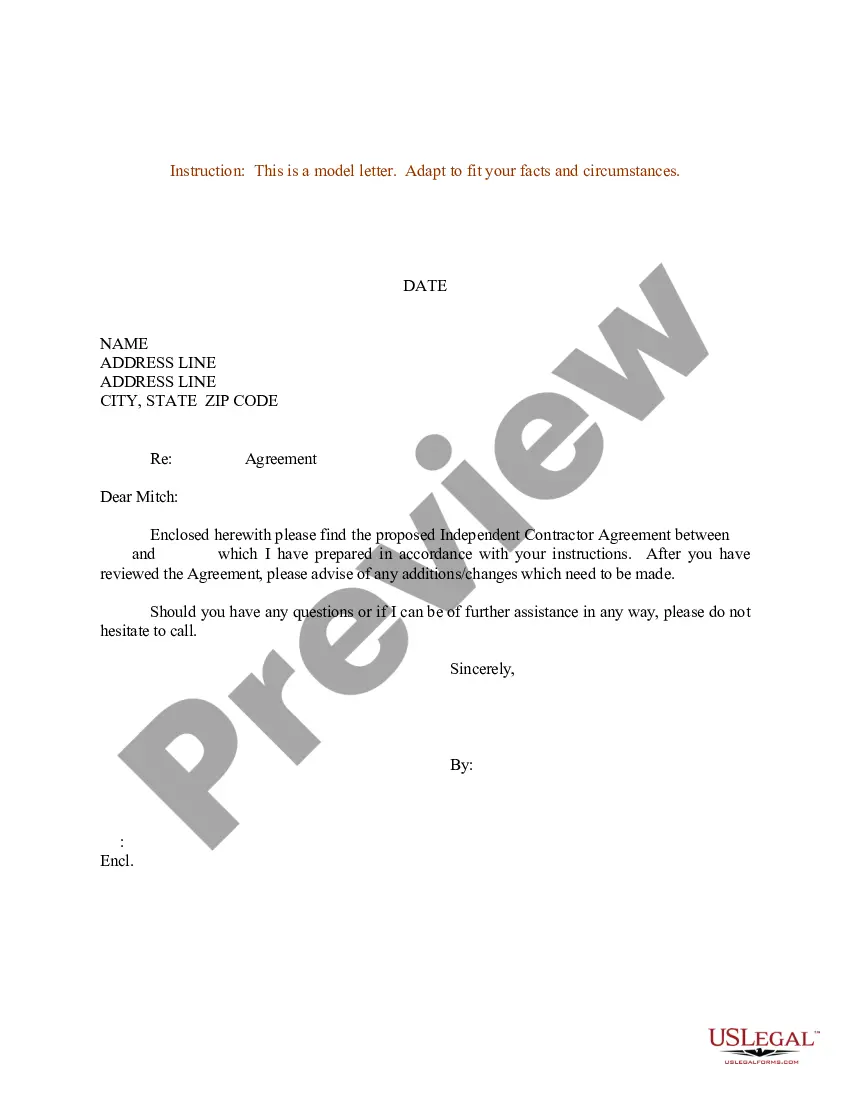
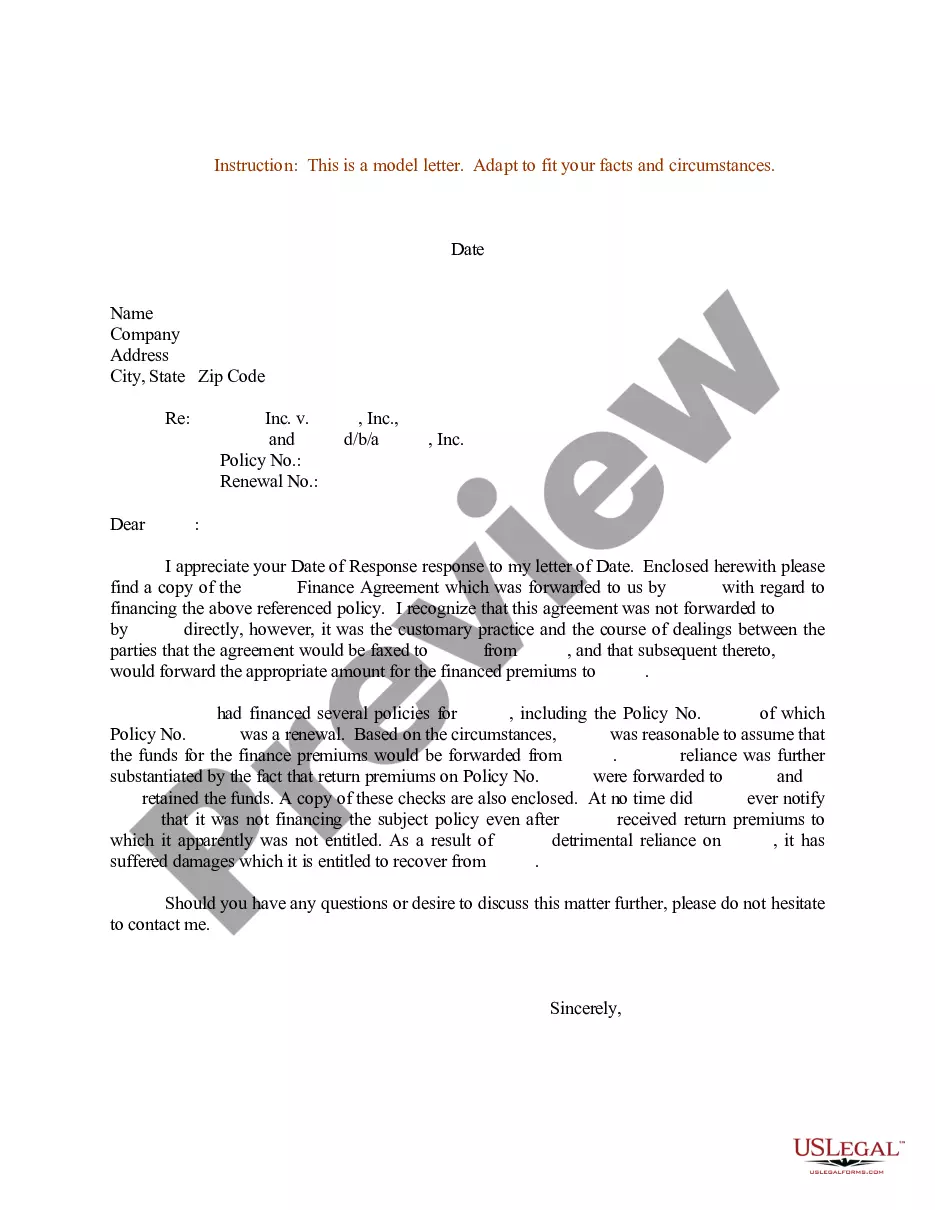
An agreement letter is a type of contract document that outlines the terms and conditions of a working relationship between two parties in a written record. If you want to understand more about contracts, such as those between employers and employees, understanding agreement letters can be a helpful step.
Key Differences Between Agreement and Contract A contract is legally binding and enforceable, whereas an agreement may or may not be legally binding. Contracts create legal obligations that must be fulfilled by the parties, while agreements may not create any legal obligations.
Contract teaching is one way to renew interest and add excitement to a unit or program. Students are motivated by the personal attention in smaller teaching situations, the opportunity for independent practice, and a method for establishing goals and tracking their own progress.
A letter of agreement is a document you can use for business, professional, or commercial purposes to outline the terms and conditions of an agreement. This document gains effect when all relevant parties sign their names to demonstrate their agreement to the terms.
Commonly called a contract, a contractual agreement between two or more parties allows or restricts them from engaging in certain acts by creating mutual obligations enforceable by law. Failure to abide by these obligations may be punishable by law in the form of monetary fines, community service, or even jail time.
(This is more than most full-time employees.) Of course, I realize that many people with 40-hour-a-week jobs take work home or work more than their 40 hours. But remember, again, that teachers' contracts aren't actually for 12 months a year. Contracts are usually for 39 weeks, or around 180 days.
Student contracts are working negotiations between students and their teacher that record how a student is going to achieve specific learning or behavior objectives. These contracts generally include the follow components: The learning objective (goal) of the contract. The steps involved (what the student will do)
The Victorian Government Schools Agreement 2022 included a landmark reduction in the maximum face-to-face teaching hours for primary, secondary and specialist school teachers by 1 hour in 2023, with a further reduction of 30 minutes in 2024.
The Classroom Contract serves as a collaboratively created framework for behavior expectations in the classroom. Students and teacher work together to design an agreement for classroom norms, rules and consequences.

