Made A Director Without Consent In Oakland
Description
Get your form ready online
Our built-in tools help you complete, sign, share, and store your documents in one place.
Make edits, fill in missing information, and update formatting in US Legal Forms—just like you would in MS Word.
Download a copy, print it, send it by email, or mail it via USPS—whatever works best for your next step.
Sign and collect signatures with our SignNow integration. Send to multiple recipients, set reminders, and more. Go Premium to unlock E-Sign.
If this form requires notarization, complete it online through a secure video call—no need to meet a notary in person or wait for an appointment.
We protect your documents and personal data by following strict security and privacy standards.

Make edits, fill in missing information, and update formatting in US Legal Forms—just like you would in MS Word.

Download a copy, print it, send it by email, or mail it via USPS—whatever works best for your next step.

Sign and collect signatures with our SignNow integration. Send to multiple recipients, set reminders, and more. Go Premium to unlock E-Sign.

If this form requires notarization, complete it online through a secure video call—no need to meet a notary in person or wait for an appointment.

We protect your documents and personal data by following strict security and privacy standards.
Looking for another form?








Form popularity
FAQ
How to remove a director under the company's articles of association they resign. a majority of the company shareholders vote them out by ordinary resolution. they're stopped from being a director by a court or in law. they become bankrupt or similar.
Section 168 provides that a company can remove a Director by passing an ordinary resolution at a meeting. Special notice is however required. On receipt of notice of an intended resolution to remove a Director, the company must send a copy of the notice to the Director concerned.
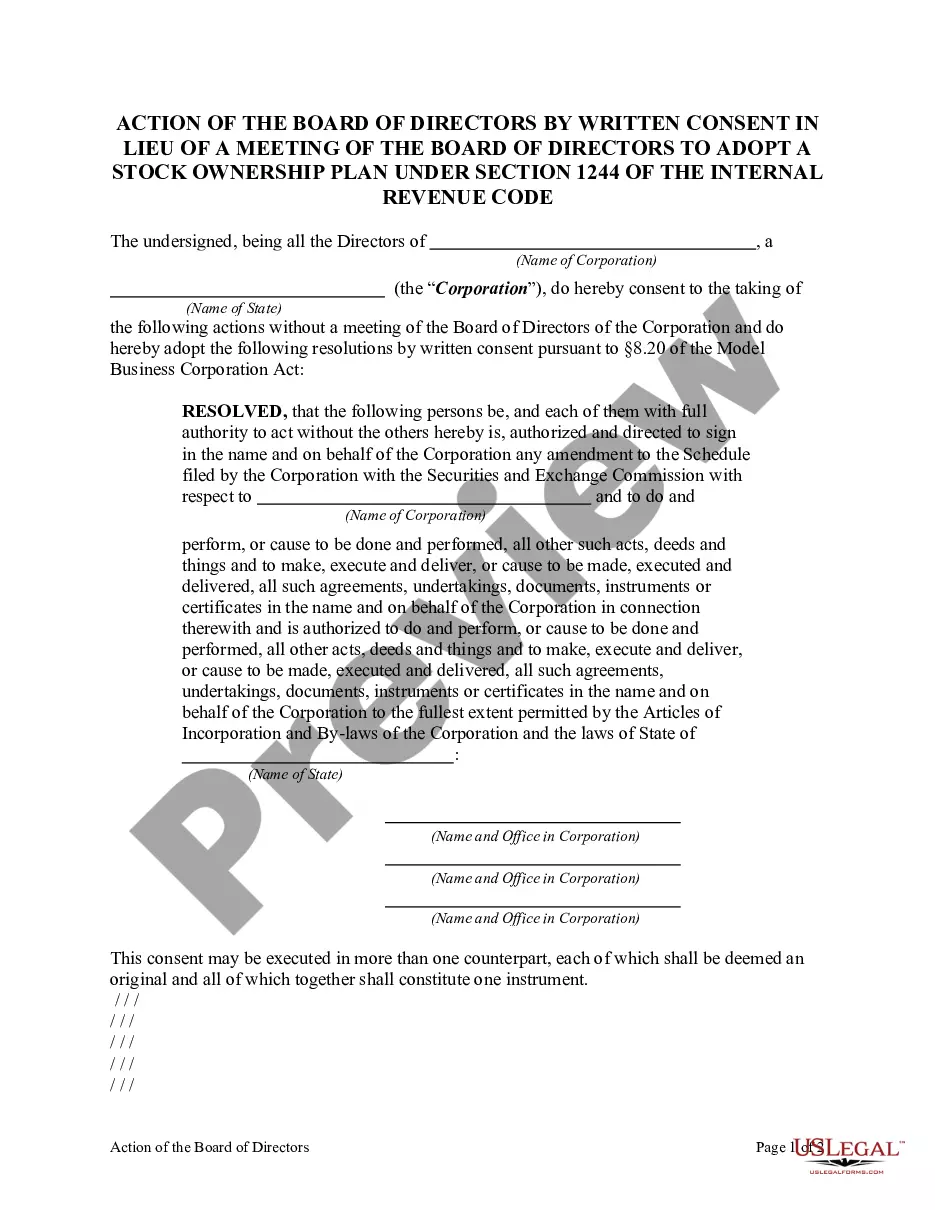
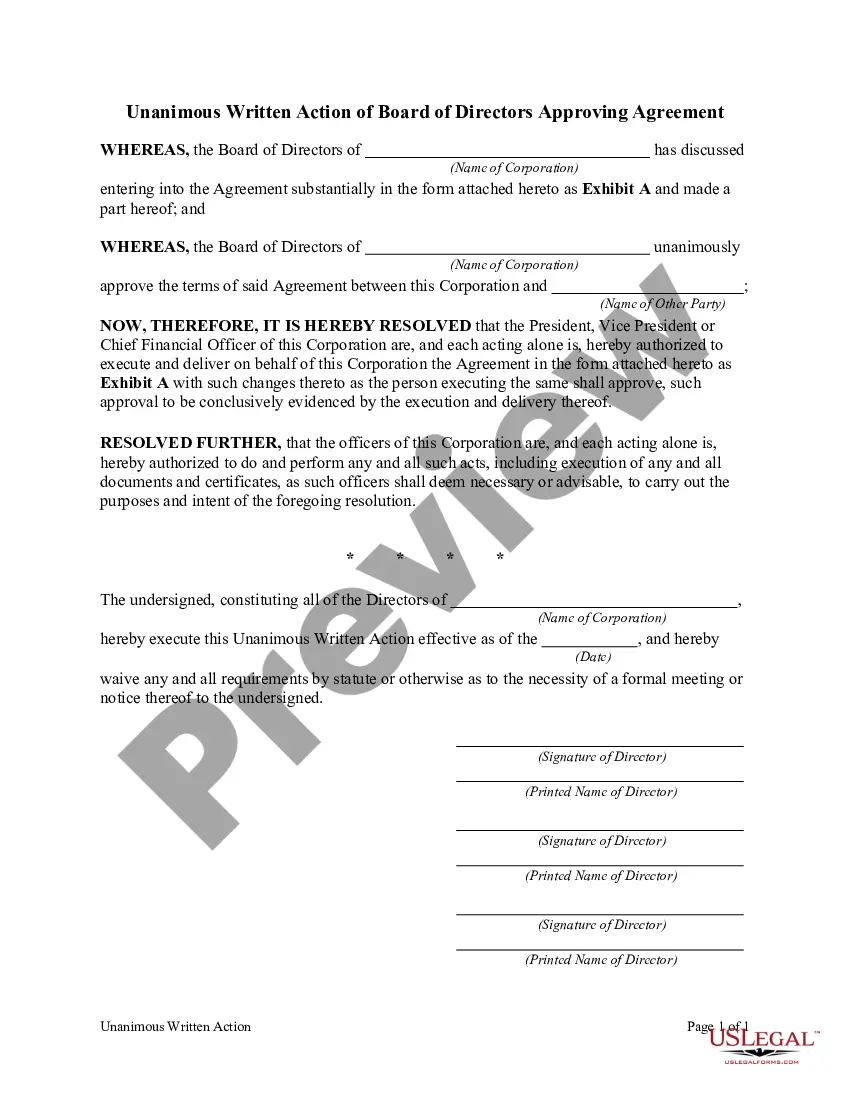
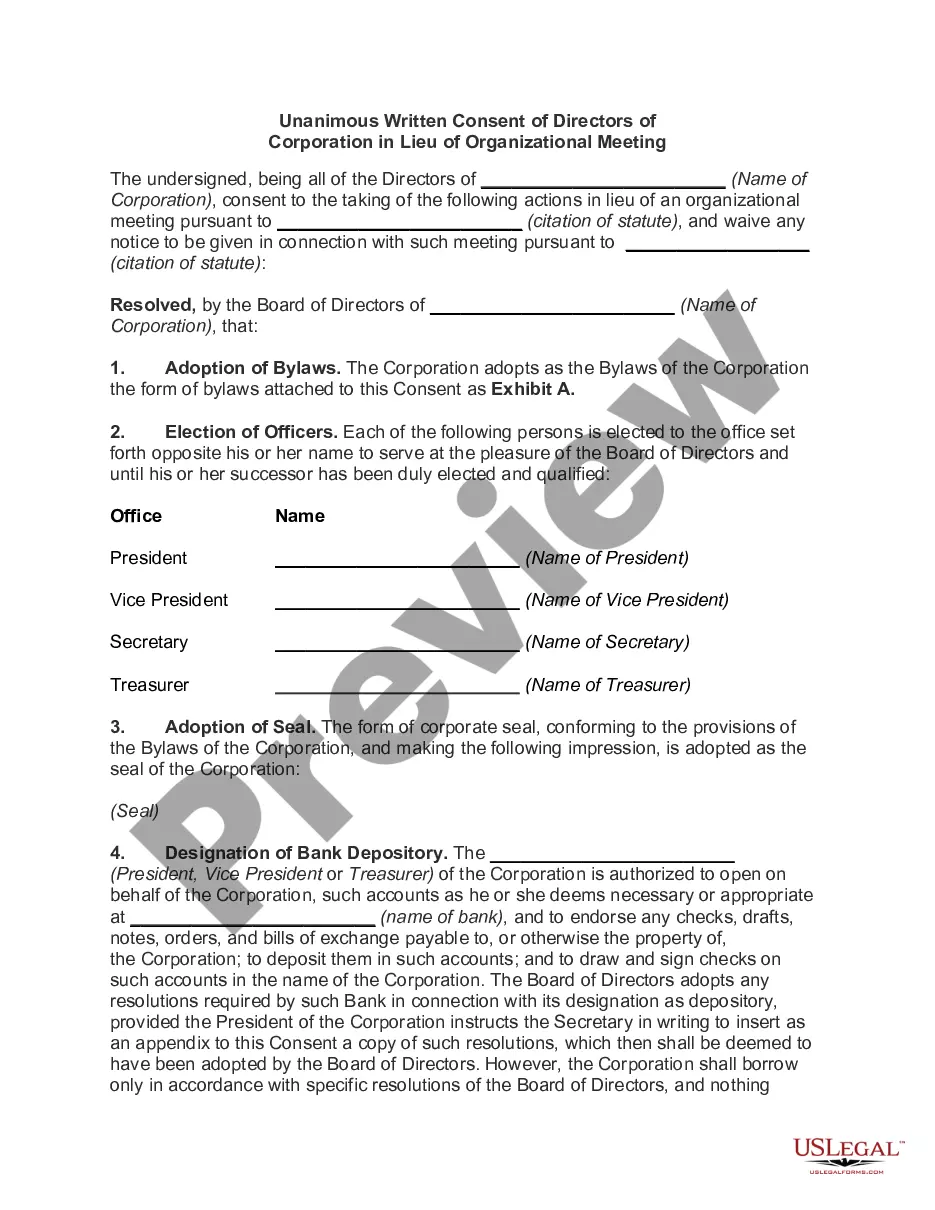
Code § 307(b) provides, "An action required or permitted to be taken by the board may be taken without a meeting, if all members of the board shall individually or collectively consent in writing to that action and if the number of members of the board serving at the time constitutes a quorum.
Unless there is a special provision in the company's Articles of Association a director cannot be removed from office by the Board of Directors, and only the shareholders can remove a director. The Articles may provide a procedure for this; otherwise the statutory procedure must be used.
As per the 2013 Act, the removal of a director can only take place during a general meeting through the approval of an ordinary resolution. Notably, this condition is applicable unless the director in question was appointed either through proportional representation or under section 163.
A director may be removed by: An ordinary resolution adopted at a shareholders' meeting by the persons entitled to exercise voting rights in the election of that director.
California Is a Two-Party Consent State But California is one of a small handful of states that has enacted what's known as a two-party consent law. That means recording a conversation in person, over the phone or via online platforms without getting permission from all participants is illegal.
What does the law say about recording someone else? Washington State is a "2-party" consent recording state. You have a right to privacy in your private conversations. This means that you must get permission from everyone being recorded in the private conversation before you can record them by video or audio.
Ing to the current laws, you are allowed to record a video of people without their consent, but only if you don't pick up any bits of their conversation. The state doesn't have a problem with you capturing their image, just their words. If you want to record the conversation, you'll have to get their consent.
You may have grounds to sue someone or a company for recording you without your permission under certain circumstances. California's law, specifically Penal Code 632, prohibits the recording of confidential communications without the consent of all parties involved.
