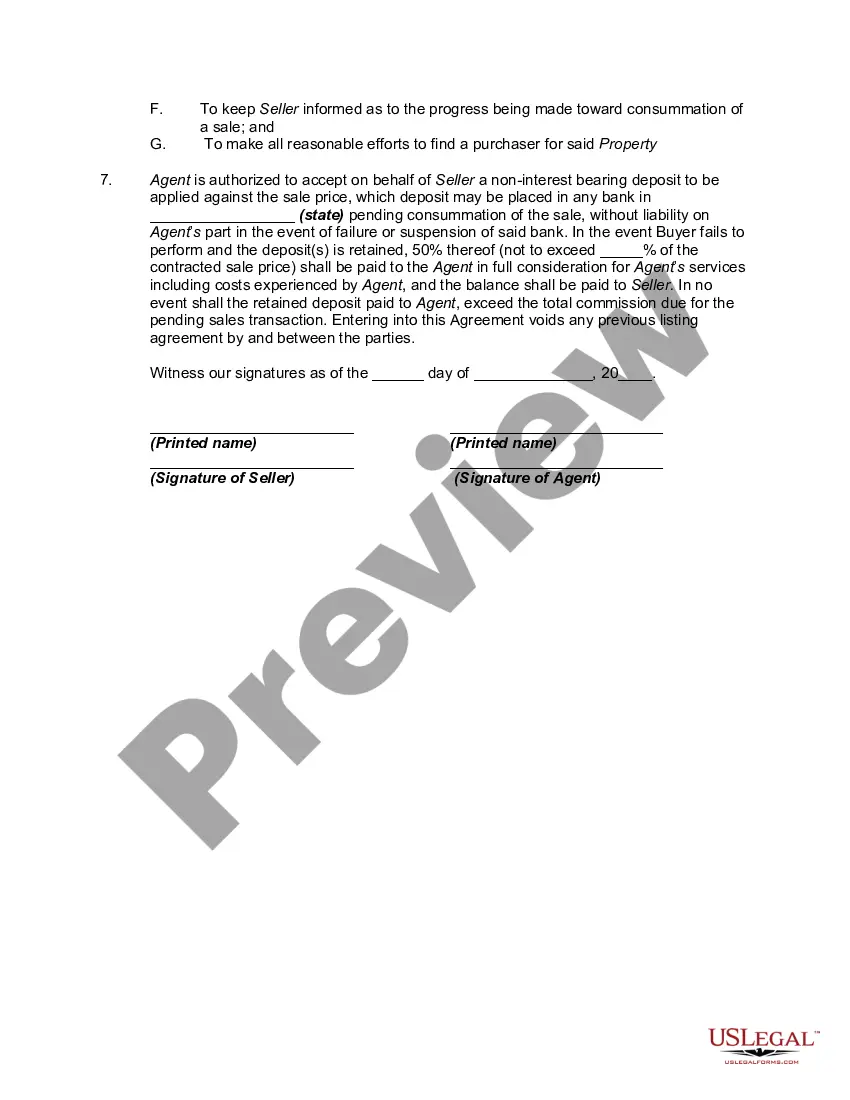
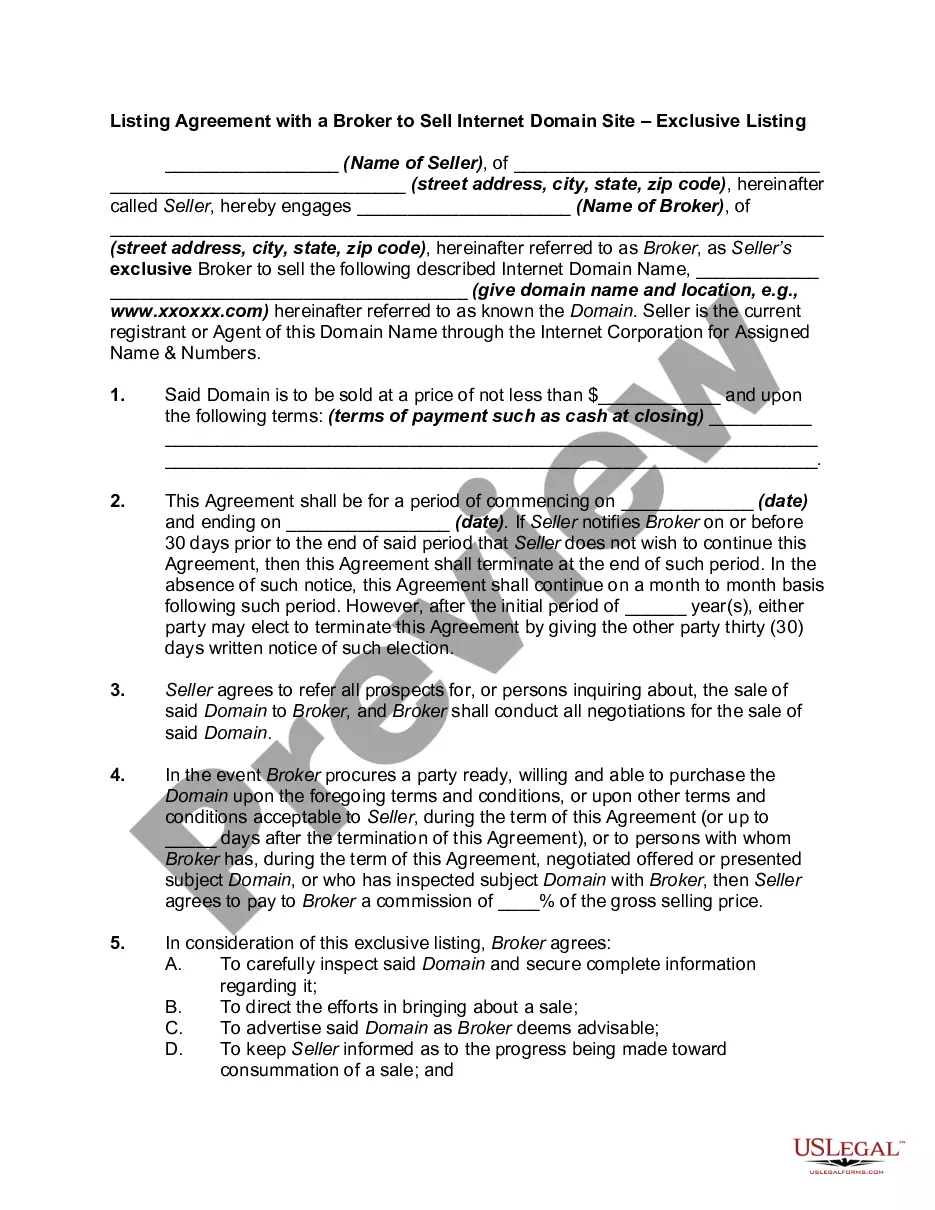
Listing Agreement Real Estate Definition In Oakland
Description


Get your form ready online
Our built-in tools help you complete, sign, share, and store your documents in one place.
Make edits, fill in missing information, and update formatting in US Legal Forms—just like you would in MS Word.
Download a copy, print it, send it by email, or mail it via USPS—whatever works best for your next step.
Sign and collect signatures with our SignNow integration. Send to multiple recipients, set reminders, and more. Go Premium to unlock E-Sign.
If this form requires notarization, complete it online through a secure video call—no need to meet a notary in person or wait for an appointment.
We protect your documents and personal data by following strict security and privacy standards.

Make edits, fill in missing information, and update formatting in US Legal Forms—just like you would in MS Word.

Download a copy, print it, send it by email, or mail it via USPS—whatever works best for your next step.

Sign and collect signatures with our SignNow integration. Send to multiple recipients, set reminders, and more. Go Premium to unlock E-Sign.

If this form requires notarization, complete it online through a secure video call—no need to meet a notary in person or wait for an appointment.

We protect your documents and personal data by following strict security and privacy standards.
Looking for another form?




Form popularity
FAQ
Expert-Verified Answer. A written listing agreement between a seller and a broker is a bilateral contract because both parties make promises to each other. The seller agrees to sell the property, while the broker agrees to find a buyer.
Exclusive Rights-to-Sell Listing This gives the real estate agent the exclusive rights to market your home and list it on MLS. They will receive the full commission as long the home is sold within the designated timeframe. This is the preferred agreement for most real estate agents.
In California's dynamic real estate market, the listing agreement stands as a cornerstone for home sellers, ensuring a seamless and legally sound transaction. This formal contract between a property owner and a real estate broker authorizes the broker to represent the seller in marketing and selling the property.
This legal document outlines the terms between a property owner and a real estate broker or agent, detailing what they can expect from each other during the process of selling a property. Let's explore what a listing agreement involves, the different types available, and why it's important for both parties involved.
A real estate listing agreement – also known as a seller's agent agreement – is a contract between a property owner and a real estate broker. It permits the broker to sell the home on the seller's terms, locating an appropriate buyer. The property owner pays the brokerage a commission for acting as the listing agent.
A listing agreement is “a legally binding contract that creates an agency relationship authorizing a broker to serve as the agent for a principal in a real estate transaction.” In other words, a listing agreement is an employment contract between a client and a broker that spells out what the broker is responsible for ...
Signatories sign legal documents, international agreements, and contracts. These types of documents have multiple parties that need to sign the agreement. Signers are anyone who needs to provide a signature to legal documents.
Listing agents represent home sellers — as the name suggests, they create and promote the listing for a home that's for sale. Somewhat confusingly, selling agents represent the purchaser's interests and are therefore also known as buyer's agents.
Also, under the statute of frauds, a listing agreement must be in writing and must be signed by the seller. (If the property has more than one owner, only one of them has to sign the listing.) The broker usually also signs the listing agreement, although her signature is not strictly required.
