Listing Agreement Real Estate With Agent In North Carolina
Description
Get your form ready online
Our built-in tools help you complete, sign, share, and store your documents in one place.
Make edits, fill in missing information, and update formatting in US Legal Forms—just like you would in MS Word.
Download a copy, print it, send it by email, or mail it via USPS—whatever works best for your next step.
Sign and collect signatures with our SignNow integration. Send to multiple recipients, set reminders, and more. Go Premium to unlock E-Sign.
If this form requires notarization, complete it online through a secure video call—no need to meet a notary in person or wait for an appointment.
We protect your documents and personal data by following strict security and privacy standards.

Make edits, fill in missing information, and update formatting in US Legal Forms—just like you would in MS Word.

Download a copy, print it, send it by email, or mail it via USPS—whatever works best for your next step.

Sign and collect signatures with our SignNow integration. Send to multiple recipients, set reminders, and more. Go Premium to unlock E-Sign.

If this form requires notarization, complete it online through a secure video call—no need to meet a notary in person or wait for an appointment.

We protect your documents and personal data by following strict security and privacy standards.
Looking for another form?
Form popularity
FAQ
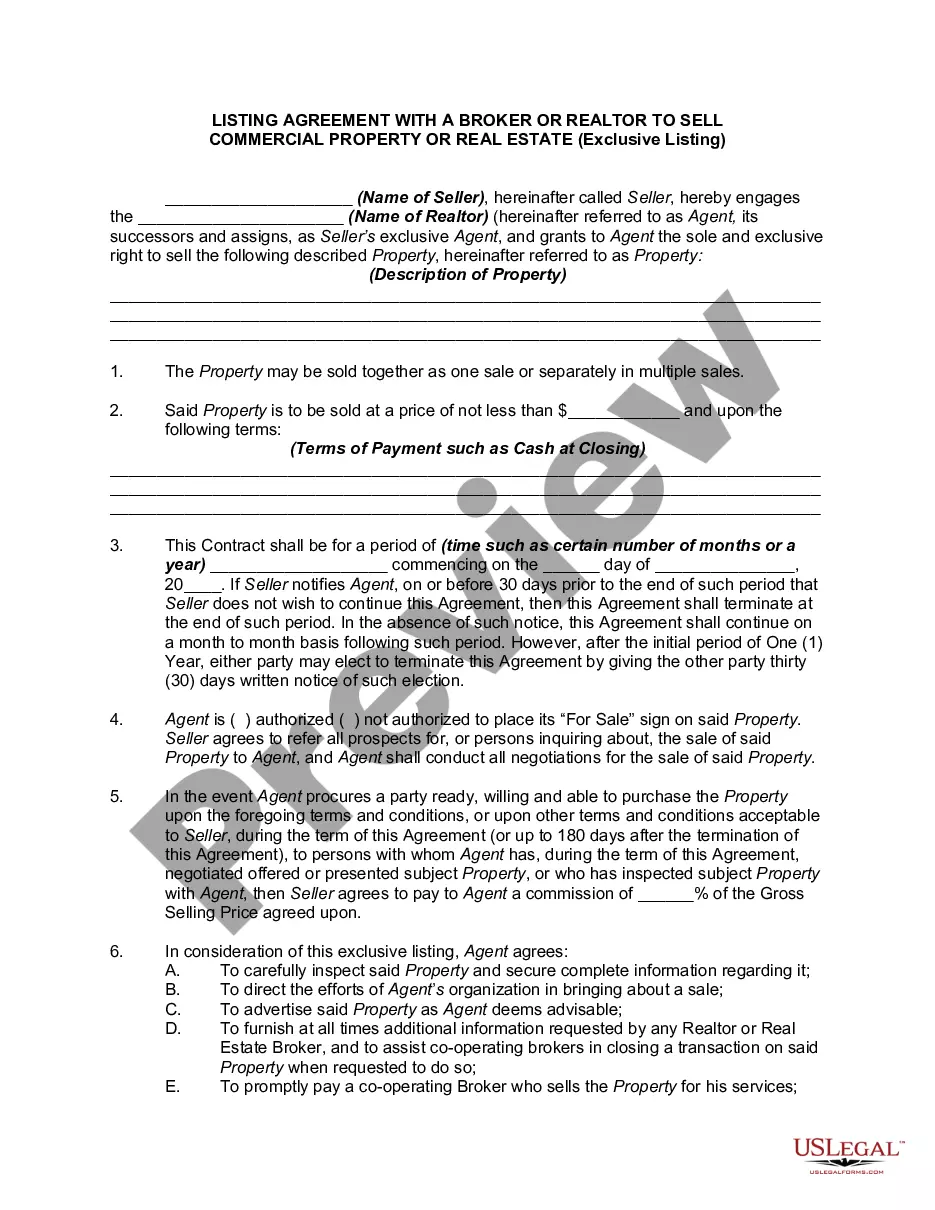
A listing agreement is a contract that allows a real estate broker to perform specific marketing and selling tasks for a property. It does not transfer title to the broker and establishes the broker as an independent contractor. The correct answer to the question is A: It allows a broker to complete a specific task.
Writing your own contracts is perfectly possible, and legal. But it's also an incredibly bad idea. There's two reasons for this: Property law is complicated. Because it's such a fundamental part of legislation, it's often lots and lots of different laws layered on top of each other.
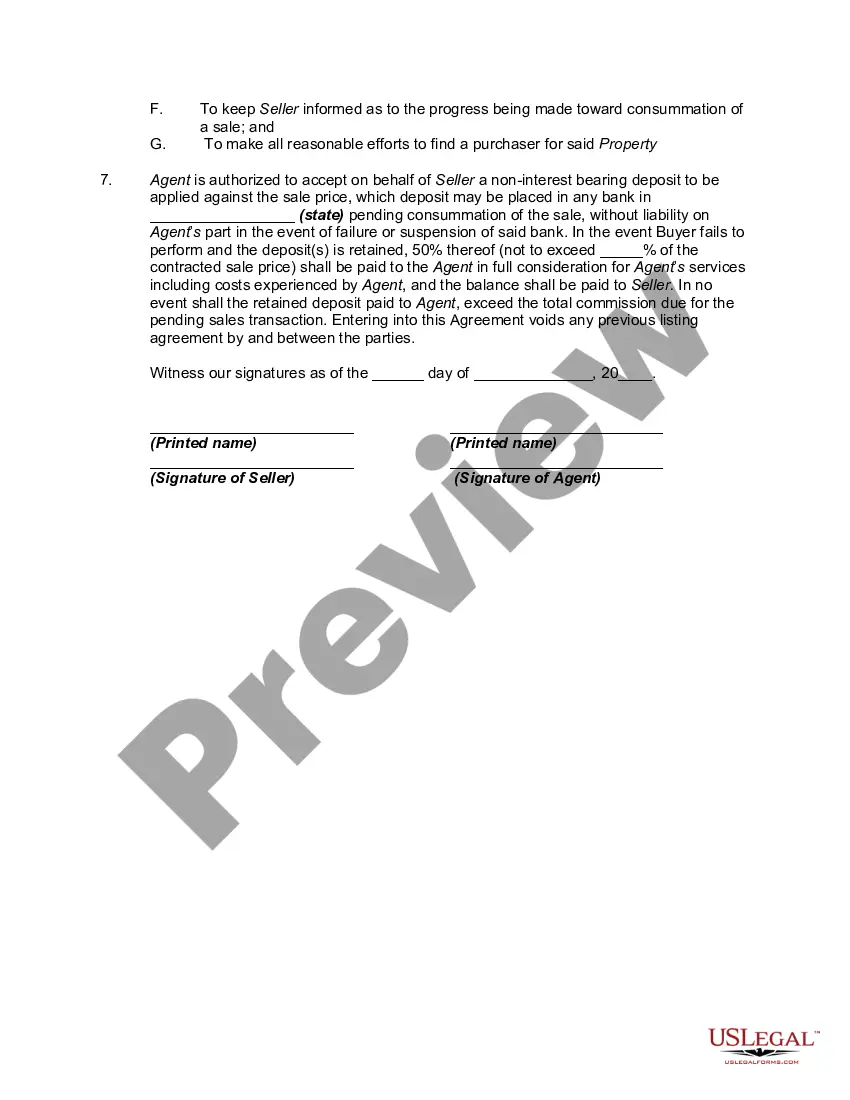
To be legally enforceable, a listing agreement must satisfy four requirements. It must contain a property description, include a promise of compensation, specify a fixed figure for the compensation (either a percentage or a dollar amount), and be in writing and signed by the seller.
Dual agency is legal in North Carolina as long as both parties (e.g., seller and buyer) have provided written authority for the agent to represent both parties in the transaction.
The basic elements required for the agreement to be a legally enforceable contract are: mutual assent , expressed by a valid offer and acceptance ; adequate consideration ; capacity ; and legality . In some states , elements of consideration can be satisfied by a valid substitute.
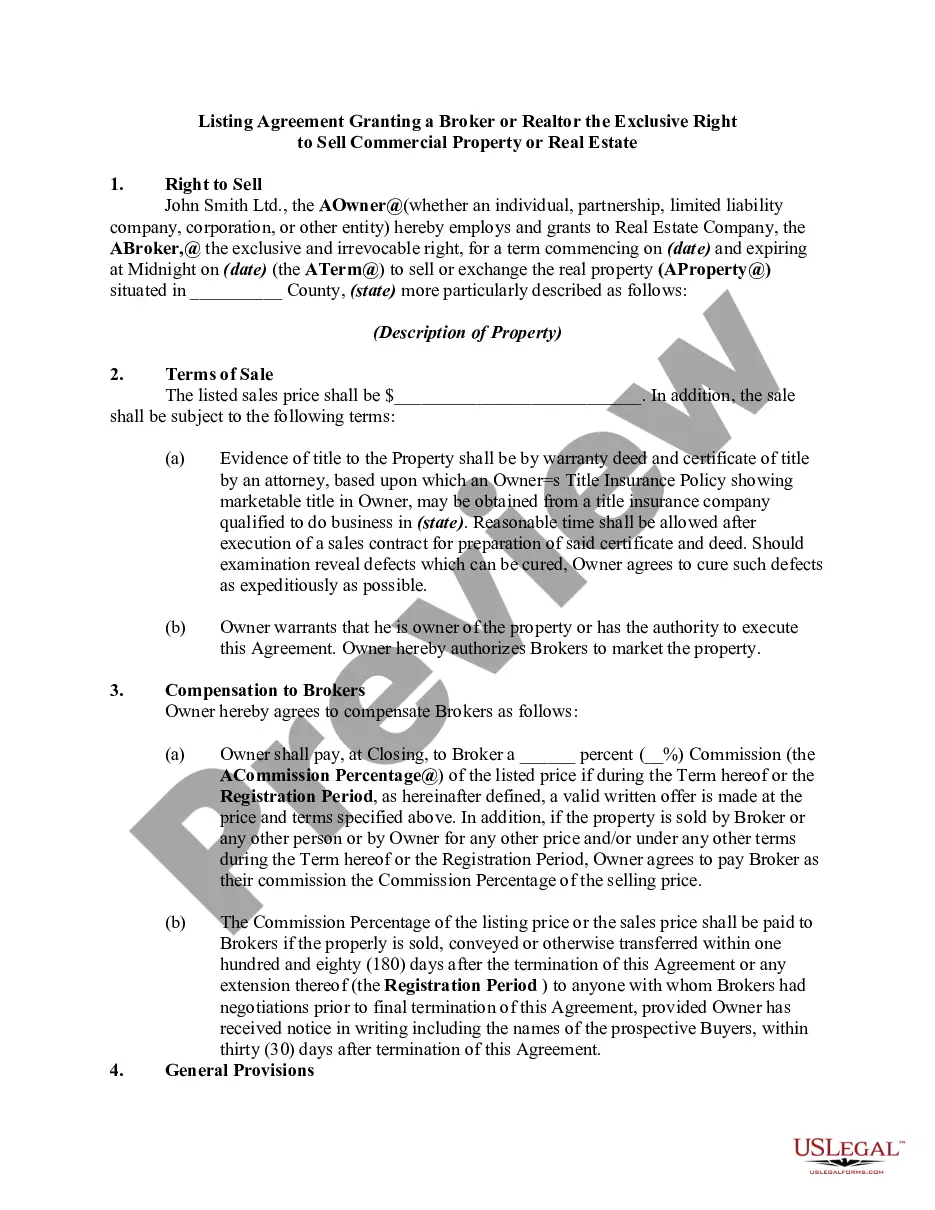
Exclusive Right to Sell Listing As the most commonly used listing agreement, the Exclusive Right to Sell Listing's name pretty much says it all. With an Exclusive Right to Sell Listing Agreement, the real estate agent or broker has total control over the transaction.
Listing agreements vary. Each type has its own advantages and disadvantages: Exclusive Right-to-Sell Listing: The most common type. It grants the broker the exclusive right to sell your home, regardless of who finds the buyer.
Dual agency is legal in North Carolina as long as both parties (e.g., seller and buyer) have provided written authority for the agent to represent both parties in the transaction. A dual agent owes the same fiduciary duties to both the principals in the transaction.
Fortunately, NC is a dual agency state, meaning home buyers don't legally have to work with an agent who has a relationship with the seller. Whether you are buying or selling, you should work with your own agent if you plan on using a realtor.
The exclusive right to sell listing agreement is the most common type of agreement in real estate. Under this arrangement, the broker is given exclusive rights to market the property for a set period.