Listing Agreement For Commercial Real Estate In Harris
Description


Get your form ready online
Our built-in tools help you complete, sign, share, and store your documents in one place.
Make edits, fill in missing information, and update formatting in US Legal Forms—just like you would in MS Word.
Download a copy, print it, send it by email, or mail it via USPS—whatever works best for your next step.
Sign and collect signatures with our SignNow integration. Send to multiple recipients, set reminders, and more. Go Premium to unlock E-Sign.
If this form requires notarization, complete it online through a secure video call—no need to meet a notary in person or wait for an appointment.
We protect your documents and personal data by following strict security and privacy standards.

Make edits, fill in missing information, and update formatting in US Legal Forms—just like you would in MS Word.

Download a copy, print it, send it by email, or mail it via USPS—whatever works best for your next step.

Sign and collect signatures with our SignNow integration. Send to multiple recipients, set reminders, and more. Go Premium to unlock E-Sign.

If this form requires notarization, complete it online through a secure video call—no need to meet a notary in person or wait for an appointment.

We protect your documents and personal data by following strict security and privacy standards.
Looking for another form?





Form popularity
FAQ
The letter of intent should include the following six things: A Statement Declaring Your Interest in Leasing the Space. A Description of Your Company. An Outline of On-Site Employees, Equipment, and Machinery. Your Business Hours. An Overview of Your Current Space. Contact Details.
How to write a letter of intent for business Write the introduction. Describe the transaction and timeframes. List contingencies. Go through due diligence. Include covenants and other binding agreements. State that the agreement is nonbinding. Include a closing date.
Exclusive Rights-to-Sell Listing This gives the real estate agent the exclusive rights to market your home and list it on MLS. They will receive the full commission as long the home is sold within the designated timeframe. This is the preferred agreement for most real estate agents.
Many of the issues confronting industry stakeholders in the new year are interrelated. High Financing Costs. Massive Commercial Real Estate Debt. High Cap Rates. Soaring Insurance Costs. Increasingly Unaffordable Housing. Rise in Artificial Intelligence. Impact of Extreme Weather. Lingering Office Vacancies.
How to create winning commercial real estate proposals: a step-by-step guide Start with an executive summary. Define the property. Provide location information. Summarize the existing property market. Make specific marketing recommendations. Give some details about you and your team. Don't forget to use visuals.
Components of a LOI Opening Paragraph: Your summary statement. Statement of Need: The "why" of the project. ( ... Project Activity: The "what" and "how" of the project. ( ... Outcomes (1–2 paragraphs; before or after the Project Activity) ... Credentials (1–2 paragraphs) ... Budget (1–2 paragraphs) ... Closing (1 paragraph) ... Signature.
A Letter of Intent (LOI) is a preliminary document that outlines the basic terms and conditions of a potential commercial real estate transaction. It serves as a non-binding agreement between the buyer and seller or landlord and tenant, laying the groundwork for further negotiations and formal agreements.
How do you start a business letter in the first sentence? You'll want to start your letter with exactly why you are writing. Start with a phrase like “I am reaching out regarding” or “I am writing to request” and then finish the sentence with the specific topic of your letter.
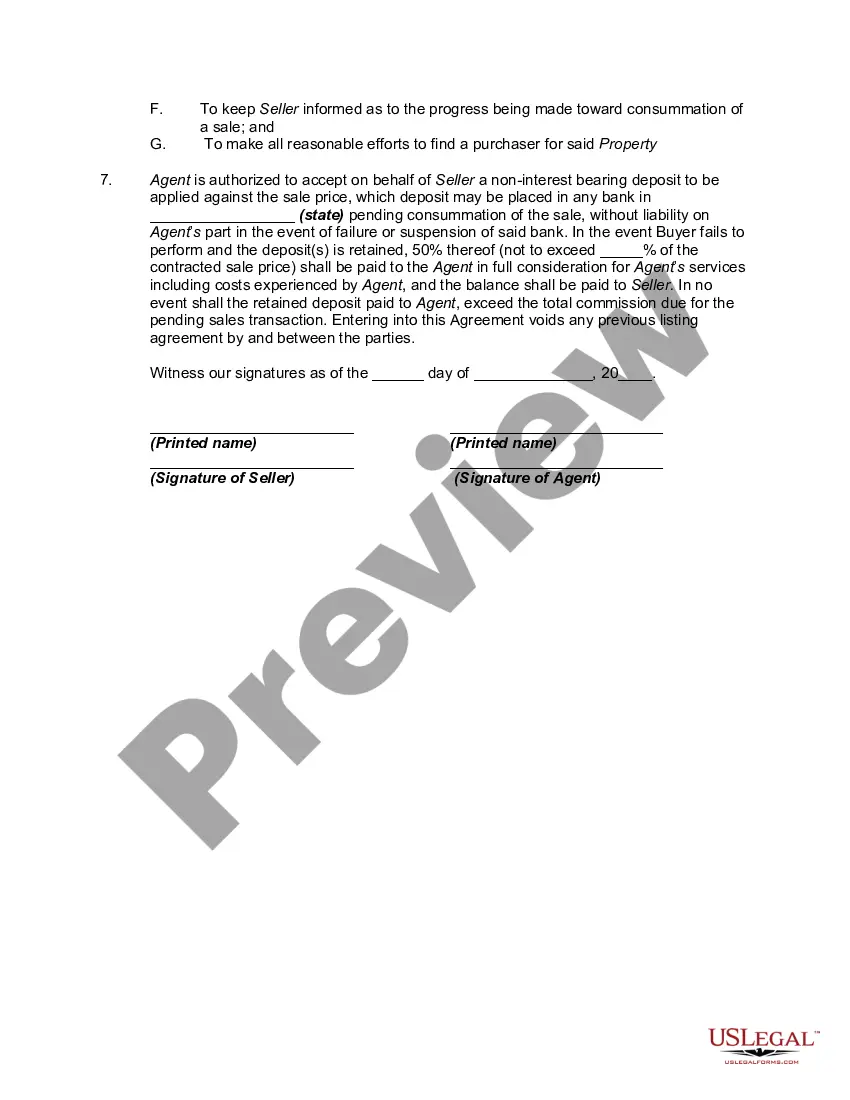
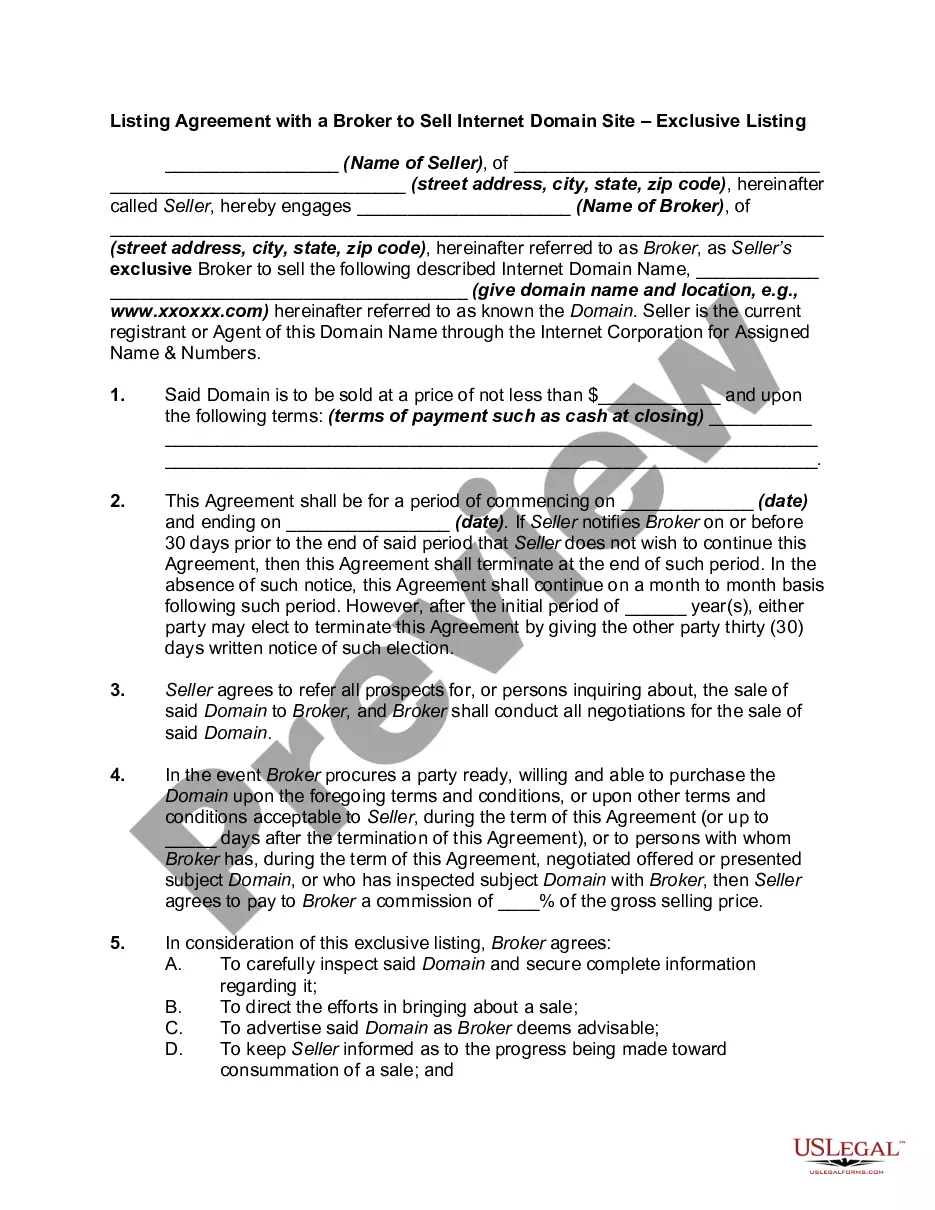
A real estate listing agreement – also known as a seller's agent agreement – is a contract between a property owner and a real estate broker. It permits the broker to sell the home on the seller's terms, locating an appropriate buyer. The property owner pays the brokerage a commission for acting as the listing agent.
