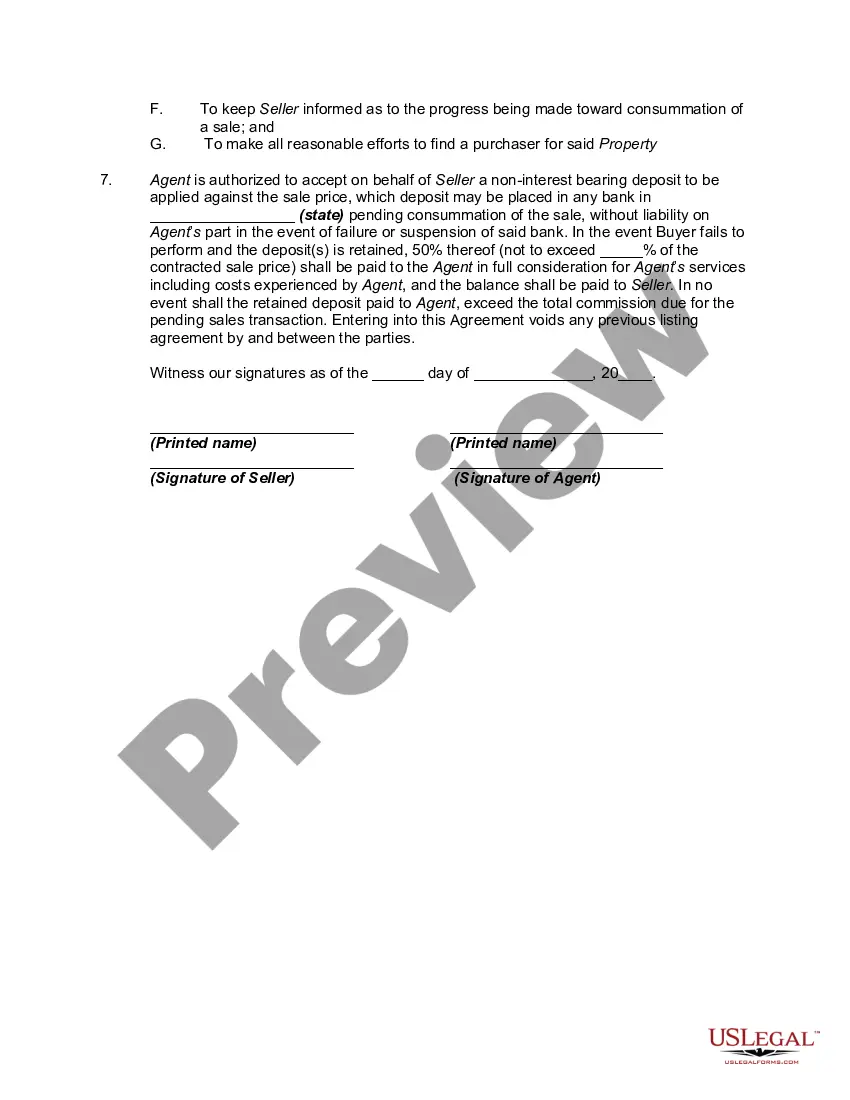
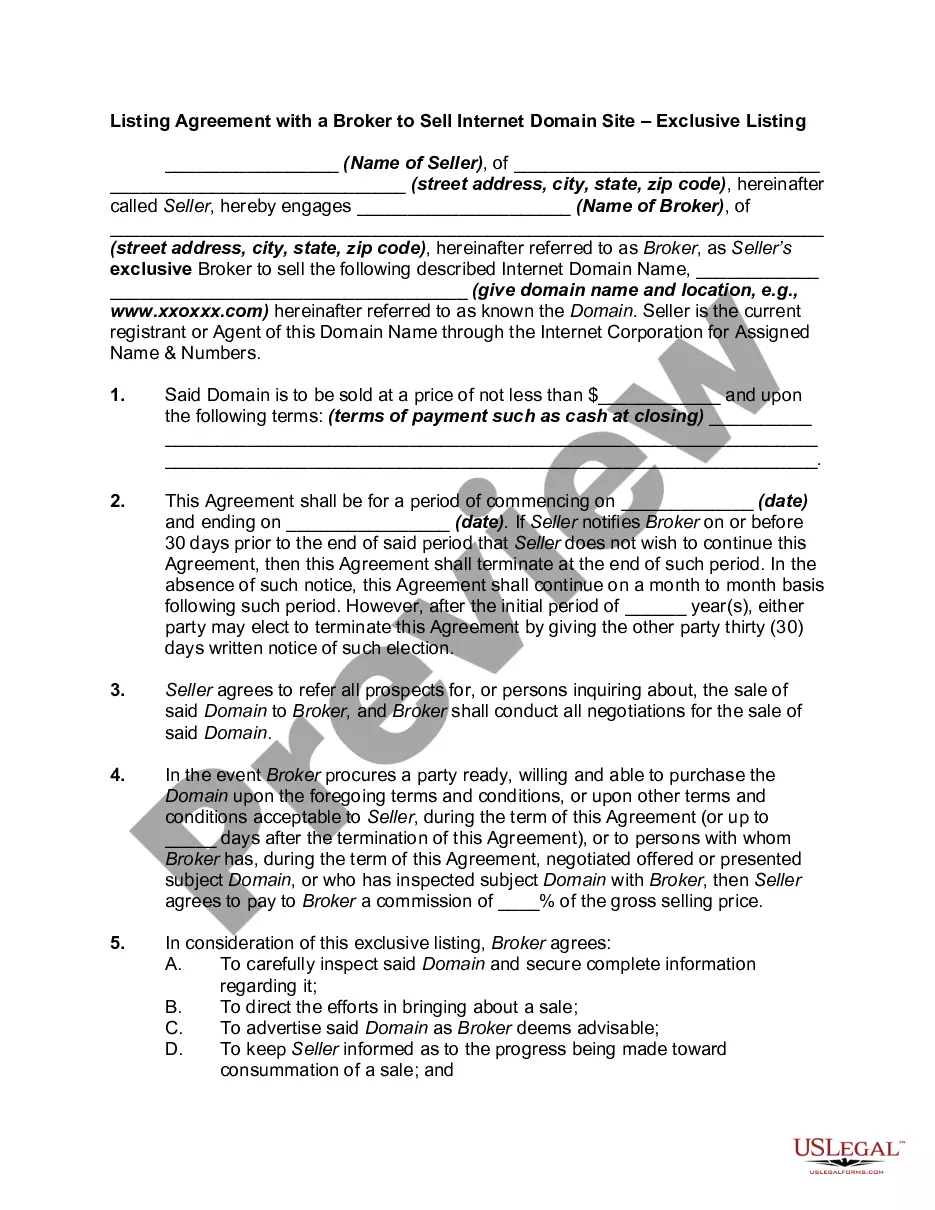
Listing Agreement Real Estate With Agent In Florida
Description


Get your form ready online
Our built-in tools help you complete, sign, share, and store your documents in one place.
Make edits, fill in missing information, and update formatting in US Legal Forms—just like you would in MS Word.
Download a copy, print it, send it by email, or mail it via USPS—whatever works best for your next step.
Sign and collect signatures with our SignNow integration. Send to multiple recipients, set reminders, and more. Go Premium to unlock E-Sign.
If this form requires notarization, complete it online through a secure video call—no need to meet a notary in person or wait for an appointment.
We protect your documents and personal data by following strict security and privacy standards.

Make edits, fill in missing information, and update formatting in US Legal Forms—just like you would in MS Word.

Download a copy, print it, send it by email, or mail it via USPS—whatever works best for your next step.

Sign and collect signatures with our SignNow integration. Send to multiple recipients, set reminders, and more. Go Premium to unlock E-Sign.

If this form requires notarization, complete it online through a secure video call—no need to meet a notary in person or wait for an appointment.

We protect your documents and personal data by following strict security and privacy standards.
Looking for another form?




Form popularity
FAQ
If you're in the process of buying or selling a home in Florida, you've likely heard the term "dual agency." While it's a common practice in many states, it's important to understand that dual agency is illegal in Florida. This is for good reason—it poses a number of conflicts that can impact both buyers and sellers.
The new rules took effect August 17, and final court approval was granted November 26. The biggest change is that listing agents (the agents who represent home sellers) may no longer make offers of compensation to buy-side agents on any NAR-affiliated multiple listing service (MLS).
A. Net listing agreements are commonly used throughout the State of Florida in certain circumstances, and the same have been recognized as valid by the courts of this State.
The exclusive right to sell listing agreement is the most common type of agreement in real estate. Under this arrangement, the broker is given exclusive rights to market the property for a set period.
Meseck, the most common complaints involve: Septic systems. Solar leases. Failure to disclose and Seller's Property Disclosures. Water rights. Miscommunication. Agent-owned property and additional supervision. Multiple offers. Unpermitted work.
Dual agency refers to a situation where a real estate agent or broker represents both the buyer and the seller in a real estate transaction. However, Florida law prohibits this practice due to potential conflicts of interest that may arise.
The new rules took effect August 17, and final court approval was granted November 26. The biggest change is that listing agents (the agents who represent home sellers) may no longer make offers of compensation to buy-side agents on any NAR-affiliated multiple listing service (MLS).
Exclusive Right to Sell Listing As the most commonly used listing agreement, the Exclusive Right to Sell Listing's name pretty much says it all. With an Exclusive Right to Sell Listing Agreement, the real estate agent or broker has total control over the transaction.
Most Common Disclosures in Real Estate Natural Hazards Disclosure. First on the list is the natural hazards disclosure. Market Conditions Advisory (MCA) Market Conditions Advisory, also known as MCA, covers items more financial in nature. State Transfer Disclosure. Local Transfer Disclosure. Megan's Law Disclosures.
Well, the good thing about the Standard Florida Real Estate Contract and the AS-IS Florida Real Estate Contract is that both were written by Florida Attorneys. So, really, any buyer, seller, or attorney can “fill in the blanks.” Disclosure – I am not a real estate attorney.