Agreement Satisfaction With Judgment In Michigan
Description
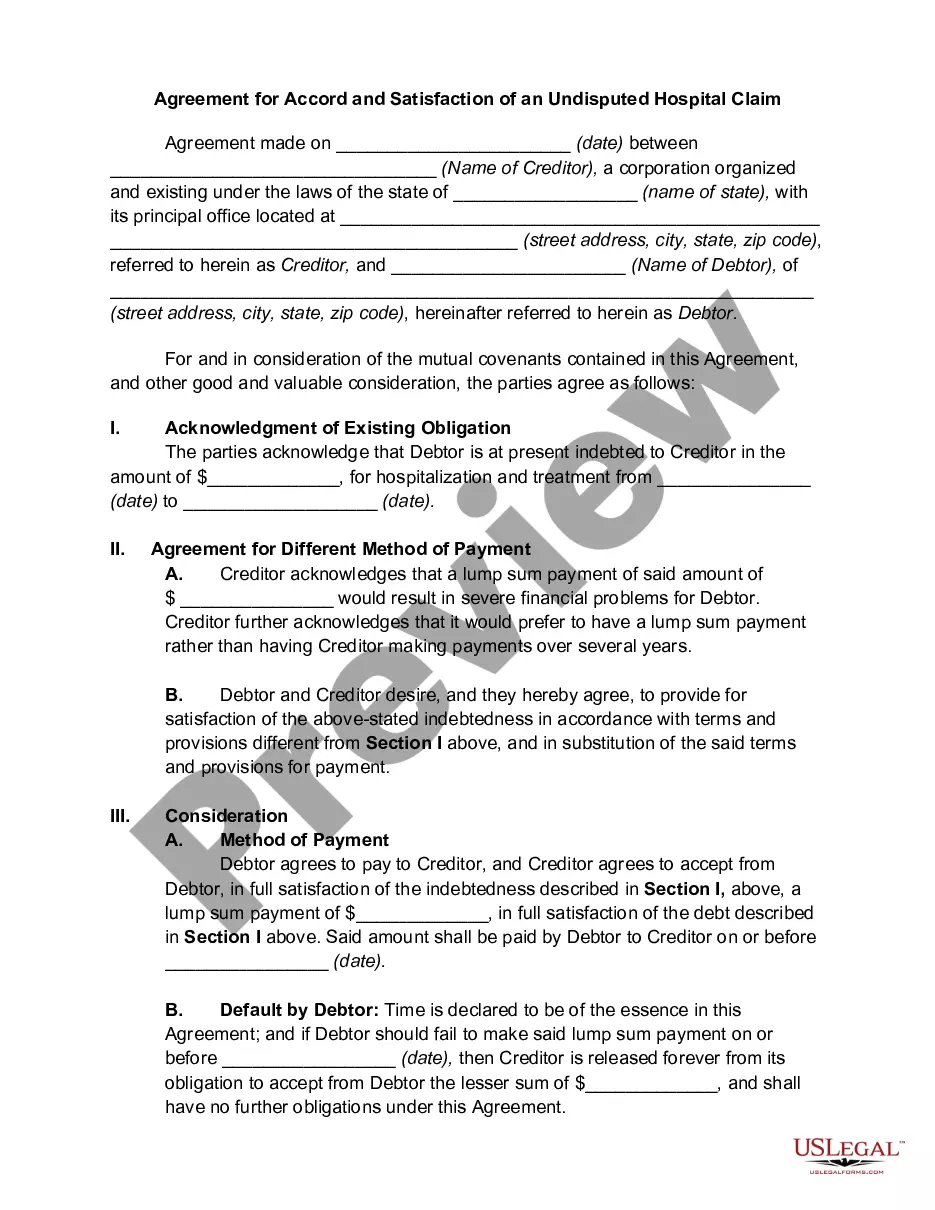
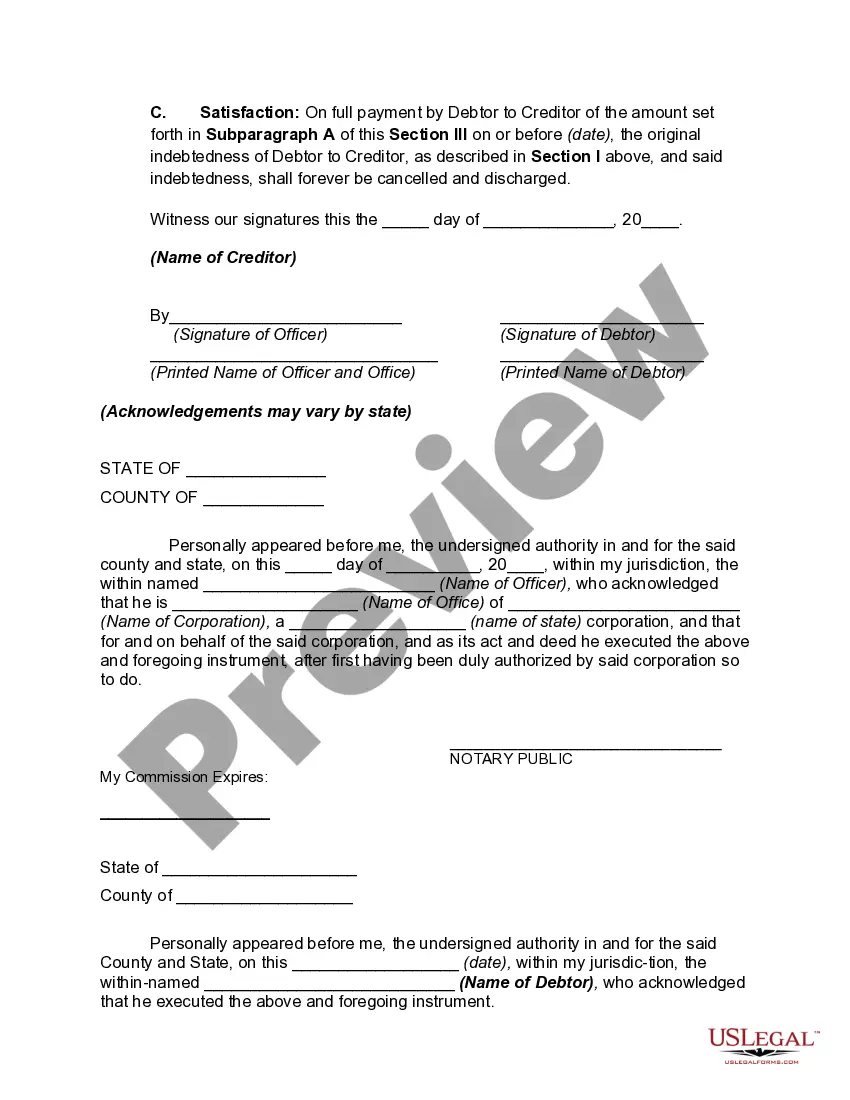


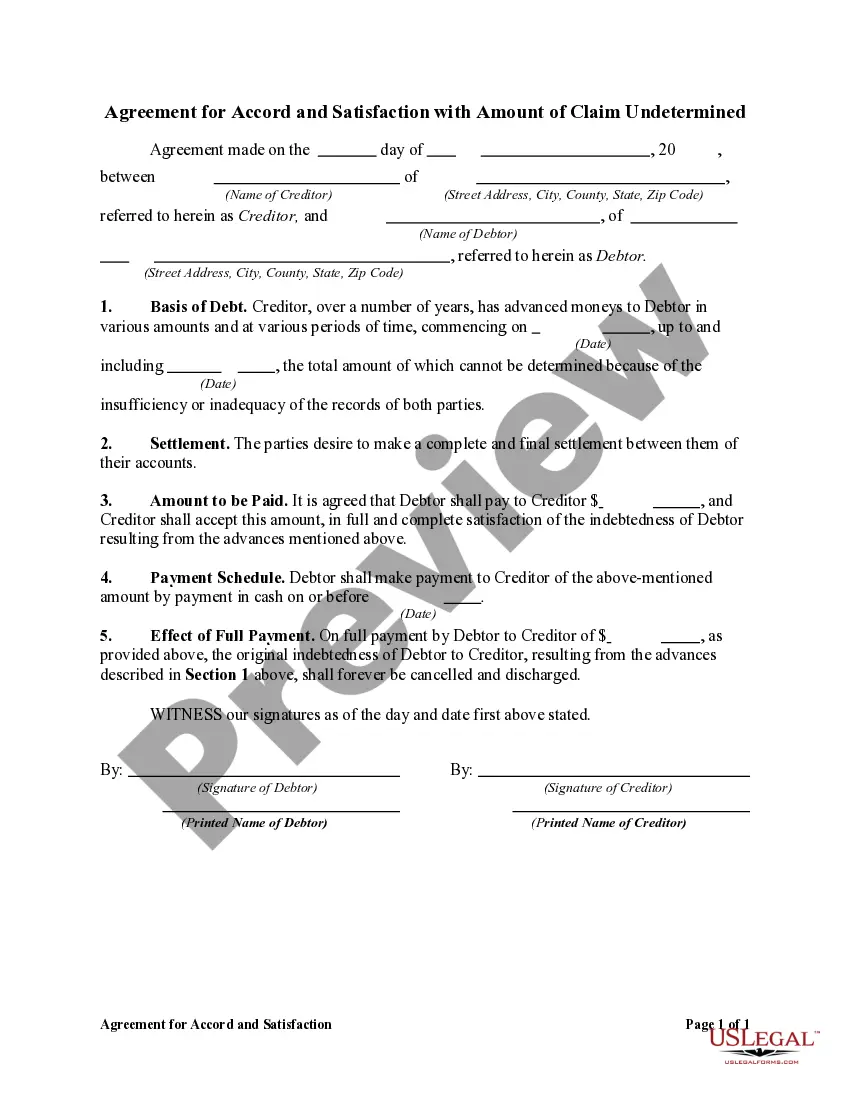
Get your form ready online
Our built-in tools help you complete, sign, share, and store your documents in one place.
Make edits, fill in missing information, and update formatting in US Legal Forms—just like you would in MS Word.
Download a copy, print it, send it by email, or mail it via USPS—whatever works best for your next step.
Sign and collect signatures with our SignNow integration. Send to multiple recipients, set reminders, and more. Go Premium to unlock E-Sign.
If this form requires notarization, complete it online through a secure video call—no need to meet a notary in person or wait for an appointment.
We protect your documents and personal data by following strict security and privacy standards.

Make edits, fill in missing information, and update formatting in US Legal Forms—just like you would in MS Word.

Download a copy, print it, send it by email, or mail it via USPS—whatever works best for your next step.

Sign and collect signatures with our SignNow integration. Send to multiple recipients, set reminders, and more. Go Premium to unlock E-Sign.

If this form requires notarization, complete it online through a secure video call—no need to meet a notary in person or wait for an appointment.

We protect your documents and personal data by following strict security and privacy standards.
Looking for another form?








Form popularity
FAQ
The most common method is garnishment. In addition, the Plaintiff may get a writ of execution to seize the Defendant's property to satisfy the debt. If the Plaintiff does not know what assets the Defendant owns, the Plaintiff may compel disclosure through a civil discovery subpoena.
(3) Within 7 days after the granting of the judgment or order, or later if the court allows, a party may serve a copy of the proposed judgment or order on the other parties, with a notice to them that it will be submitted to the court for signing if no written objections to its accuracy or completeness are filed with ...
The most common method is garnishment. In addition, the Plaintiff may get a writ of execution to seize the Defendant's property to satisfy the debt. If the Plaintiff does not know what assets the Defendant owns, the Plaintiff may compel disclosure through a civil discovery subpoena.
Except for crimes exempted by MCL 780.131(2), the inmate shall be brought to trial within 180 days after the department of corrections causes to be delivered to the prosecuting attorney of the county in which the warrant, indictment, information, or complaint is pending written notice of the place of imprisonment of ...
Rule 2.405 - Offers to Stipulate to Entry of Judgment (A) Definitions. As used in this rule: (1) "Offer" means a written notification to an adverse party of the offeror's willingness to stipulate to the entry of a judgment in a sum certain, which is deemed to include all costs and interest then accrued.
Local Civil Rule 45. 45.1 Unless otherwise ordered, all subpoenas to be served by the United States Marshals Service shall allow a minimum of fourteen (14) days prior to the required appearance.
MCR 2.405 allows any party to serve a settlement proposal on an opposing party. If, within the time specified in the rule, the opponent accepts the proposal, one of the parties may file the offer and notice of acceptance with the court and the case is settled.
