Domicile Type Meaning In Palm Beach
Description
Get your form ready online
Our built-in tools help you complete, sign, share, and store your documents in one place.
Make edits, fill in missing information, and update formatting in US Legal Forms—just like you would in MS Word.
Download a copy, print it, send it by email, or mail it via USPS—whatever works best for your next step.
Sign and collect signatures with our SignNow integration. Send to multiple recipients, set reminders, and more. Go Premium to unlock E-Sign.
If this form requires notarization, complete it online through a secure video call—no need to meet a notary in person or wait for an appointment.
We protect your documents and personal data by following strict security and privacy standards.

Make edits, fill in missing information, and update formatting in US Legal Forms—just like you would in MS Word.

Download a copy, print it, send it by email, or mail it via USPS—whatever works best for your next step.

Sign and collect signatures with our SignNow integration. Send to multiple recipients, set reminders, and more. Go Premium to unlock E-Sign.

If this form requires notarization, complete it online through a secure video call—no need to meet a notary in person or wait for an appointment.

We protect your documents and personal data by following strict security and privacy standards.
Looking for another form?








Form popularity
FAQ
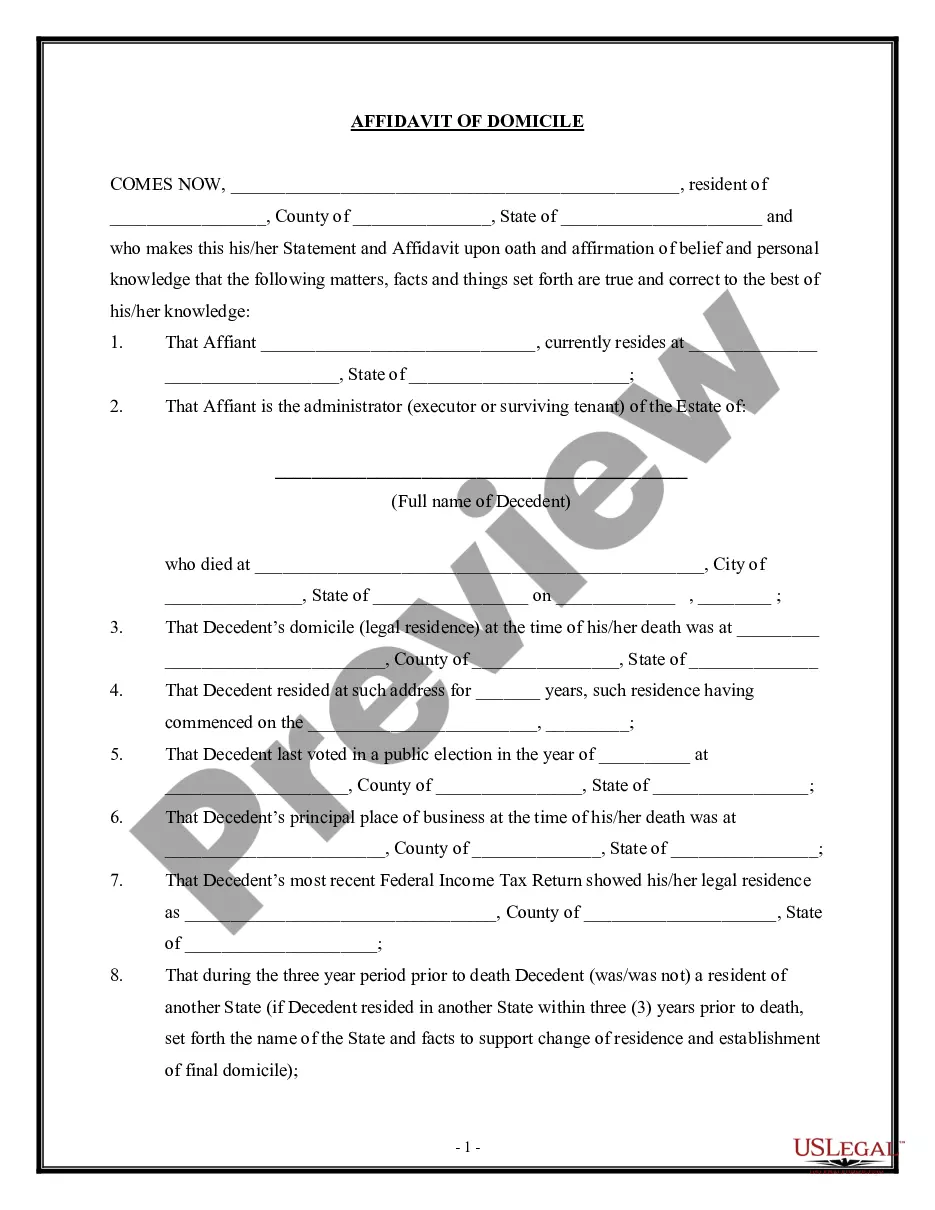
Completing the Form Line 1 - Fill in the last address you lived at before you moved to the state of Florida/or if within Florida, your previous address. Line 2 - Fill in the date you moved to Florida. Line 3 - Fill in your current address. Line 4 - Your signature. Line 5 - Clearly and legibly PRINT the name that you signed.
You may download a domicile form or obtain one at any Clerk of the Circuit Court & Comptroller location. Bring or mail the form to a Clerk's office location to be recorded. You must bring some form of legal identification if you need your document notarized.
Residence is a place you live for a time. It could be a summer hideaway, a college dorm, or just a place you go to get away from the snowy winters up north. Domicile is the place you intend to make your permanent home, the place to which you intend to return if you are temporarily residing in another state.
Is Dual Residency Possible? ing to federal law, dual residency is not allowed. It's necessary, then, to establish legal resident status in one state and only one state, no matter how many properties a person might own. While an individual may own homes in several states, only one residence can be their domicile.
Residence is a place you live for a time. It could be a summer hideaway, a college dorm, or just a place you go to get away from the snowy winters up north. Domicile is the place you intend to make your permanent home, the place to which you intend to return if you are temporarily residing in another state.
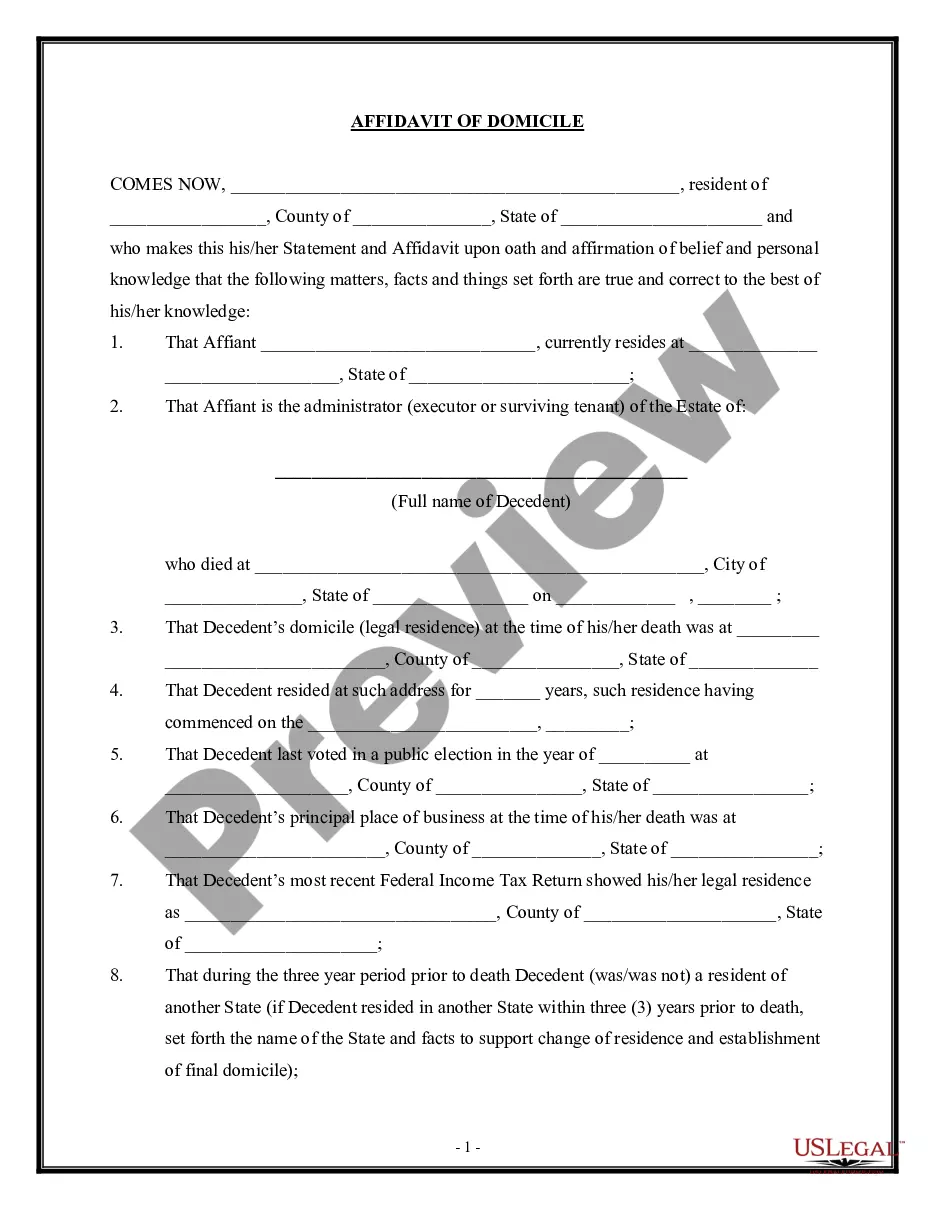
Acceptable Proofs of Florida Residency: Current Florida voter registration information card. Declaration of domicile (may be obtained from county clerk's office) Florida homestead exemption. NOTE: Landlord certification is no longer accepted as an alternate proof of residency.
You may download a domicile form or obtain one at any Clerk of the Circuit Court & Comptroller location. Bring or mail the form to a Clerk's office location to be recorded. You must bring some form of legal identification if you need your document notarized.
Steps to Establishing Florida Residency Live in Florida for at least 183 days per year. Obtain a Florida driver's license or ID card. Register to vote in Florida. File a Declaration of Domicile. Claim the homestead exemption. Use a Florida address on all legal paperwork. Physically move valuable household items.
Things like travel records, telephone usage and utility bills can be used to prove where you spend your time. Enjoy the weather and Florida lifestyle! States like Florida allow you to file a sworn statement in the office of the clerk of the circuit court declaring yourself as a resident of the state.
You may download a domicile form or obtain one at any Clerk of the Circuit Court & Comptroller location. Bring or mail the form to a Clerk's office location to be recorded. You must bring some form of legal identification if you need your document notarized.

