Domicile Definition In Law In Ohio
Description
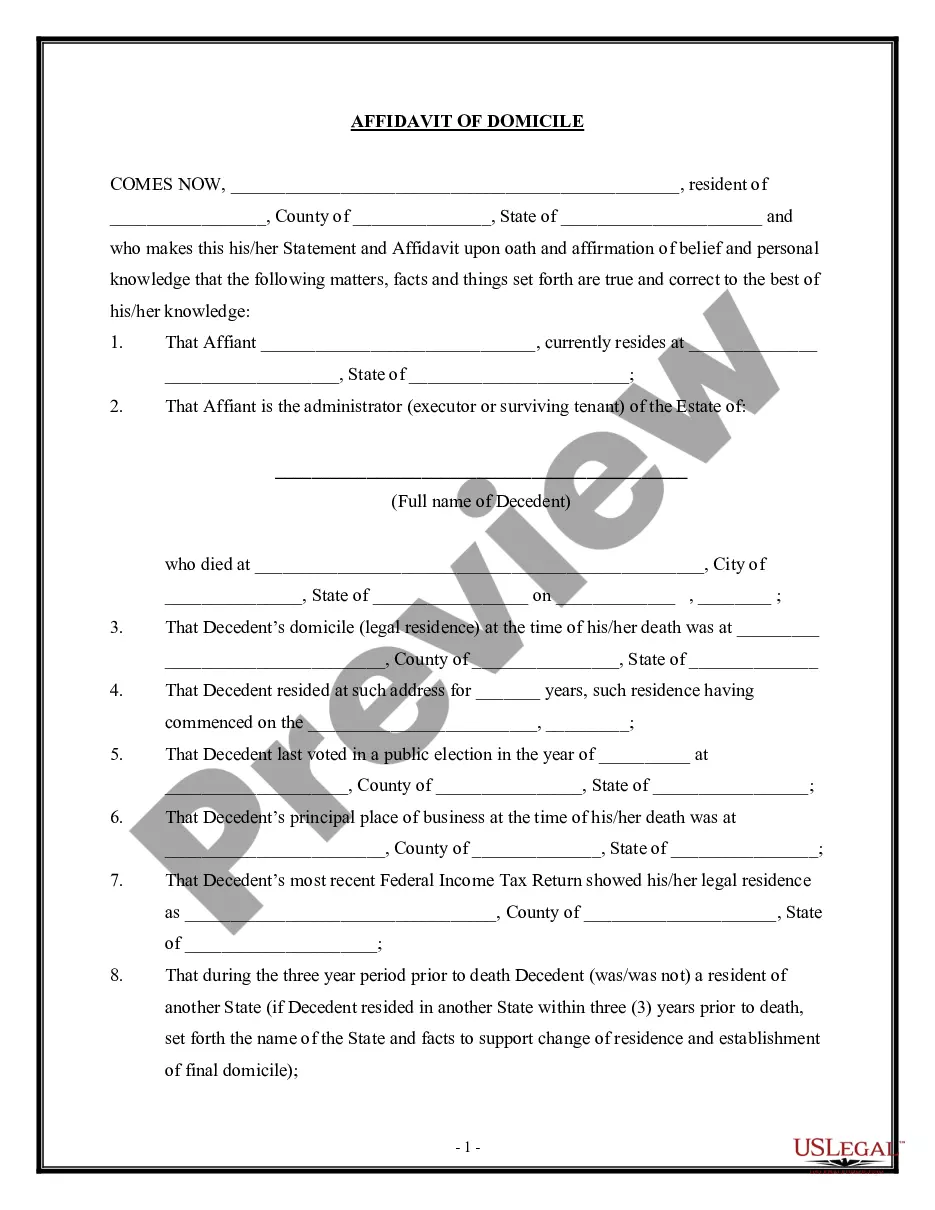
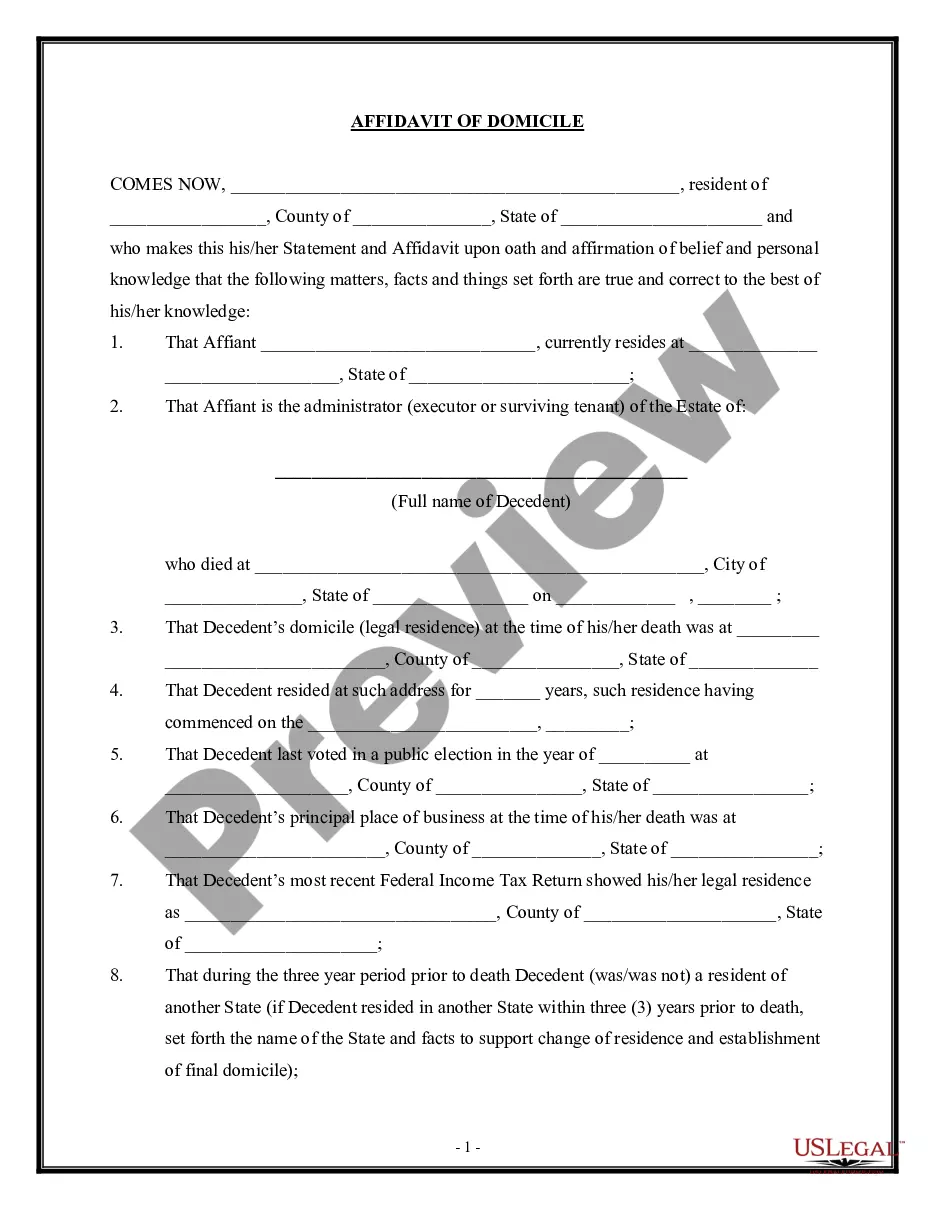
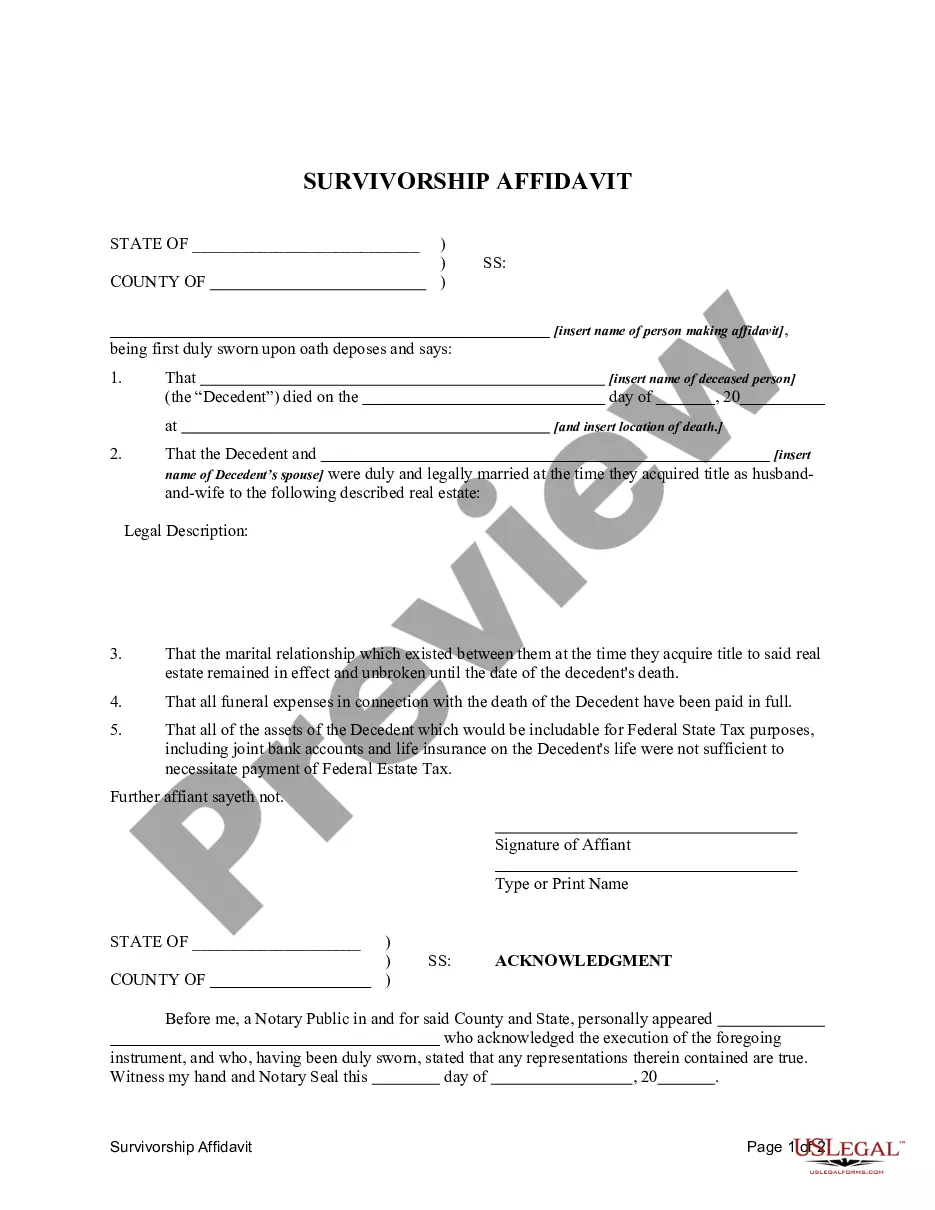
Get your form ready online
Our built-in tools help you complete, sign, share, and store your documents in one place.
Make edits, fill in missing information, and update formatting in US Legal Forms—just like you would in MS Word.
Download a copy, print it, send it by email, or mail it via USPS—whatever works best for your next step.
Sign and collect signatures with our SignNow integration. Send to multiple recipients, set reminders, and more. Go Premium to unlock E-Sign.
If this form requires notarization, complete it online through a secure video call—no need to meet a notary in person or wait for an appointment.
We protect your documents and personal data by following strict security and privacy standards.

Make edits, fill in missing information, and update formatting in US Legal Forms—just like you would in MS Word.

Download a copy, print it, send it by email, or mail it via USPS—whatever works best for your next step.

Sign and collect signatures with our SignNow integration. Send to multiple recipients, set reminders, and more. Go Premium to unlock E-Sign.

If this form requires notarization, complete it online through a secure video call—no need to meet a notary in person or wait for an appointment.

We protect your documents and personal data by following strict security and privacy standards.
Looking for another form?








Form popularity
FAQ
To classify as a nonresident, an individual has to prove that they were in the state for less than 183 days and that their purpose for being in the state was temporary. If you're a basketball player in town for a game, that's temporary.
Maintain a permanent residence in Ohio for 12 consecutive months prior to petitioning for Ohio residency status.
If your permanent place of residence is in Ohio you are considered a full-year Ohio resident. Your place of residence can be owned or rented. You can still be a full-year Ohio resident even if you spend time in another state.
The taxpayer has the burden of proof that they were not domiciled in Ohio for more than 183 days, and the individual may be asked to provide clear and convincing evidence to the contrary when they are moving their domicile.
Thus, under Ohio law, the terms “domiciled” and “resident” mean the same thing. Generally, any individual with an abode in Ohio is presumed to be a resident. The abode can be either owned or rented. Temporary absence from your Ohio abode, no matter how long, does not change your residency status.
Your domicile is the state of your permanent home, or the state you consider your home whenever you are. elsewhere. Your domicile is an important place. It is, for example, the place that usually has the power to tax.
If you were present in the U.S. for 183 days or more in the current year, you automatically meet the test. You are a U.S. resident for U.S. income tax purposes. If you were present for more than 30 days but less than 183 days, you need to go to step 2 to determine whether you meet the test.
A Resident of Ohio is an individual that lived in Ohio for the entire year. A Nonresident of Ohio is an individual that was domiciled outside of Ohio for the entire tax year.

