Domicile Documents Requirements In Bronx
Description
Get your form ready online
Our built-in tools help you complete, sign, share, and store your documents in one place.
Make edits, fill in missing information, and update formatting in US Legal Forms—just like you would in MS Word.
Download a copy, print it, send it by email, or mail it via USPS—whatever works best for your next step.
Sign and collect signatures with our SignNow integration. Send to multiple recipients, set reminders, and more. Go Premium to unlock E-Sign.
If this form requires notarization, complete it online through a secure video call—no need to meet a notary in person or wait for an appointment.
We protect your documents and personal data by following strict security and privacy standards.

Make edits, fill in missing information, and update formatting in US Legal Forms—just like you would in MS Word.

Download a copy, print it, send it by email, or mail it via USPS—whatever works best for your next step.

Sign and collect signatures with our SignNow integration. Send to multiple recipients, set reminders, and more. Go Premium to unlock E-Sign.

If this form requires notarization, complete it online through a secure video call—no need to meet a notary in person or wait for an appointment.

We protect your documents and personal data by following strict security and privacy standards.
Looking for another form?






Form popularity
FAQ
To count as a permanent place of abode for tax purposes, you need to maintain the home for most of the year (more than 10 months) and use it as your residence. If you maintain such a home in New York and spend 184 days or more in the state, you may be considered a statutory resident, even if your domicile is elsewhere.
To count as a permanent place of abode for tax purposes, you need to maintain the home for most of the year (more than 10 months) and use it as your residence. If you maintain such a home in New York and spend 184 days or more in the state, you may be considered a statutory resident, even if your domicile is elsewhere.
Overview of the 10-Month Rule Under New York State law, a person is considered a resident for tax purposes if they maintain a permanent place of residence in NYC and spend more than 183 days in the state during the tax year.
Any part of any day spent physically in New York, including days in transit, counts as a day of presence in New York. N.Y.C.R.R. 105.20(c). Because residency is determined in part by day count (183-day rule), generally a part-year resident is a person whose domicile changes to or from New York State during a tax year.
Domicile refers to someone's true, principal, and permanent home. In other words, the place where a person has physically lived, regards as home, and intends to return even if currently residing elsewhere. Determining where a party is domiciled is of particular importance in the field of civil procedure.
The rules regarding New York City domicile are also the same as for New York State domicile. If your permanent and primary residence that you intend to return to and/or remain in after being away is located in one of the five boroughs of New York City, it is considered a New York City domicile.
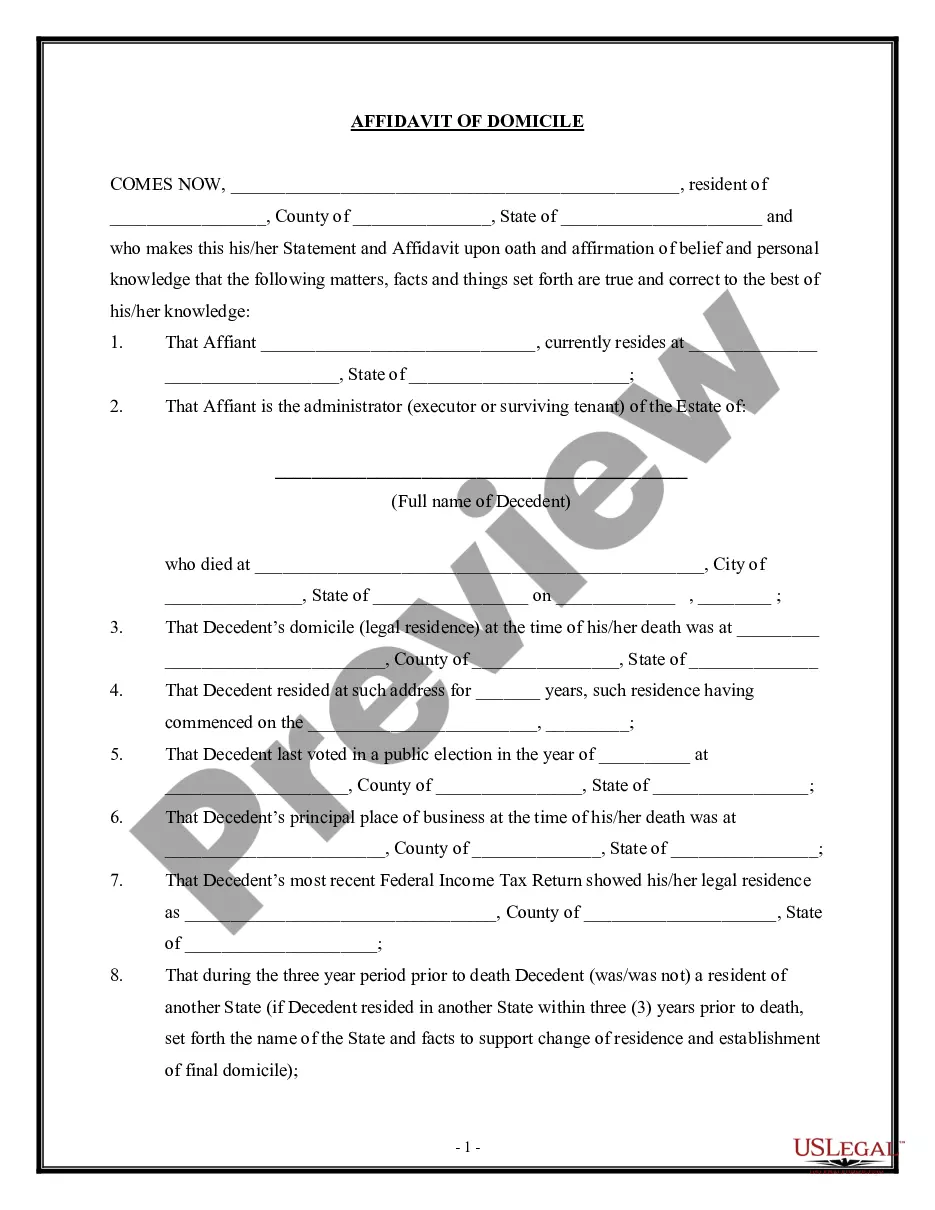
You must apply to the Office of the City Comptroller by submitting a notarized affidavit and two proofs of identification. Acceptable forms of identification include a voter registration card and copies of both the State and City tax returns. You can get more information on the application process.
Acceptable proofs of residency are, a valid government issued photo ID such as; a driver's license, and either a current utility bill, rent receipt, lease, or check with an address imprinted. Please note, library cards, previous years membership ID cards, and tax bills cannot be used as proof of residency.
Government-issued photo ID. Residential lease/property deed. Utility bill. Certified Letter from the government/court (marriage license, divorce, government aid). Bank statement. Driver's license/learner's permit. Car registration. Notarized affidavit of residency.

