Proposal For Construction Work In Hillsborough
Description


Get your form ready online
Our built-in tools help you complete, sign, share, and store your documents in one place.
Make edits, fill in missing information, and update formatting in US Legal Forms—just like you would in MS Word.
Download a copy, print it, send it by email, or mail it via USPS—whatever works best for your next step.
Sign and collect signatures with our SignNow integration. Send to multiple recipients, set reminders, and more. Go Premium to unlock E-Sign.
If this form requires notarization, complete it online through a secure video call—no need to meet a notary in person or wait for an appointment.
We protect your documents and personal data by following strict security and privacy standards.

Make edits, fill in missing information, and update formatting in US Legal Forms—just like you would in MS Word.

Download a copy, print it, send it by email, or mail it via USPS—whatever works best for your next step.

Sign and collect signatures with our SignNow integration. Send to multiple recipients, set reminders, and more. Go Premium to unlock E-Sign.

If this form requires notarization, complete it online through a secure video call—no need to meet a notary in person or wait for an appointment.

We protect your documents and personal data by following strict security and privacy standards.
Looking for another form?








Form popularity
FAQ
The legal risks of an RFI/RFQ/RFP can vary depending on the local or international laws. In some places, they're not necessarily binding (unless stated otherwise), in other places it's the exact opposite - binding unless stated otherwise. As usual, the legal situation ultimately depends on the particular situation.
A contract is an agreement between parties , creating mutual obligations that are enforceable by law . The basic elements required for the agreement to be a legally enforceable contract are: mutual assent , expressed by a valid offer and acceptance ; adequate consideration ; capacity ; and legality .
Once you instruct the party accepting the proposal to date, sign, make payment, and abide by the proposal terms, it becomes a legally-binding contract. Contracts and proposals prevent financial disputes and help to eliminate ambiguity and second-guessing.
Once you instruct the party accepting the proposal to date, sign, make payment, and abide by the proposal terms, it becomes a legally-binding contract.
The proposal or offer is the starting point. An offer is a proposal by one party to another to enter into a legally binding agreement with him. Every agreement is the result of a promise or set of promises. A promise is the result of a proposal made by one party and acceptance of the same by the other party.
A request for proposal (RFP) is a business document that announces a project, describes it, and solicits bids from qualified contractors to complete it.
An RFP is a document that a business, non-profit, or government agency creates to outline the requirements for a specific project. The RFP process helps solicit bids from vendors and identify which one is best qualified to complete the project.
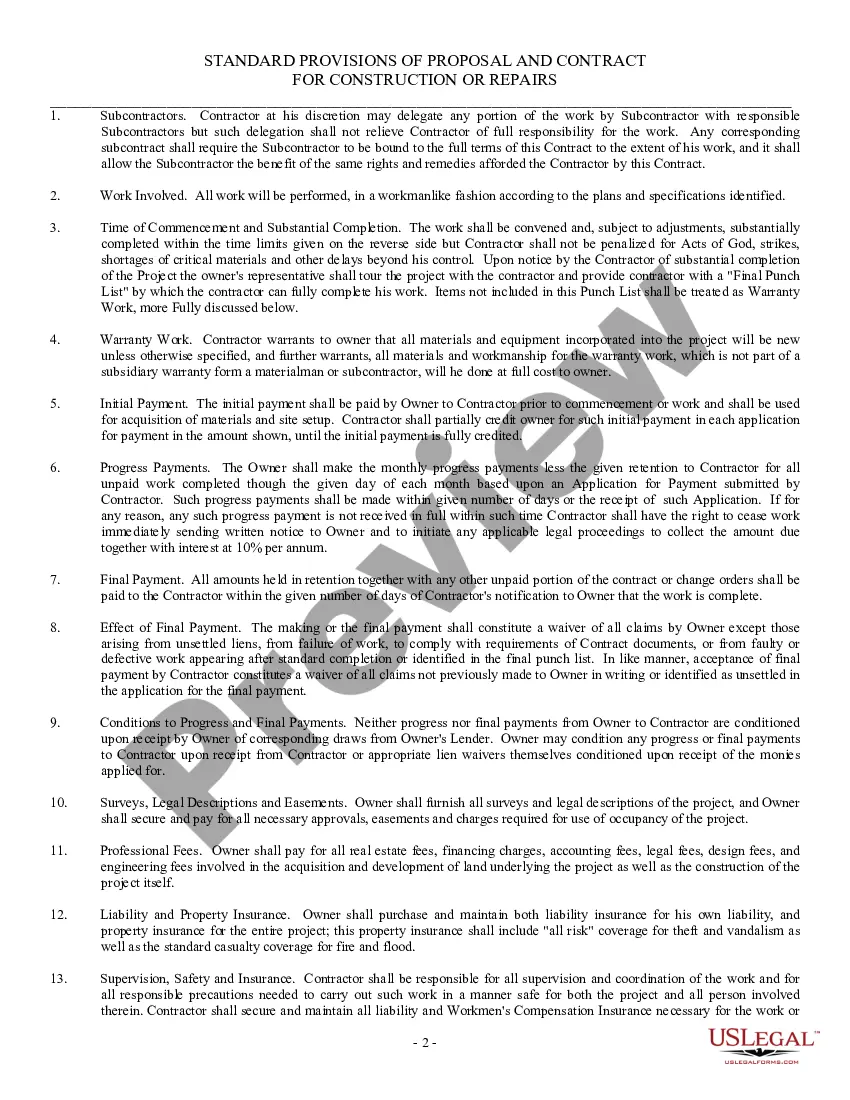
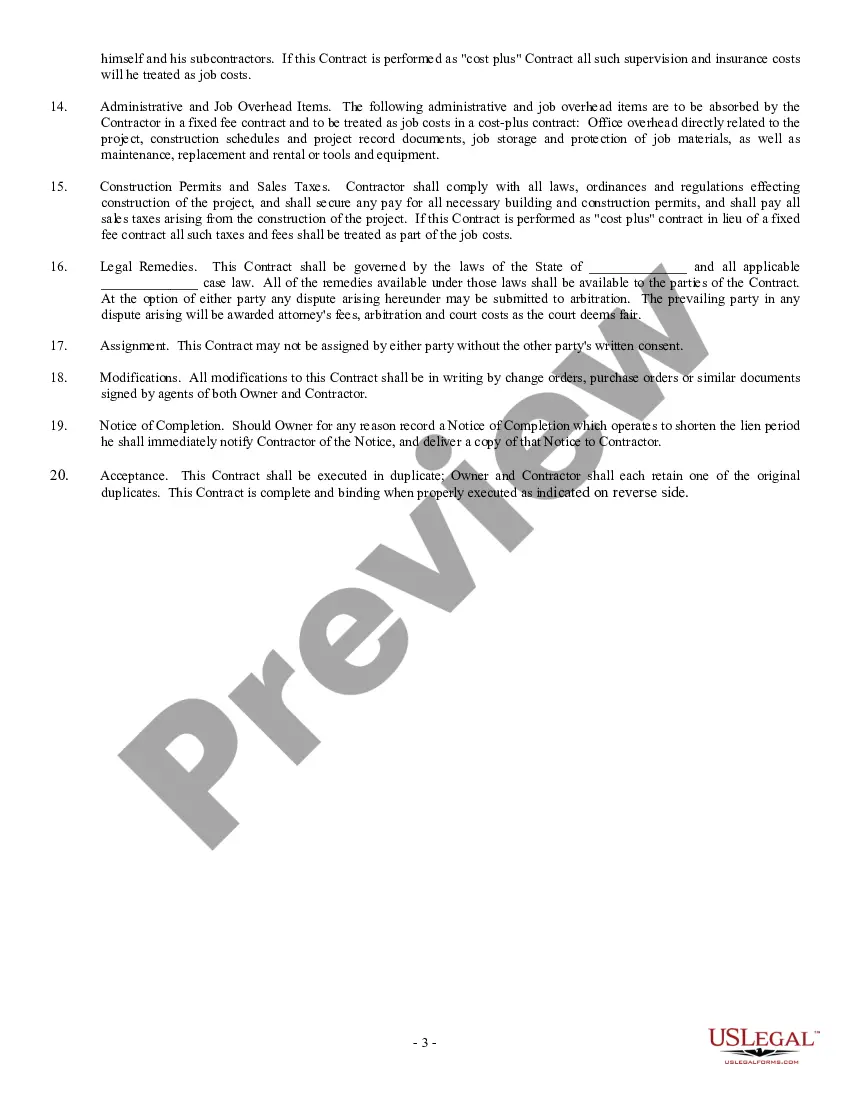
A construction proposal is a document that outlines the details of a construction project and proposes a plan for its completion. It includes information about the scope of work, budget, timeline, materials, and other essential details.
A request for proposal (RFP) in the construction industry is a document that formally announces a project, describes the scope of the project, and invites construction bids from qualified contractors to complete the project.
How To Write A Construction Contract With 7 Steps Step 1: Define the Parties Involved. Step 2: Outline the Scope of Work. Step 3: Establish the Timeline. Step 4: Determine the Payment Terms. Step 5: Include Necessary Legal Clauses. Step 6: Address Change Orders and Modifications. Step 7: Sign and Execute the Contract.