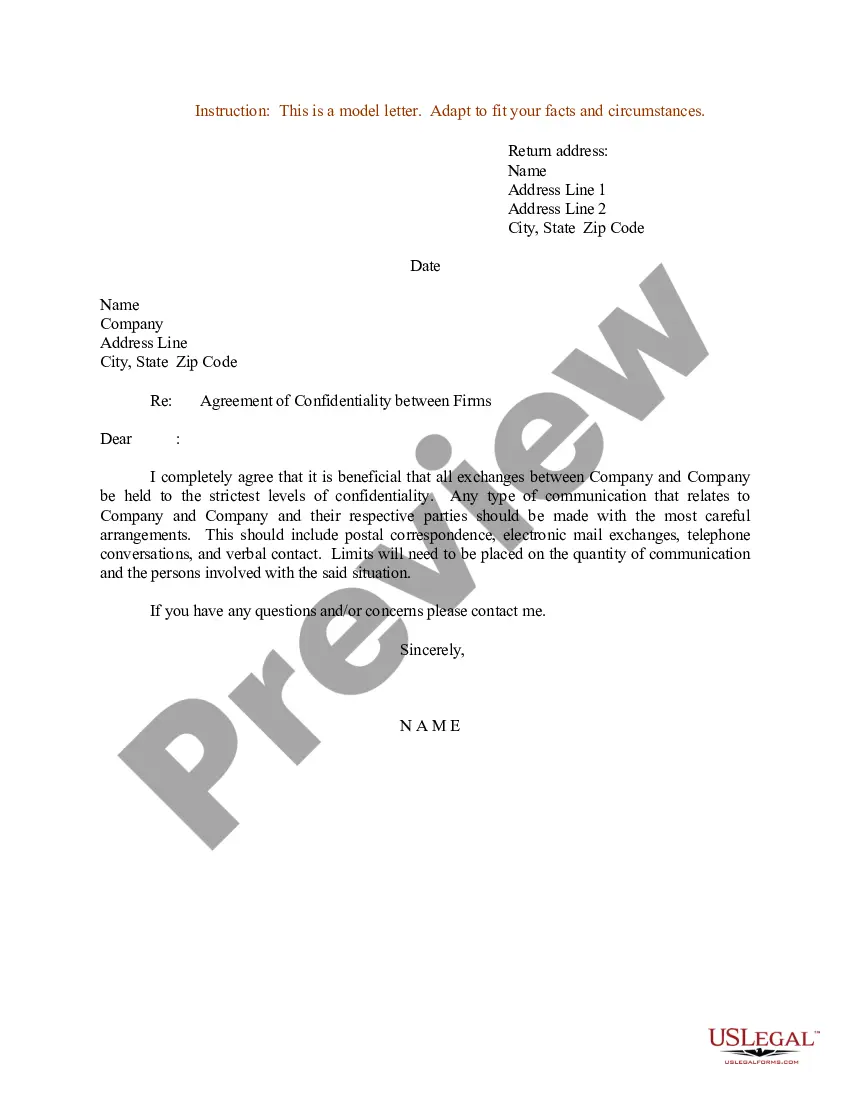
Agreement Confidentiality Between Without Term In California
Description

Get your form ready online
Our built-in tools help you complete, sign, share, and store your documents in one place.
Make edits, fill in missing information, and update formatting in US Legal Forms—just like you would in MS Word.
Download a copy, print it, send it by email, or mail it via USPS—whatever works best for your next step.
Sign and collect signatures with our SignNow integration. Send to multiple recipients, set reminders, and more. Go Premium to unlock E-Sign.
If this form requires notarization, complete it online through a secure video call—no need to meet a notary in person or wait for an appointment.
We protect your documents and personal data by following strict security and privacy standards.

Make edits, fill in missing information, and update formatting in US Legal Forms—just like you would in MS Word.

Download a copy, print it, send it by email, or mail it via USPS—whatever works best for your next step.

Sign and collect signatures with our SignNow integration. Send to multiple recipients, set reminders, and more. Go Premium to unlock E-Sign.

If this form requires notarization, complete it online through a secure video call—no need to meet a notary in person or wait for an appointment.

We protect your documents and personal data by following strict security and privacy standards.
Looking for another form?






Form popularity
FAQ
Term: The term provision of a confidentiality agreement can be extremely important. The term must be long enough to protect the interests of the Disclosing party. Nonetheless, the term should not unduly burden the Recipient. Example term provisions would have the agreement last one or five years.
NDAs should have a clear description of the purpose, parties, and duration they cover. Specifying time limits or periods that your employees are subject to confidentiality is particularly important to ensure your NDA is enforceable in California. The typical time period is one to five years.
In some instances, the parties may agree that a specific duration is long enough to require an obligation of confidentiality. In other situations, the theory may be that there is no way to know how long certain information will remain valuable if not disclosed, so the duration should be perpetual.
Confidentiality agreements can run indefinitely, covering the parties' disclosures of confidential information at any time, or can terminate on a certain date or event. Whether or not the overall agreement has a definite term, the parties' nondisclosure obligations can be stated to survive for a set period.
Starting January 1, 2025, businesses settling disputes with consumers cannot condition any refund or other consideration on a consumer agreeing not to make statements about the business, regardless of the sentiment or accuracy of those statements. The text of the new Cal. Civ. Code § 1748.50 can be found here.
This clause states that the duty of confidentiality under the agreement has no time limit and continues indefinitely: - There is no set term or expiration for the confidentiality obligations. - The obligations do not end if the agreement is terminated.
Time frame: Most NDAs don't last forever, and many confidentiality agreements explicitly state the number of years that sensitive information must be kept secret. Even those with an indefinite time frame will often indicate when information is no longer protected by the agreement.
Most NDAs define a specific duration for keeping information confidential, often a set number of years. Agreements with indefinite terms typically specify when protections cease. NDAs usually last between one and five years, but this can vary based on the transaction or market conditions.
Completing the Confidentiality Agreement The "Receiving Party" is the person or company who receives the confidential information and is obligated to keep it secret. You'll need to fill in information specific to your circumstances in the spaces provided, such as the parties' names and addresses.
In California, a nondisclosure agreement may be enforceable, provided it meets basic criteria. The restrictive covenant must be properly drafted. This entails clear writing, detailed information about the confidential components of the contract, and a clearly stated extent of the confidentiality obligation.