Forgery Forged Instrument In Texas
Description

Get your form ready online
Our built-in tools help you complete, sign, share, and store your documents in one place.
Make edits, fill in missing information, and update formatting in US Legal Forms—just like you would in MS Word.
Download a copy, print it, send it by email, or mail it via USPS—whatever works best for your next step.
Sign and collect signatures with our SignNow integration. Send to multiple recipients, set reminders, and more. Go Premium to unlock E-Sign.
If this form requires notarization, complete it online through a secure video call—no need to meet a notary in person or wait for an appointment.
We protect your documents and personal data by following strict security and privacy standards.

Make edits, fill in missing information, and update formatting in US Legal Forms—just like you would in MS Word.

Download a copy, print it, send it by email, or mail it via USPS—whatever works best for your next step.

Sign and collect signatures with our SignNow integration. Send to multiple recipients, set reminders, and more. Go Premium to unlock E-Sign.

If this form requires notarization, complete it online through a secure video call—no need to meet a notary in person or wait for an appointment.

We protect your documents and personal data by following strict security and privacy standards.
Looking for another form?








Form popularity
FAQ
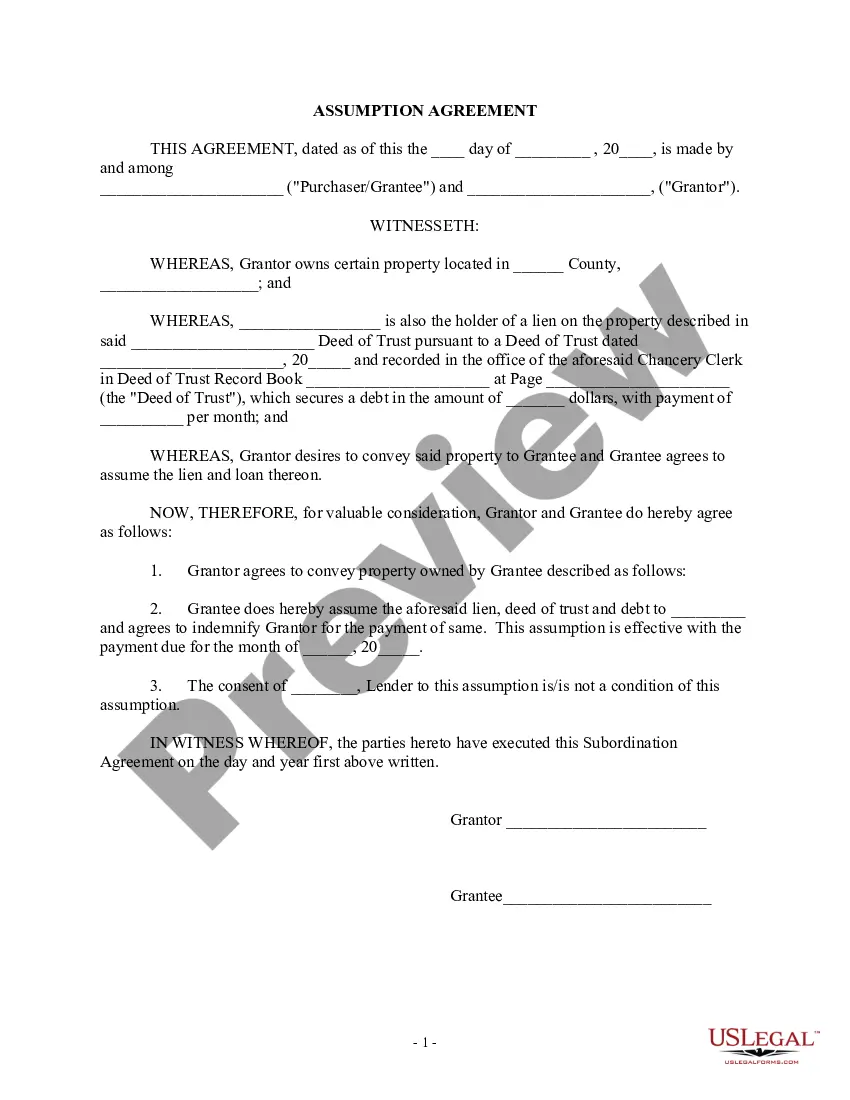
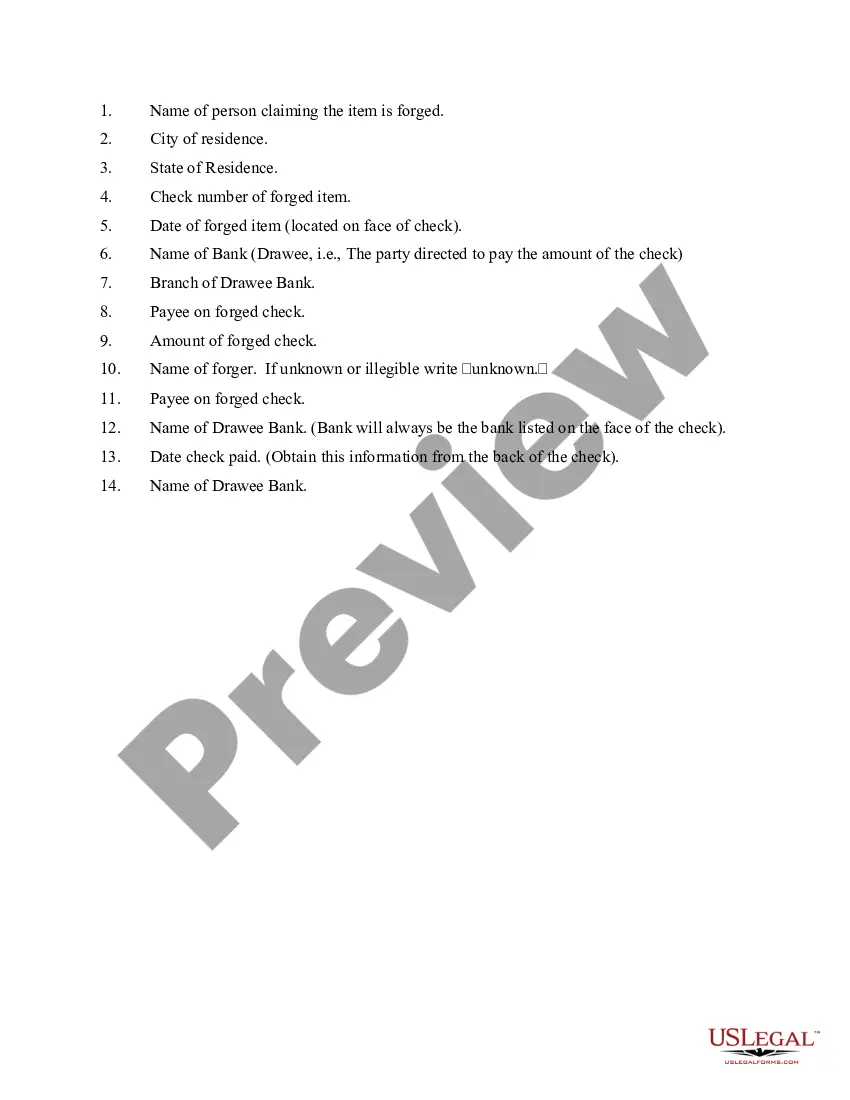
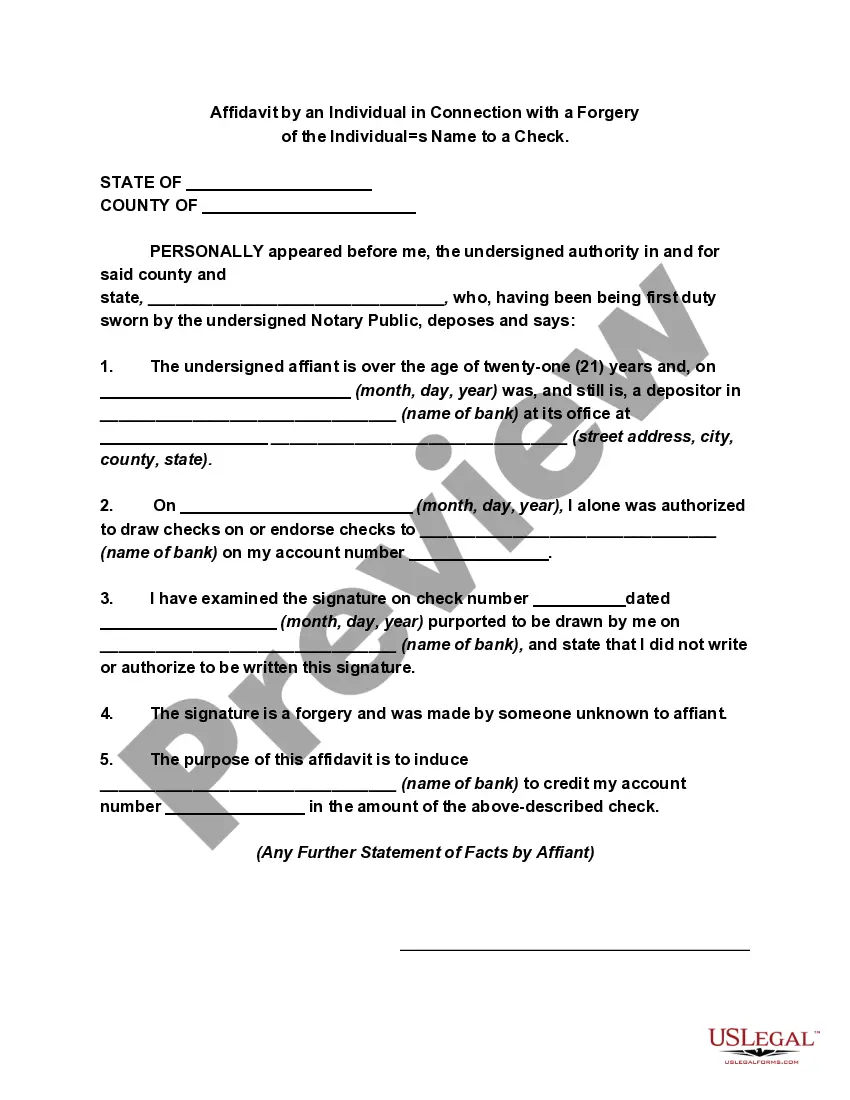
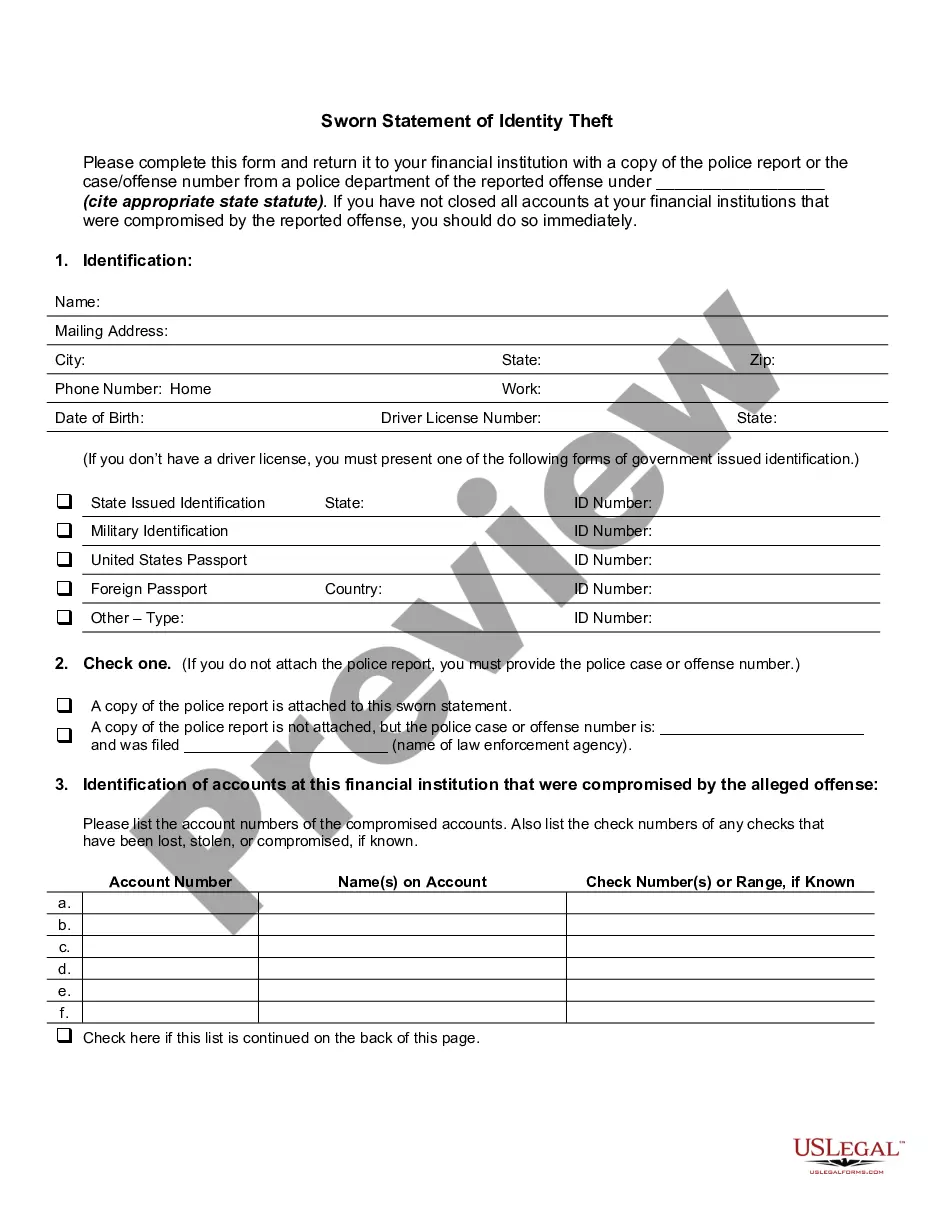
Forgery in Texas is a third-degree felony if the forged writing is worth property or services from $30,000 to $150,000. Third-degree felony convictions are punishable by two to 10 years in prison and a $10,000 fine. Examples of third-degree felony-level forgery: Forging government record.
Whether it's signing someone else's name on a check, altering a legal document, or using a ID, even seemingly minor actions can lead to criminal charges. Texas law takes forgery seriously, with penalties ranging from misdemeanors to felonies, depending on the circumstances.
Second-Degree Criminal Possession of a Forged Instrument Examples might include: Forged checks or credit card receipts. driver's licenses or state IDs. Altered legal documents like wills or deeds.
Under Texas real estate law, the forgery of a deed is considered a state jail felony. Deed forgery may be found in one of the following forms: A document is written or altered in some way under false pretenses, or. An individual makes these alterations or documents with the intention of defrauding another person.
Signature analysts can assess the speed, pressure, and form of signatures to see if they were signed fluidly. If the signature appears to be traced or written slowly, it may be a forgery. Additionally, signature analysts and signature verification software can compare presented signatures with reference signatures.
Third-Degree Criminal Possession of a Forged Instrument.
Possible Penalties for Check Forgery In many circumstances, forgery is a Class A misdemeanor, punishable by up to one year in jail and a $4,000 fine.
33.024. UNLAWFUL DECRYPTION. (a) A person commits an offense if the person intentionally decrypts encrypted private information through deception and without a legitimate business purpose.
Stalking. (D) feel harassed, terrified, intimidated, annoyed, alarmed, abused, tormented, embarrassed, or offended. (4) federal law.