Deferred Compensation Plan Sf In Dallas
Description

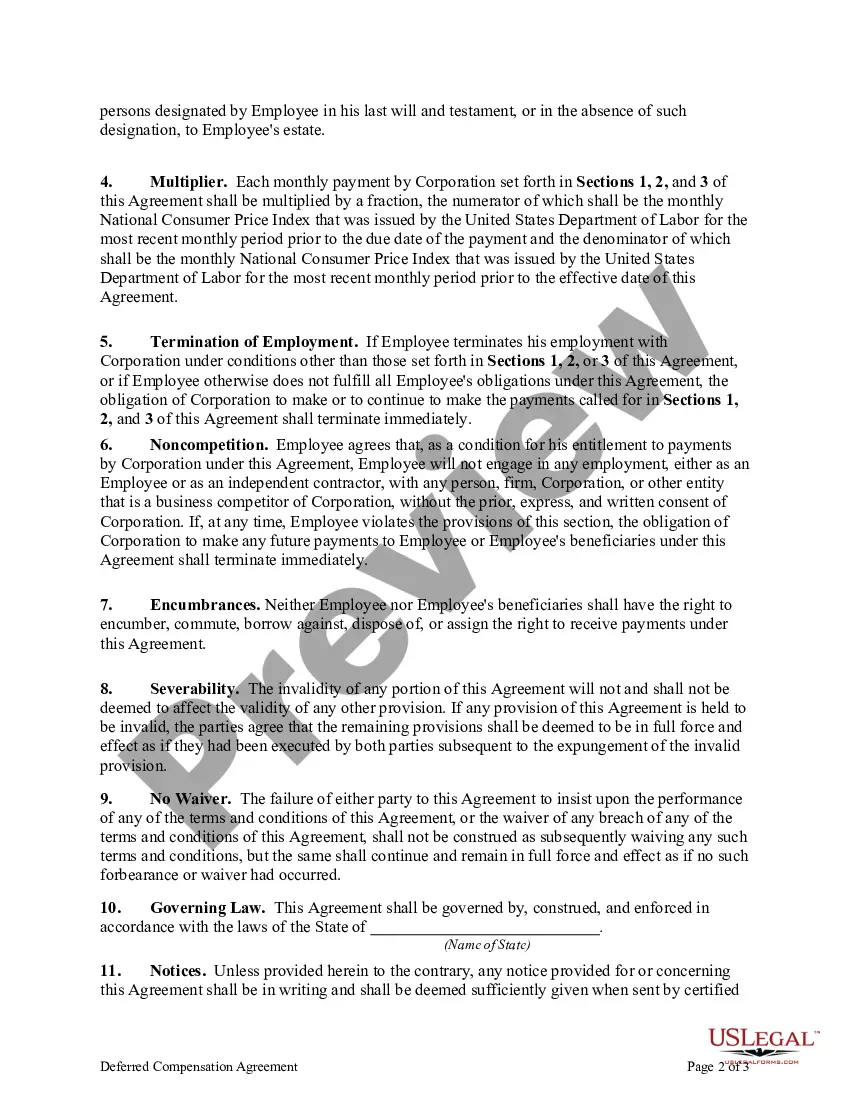
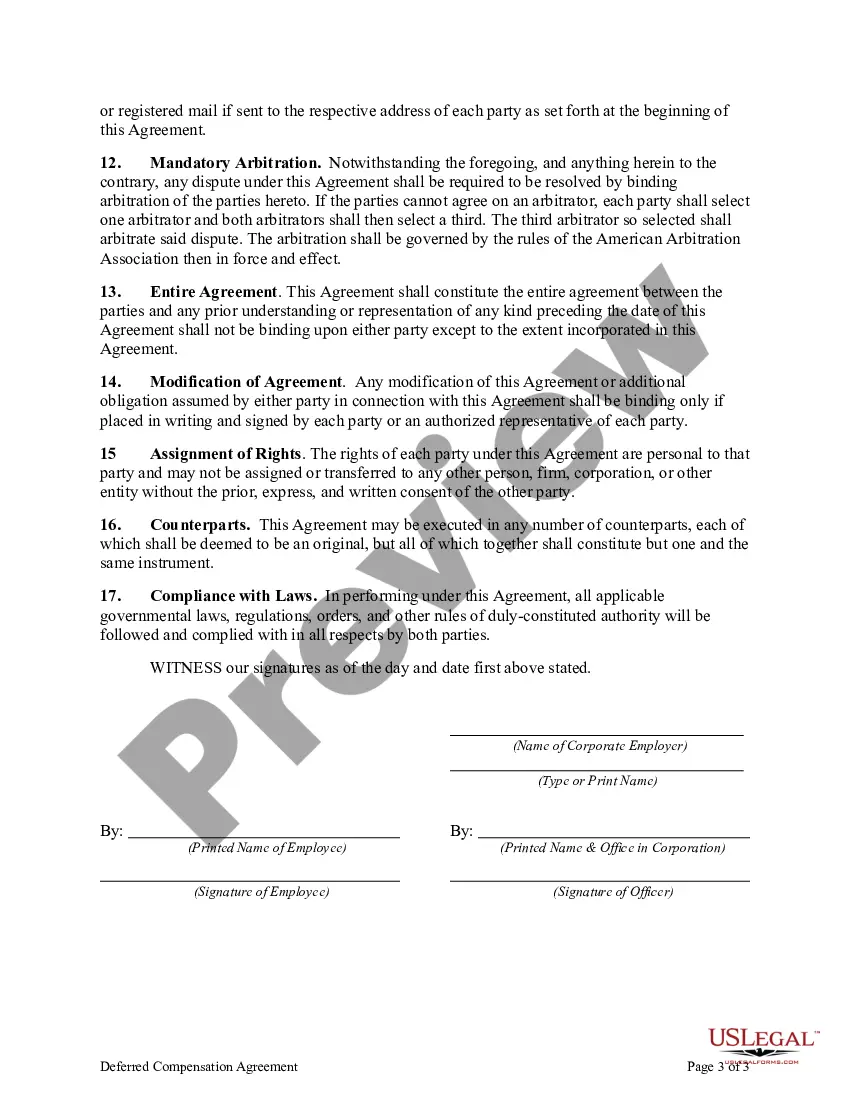

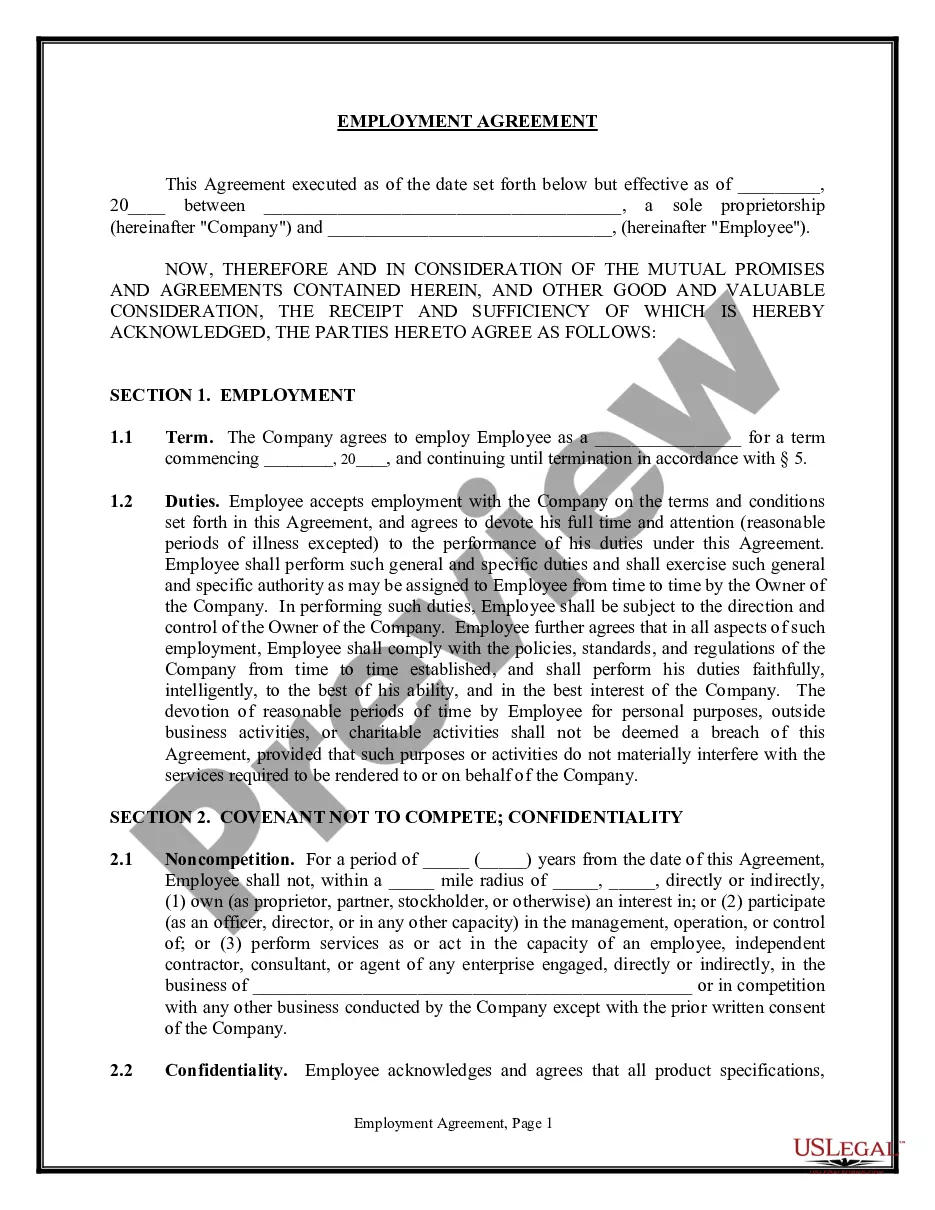
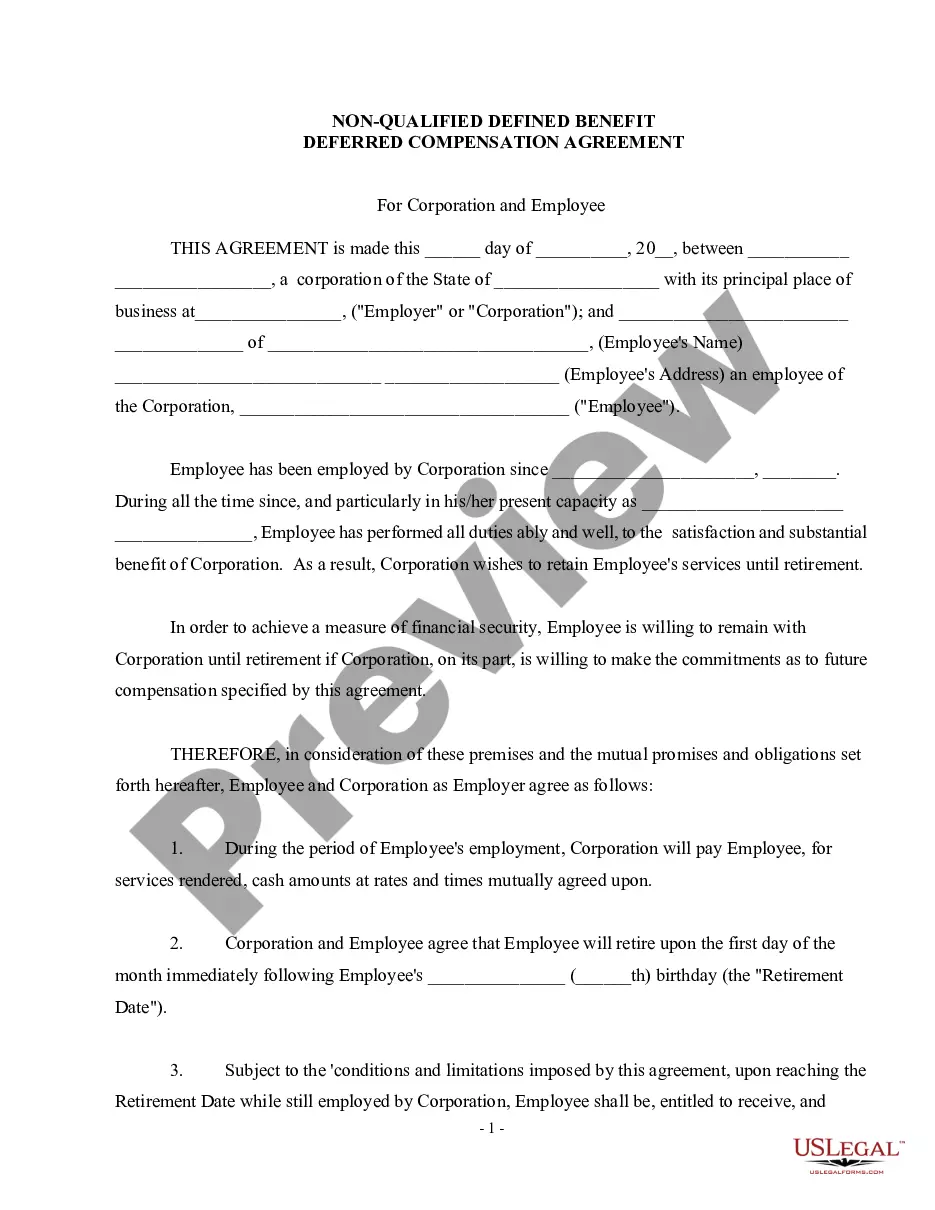
Get your form ready online
Our built-in tools help you complete, sign, share, and store your documents in one place.
Make edits, fill in missing information, and update formatting in US Legal Forms—just like you would in MS Word.
Download a copy, print it, send it by email, or mail it via USPS—whatever works best for your next step.
Sign and collect signatures with our SignNow integration. Send to multiple recipients, set reminders, and more. Go Premium to unlock E-Sign.
If this form requires notarization, complete it online through a secure video call—no need to meet a notary in person or wait for an appointment.
We protect your documents and personal data by following strict security and privacy standards.

Make edits, fill in missing information, and update formatting in US Legal Forms—just like you would in MS Word.

Download a copy, print it, send it by email, or mail it via USPS—whatever works best for your next step.

Sign and collect signatures with our SignNow integration. Send to multiple recipients, set reminders, and more. Go Premium to unlock E-Sign.

If this form requires notarization, complete it online through a secure video call—no need to meet a notary in person or wait for an appointment.

We protect your documents and personal data by following strict security and privacy standards.
Looking for another form?









Form popularity
FAQ
The regular yearly contributions amount for Deferred Compensation will increase from $23,000 to $23,500. The catch-up contribution limit that generally applies for employees aged 50 and over remains at $7,500 for 2025 for a combined maximum contribution limit of $31,000 in 2025.
Elective deferral limit The amount you can defer (including pre-tax and Roth contributions) to all your plans (not including 457(b) plans) is $23,000 in 2024 ($22,500 in 2023; $20,500 in 2022; $19,500 in 2020 and 2021; $19,000 in 2021).
The San Francisco Deferred Compensation Plan (SFDCP) allows CCSF employees to voluntarily invest a portion of their pre-tax regular earnings in a diverse selection of 13 core investment funds, including a suite of Target Date Funds and access to a self-directed brokerage option.
Elective deferral limit The amount you can defer (including pre-tax and Roth contributions) to all your plans (not including 457(b) plans) is $23,000 in 2024 ($22,500 in 2023; $20,500 in 2022; $19,500 in 2020 and 2021; $19,000 in 2021).
What Is a 457(b) Plan? A 457(b) plan is a tax-deferred retirement savings plan. Funds are withdrawn from an employee's income without being taxed and are only taxed upon withdrawal, which is typically at retirement, after the funds have had several years to grow.
Deferred compensation plans are perks provided by employers to their employees. They allow employees to elect a certain percentage or dollar amount of their compensation to be withheld for a certain purpose, such as retirement.
The two plans are also different in that 401(k) plans do not offer a three-year Pre-Retirement Catch-Up; and 457(b) plans do. Another difference is that a 401(k) distribution prior to age 59½ may be subject to a 10% early withdrawal penalty and 457(b) plans generally do not have the same early withdrawal penalty.
