Difference Between Asset Sale And Stock Sale For Tax Purposes In Virginia
Description



Get your form ready online
Our built-in tools help you complete, sign, share, and store your documents in one place.
Make edits, fill in missing information, and update formatting in US Legal Forms—just like you would in MS Word.
Download a copy, print it, send it by email, or mail it via USPS—whatever works best for your next step.
Sign and collect signatures with our SignNow integration. Send to multiple recipients, set reminders, and more. Go Premium to unlock E-Sign.
If this form requires notarization, complete it online through a secure video call—no need to meet a notary in person or wait for an appointment.
We protect your documents and personal data by following strict security and privacy standards.

Make edits, fill in missing information, and update formatting in US Legal Forms—just like you would in MS Word.

Download a copy, print it, send it by email, or mail it via USPS—whatever works best for your next step.

Sign and collect signatures with our SignNow integration. Send to multiple recipients, set reminders, and more. Go Premium to unlock E-Sign.

If this form requires notarization, complete it online through a secure video call—no need to meet a notary in person or wait for an appointment.

We protect your documents and personal data by following strict security and privacy standards.
Looking for another form?




Form popularity
FAQ
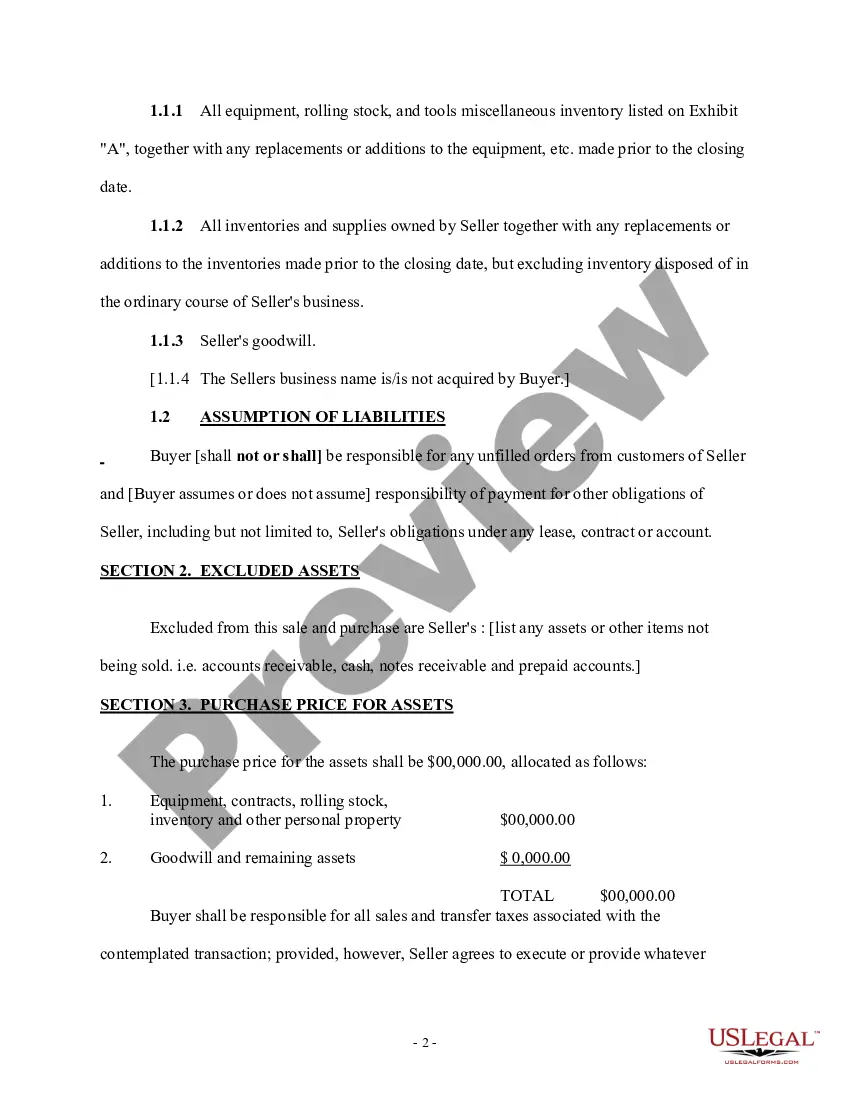
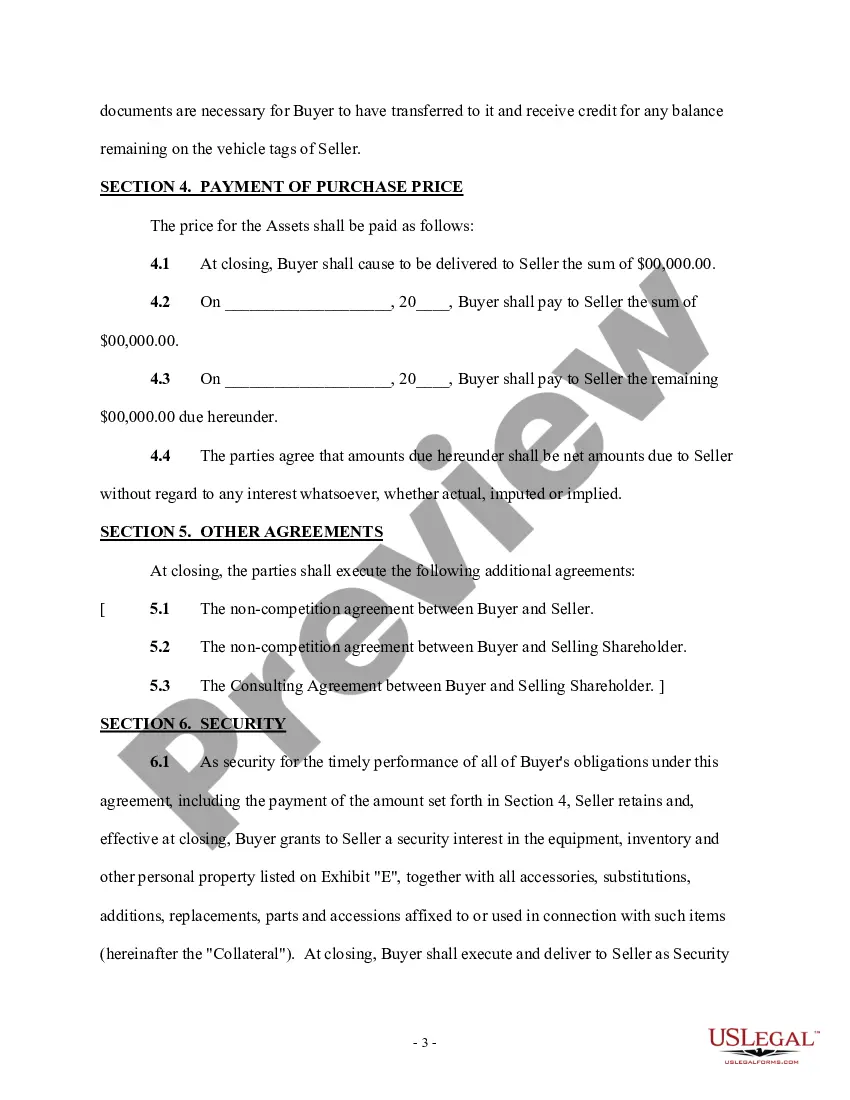
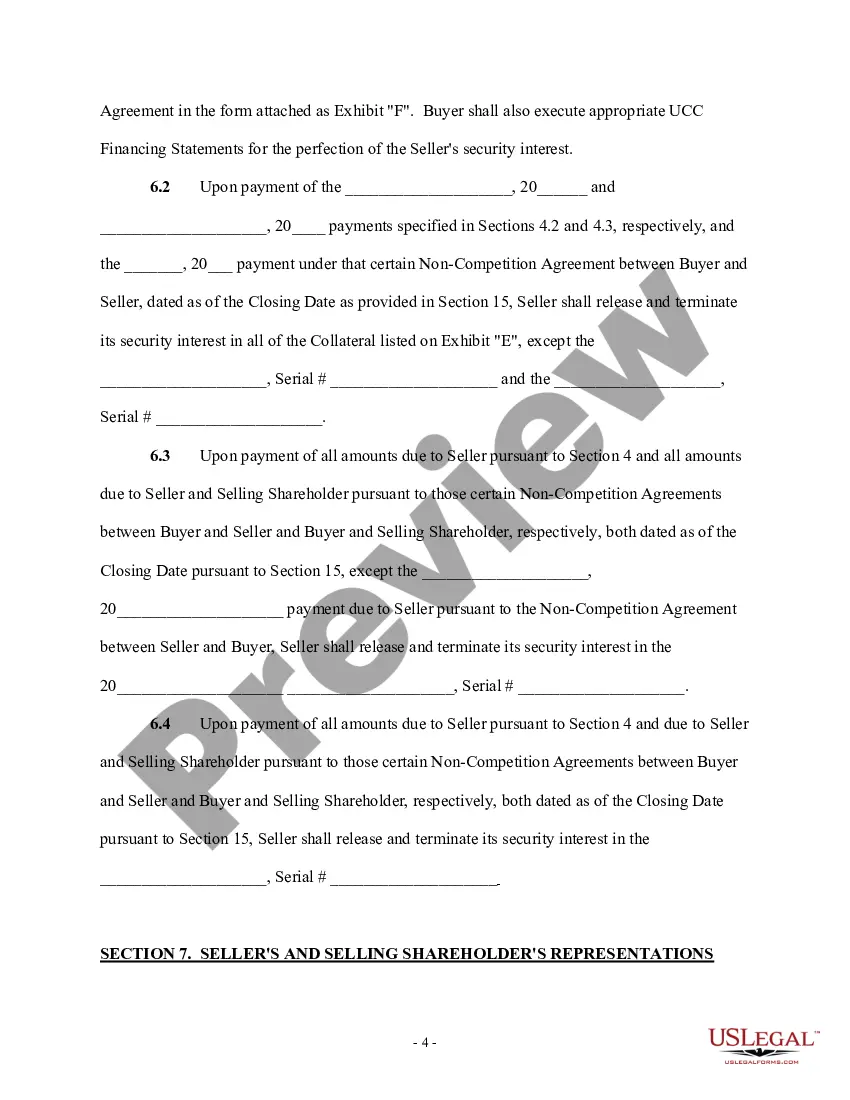
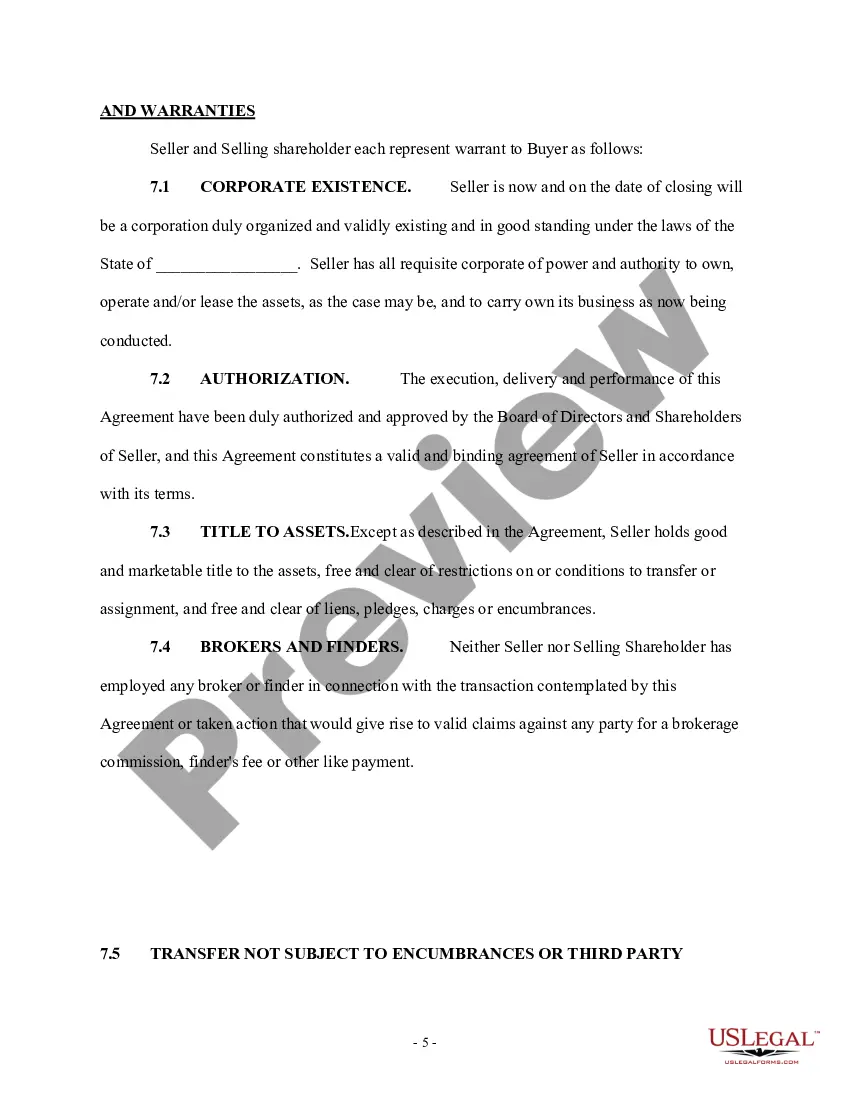
In an asset sale, the ownership of these acquired assets would change hands, with the buyer negotiating separately for each asset. In a stock sale, ownership of such assets does not change hands in the same way. The target still retains its ownership typically, even if the target has a new owner.
In an asset sale, the seller faces double taxation: the company pays taxes on the sale of assets, and shareholders are taxed on the distribution of proceeds. Buyers may benefit from tax deductions on depreciated assets. In a share sale, the seller typically incurs capital gains tax on the sale of shares.
The benefit of an asset sale, from the buyer's perspective, is that it can select which assets and liabilities to acquire in the deal, compared to a stock sale or merger, where the buyer acquires all the assets and liabilities of the target.
In a share deal, the buyer acquires a separate legal entity, while under an asset deal the assets and liabilities acquired can be transferred directly into the purchasing legal entity. However, it is often useful to establish a separate legal entity that takes over the business that was acquired via the asset deal.
The benefit of an asset sale, from the buyer's perspective, is that it can select which assets and liabilities to acquire in the deal, compared to a stock sale or merger, where the buyer acquires all the assets and liabilities of the target.
Asset transaction means any transaction or related series of transactions whereby the Issuer transfers certain of its assets to ReGen AG through a sale, capital contribution or otherwise.
For the target, a stock sale is usually a nonevent from a tax perspective. The buyer in a stock sale does not get a step-up in tax basis in the assets that comprise the target company, and thus is not able to increase their depreciation and amortization deductions in the same way as in an asset sale.