Joint Tenancy Definition With Right Of Survivorship In Sacramento
Description

Get your form ready online
Our built-in tools help you complete, sign, share, and store your documents in one place.
Make edits, fill in missing information, and update formatting in US Legal Forms—just like you would in MS Word.
Download a copy, print it, send it by email, or mail it via USPS—whatever works best for your next step.
Sign and collect signatures with our SignNow integration. Send to multiple recipients, set reminders, and more. Go Premium to unlock E-Sign.
If this form requires notarization, complete it online through a secure video call—no need to meet a notary in person or wait for an appointment.
We protect your documents and personal data by following strict security and privacy standards.

Make edits, fill in missing information, and update formatting in US Legal Forms—just like you would in MS Word.

Download a copy, print it, send it by email, or mail it via USPS—whatever works best for your next step.

Sign and collect signatures with our SignNow integration. Send to multiple recipients, set reminders, and more. Go Premium to unlock E-Sign.

If this form requires notarization, complete it online through a secure video call—no need to meet a notary in person or wait for an appointment.

We protect your documents and personal data by following strict security and privacy standards.
Looking for another form?








Form popularity
FAQ
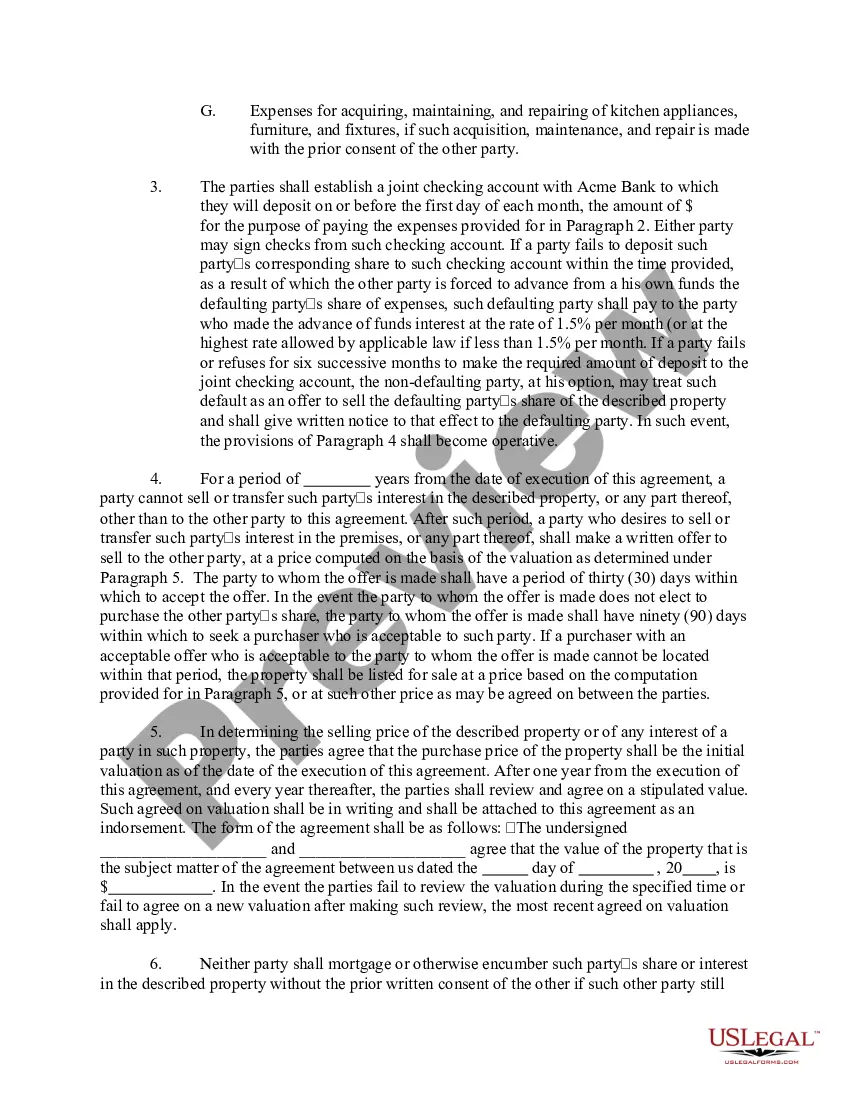
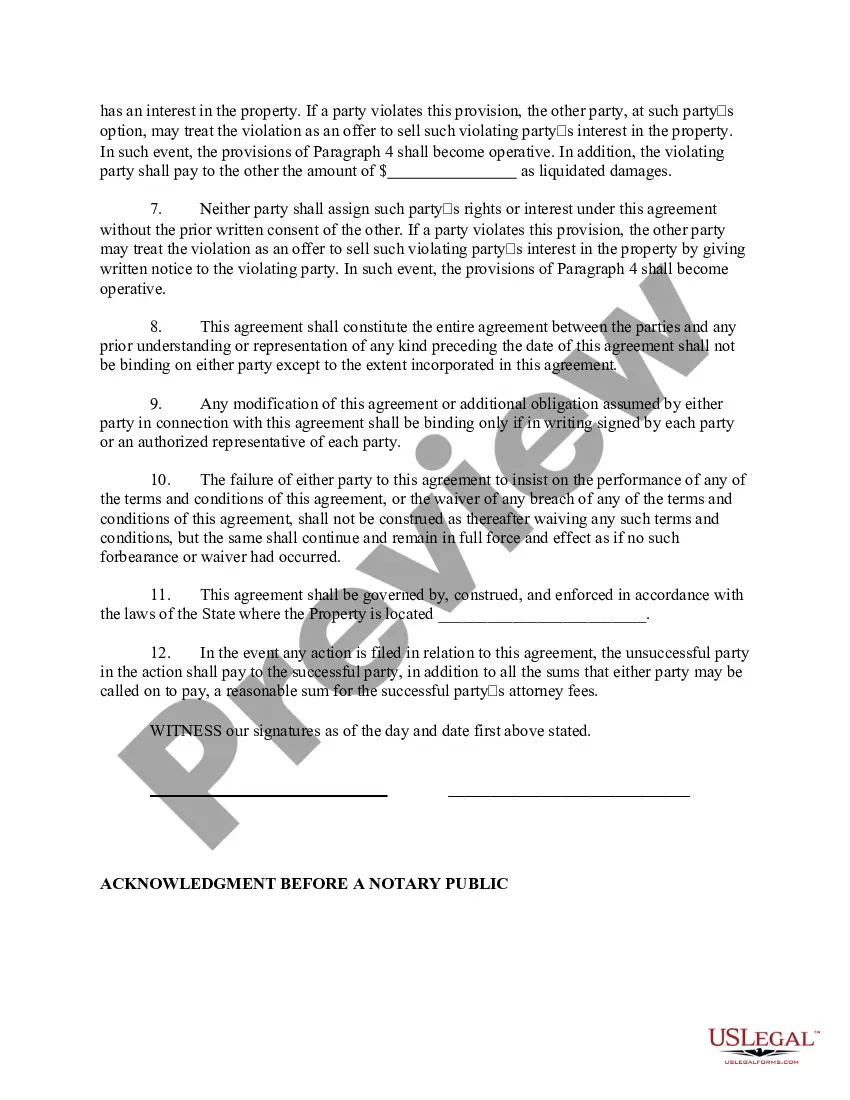
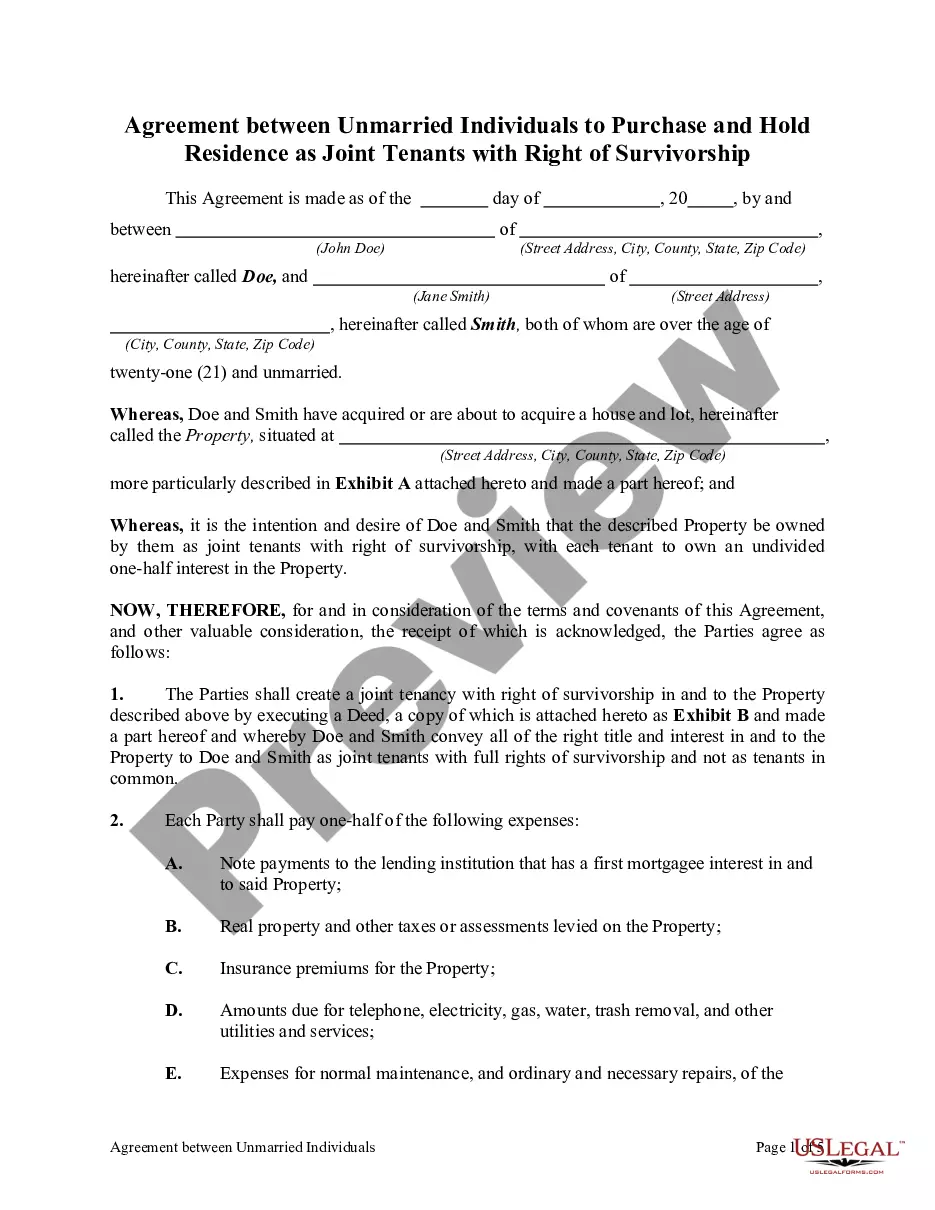
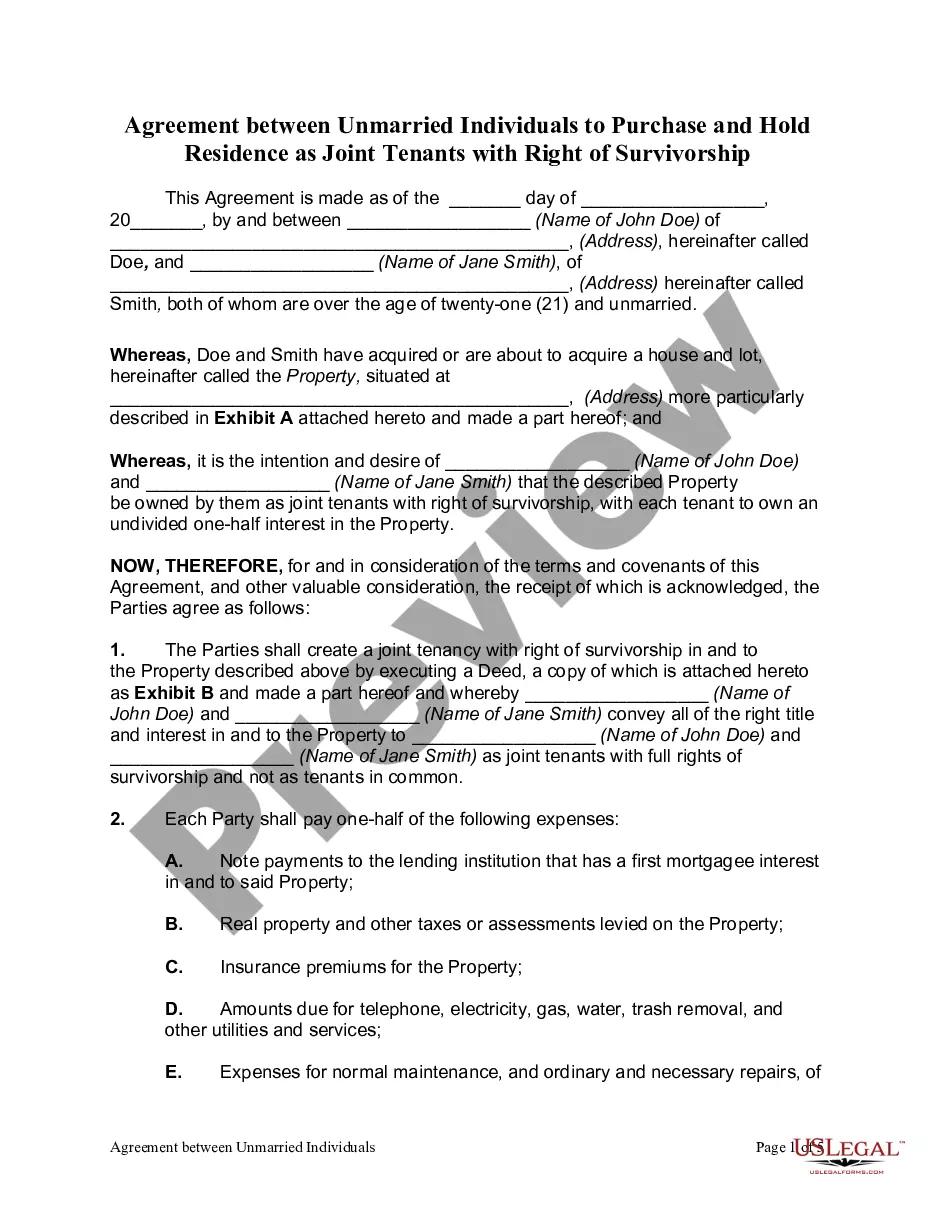
With joint tenancy the right of survivorship is implied, so if one joint tenant dies, the other joint tenant or tenants automatically become the owners of the deceased tenant's interest in the property without the property having to pass through probate.
If any one joint tenant conveys away his entire interest to a third party the joint tenancy is sev- ered as between the conveying party and his joint tenants, and the conveyee becomes a tenant in common with the remaining tenant." Also if a joint tenant conveys his entire interest to one of his co-tenants, there is a ...
Joint tenancy is a way for two or more people to own property in equal shares so that when one of the joint tenants dies, the property can pass to the surviving joint tenant(s) without having to go through probate court.
To create a joint tenancy with the right of survivorship, all you need to do is put the right words on the title document, such as a deed to real estate, a car's title slip, or the signature card establishing a bank account.
This avoids the need for a probate court proceeding – the lengthy, public, and costly legal process that determines property ownership after death. In California, this principle applies to specific types of joint property ownership, including joint tenancy and community property with the right of survivorship.
Separate property becomes community property in California through several mechanisms. One common way is through the commingling of funds. When separate property funds, such as inheritances, are mixed with community property funds (like deposits into a joint bank account), they lose their separate status.
In California, a couple must only include the following clause in the title document: “Couple takes title to the property as Community property with Right of Survivorship.” A lawyer can ensure that the correct legal language is used so that the creation of this type of property is legally enforceable.
Community property is considered fair game for liabilities, so creditors can come after the asset regardless of which spouse owes. With joint tenancy, however, creditors can only lay claim to the owing spouse's share of the property, which the non-owing spouse's share is protected.
